


 BC Hydro Logo PNG
The BC Hydro logo conveys sustainability and energy, emphasizing the importance of harmony between society’s needs and nature. Its simplicity makes the image clear and relatable, reflecting the company’s longstanding connection with the local community and its contribution to improving the quality of life.
BC Hydro grew out of British Columbia’s early power system, shaped by rivers, mountains, mining, and rapid urban growth. British Columbia Electric Company, founded in 1897, supplied Vancouver, Victoria, and nearby districts. In 1945, the province created the British Columbia Power Commission to electrify rural areas that private operators were slow to serve because returns were low and infrastructure costs were high.
By the late 1950s, the divided model no longer matched the province’s needs. Industrial demand, population growth, and major resource projects required coordinated planning. In 1961, Premier W. A. C. Bennett’s government bought the British Columbia Electric Company for $171.8 million. It merged it with the BC Power Commission, forming the BC Hydro and Power Authority. Shareholders disputed the move, but it placed major electricity planning under provincial control.
The first major test was the W. A. C. Bennett Dam on the Peace River. Construction began in 1961 and ended in 1967. The project created Williston Reservoir, Canada’s largest artificial lake, covering more than 1,700 square kilometers. Its generating station reached about 2,730 megawatts, giving the province a new power base for industry, cities, and later projects on the Peace River.
The 1960s also saw the signing of the Columbia River Treaty between Canada and the United States. Canada built dams, including Duncan, Hugh Keenleyside, and Arrowhead, to regulate floods and support downstream generation. From 1980 to 1984, the Revelstoke generating station entered service with a capacity of about 1,980 megawatts. In 2003, the province created Powerex to engage in wholesale electricity trading, while BC Hydro retained transmission and distribution.
Meaning and History
What is BC Hydro?
This Canadian energy corporation serves over 4 million customers and is British Columbia’s primary electricity provider. The organization operates an extensive network of power lines running through challenging mountainous terrain and numerous hydroelectric plants on the region’s mountain rivers. Reliable energy delivery under difficult weather conditions from coastal areas to remote mountain communities is a key aspect of its operations. The company is known for its partnership projects with Indigenous peoples, social initiatives, and the development of electric-vehicle infrastructure in the province.
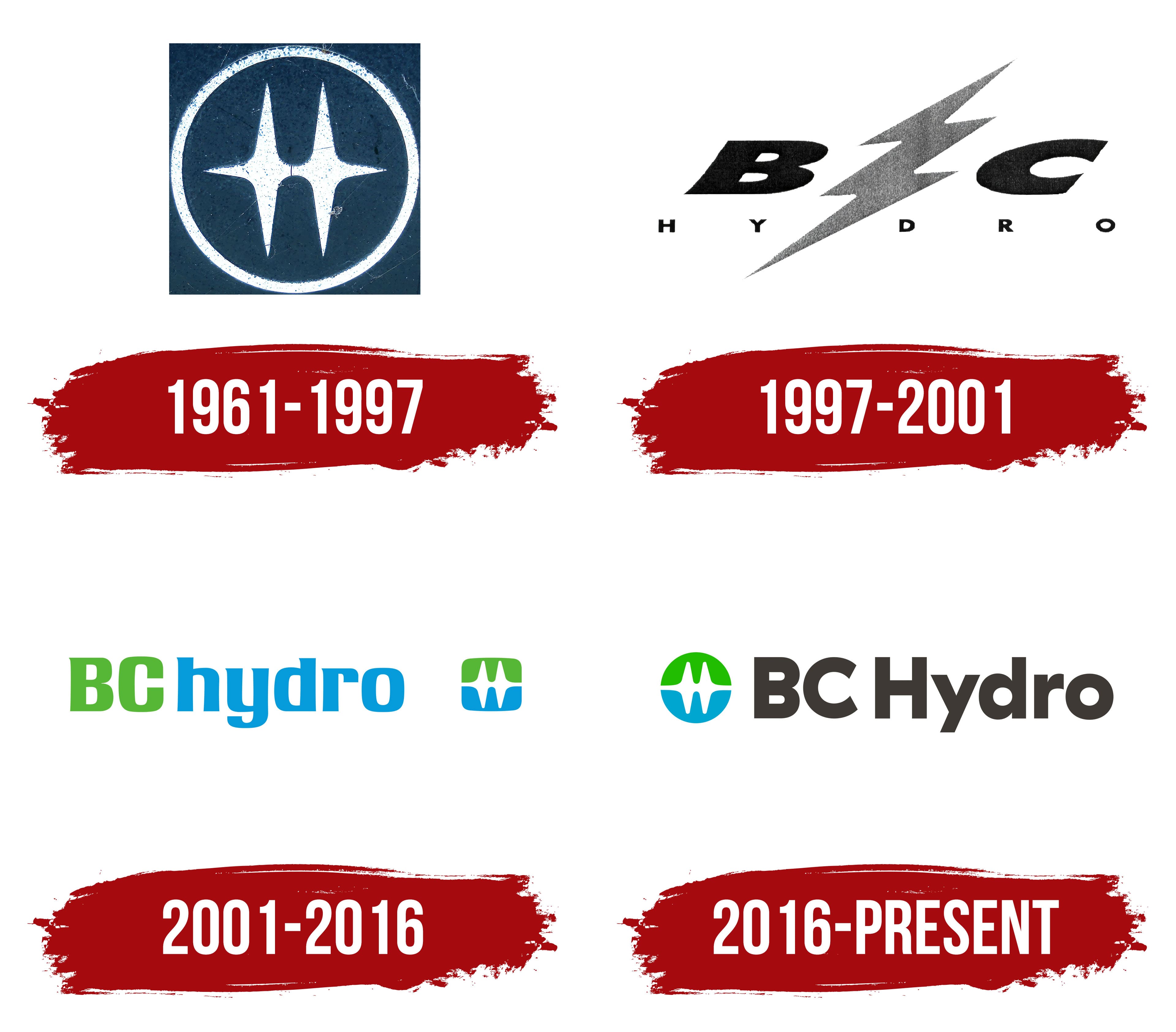
1961 – 1997

1997 – 2001

2001 – 2016

2016 – today
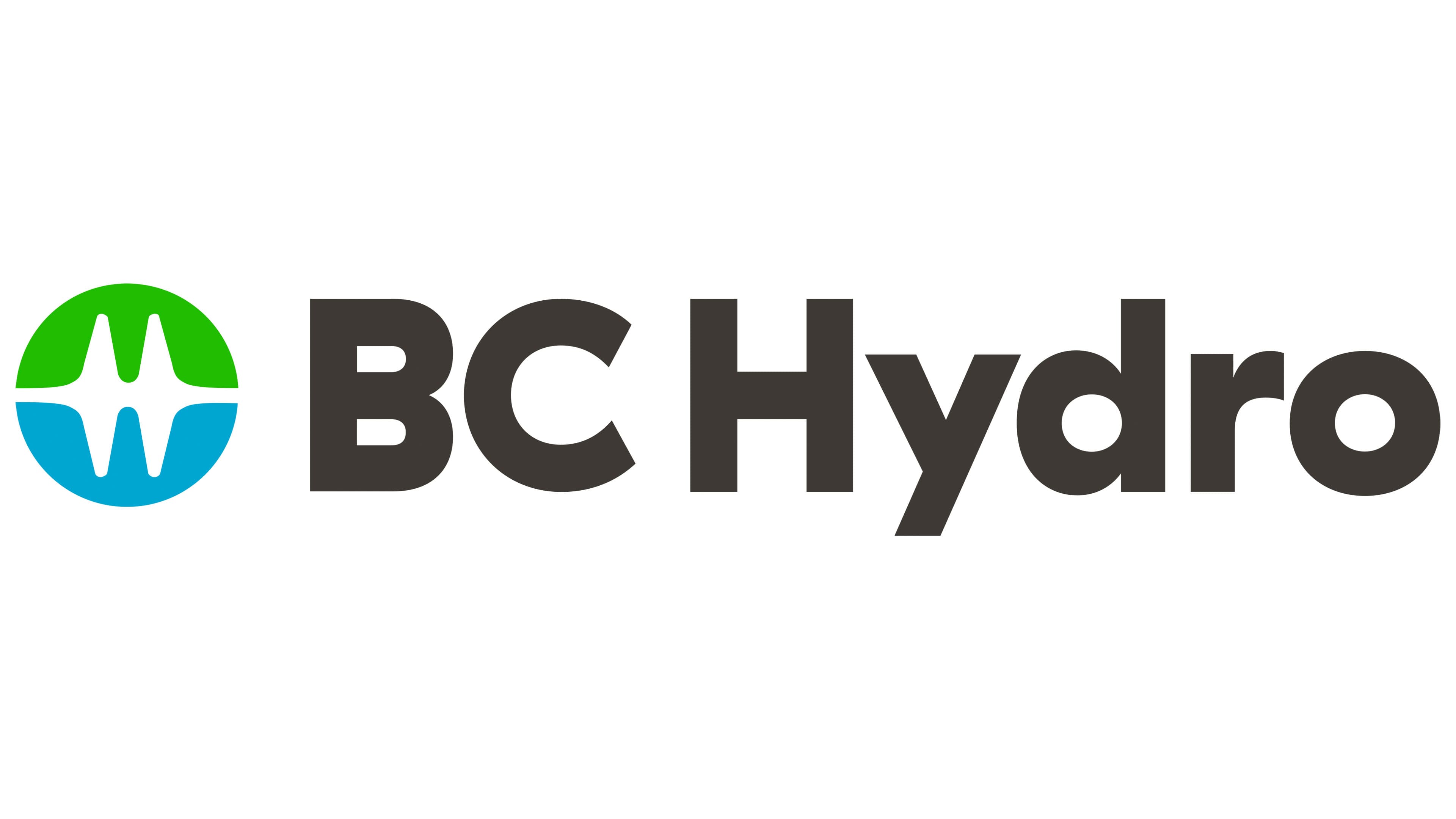
The BC Hydro logo combines simplicity with deep symbolism, reflecting the company’s connection to nature and its role in energy production. The graphic element on the left is a circle divided into two halves. The upper green half represents natural resources and sustainability, while the lower blue half symbolizes water as the primary source of energy.
A wavy line runs through the circle’s center, simultaneously resembling an electrical pulse and the silhouette of the letter “H,” directly referencing the company’s name. The smooth transitions at the line’s peaks emphasize the stability and reliability of the energy supply. The horizontal stripe dividing the circle connects the upper and lower sections, symbolizing the union of nature and technology.
The company name is positioned to the right of the graphic element. The black font adds a sense of professionalism and confidence. “BC” is written in uppercase to highlight British Columbia’s regional identity, while “Hydro” is in lowercase to create visual balance. The sans-serif font underscores a modern and technological approach.
The BC Hydro emblem harmoniously integrates natural elements with modern technology. The colors and shapes convey the company’s mission to provide its customers with sustainable and reliable energy.