


 Petronas Logo PNG
The Petronas logo is minimalist and conveys a sense of harmony and order. Its clean lines and shape balance technical precision and natural harmony. The logo reflects practicality and reliability, combining extensive experience with confidence in actions.
Petronas was founded by the Malaysian government in 1974 as a national oil and gas corporation headquartered in Kuala Lumpur. From the start, the company was connected with Malaysia’s energy policy and economic development plans. In 1975, Petronas began exploration of the country’s oil and gas resources, taking a direct role in domestic production and the management of national reserves.
In the 1980s, Petronas moved beyond Malaysia and began building an international footprint. In 1980, it entered the Middle East, then expanded into Africa in 1990 and the Americas in 1993. By the 1990s, its operations covered exploration, production, transportation, refining, petrochemicals, and liquefied natural gas, giving the company a broader position in the global oil and gas market.
The company’s project history included several large energy developments. Petronas worked on the Kumang oil field in Malaysia and built the Bintulu LNG plant in 1994. In 2000, Petronas became a publicly traded company, marking a new stage in its corporate development. In 2004, it entered the Chinese market, and in 2008, it took on work connected with the South Pars gas field expansion in Iran.
Petronas later faced pressure from falling oil prices and a corruption investigation affecting Malaysia. In 2015, lower global oil prices reduced the company’s profits. In 2020, rising oil prices changed its financial position, leading to a reported increase in profit. The supplied history traces Petronas’s journey from domestic exploration to international expansion, LNG, petrochemicals, and major oil and gas projects.
Meaning and History
What is Petronas?
Malaysia’s national oil and gas company began as a small operator and has grown into one of Asia’s largest energy conglomerates. It is globally recognized for the iconic Petronas Twin Towers in Kuala Lumpur. From offshore exploration and production to oil refining and the operation of a modern network of gas stations, the company holds a leading position in the country’s oil and gas industry. As one of the world’s largest exporters, it has successfully developed the liquefied natural gas (LNG) industry through a major complex in Bintulu. Internationally, the organization operates in more than 30 countries. Its motor oil brand has gained recognition through its partnership with the Mercedes team in Formula 1.
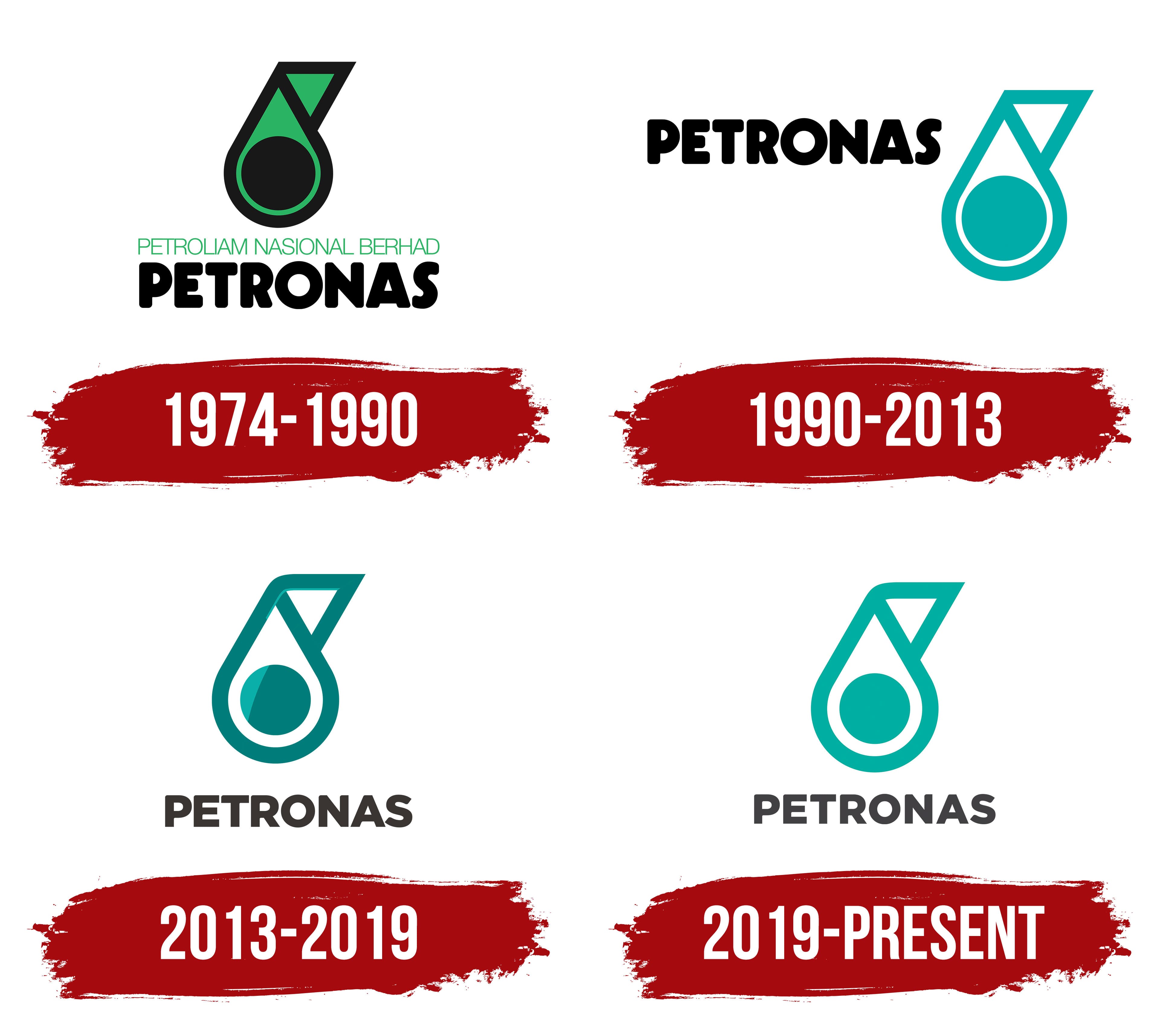
1974 – 1990
1990 – 2013
2013 – 2019
2019 – today
The Petronas logo is a sleek, memorable symbol that reflects the company’s operations. The central element is a drop with a triangular cutout at the top. This shape adds uniqueness, and the triangle evokes associations with an oil drilling rig, highlighting the company’s industry focus. The overall design appears dynamic, creating a sense of movement and energy.
The drop is turquoise, evoking images of water and energy. It is associated with modernity and environmental responsibility. Inside the drop is a bold round dot, symbolizing the source of resources or the energy center. White lines inside the figure add visual depth, making the composition harmonious.
The company name is positioned below the graphic element and set in dark gray grotesque type. The letterforms are smooth and soft, adding neatness to the text and making it readable. This style emphasizes reliability and stability while maintaining a modern appearance.
The color palette combines turquoise, white, and dark gray. Turquoise highlights innovation and progress, white adds purity and transparency, and gray underscores professionalism and reliability. The combination creates a sense of balance and emphasizes the company’s environmental approach.
The Petronas emblem exemplifies minimalist yet expressive design, effectively conveying the company’s core values. Simple shapes and harmonious colors demonstrate the company’s connection to natural resources and its focus on sustainable development.