


 Chennai Super Kings Logo PNG
The Chennai Super Kings logo conveys the team’s athletic character. The formal design symbolizes determination, team spirit, and success in the Indian Premier League.
Chennai Super Kings were founded in January 2008 as one of the eight original franchises in the Indian Premier League. India Cements owned the team, and its executive, N. Srinivasan, held a prominent position in Indian cricket administration. M. A. Chidambaram Stadium, known as Chepauk, became the home ground. The club’s name, roaring lion emblem, and yellow-gold colors were chosen through a public competition. At the same time, fans in yellow shirts later became closely associated with matches in Chennai.
Under captain Mahendra Singh Dhoni, Chennai reached the final in its debut 2008 season. The first championship came in 2010 after a victory over Mumbai Indians, followed by another title in 2011. Dhoni remained closely linked to the club’s rise. At the same time, the rivalry between the two franchises developed into one of the league’s main contests because both regularly challenged for the trophy.
In 2015, a betting scandal led to a two-year suspension covering the 2016 and 2017 seasons. The organization remained intact during the absence, and Chennai returned in 2018 with another championship. Further titles followed in 2021 and 2023, when the team defeated defending champion Gujarat Titans in the final.
By 2023, Chennai had reached ten finals and collected five championships. In 2024, Dhoni handed the captaincy to Ruturaj Gaikwad, ending a long period of leadership that had shaped most of the club’s history since its first season and opening a new stage for the franchise.
Meaning and History
What is Chennai Super Kings?
It is a cricket team from Chennai competing in the Indian Premier League (IPL). The club is one of the most successful in league history, having won multiple championships. Longtime captain Mahendra Singh Dhoni is among India’s greatest cricketers. The team enjoys immense regional popularity and plays home matches at M. A. Chidambaram Stadium.
2008 – 2015, 2018 – today
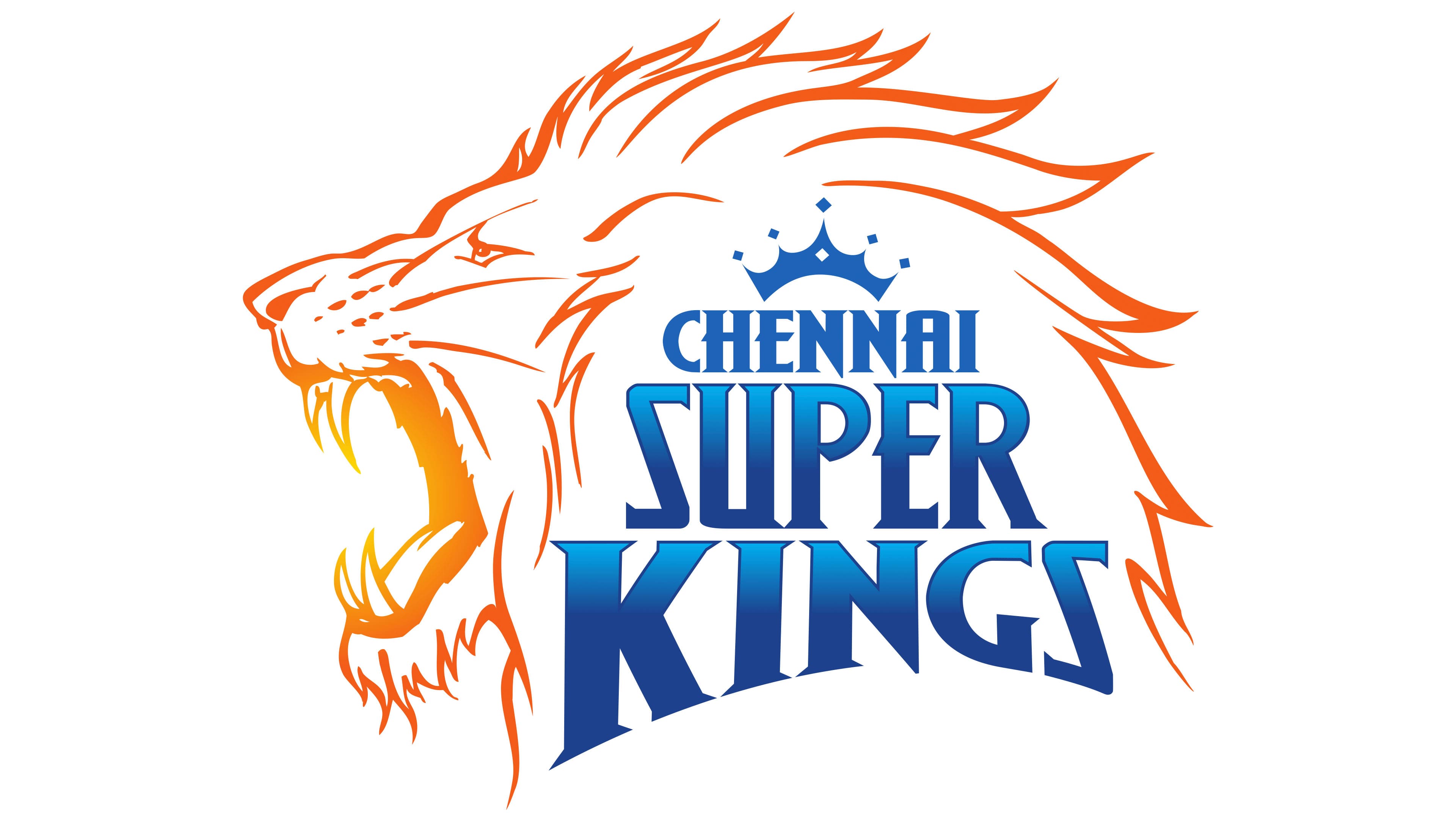
The Chennai Super Kings logo, designed in 2008 by Landor Associates for India Cements, is a vivid example of visual identity where symbolism, typography, and expressive color choices are seamlessly combined.
The lion’s profile is drawn with a thin outline, featuring an aggressive expression: the mouth is wide open, its sharp fangs clearly defined, and the mane flows downward in smooth yet pointed strokes, emphasizing the image’s dynamism and strength. Rendered in an orange gradient that transitions from rich amber to ochre-red, the graphic conveys the club’s energy, confidence, and determination. The lion symbolizes a “royal dynasty,” harmoniously tied to Chennai’s historical and cultural heritage.
The three-tier typographic composition occupies the central right side of the emblem. The words “CHENNAI SUPER KINGS” are set in a specially adapted serif font with sharp serifs, thickened vertical strokes, and geometric proportions. The typeface visually resembles commercial fonts such as Harmoniquetrade, Counte, or Wolf’s Bane. Still, it has been individually refined to ensure uniqueness and recognizability. The top tier (“CHENNAI”) is smaller, and the middle tier (“SUPER”) is the largest. It features a vivid gradient transition, with the bottom (“KINGS”) being slightly larger than the top, which balances the overall block and emphasizes the club’s name.
Rich blue gradient shades, ranging from light blue to indigo, convey professionalism, authority, and stability. Above the text is a minimalist crown graphic symbolizing the team’s leadership and status in the Indian Premier League (IPL).
The color and typographic design work in harmony with the team’s overall visual identity, particularly the bright yellow jerseys decorated with a lion print and camouflage elements, creating a cohesive and convincing brand language.
Despite a two-year absence from competition (2016–2017), the emblem has retained its relevance, continuing to project a stable, powerful identity and to stand as one of the most recognizable sports symbols in the IPL.
Font and Colors
The Chennai Super Kings’ typographic style is an individually developed decorative serif typeface with geometric proportions. All letters are uppercase, each with distinctive dynamism thanks to sharp serifs and lines that taper toward the top. Vertical strokes are thickened, creating a strong silhouette for the text. While visually similar to commercial fonts like Harmoniquetrade or Counte, the contours and curves have been deeply refined, giving the typeface a unique and recognizable character.
The club’s color palette is based on the contrast of two primary colors, orange and blue, both presented in gradient form. The orange gradient shifts from bright yellow around the lion’s mouth to a warmer, richer amber, emphasizing the emotional aspects of the design associated with energy, determination, and the team’s aggressive nature. Meanwhile, the text portion of the logo is in a deep blue gradient, transitioning smoothly from light blue at the top of the letters to dark navy at the bottom, visually conveying stability, professionalism, and the club’s authority.