


 Enel Logo PNG
The Enel logo highlights the company’s role as a provider of light and energy, permeating all aspects of life. It has become a recognizable element for millions whose homes are illuminated by the company’s energy.
Enel was created on December 6, 1962, when Italy nationalized its electricity sector and formed Ente Nazionale per l’Energia Elettrica. More than 1,200 private and municipal producers and distributors were merged into one state company. The aim was to unify a fragmented system with different standards, uneven coverage, and tariff gaps between the industrial North and the rural South.
For its first decades, Enel operated as a state monopoly controlling generation, transmission, and distribution. It built fuel-oil thermal plants, hydroelectric stations in the Alps and the Apennines, and nuclear plants, including those at Latina, Garigliano, and Trino Vercellese. After the 1986 Chornobyl disaster and Italy’s 1987 referendum, the country closed its nuclear plants, leaving Enel focused on thermal and hydro generation.
In 1992, Enel became a joint-stock company fully owned by the state. Real privatization followed in 1999, when the government sold about 32 percent of its shares in Italy’s largest IPO, raising around $16.5 billion. More than 3.5 million Italian citizens and global institutional investors bought shares. At the same time, the state kept control through the Ministry of Economy and Finance.
That same year, Italy liberalized its power market in line with European rules. Enel had to sell generators, including Elettrogen, Eurogen, and Interpower, while competitors such as EDF entered the market. Enel then expanded abroad. It acquired a stake in Spain’s Endesa in 2000. It completed the takeover in 2007-2009 with Acciona, despite competition from E.ON. Endesa added major assets in Spain and Latin America, including Chile, Argentina, Brazil, Peru, and Colombia. In 2013, Enel expanded further in Romania.
Meaning and History
What is Enel?
This is one of the largest global entities involved in the production and distribution of electricity. It builds power distribution networks and manages various energy assets, including thermal, hydro, and nuclear power plants, across 31 countries on five continents. The organization follows a comprehensive approach to the energy sector, developing smart grids and digital solutions for consumers. It is known for innovative pricing plans, energy management tools, and modern customer service methods. The company is also actively expanding electric vehicle infrastructure through a dedicated division.
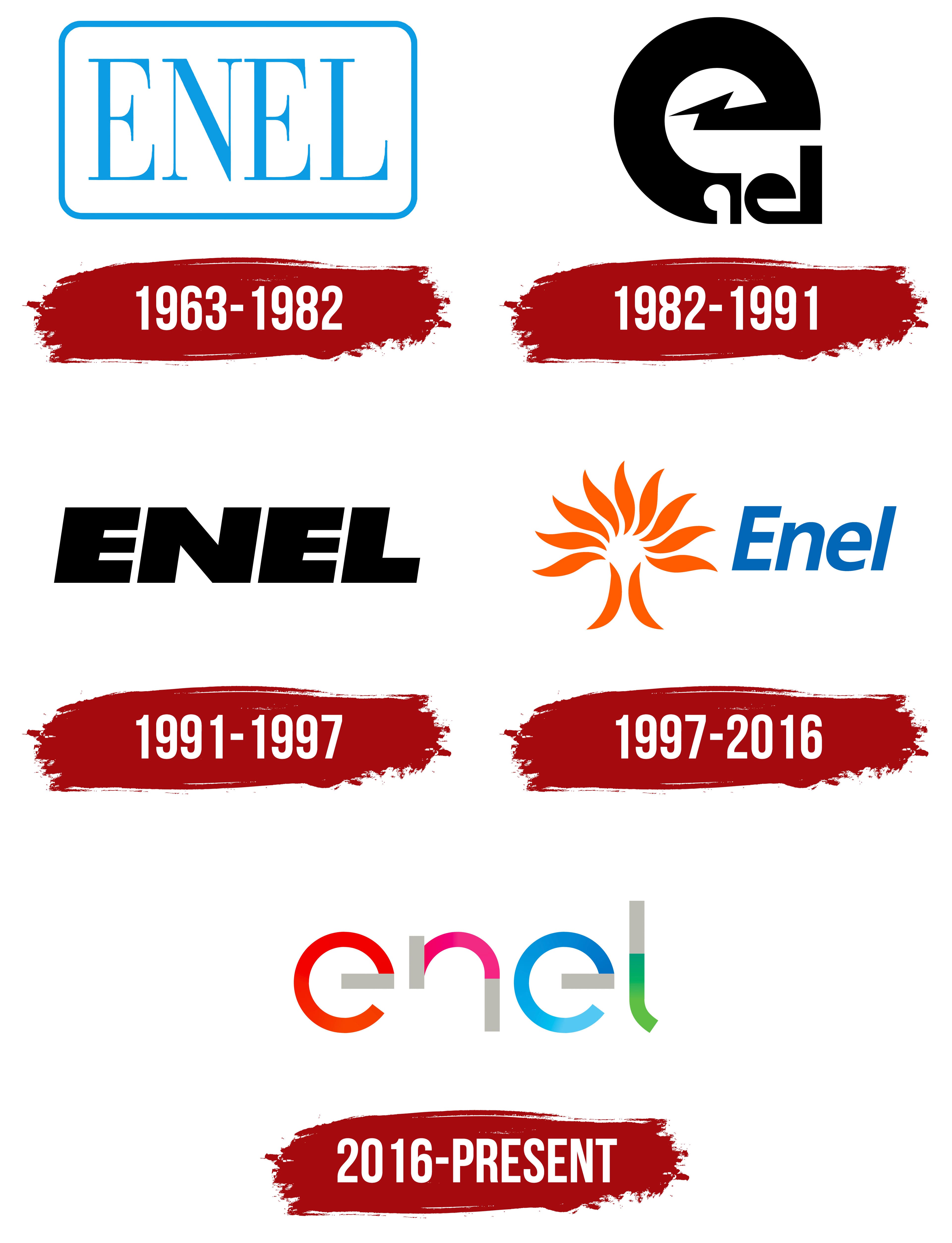
1963 – 1982
1982 – 1991
1991 – 1997
1997 – 2016
2016 – today
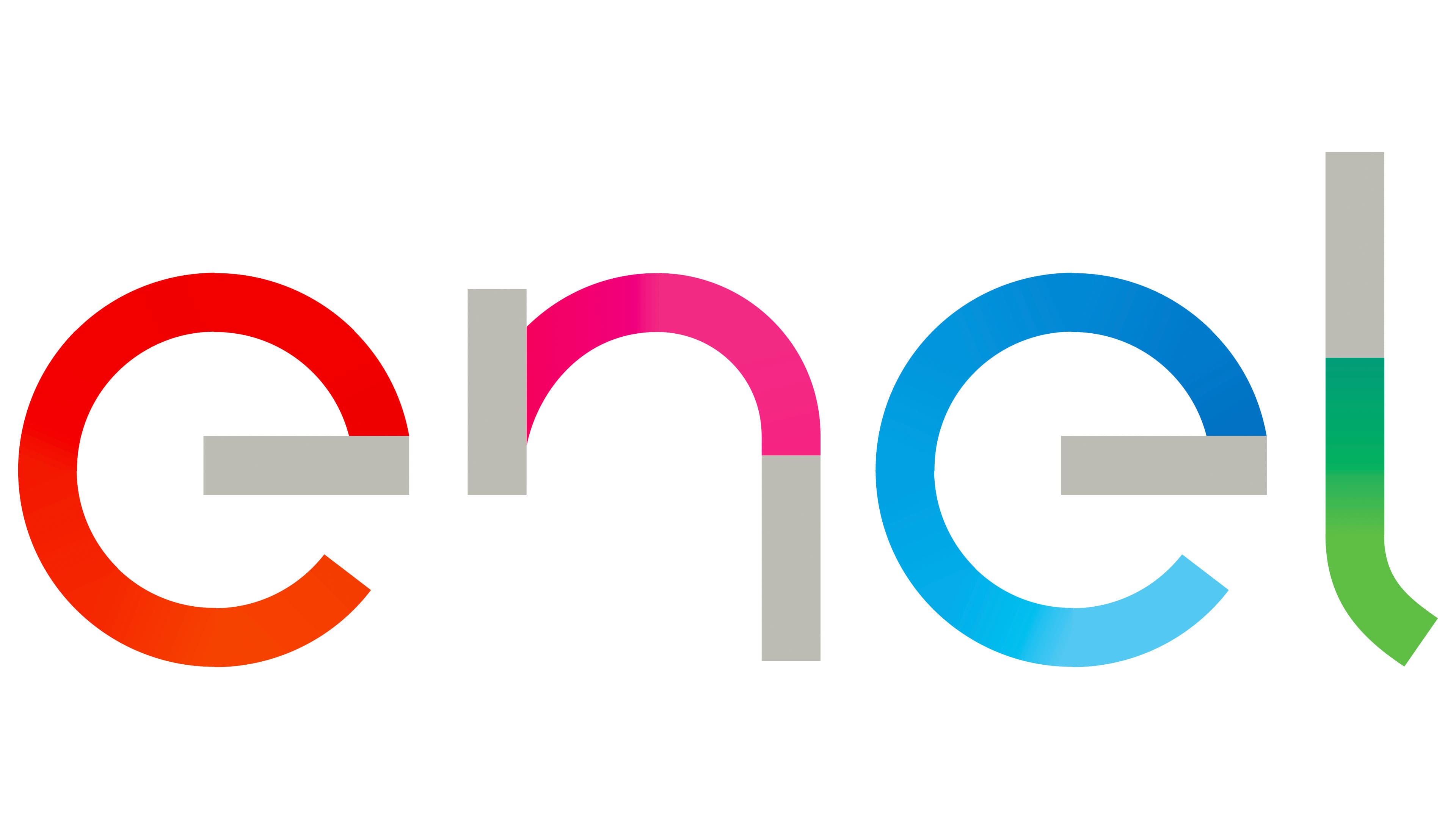
The Enel logo’s vibrant, distinctive style reflects the Italian company’s connection to energy, nature, and modern technology. Its distinctive feature is a rich color palette: red, orange, pink, blue, and green. These colors symbolize the diversity of energy sources, vitality, and the company’s openness to new ideas. Each color carries its association, evoking images of the sun, water, greenery, and technological progress.
The word “enel” is written in lowercase letters using a font with clear geometry and straight lines, emphasizing modernity and simplicity. An interesting design element is the incompleteness of some letters: the “n” is missing its left vertical line, and the “l” is missing its lower curve. These details make the font unique and memorable.
Each letter features its color accent, and the smooth transitions between colors create a sense of motion and energy, reflecting the core mission of a company operating in the energy sector. The logo seems to come alive through its dynamic and bold color choices.
Gray connecting elements between parts of the letters add structure, emphasizing the composition’s completeness. They balance vibrant colors with strict geometric forms, creating a cohesive, harmonious design.
The Enel emblem reflects the character of a company actively evolving in the energy industry. It highlights its commitment to innovation, connection to nature, and use of modern technologies. The bold color palette and light, dynamic style symbolize diversity, sustainability, and forward momentum.