


 Galp Logo PNG
The Galp logo conveys the company’s drive for energy and development, which is closely tied to resources. Its shape evokes a sense of movement and modernization while remaining concise. The emblem demonstrates the brand’s confidence in its goals and ambitions on the global stage.
Galp’s history goes back to 1954, when Portugal created Petrogal under Salazar’s protectionist economic system. The state company received monopoly rights to refine and distribute oil products. Portugal had no domestic oil, but needed refining capacity for a motorized economy, the army, and the navy. Petrogal’s large refinery at Sines became one of the main plants on the Iberian Peninsula.
After the Carnation Revolution in April 1974, Petrogal came under full state control as Portugal nationalized major companies. During the 1970s, the country also built its natural-gas system. Gás de Portugal handled gas distribution for homes and industry. At the same time, Transgás developed the pipeline network that brings Algerian gas into Portugal via Spain.
In the late 1980s and 1990s, Portugal joined the European Community and began privatizing state assets. Petrogal was partially privatized, and Spain’s Repsol became a major investor, viewing Portugal as part of a broader Iberian market. In 1999, the government merged Petrogal, Gás de Portugal, and Transgás into Galp Energia, using the familiar Galp retail station brand as the name of the new holding. Repsol held about 30 percent.
In the 2000s, Galp focused on Brazil and Angola. In Angola, it operated through Petrogal-linked structures in partnership with Sonangol. In 2007, Galp joined Petrobras and BG Group in confirming the Lula field in Brazil’s Santos Basin, one of the decade’s largest oil discoveries. In 2006, Galp Energia was listed on the Lisbon Stock Exchange. During Portugal’s 2011-2012 debt crisis, part of the state’s holding in Galp was sold.
Meaning and History
What is Galp?
This is the largest player in the energy market on the Iberian Peninsula, operating a network of modern gas stations in Portugal and Spain. The organization covers the entire oil and gas value chain from oil exploration and production, primarily in Brazil and Africa, to refining and retail sales of petroleum products. A distinctive feature of its approach is the transformation of gas stations into multifunctional service centers with stores, cafes, and car washes. In addition to managing two major refineries in Portugal, the organization actively expands its gas station network and produces a range of petroleum products for the European market.
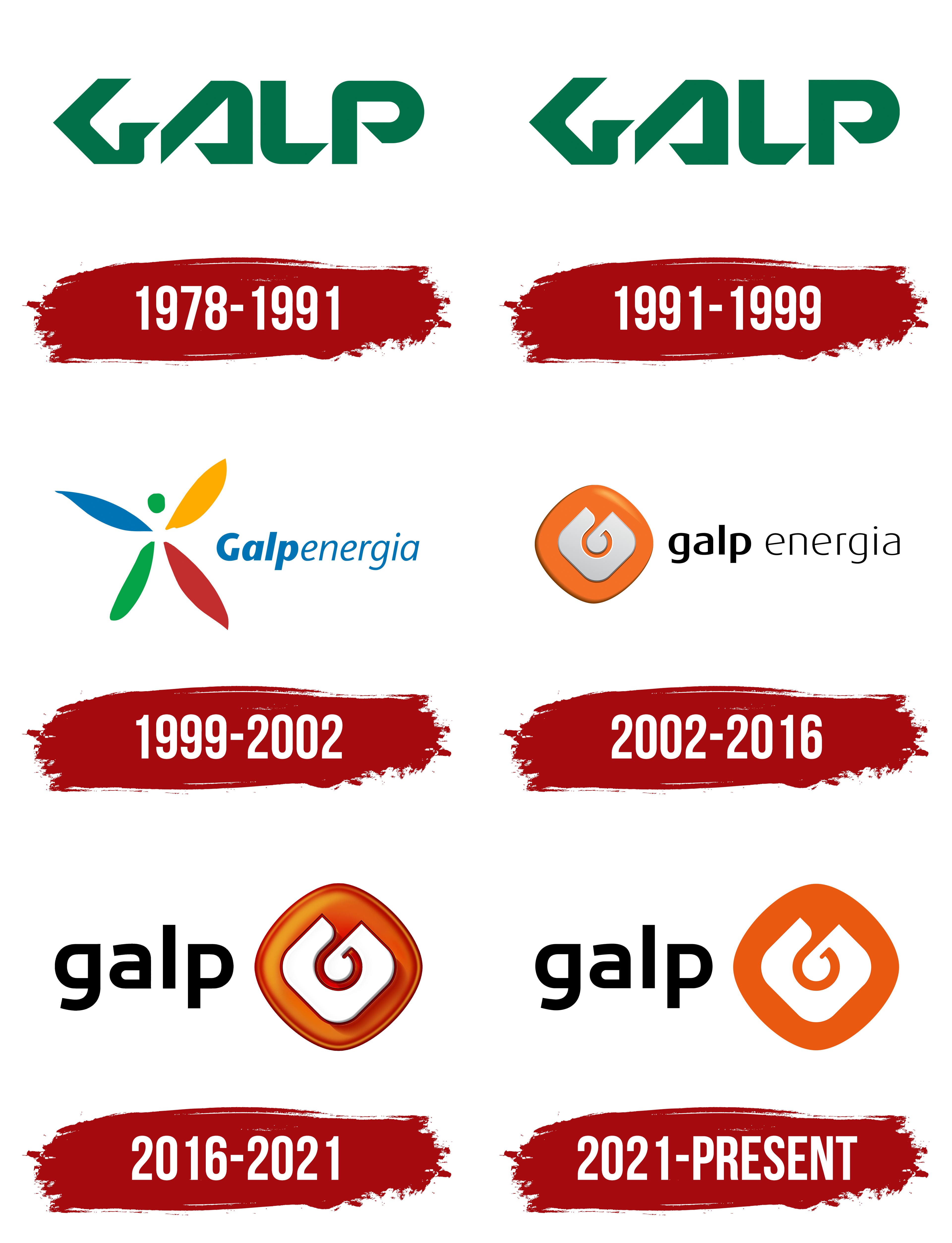
1978 – 1991
1991 – 1999

1999 – 2002
2002 – 2016
2016 – 2021

2021 – today
Despite its simplicity, the logo of the Portuguese company Galp carries profound meaning, reflecting its rich history and diverse activities. The central element of the design is an orange rhombus with rounded corners. This shape appears dynamic and stable, symbolizing the company’s flexibility and reliability in the energy resources sector.
Inside the orange rhombus is a white symbol resembling a stylized flame or spiral. The flame refers to the company’s origins in gas street lamps, while its shape evokes components used in oil-extraction equipment. This symbol connects the past and present, highlighting the company’s evolution from a gas supplier to a leading player in the energy industry.
The name “galp” is positioned to the left of the symbol and written in lowercase letters. The font is clean, with smooth lines that convey simplicity and accessibility. The black text color emphasizes the brand’s seriousness and reliability, while the tight letter spacing makes the logo visually compact and modern.
The orange color of the rhombus is associated with energy, warmth, and motion, while the white interior adds contrast, drawing attention to purity and clarity. Together, these elements create a harmonious image that conveys the company’s core values: innovation, progress, and a commitment to providing energy to customers worldwide.