


 Leica Logo PNG
The Leica logo is like a camera flash, capturing the company’s name. The emblem connects the brand with its famous products. The sign encourages pressing the button to take a new frame for the collection of happy memories.
Leica’s history began in 1849, when mathematician Carl Kellner founded the Optical Institute in Wetzlar to make microscopes and lenses. Ernst Leitz joined the business in 1865, took full control in 1869, and renamed it Ernst Leitz Optische Werke. The company became a major European supplier of microscopes for scientific institutions.
In 1911, Oskar Barnack joined the company as a precision mechanic and later became head of development. Because asthma made heavy cameras difficult for him to use, he designed a smaller camera with high optical precision. In 1913 and 1914, he created the Ur-Leica, using 35 mm cinema film horizontally to produce the 24×36 mm frame. World War I delayed the project, but Ernst Leitz II approved production in 1924. In 1925, Leica, short for Leitz Camera, appeared at the Leipzig Spring Fair.
After Hitler became the chancellor in 1933, Ernst Leitz II helped Jewish employees leave Germany through foreign company offices in France, Britain, Hong Kong, and the United States. Historians later called the effort the “Leica Freedom Train.” It continued until September 1, 1939, when Germany closed its borders.
In 1954, the Leica M3 launched the M system with a quiet shutter and a refined rangefinder. By 1966, Leica had sold one million cameras, while Nikon was growing in the professional 35 mm SLR market. Hermès owned 36 percent of Leica from 2001 to 2007, helping push the brand toward luxury positioning. Under Andreas Kaufmann, Leica restructured, then released the digital M8 in 2006 and the full-frame digital M9 in 2009. In 2011, revenue reached €248.8 million, with operating profit rising to €41.6 million.
Meaning and History
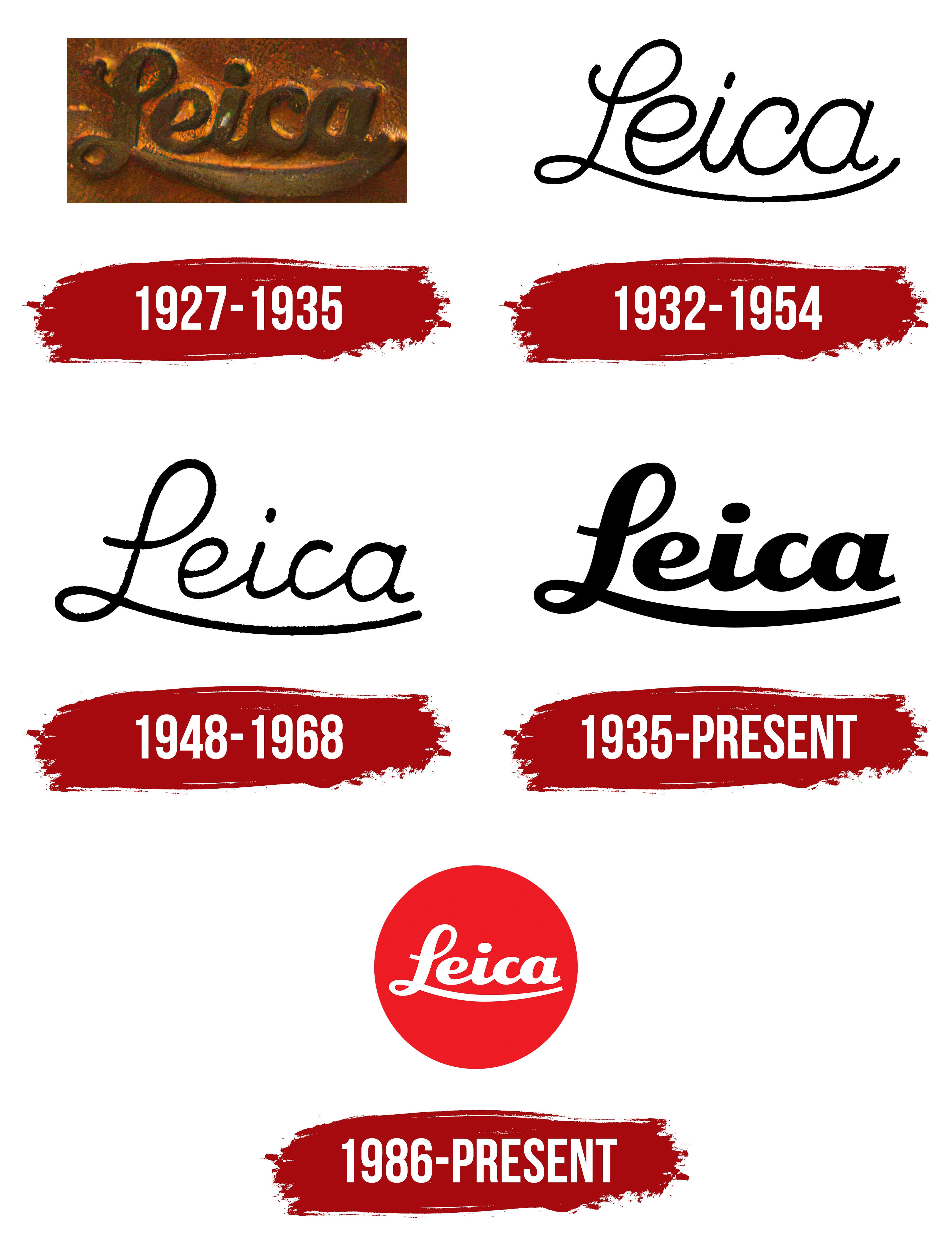
Throughout its century-long history, Leica has demonstrated remarkable consistency in its logo choices. The emphasis is on the inscription, which resembles a camera. Its font has not changed throughout the brand’s history. The clever use of film loops has made the emblem memorable. In later designs, the central element was placed against various backgrounds, with changes in letter thickness and color reflecting different periods in the company’s life.
What is Leica?
Leica is a historic German company that produces professional premium-segment cameras and accessories for photography. Among its famous product lines are the M, Q, and SL cameras, and the Summicron, APO-Telyt, and Noctilux lenses. The company also manufactures scopes, binoculars, and microscopes. The company’s revenue amounts to 408 million euros.
1927 – 1935
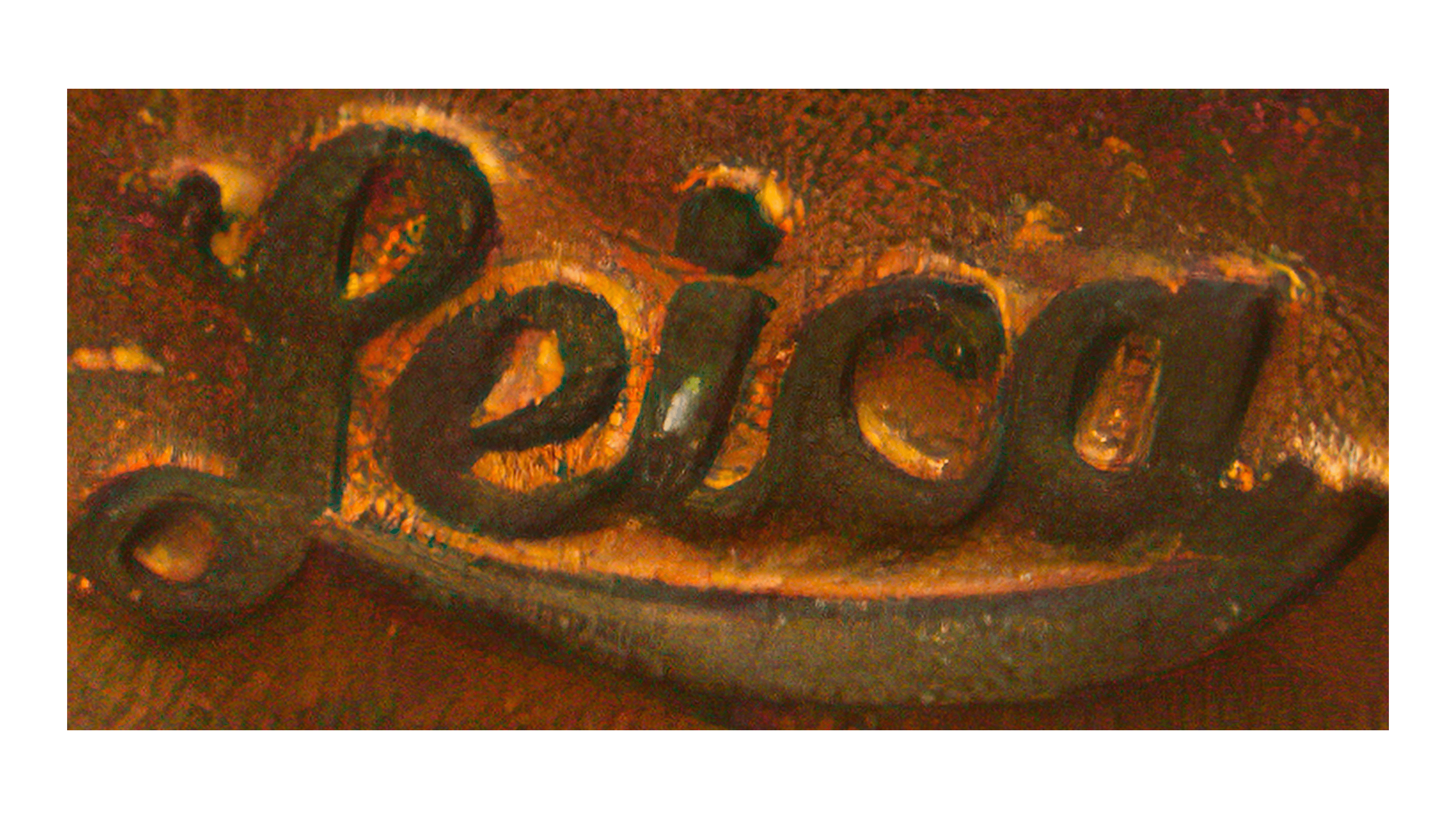
In 1927, the manufacturer was renamed from Leitz (after founder Ernst Leitz) to Leica (a combination of the first syllables of the surname Leitz and the word “Camera”), which led to a change in the emblem.
The new logo featured the inscription Leica in cursive. The first letter was transformed: the lower glyph was elongated, widened, and wrapped around the entire word. This technique depicts unrolling film. The sequential connection of the letters represents the frames shot one after another, symbolizing negatives collected on a single strip.
1932 – 1954

1948 – 1968

1935 – today

1986 – today
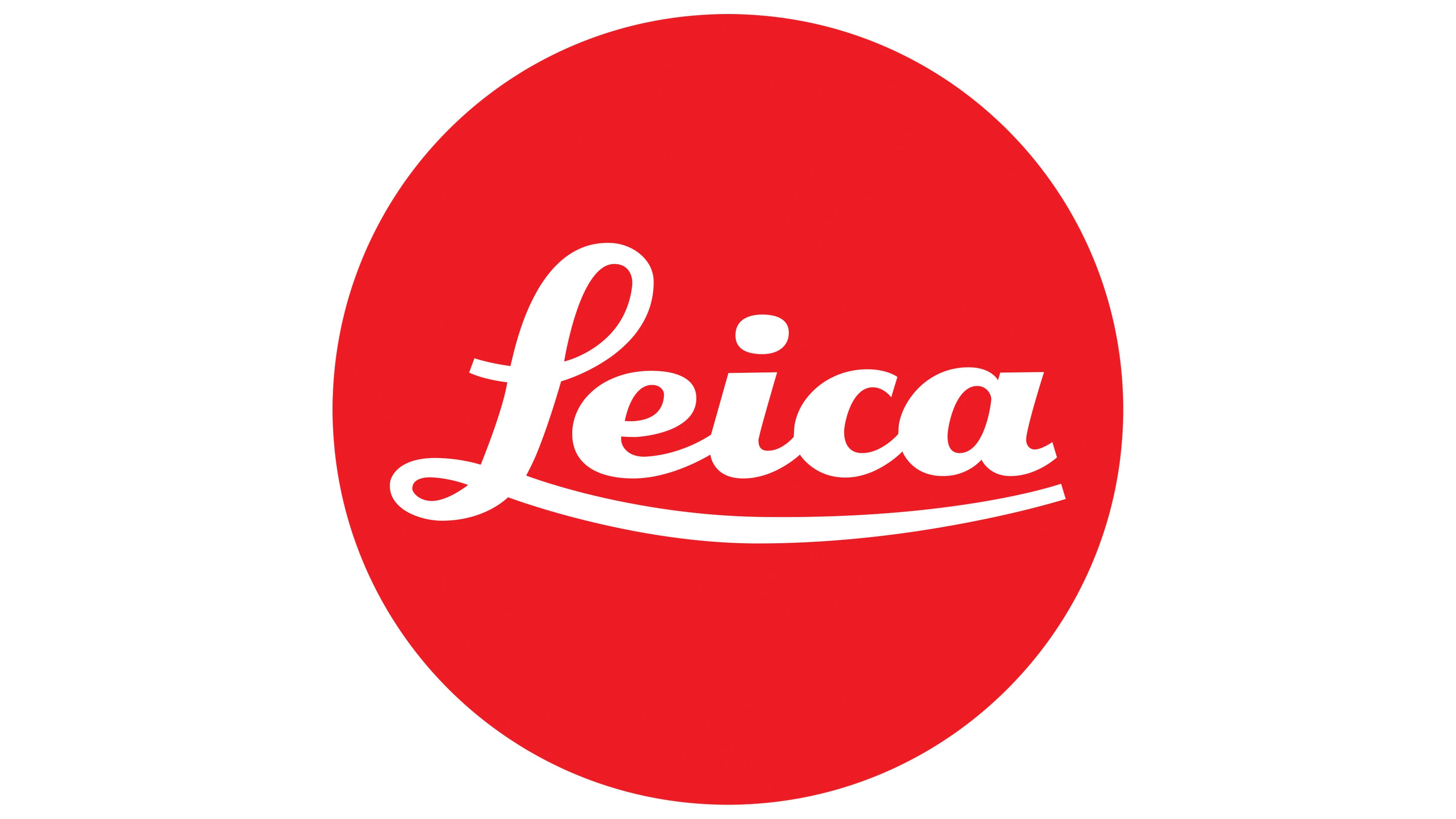
In 1986, a modern factory was built, enabling the production of more technologically advanced products. This led to the introduction of the Leica M6 camera, which was very popular among photographers. A new logo marked the change.
The updated emblem consists of a red circle with the name Leica inscribed inside. The background’s appearance is a new concept in the brand’s identity. The addition of color to the logo is also used for the first time.
This move reveals the brand’s multifaceted nature, celebrating progress and transitioning to modern equipment and technology. It draws an analogy with the leap from black-and-white to color photography.
The circle represents the camera lens through which the company views the world. The shape symbolizes harmony and completeness, indicating a full range of photography products.
The circular shape of the background also symbolizes camera and photography equipment, sights, and other optical products, most of which are similarly shaped.
The red hue conveys a sense of speed and the desire to capture an important moment. The brand’s products offer numerous opportunities to see beautiful places and record significant events.
The white name indicates novelty. The brand’s camera focus is constantly evolving and improving, offering modern products. This is one aspect of its philosophy: unwavering quality and cutting-edge technology.
Font and Colors
The combination of red and white embodies boldness, leadership, and the development of new solutions and products:
- Red: love for one’s work, the ability to capture beauty, and the inspiration that creativity brings with the brand’s products.
- White, transparent lenses, a clear, unclouded view, and the opportunity to see the world anew.
The cursive font with ornaments on the first letter evokes the brand’s history and points to the beginning of the 20th century, when the first Ur-Leica appeared. The elegant underlining of the word hints at the device’s compactness and elongated shape. The line resembles film, as this model established the standard for using 35-millimeter film in photography. The upper loop of the L resembles a flash mounted on the device.