


 Brother Logo PNG
The Brother logo is characterized by its smooth and streamlined design. It echoes the key elements of the manufactured equipment, repeating its smooth contours and rounded corners. The emblem speaks to the desire to please customers and to make working with the company’s products as easy as possible.
Brother began in April 1908 in Nagoya, when Kanekichi Yasui opened a small sewing machine repair shop. Most machines used in Japan were imported from brands such as Singer and Gritzner, and spare parts were difficult to obtain. His son Masayoshi learned the trade as a teenager. He took over in 1923, later working with his younger brother Jitsuichi to move from repair into domestic production.
In 1928, the brothers opened Yasui Brothers and released their first product, a chain-stitch sewing machine for straw-hat production. They then worked on a household lockstitch machine, a harder technical task because Japan lacked industrial production of bobbin hooks. In 1932, Jitsuichi developed equipment for casting the hooks, and the Type 50 Model 70 became Japan’s first household lockstitch sewing machine.
In 1934, the company became Nippon Sewing Machine Manufacturing Co. Industrial sewing machines followed in 1936. In 1947, after World War II, the company exported 200 HA-1 household machines to Shanghai. Brother International Corporation was founded in the United States in 1954, and a European sales base opened in Dublin in 1957. In 1961, Brother released its first portable typewriter, and in 1962, it became Brother Industries, Ltd.
In 1968, Brother bought Britain’s Jones Sewing Machine Co. In 1971, working with Centronics Data Computer Corporation, it created a high-speed dot-matrix printer. The K-2000 Japanese-character printer followed in 1974. After US anti-dumping duties on typewriters in 1979, Brother diversified into office equipment, launching a division in 1981. In 1988, it introduced the P-touch label printer, and in 2015, it acquired Domino Printing Sciences.
Meaning and History
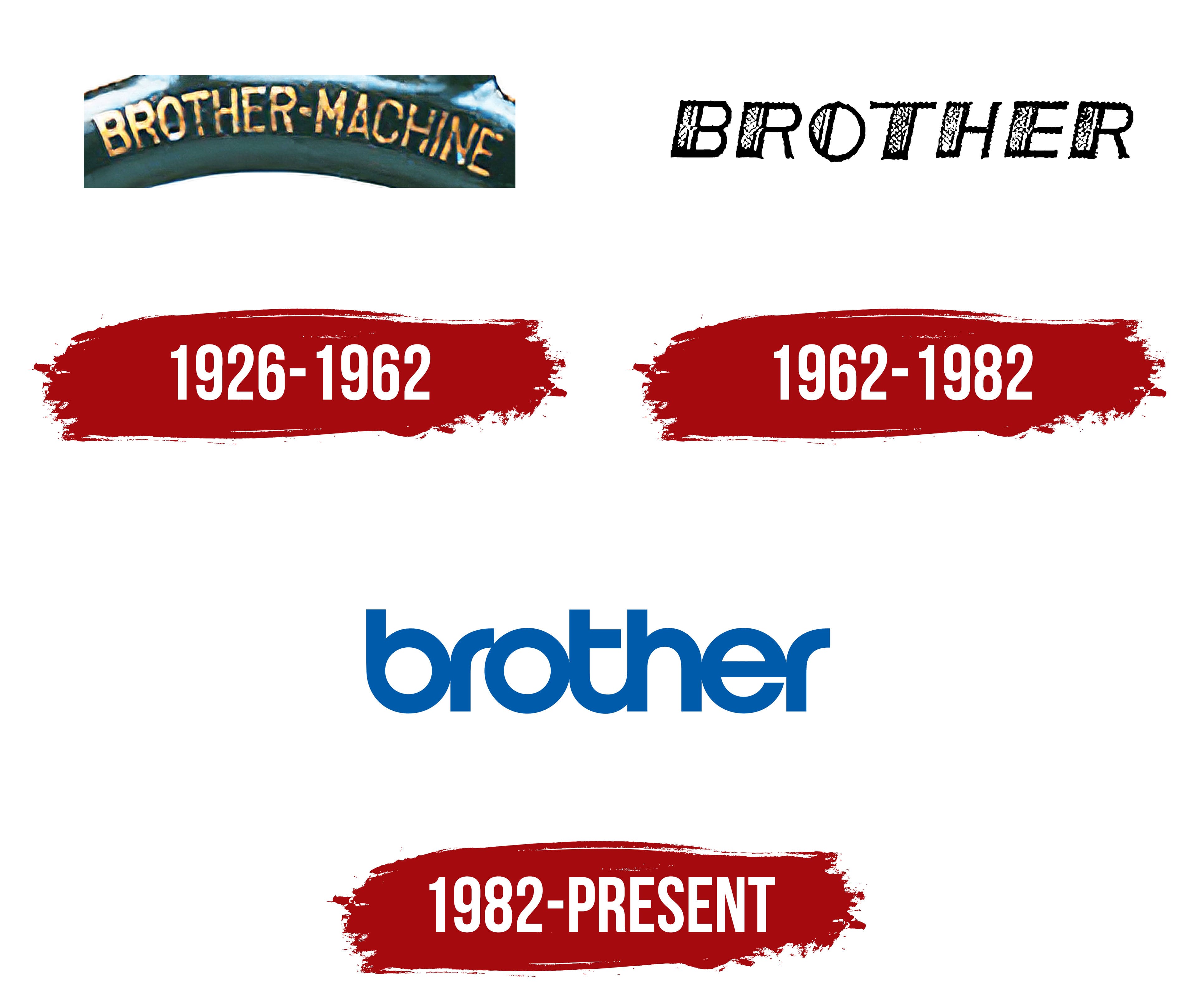
The company has come a long way in its search for a logo that best reflects its essence. Since the corporation was actively expanding, adding new areas of work and countries, the emblems varied. The only common feature is the choice of a wordmark without drawings or graphic elements. Each emblem looked more modern and stylish. The lack of radical changes in identity in the last 30 years suggests that the perfect match has been found.
What is Brother?
A Japanese company specializing in the production of office and industrial electronics. Brother owns 40 branches worldwide and seven factories, employing over 41,000 people. Particularly known for its laser printers.
1926 – 1962
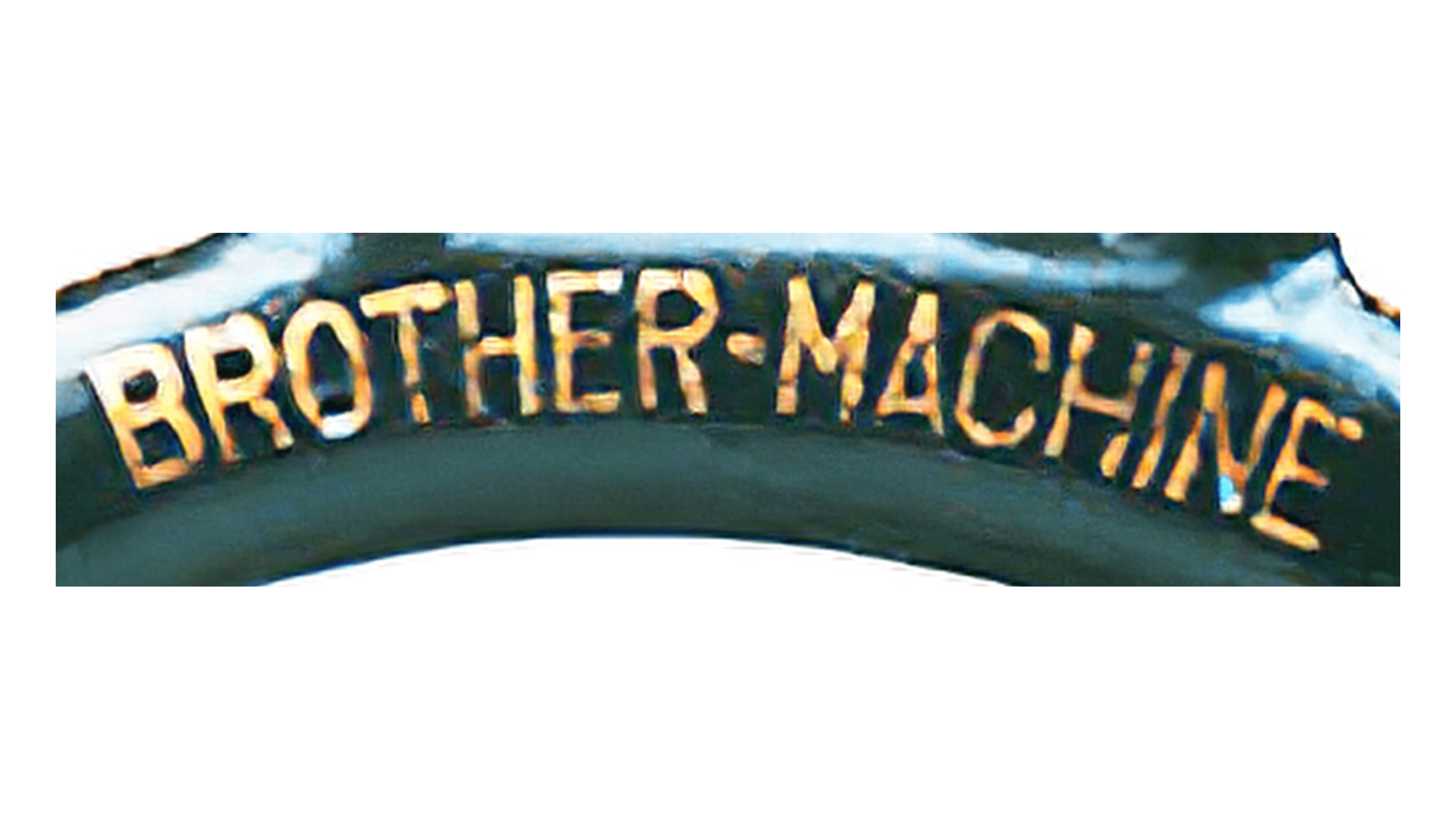
The first logo appeared on a sewing machine in 1926, when the founder’s sons inherited the business. They gave the company the long name Yasui Brothers’ Sewing Machine Company, which was abbreviated in the trademark.
The emblem consisted of the inscription “Brother-Machine”. This name was chosen because two brothers ran the business. The main focus of work since the workshop’s establishment in 1908 has been repairing sewing machines. Yasui produced his first machine in the early 1930s. However, as if anticipating the future, the logo omitted the words “repair” or “service.” Therefore, the mark was ideal for the first devices.
The letters in the logo are gold and capitalized. Such a technique emphasizes the quality of craftsmen’s work, the warranty, and reliability. It indicates the owners’ high ambitions. For the Japanese, the color gold symbolizes the Sun and divine power. Using it, the brothers sought to attract the favor of heaven and prosperity.
1962 – 1982
1982 – today
The new emblem came about after Brother introduced the first battery-powered, thermal electronic printers. The updated logo was meant to reflect innovation and development.
The logo is in light blue letters with a smooth, rounded font. The writing style indicates the convenience and comfort of using the corporation’s equipment.
The absence of lowercase letters in the logo aligns with the company’s slogan, which promises to be on the customer’s side. The slogan emphasizes Brother’s desire to be useful and to serve customers’ interests. Such goals require shifting the focus from self-interest to users’ needs. Hence, the capital letters in the logo.
Another reason is that Brother often works under OEM contracts and sells its products to other companies for sale under their brands.
Font and Colors
The emblem is monochromatic. In Japanese culture, its sky-blue color symbolizes protection from all evil and promises prosperity, longevity, and harmony.
The hue emphasizes the corporation’s historical roots. In ancient times, blue was the color of commoners, to which the founders of the company belonged.
Blue is the color of the sky, dreams, and hope. The corporation has reached incredible heights, and its owners continue to dream, anticipating future achievements.
The font used in And Then It Ends. All letters are devoid of sharp corners. The elements with rounded lettering are reminiscent of the rolls that underlie the operation of printers and scanners. They are also reminiscent of fax paper rolls, sewing machine wheels, and bobbins.