


 PTT Logo PNG
The PTT logo expresses harmony and interaction. Its minimalist and confident appearance reflects a path of constant growth and stability. Each element reveals the complex yet essential work of energy infrastructure. The symbol serves as a guide, uniting efforts and emphasizing the importance of resources for life and progress.
PTT Public Company Limited, often referred to as PTT, is a Thai multinational oil and gas company headquartered in Bangkok. Its history began in 1978, after the merger of the Thai Petroleum Authority and the Thai Petroleum Company. The name PTT comes from “Phathana Thai,” which translates to “Development of Thailand.” It reflects the company’s link with Thailand’s energy sector and economic growth.
In its early years, PTT worked on oil and gas exploration in remote areas of Thailand. During the 1980s, the company expanded into other Southeast Asian countries, including Indonesia, Malaysia, and Vietnam. That period moved PTT beyond the domestic market and gave it a regional presence in oil and gas operations.
In the 1990s, PTT broadened its business into oil refining and marketing, petrochemicals, and liquefied natural gas (LNG). In the early 2000s, the company began investing in renewable energy research, including solar and wind power. Its main operations, however, remained connected with exploration, production, refining, marketing, petrochemicals, and gas supply.
In the 2010s, PTT became one of the key companies in the global LNG market. According to the provided history, it now operates in 20 countries and employs more than 50,000 people. In the 2020s, PTT continued to expand its operations and invest in advanced technologies, while maintaining its focus on oil, gas, LNG, petrochemicals, and renewable energy.
Meaning and History
What is PTT?
This is Thailand’s largest energy enterprise, which began as a state-owned oil and gas monopoly and has since grown into a key player in Southeast Asia’s energy sector. The organization operates the country’s largest network of gas stations and an extensive pipeline network spanning Thailand. These stations are known for their modern design and offer a range of services, including a popular café. The company is expanding its petrochemical production through its subsidiaries and controls a significant portion of the country’s oil refining capacity. Internationally, it participates in hydrocarbon exploration and production projects, covering Southeast Asia and Africa.
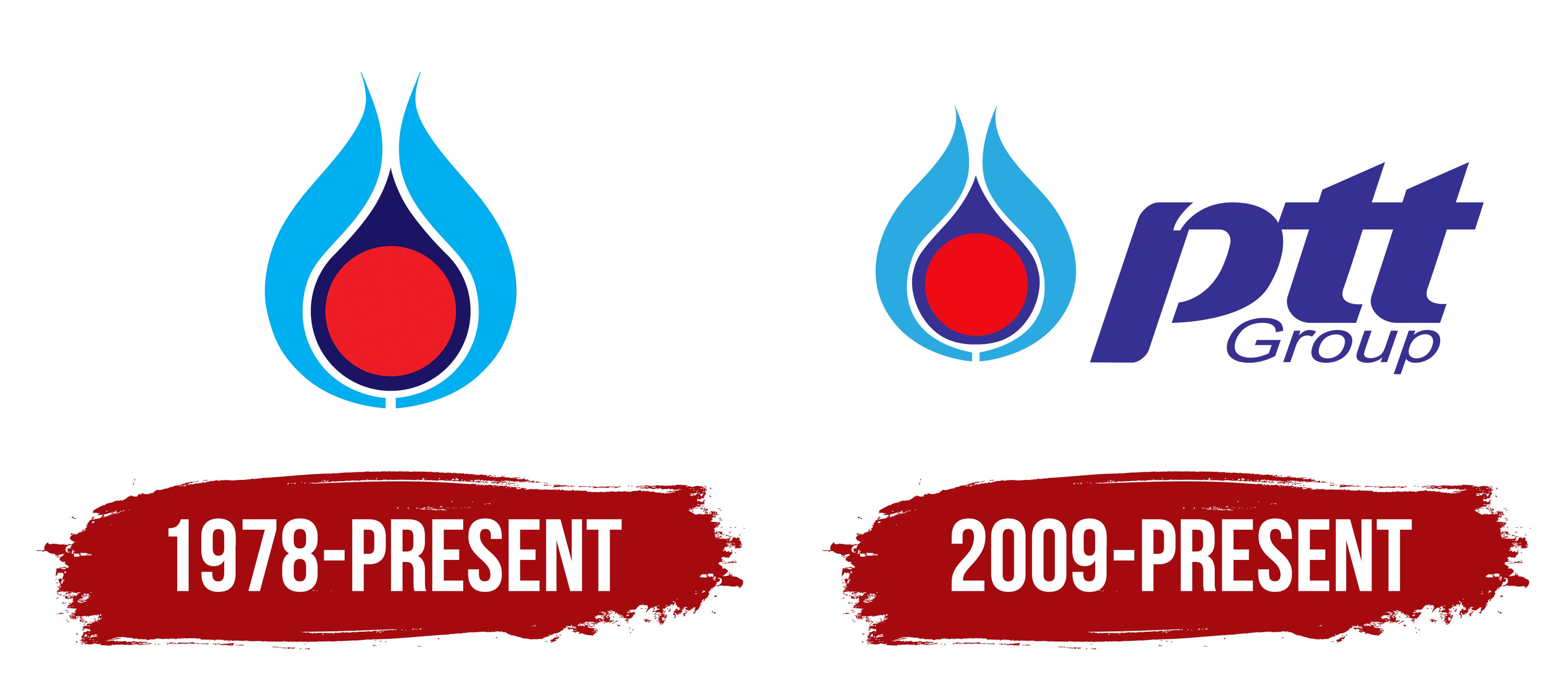
1978 – today
2009 – today
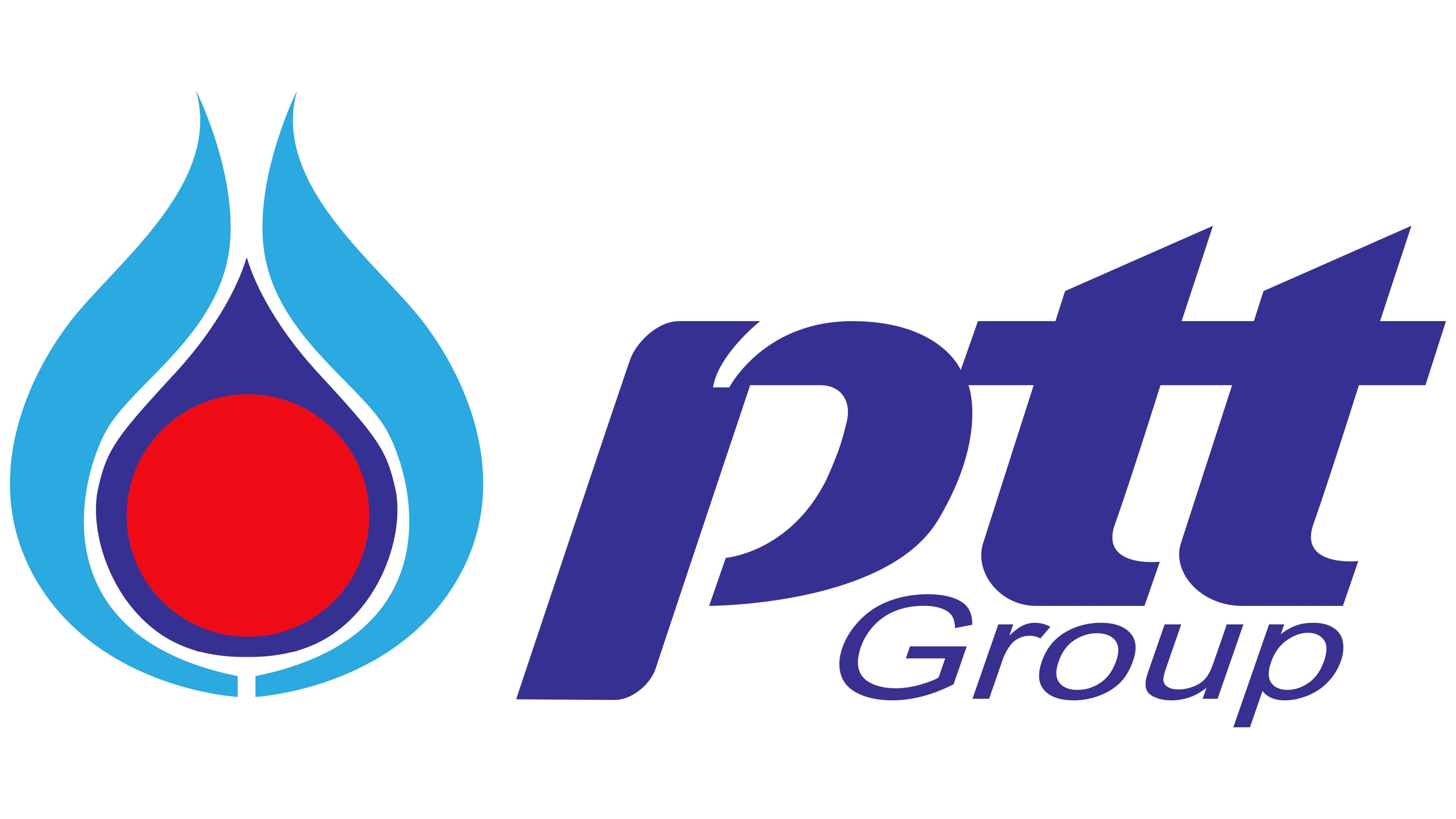
The PTT Group logo combines national symbols and modern style, reflecting the Thai company’s connection to the energy sector. The central element is a drop, symbolizing fuel and water, emphasizing the company’s commitment to preserving natural resources. Its shape resembles a lotus flower, associated with purity and harmony in Thailand.
Inside the drop is a bright red circle on a dark blue background. This element symbolizes energy and power. The red color draws attention to the company’s key role in fuel extraction and distribution, while the dark blue background conveys reliability and professionalism.
On either side of the drop are two light blue petals, pointed at the top and expanded in the middle. They create a sense of movement and progress. The light blue color symbolizes nature, purity, and the pursuit of sustainable development. These elements add dynamic movement and visual harmony to the logo.
To the right of the graphic element is the company name. On the top line, the abbreviation “PTT” is written in large, italicized dark blue letters. The slant of the letters emphasizes forward movement and development. On the bottom line, the word “Group” is written in a smaller size, in the same style. This element adds balance and completeness to the composition.
The color palette combines red, light blue, and dark blue, creating a harmonious combination. Red conveys energy and determination, light blue symbolizes natural purity, and dark blue expresses stability and professionalism. The palette makes the logo bright and unique.
The PTT Group emblem blends traditional values and modern technology, emphasizing its connection to national culture and a focus on sustainable development in the energy sector.