


< SanDisk Logo PNG
The SanDisk logo is minimalist, embodying trust and reliability in data storage. It has become a distinctive feature of reliable devices. Every product with this symbol promises to protect your information and make it easy to use.
SanDisk, now owned by Western Digital, is a US-based company known for producing flash memory products. Sanjay Mehrotra founded the company in 1988 and established its headquarters in Milpitas, California.
SanDisk has established a reputation in consumer electronics, primarily through its pioneering work in NAND flash memory cards and USB drives. The company offers a wide range of solid-state storage devices, including pen drives, SSDs, and memory cards.
The brand is known for innovations such as the first 1TB SD card and high-capacity microSD cards. The company underwent a major change in 2016 when Western Digital, a prominent hard drive manufacturer, acquired it for $19 billion.
After the acquisition, SanDisk continued to operate as a subsidiary brand under Western Digital, focusing on flash memory solutions. After the acquisition, some of the company’s key brands include WD Blue SSDs, G-Drive, and SanDisk.
The NAND flash memory market, where SanDisk competes, is dominated by major players such as Samsung, Micron, and SK Hynix. Before Western Digital acquired it, SanDisk reported $3.93 billion in revenue in 2015.
Meaning and History
What is SanDisk?
This American corporation has become a symbol of reliable digital data storage, offering everything from simple USB drives to high-end memory cards for cameras and mobile devices. As part of Western Digital, it developed the first flash-based storage system with no moving parts, revolutionizing the portable storage industry. The company’s products cover a wide range of needs, from basic smartphone microSD cards to high-speed professional cards for 4K video and SSDs for PCs. The products feature unique color-coding, letting users quickly identify each device’s purpose, whether it’s a black card for extreme performance or a red one for video.
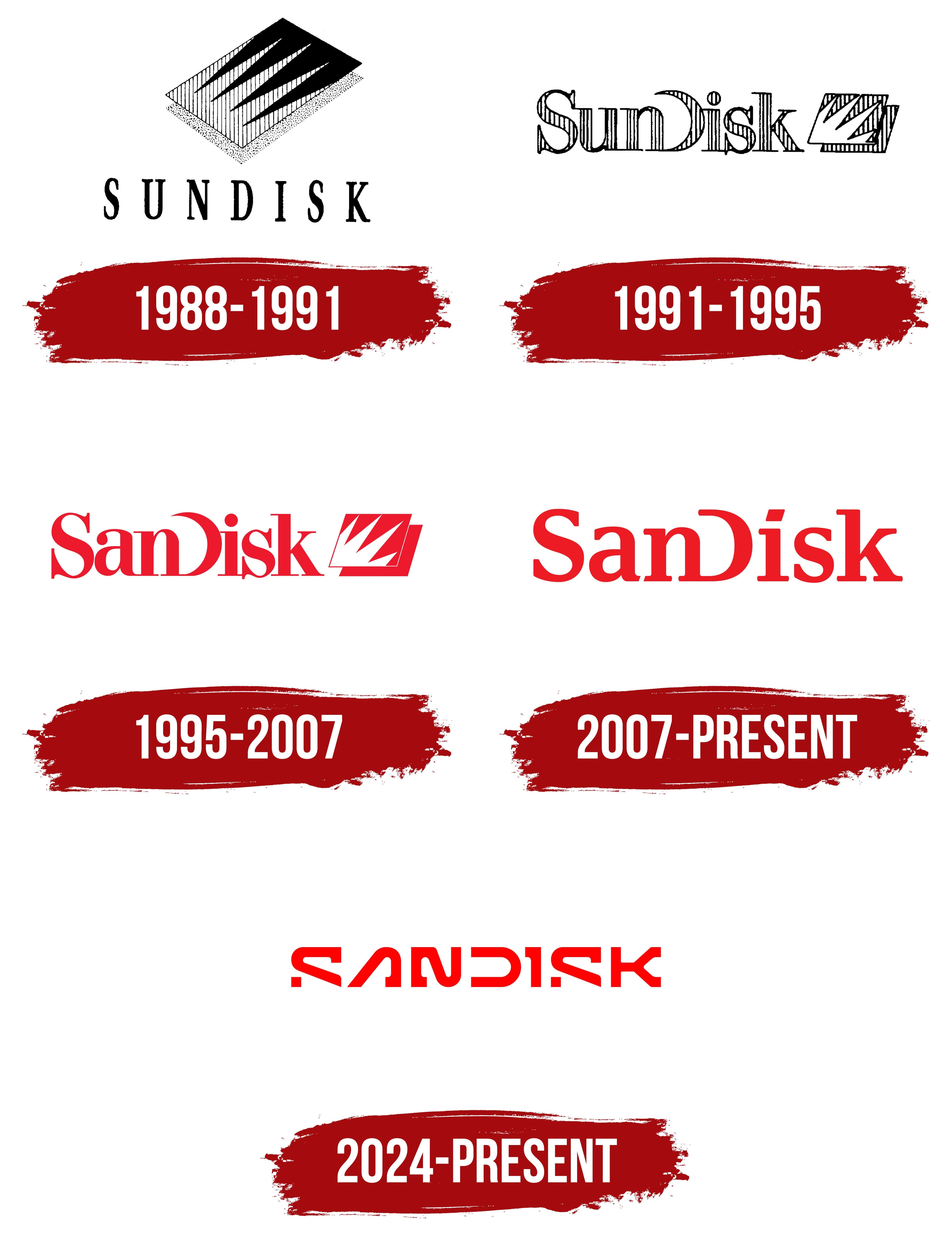
1988 – 1991

1991 – 1995

1995 – 2007

2007 – today
2024 – today
SanDisk Professional
2004 – 2021

2021 – today
