


 Singer Logo PNG
The Singer Corporation logo symbolizes the automation of routine processes, such as sewing, which, thanks to Singer, have become as simple as pressing a single button. The logo features needles and precise stitches on fabric.
Singer Corporation began in 1851, when Isaac Merritt Singer reworked a Lerow and Blodgett sewing machine in Boston. He replaced the horizontal shuttle with a vertical needle moving in a straight line. He added an overhanging arm with a needle holder, allowing curved stitching without stopping. On August 12, 1851, Singer received patent No. 8294 and founded I. M. Singer & Co. with lawyer Edward Clark.
Singer’s machine used Elias Howe’s eye-pointed lockstitch, leading to a patent lawsuit that Howe won in 1854. The case did not stop production, and Clark became a full partner during the negotiations. He later created an installment payment plan, allowing buyers to pay monthly rather than $125 upfront. This early consumer-credit model widened the market and helped Singer survive the Panic of 1857. By 1860, it was the world’s largest sewing-machine maker.
In 1863, the company became Singer Manufacturing Company. Expansion abroad followed in 1867 with a factory in Glasgow, Scotland. In 1882, Singer began building the Kilbowie plant near Clydebank, with long production halls, rail tracks, and a 61-meter clock tower. By 1885, it was the largest industrial building in the world, and in 1913, it shipped 1.3 million machines.
Singer used an electric motor for a commercial sewing machine in 1891 and showed a working electric home machine in 1910. In the 1960s, Donald Kircher led diversification into Friden calculators, General Precision aviation simulators, and portable audio and video equipment. By the 1980s, competition from Janome, Bernina, and other brands weakened sewing-machine sales. Singer sold the sewing division in 1986, and in 2004, the sewing-machine brand rights were transferred to SVP Worldwide.
Meaning and History
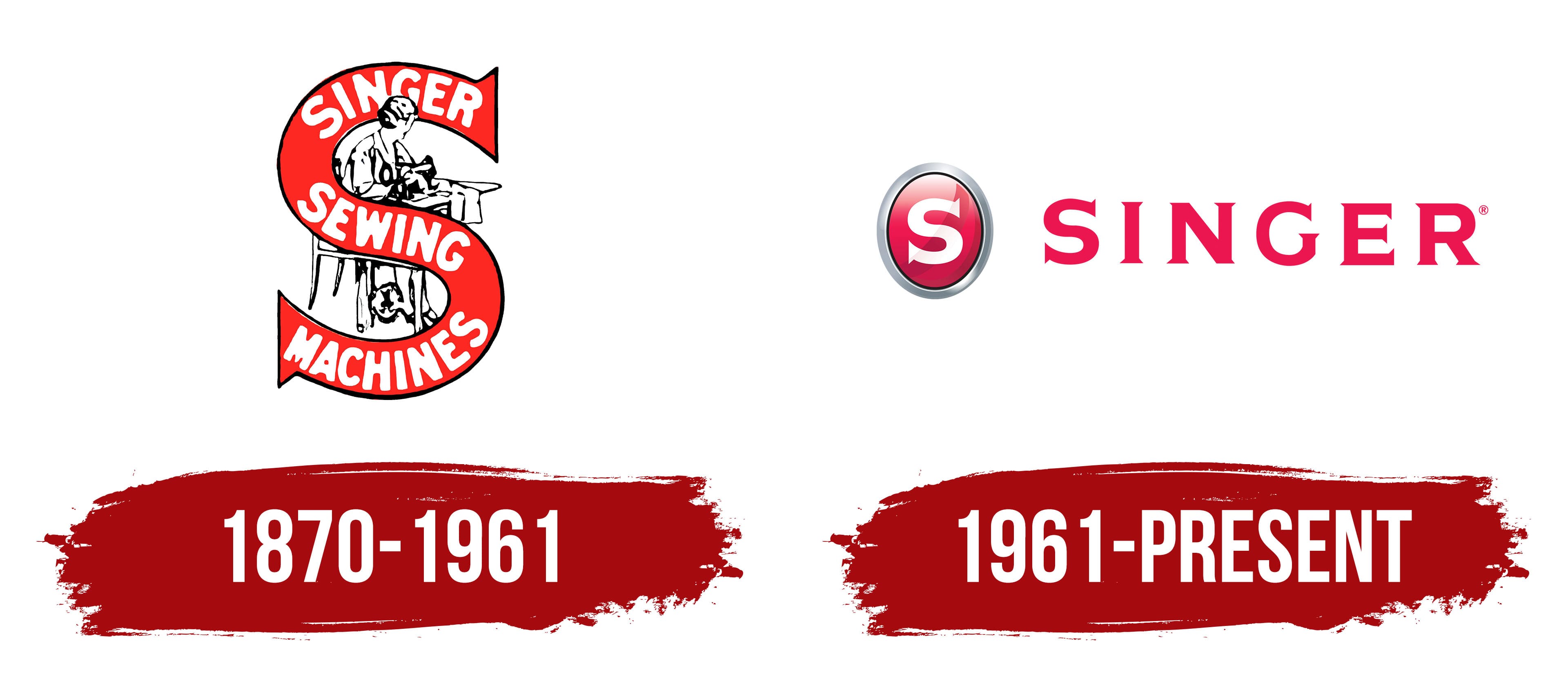
Singer grew rapidly until it faced bankruptcy at the turn of the 21st century (1999). However, the company’s logo remained constant throughout the first 100 years of its existence and the last 60 years. Stability in the first century indicated the development and improvement of a single product – sewing machines. The logo chosen in 1870 successfully reflected all the product’s features.
The attempt to expand beyond its traditional manufacturing and broaden the product range in the 1960s prompted the company to change its visual logo. However, the attempt was unsuccessful, and by 1999, Singer had gradually reduced its market presence and filed for bankruptcy. Subsequent owners were more interested in the brand’s renown in the sewing machine industry, so the logo remained unchanged to maintain and strengthen customer loyalty.
What is Singer Corporation?
This American company revolutionized the global fashion industry by creating the first sewing machine for mass production, becoming a symbol of sewing craftsmanship. This sewing machine manufacturer offers a wide range of equipment, from basic home models to advanced industrial machines for ateliers and factories. The current lineup includes traditional mechanical models, known for their reliability and ease of use, and computerized machines with hundreds of built-in stitches and automatic functions.
1870 – 1961
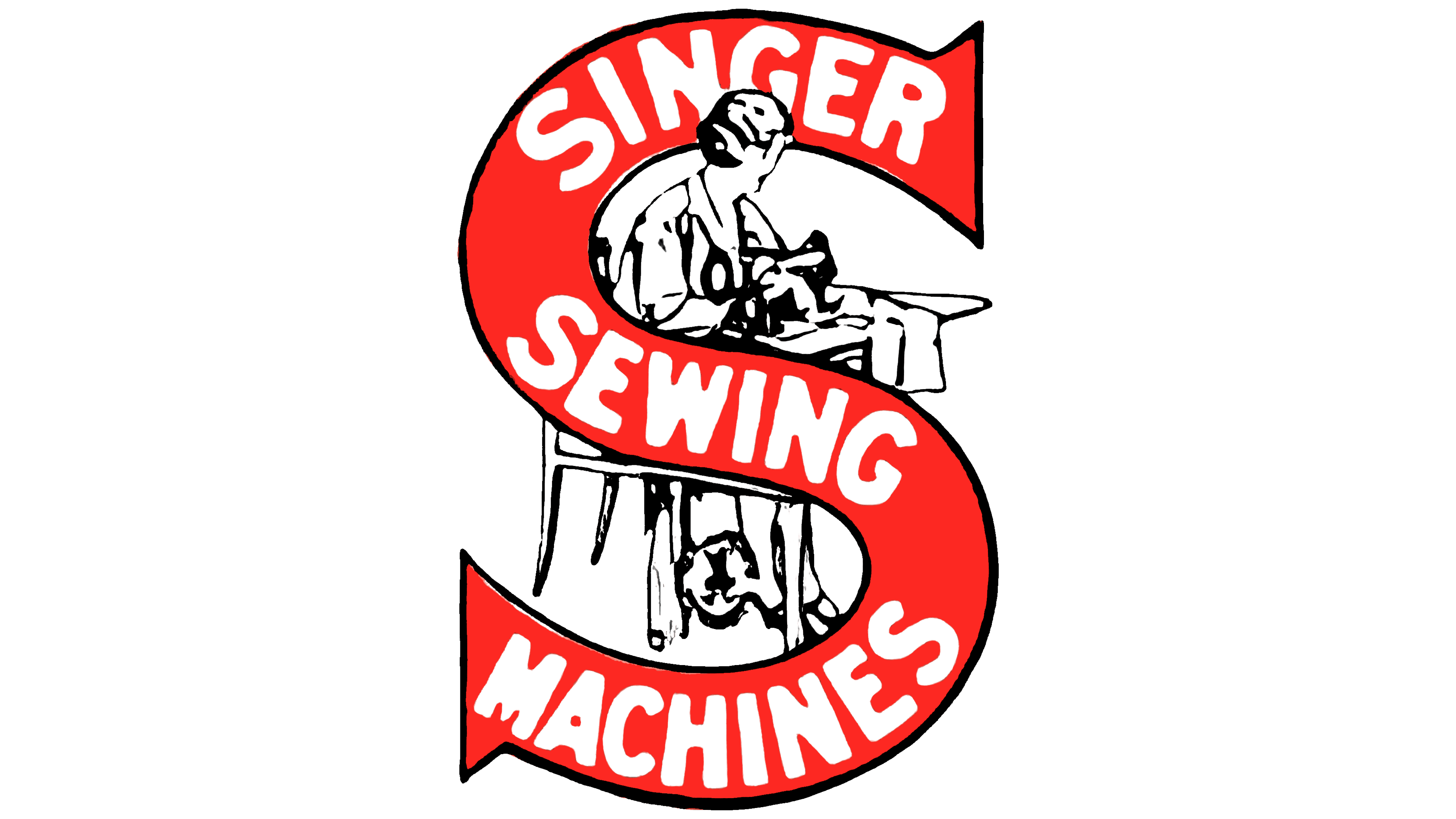
The first logo featured a large letter S, representing the word Singer (the founder’s last name, which became the company’s name). The character’s ends are sharp, resembling needles. The letter’s glyph features the inscription “Singer sewing machines,” indicating the company’s product offerings. The curving ribbon of the S resembles a thread, and the inscriptions on it look like machine stitches.
In the background, a black-and-white silhouette of a woman sits at a table, sewing on a branded machine. Singer’s advertising campaigns emphasized easing women’s sewing work, a theme reflected in the logo.
1961 – today
The latest logo was created during the company’s prosperity. It was designed to mark the acquisition of other companies (Friden Calculator and General Precision Equipment Corporation) and expand the product line.
The red circle with the letter S in the center and silver trim resembles a button. It symbolized the most modern machines of the time, such as the Singer Touch & Sew, which appeared in the 1960s. They operated automatically and were activated by a button.
The inscription “Singer” is made in red capital letters with serifs. The size indicated the company’s scale and the addition of new directions. In addition to sewing machines, vacuums, air conditioners, and more became available for sale.
Font and Colors
Red is the leading color in the logos. It conveys the brand’s top position and the joy the machines bring, easing sewing work. White is the second most common color in logos. It is the primary color of sewing threads and signifies new items sewn on the machine.
The font is confident and strong, reminiscent of Universal Serif. It embodies a company standing firmly on its feet. The sharp serifs on each letter are associated with needles, the main components of sewing machines.