


 Skullcandy Logo PNG
The Skullcandy logo is stylish and rebellious. It represents a manufacturer aimed at street kids, confident, active, and fearless youth. The emblem embodies the spirit of a bold pirate who loves adventure.
Skullcandy came from Rick Alden’s background in snowboarding. In 1986, while studying at the University of Colorado, he founded National Snowboard Incorporated, one of the early companies promoting snowboarding as its own sport. After NSI was acquired by the American Ski Association in 1991, Alden moved into Device Manufacturing, launching a snowboard boot-binding system in 1995 that was later sold to RIDE Snowboards.
The idea for Skullcandy came on a lift in Park City, Utah. Alden was listening to music when his phone rang, forcing him to remove his gloves, pull out his earbuds, stop the player, and reach for the phone. He wrote down an idea for headphones with two inputs, one for an MP3 player and one for a mobile phone, with a button to switch between them.
In January 2003, Alden founded Skullcandy in Park City after taking two mortgages on his house. The first product, Skullcandy Portable LINK, was shown at CES in Las Vegas that year. Alden sold it directly through snowboard and skateboard shops he knew from his earlier business, even offering to buy back unsold stock. No returns followed. The brand later worked with Giro on helmets with built-in speakers and released audio backpacks and watches.
Skullcandy used skull graphics, heavy lines, hip-hop cues, and street culture to differentiate itself from cleaner-audio brands such as Sony and Bose. By 2011, revenue was about $160 million, and the company was listed on NASDAQ under SKUL. It bought European distributor Kungsbacka 57 AB for $18.6 million that year. In 2016, Skullcandy agreed to merge with Incipio LLC, the owner of Astro Gaming, in a deal worth about $177 million, and later came under the ownership of Mill Road Capital.
Meaning and History
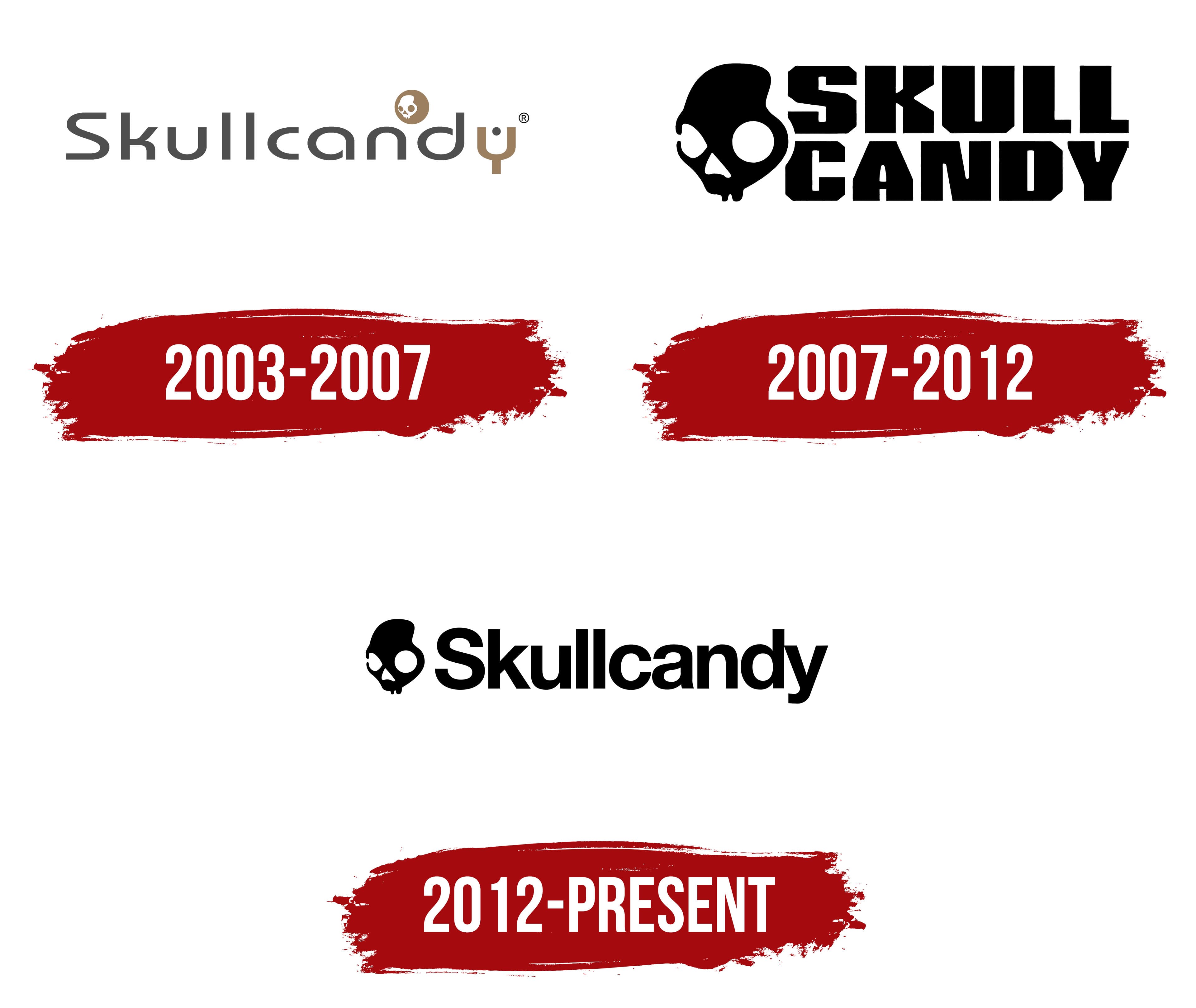
The logo’s evolution gradually focused on the main element that embodies the brand’s distinctiveness and rebellious spirit. The emblem made the company unique and unlike any other. The skull symbol, used across all logo variations, represents courage, a passion for deep sound that seems to come from the afterlife, and a craving for adventure. The small symbol looks great on the brand’s small products.
What is Skullcandy?
This company transformed headphones from simple music-listening devices into stylish fashion accessories. The brand, born among snowboarders and extreme sports enthusiasts, offers headphones in a unique style featuring skulls and vibrant colors as signature elements. The lineup includes gaming headsets with advanced surround sound technology and wireless headphones for an active lifestyle. The approach to sound tuning is distinctive: each model has its acoustic profile tailored to specific music genres, such as crisp highs for rock or powerful bass for dance music.
2003 – 2007

The first logo of the famous headphone brand featured the brand name with the last letter modified into a slingshot and a tennis ball on top, between the letters “n” and “d.” A part of a skull was visible inside the ball.
The brand targets youth with its products. The slingshot image perfectly reflected Skullcandy’s rebellious spirit, appealing to a young audience that breaks conventional boundaries. The skull hinted at extreme sports.
All products were designed for active, mobile people performing incredible jumps, flips, and tricks. Such products require a special approach to structure and properties. Headphones must stay in place in the ears during extreme activities while hands remain free. Minimal effort and movement are required for use. The company’s products fully comply with this concept.
To describe the product’s capabilities, the manufacturer emphasized informal symbols of movement, unconventional activity, and daring bordering on hooliganism.
The ball resembles a headphone speaker, and the skull indicates the use of head-worn products. The bones symbolize the headphones’ maximum durability.
The letter Y in the form of a slingshot also resembles the branching of wired headphones and the two cords leading from the controller to the phone and the player in the company’s first device, Portable Link.
The unusual name Skullcandy was intended to convey a message: the brand produces the best products worn on the head.
2007 – 2012

2012 – today

The modern company logo contains a familiar symbol to all consumers, the skull mask, followed by the brand name. The mask represents the image we present to the world. Headphones are an additional accessory that helps shape this image. The brand offers a range of designs suitable for any style.
The skull is a symbol of pirates, reflecting independence, risk, danger, courage, and a thirst for adventure. All these qualities are inherent to extreme sports enthusiasts, the brand’s first consumers.
The image’s style makes the symbol resemble a ghost icon. Hidden within it is the idea of invisibility and lightness inherent in modern Skullcandy headphones.
Font and Colors
Black is associated with piracy, confidence, and strength. It highlights the idea of youth subcultures. Most of these groups respect the color black. The shade is compatible with the entire palette, just as Skullcandy products are universal. Created for extreme athletes, the brand found admirers in various circles. The logo color conveys the headphones’ durability and reliability. They fit firmly in the ears and are made from materials that resist scratches and chips.
The font of the inscription, Neue Helvetica Armenian 7, is simple and smooth, like the even, clear sound of Skullcandy headphones.