


 Valero Logo PNG
Valero’s logo conveys a sense of reliability and confidence. It is like a trusted companion who can move forward without straying from the path. Its lines embody clarity and straightforwardness, reflecting calmness and determination. It expresses stability and practicality, appealing to those who value simplicity and results.
Valero Energy Corporation was founded in 1980 as a spin-off of Lo-Vaca Gathering Company, a subsidiary of Coastal Corporation, a Houston company focused on natural gas pipeline transportation. The name Valero came from the San Antonio de Valero mission, originally known as the Alamo. In its early years, the company was primarily tied to natural gas operations rather than oil refining.
In 1985, Valero acquired Corpus Christi Marine Services Company, a barge freight business in Corpus Christi, Texas. The acquisition moved Valero into oil refining and marketing, changing the company’s direction. In 1997, Valero sold its natural gas production operations to Pacific Gas and Electric Company, allowing the corporation to focus on refining and petroleum product sales.
The same year, Valero acquired Basis Petroleum and added four refineries in Texas and Louisiana. Later acquisitions expanded the company’s refining base: Diamond Shamrock in 2000, Premcor in 2005, Sunoco in 2011, and Shell refining and distribution assets on the East Coast in 2018. Valero also became the owner of the largest refinery in the United States, located in Port Arthur, Texas.
Over time, Valero became the largest independent refiner and supplier of petroleum products in the United States. Its operations covered the United States, Canada, and the United Kingdom, with products distributed in the United Kingdom, Ireland, and Latin America. The company also developed a large retail network of gas stations and stores, became a major ethanol producer with plants in the Midwest, and remained linked to San Antonio, Texas.
Meaning and History
What is Valero?
This major independent oil refiner has grown from a local operation into a global energy powerhouse. With modern, highly efficient refining capabilities, the organization operates 15 refineries in the United States, Canada, and the United Kingdom. Its primary focus is the production of gasoline, diesel, and jet fuel, distributed through a network of gas stations and wholesale channels. A unique feature is its ability to process various crude oil grades, ensuring high productivity and adaptability to market changes.
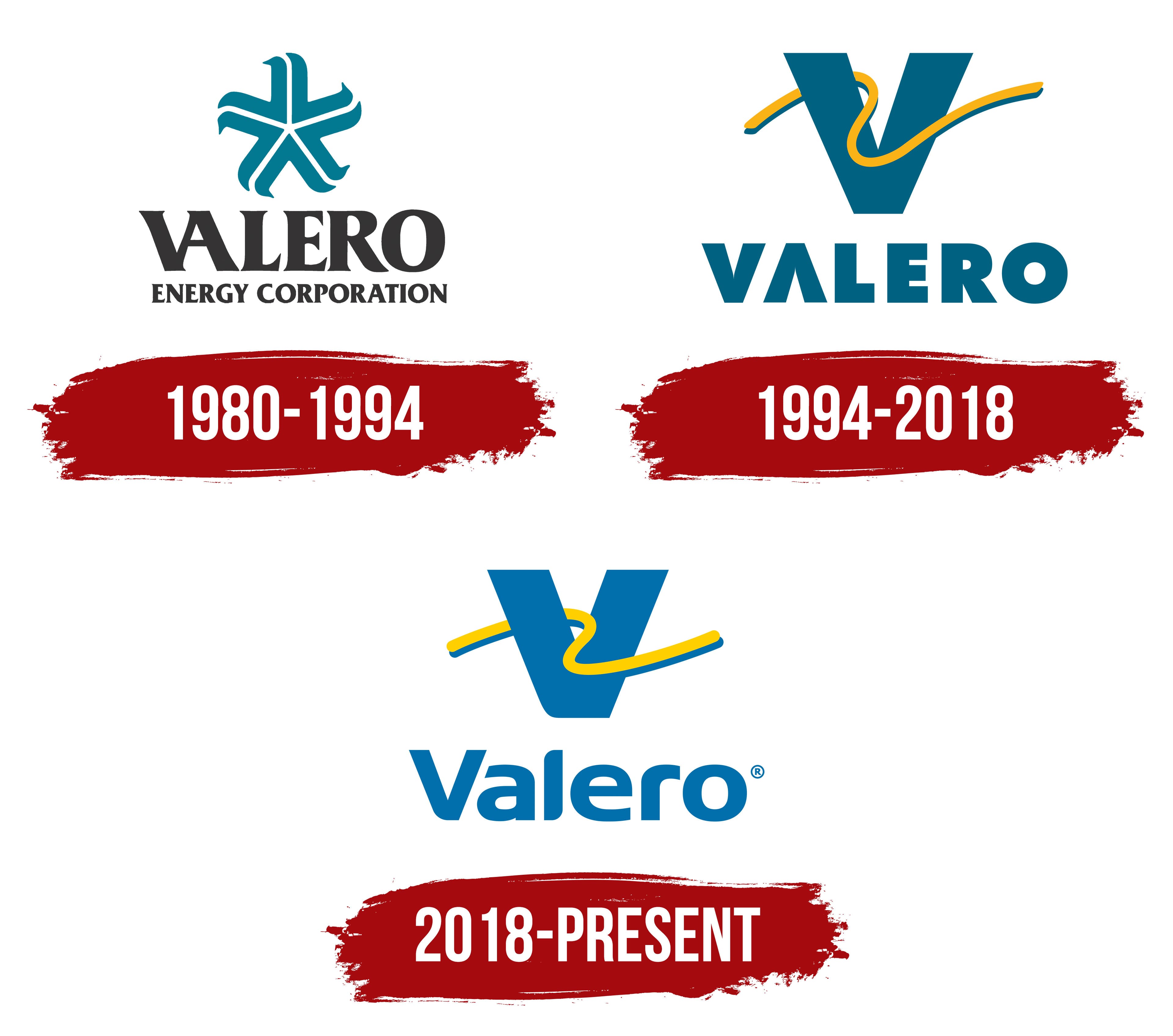
1980 – 1994
1994 – 2018
2018 – today
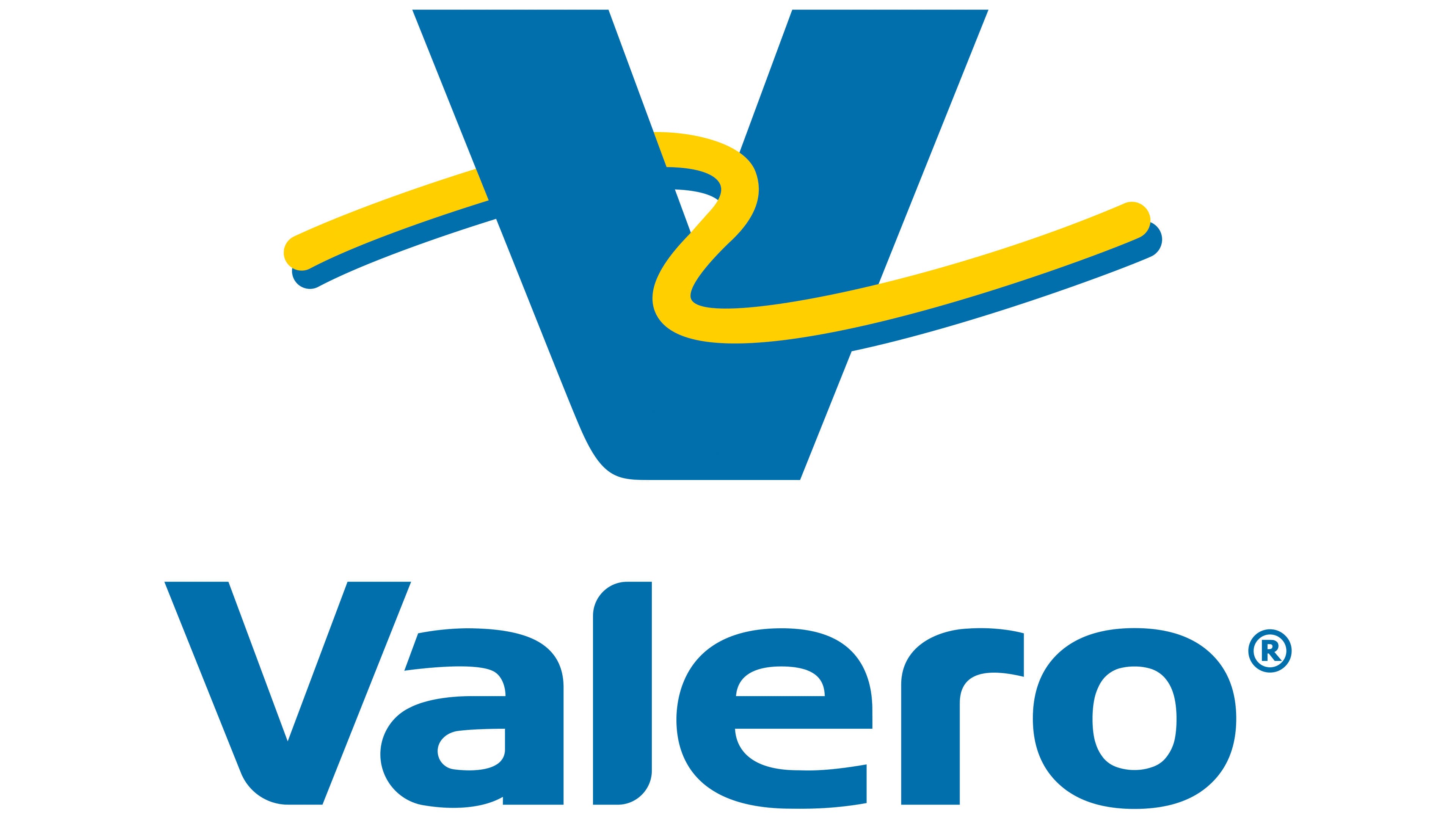
The Valero logo looks simple, but within its simplicity lies the company’s full meaning. The central element is the bold blue letter “V,” creating a sense of confidence and stability. The blue color strengthens the association with reliability and quality, while the letter’s strict, clear shape emphasizes the scale of the business. It becomes a symbol.
Through the letter “V,” two lines pass, one yellow and the other blue. They curve, adding a sense of movement. The yellow line resembles an energy flow or cable, highlighting the company’s connection to electricity. The blue line resembles a pipeline, hinting at the oil sector. Together, these elements convey the idea of connecting two key areas of operation: oil and electricity.
The company’s name is below the graphic element. The font is simple and neat, sans-serif, with soft, rounded edges, making the text modern and approachable. This design demonstrates the company’s openness to large partners and individual customers.
The colors emphasize the company’s core values. Blue symbolizes stability and professionalism, while yellow adds energy, positivity, and lightness. Together, they create a bright contrast, making the logo memorable.
The name originates from Spanish and is associated with concepts of value and dignity. It reminds us of the company’s aim to benefit its clients and be important to them.
The emblem’s entire design reflects Valero’s key qualities: reliability, movement, energy, and strength. Every detail is thoughtfully crafted to convey the company’s scale and significance.