


 EDF Logo PNG
The EDF logo is a visual element associated with places where energy becomes part of life. You see it on power plants, urban infrastructure, and household appliances, reminding people how electricity makes the world more convenient and accessible. The emblem is simple, concise, and familiar to many.
EDF was created on April 8, 1946, when France nationalized electricity and gas production and distribution. More than 1,400 private power companies were folded into Électricité de France. The postwar system was fragmented, with incompatible networks, uneven coverage, and a mix of generation assets, including coal, hydroelectric, and fuel-oil plants. The first task was standardization, since France needed a single grid after years of wartime damage.
In the 1950s and 1960s, EDF focused on electrification and new capacity. Hydroelectric stations on the Rhône, Durance, and Alpine rivers accounted for a major share of generation. The company built large projects such as Génissiat, Donzère-Mondragon, and Bollène. The company added fuel-oil plants as industrial demand rose during the postwar boom known as the “Thirty Glorious Years.”
The 1973 oil crisis changed French energy policy. In 1974, the government approved the Messmer Plan, and EDF became the main builder of a national nuclear program. The company used standardized pressurized-water reactors, which sped construction and simplified licensing. By 1990, nuclear power supplied about 75 percent of French electricity. This differed from the strategies of competitors such as RWE and British Gas, which relied more on coal and gas.
In the 1990s and 2000s, European liberalization pushed EDF to restructure. In 2004, it became a joint-stock company, followed by a Paris stock-market listing in November 2005, while the state kept control. In 2009, EDF bought British Energy for about £12.5 billion, gaining eight British nuclear plants and later taking on Hinkley Point C, which began construction in 2016. In 2022, France announced full renationalization and moved to buy the remaining private shares.
Meaning and History
What is EDF?
This is Europe’s largest electricity producer and supplier, operating an extensive network of nuclear, hydro, and thermal power plants in France and beyond. These facilities provide electricity to millions of homes and businesses. Its unique energy strategy, based on a significant share of nuclear power, enables it to offer some of the lowest rates in Europe. The organization provides advanced services, including digital energy management solutions and energy efficiency consulting.
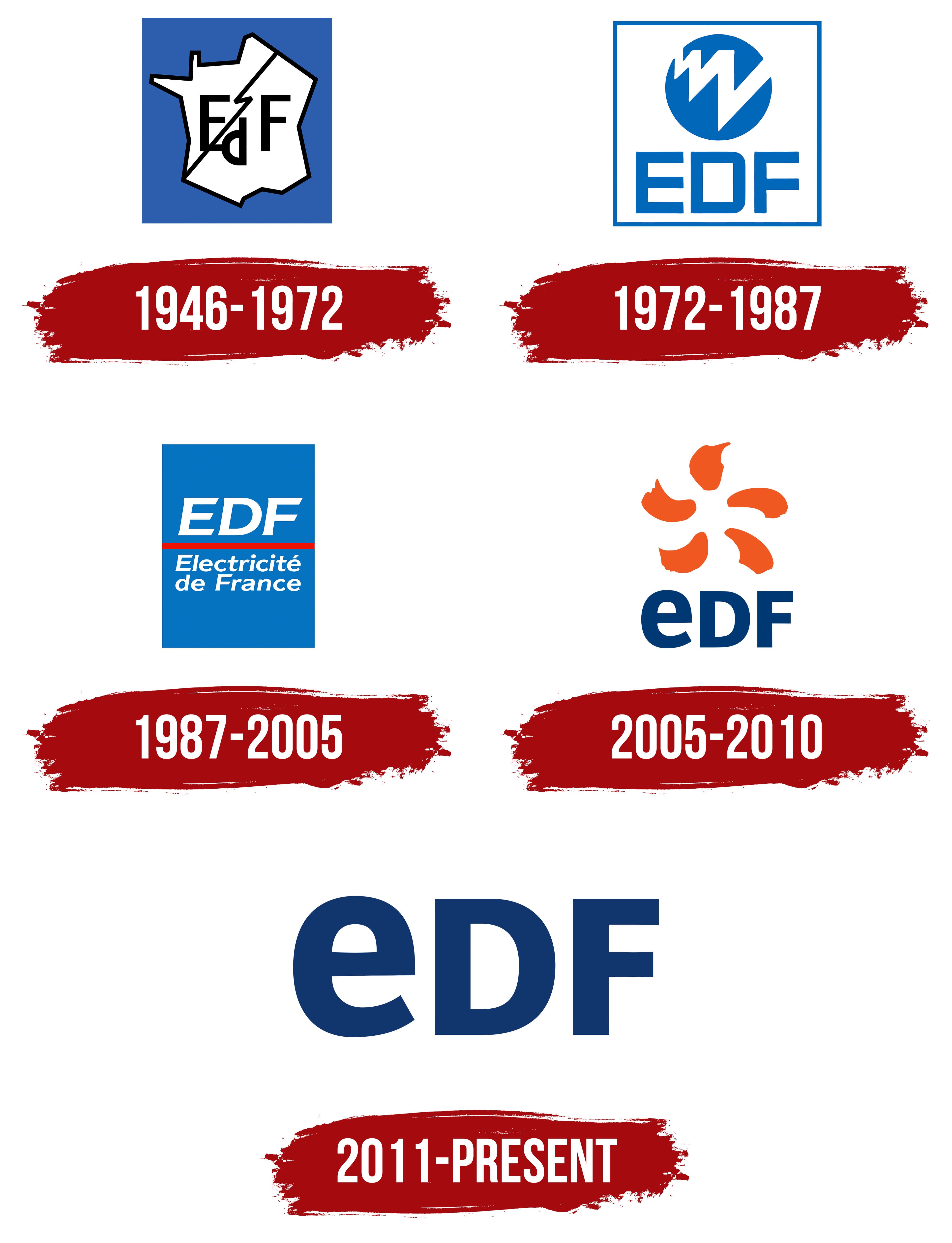
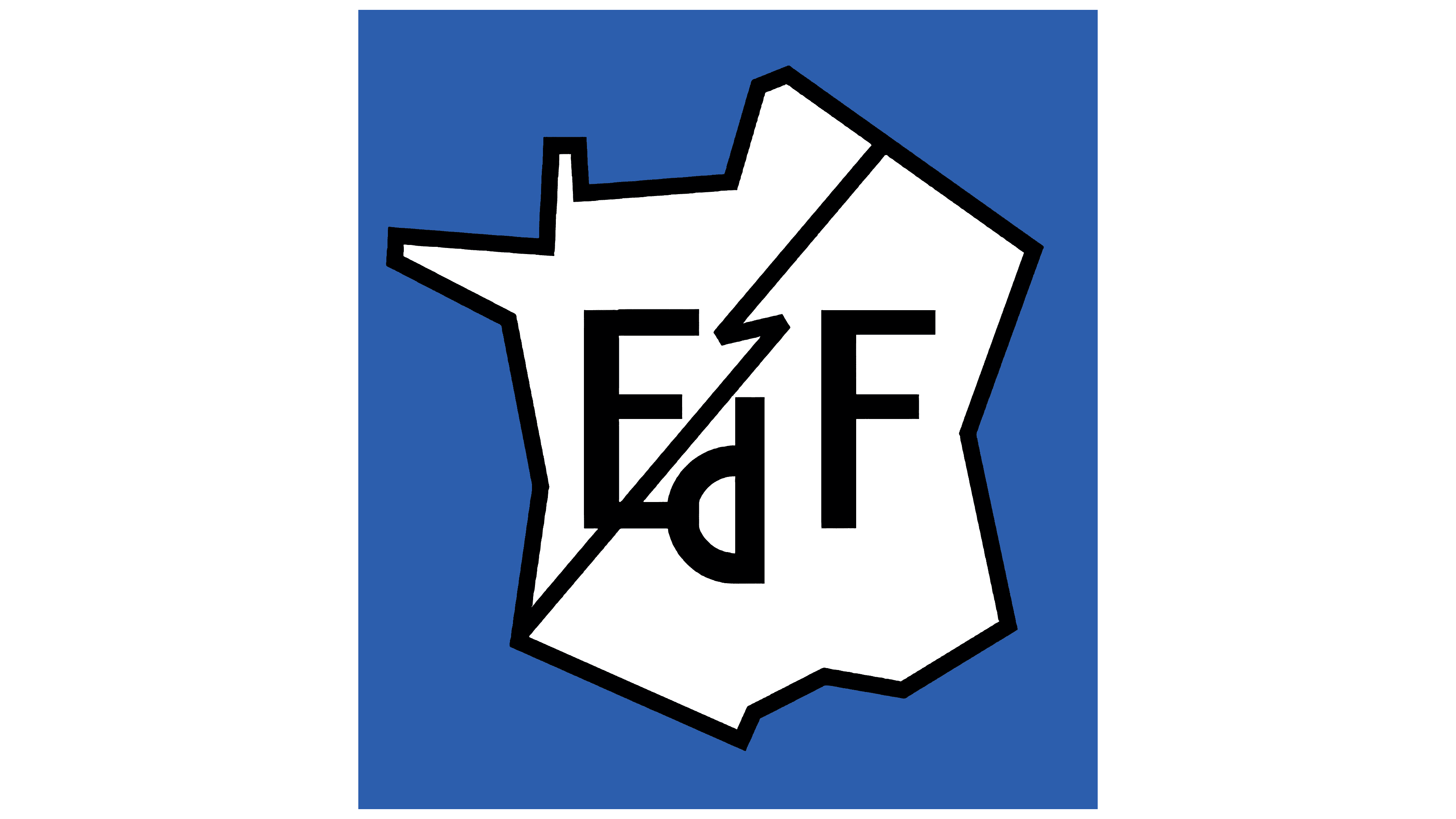
1946 – 1972
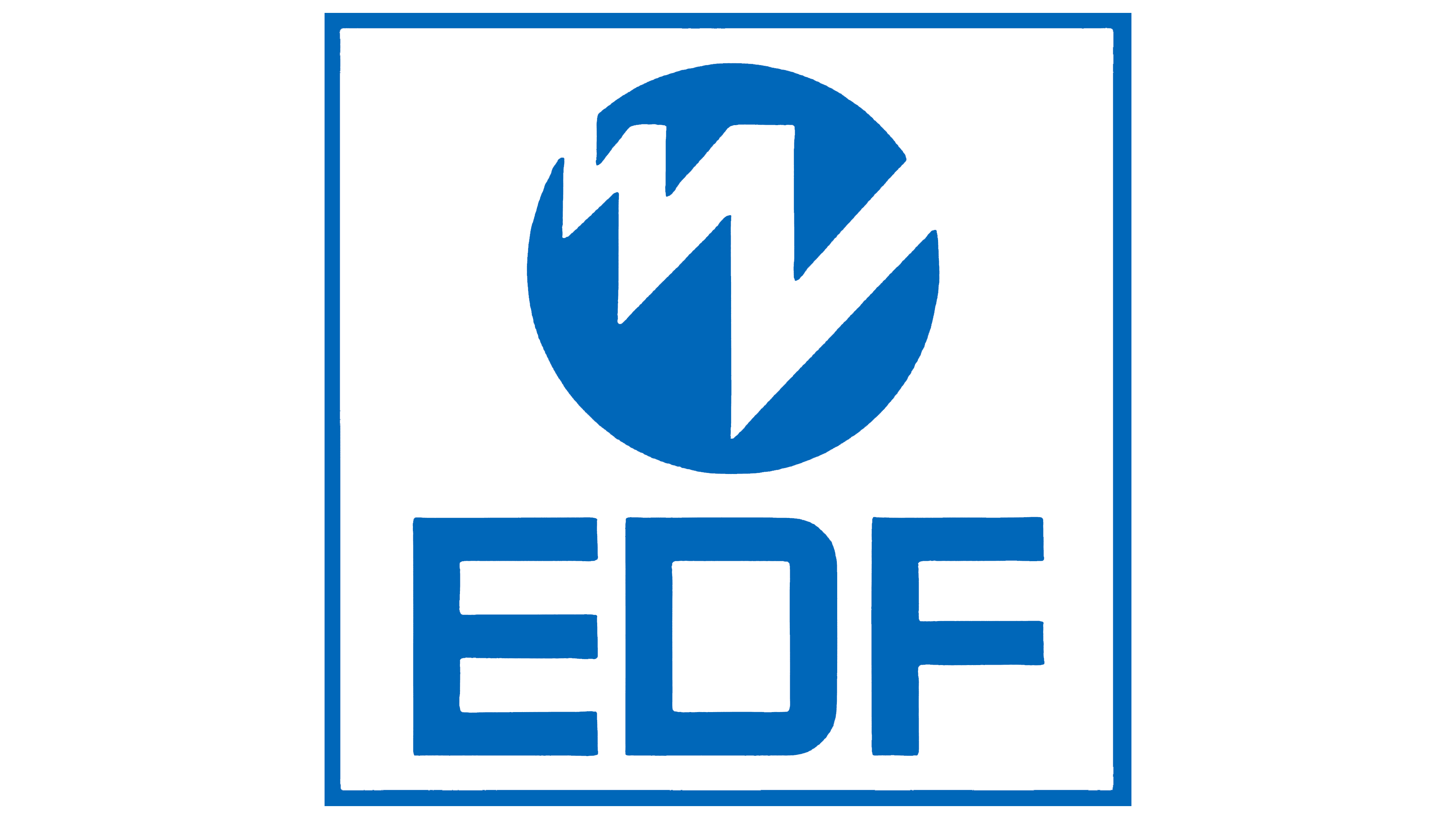
1972 – 1987
1987 – 2005
2005 – 2010
2011 – today
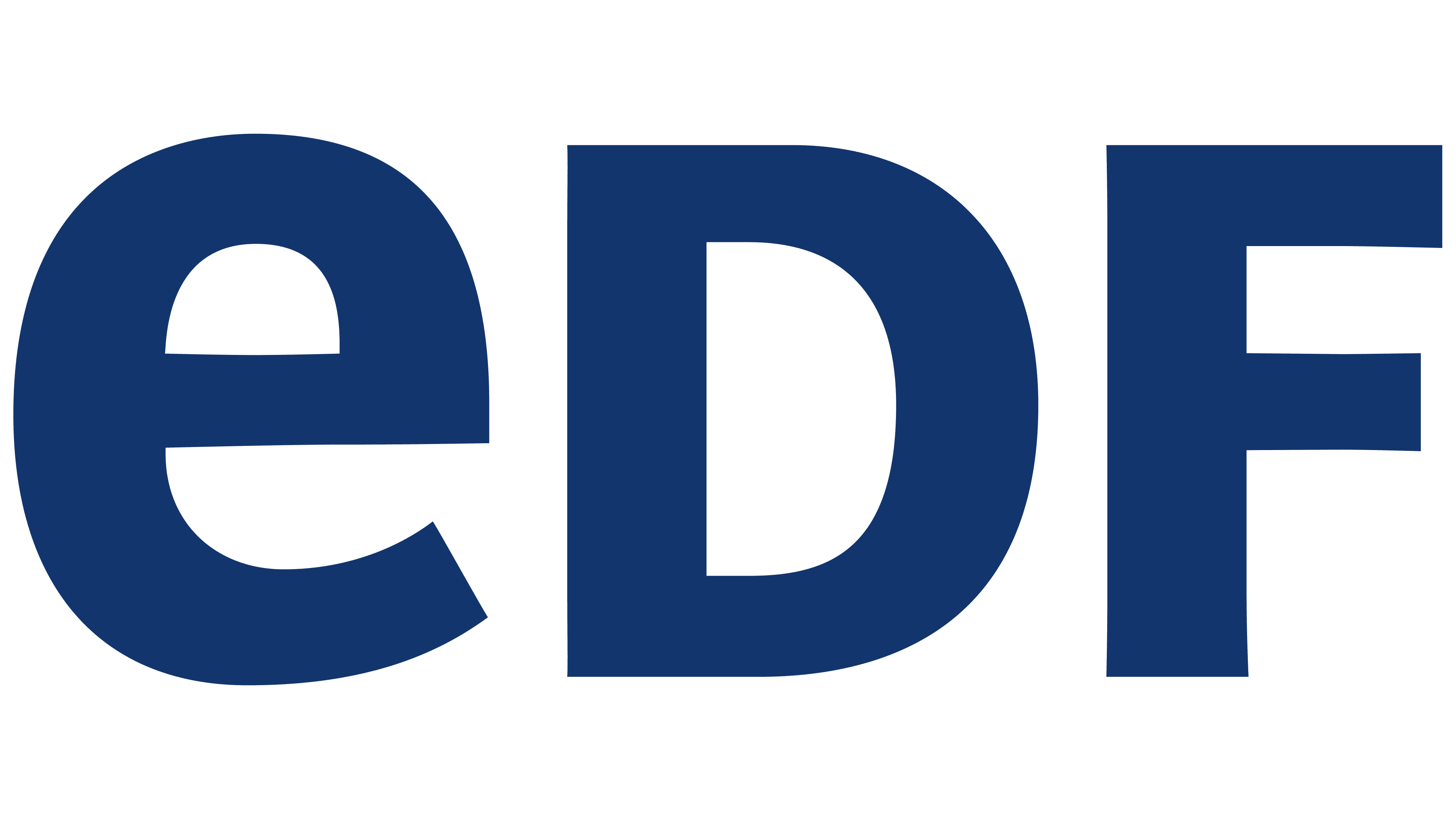
The minimalist EDF logo conveys the French company’s core message of reliability and confidence. The focus is on the text element, which consists of three letters forming the abbreviation for Électricité de France, emphasizing the company’s commitment to a clear, recognizable identity.
One notable detail is the mix of lowercase and uppercase letters. The first letter, “e,” is lowercase. Still, its enlarged size balances the overall composition with the uppercase “D” and “F.” This design choice creates harmony and gives the logo a modern character. The rounded shape of the lowercase “e” adds softness and openness, while the strong lines of “D” and “F” emphasize strength and stability.
The font is bold and clear, with no serifs, making it a universally readable symbol across formats. The dark blue text underscores the company’s reliability and seriousness. This shade is associated with confidence and stability, creating an impression of solidity.
The minimalist design focuses on the brand’s essence, making its visual identity easy to grasp. The letter composition, free from unnecessary elements, makes the EDF emblem universal and clear. It reflects the company’s core principles of confidence, accessibility, and professionalism.