


 Eli Lilly Logo PNG
The Eli Lilly logo would suit a cosmetics or fashion brand more than a pharmaceutical manufacturer. This is precisely what helped the old American company stand out in the pharmaceutical market, making its emblem a symbol of high quality.
Eli Lilly and Company began in 1876 in Indianapolis, founded by Colonel Eli Lilly, a pharmacist and Civil War veteran determined to improve the quality of available medicine. The company started with innovations such as gelatin capsules and quickly invested in laboratory research. By the 1890s, it was among the first to mass-produce diphtheria antitoxin, marking its early commitment to medical advancement.
The 20th century brought major developments. In 1923, the company partnered with the University of Toronto to produce insulin, changing diabetes treatment. During World War II, it supplied penicillin to the U.S. military. The postwar decades introduced antibiotics such as erythromycin and cephalosporins, while the 1980s saw the introduction of Humulin, the first human insulin produced using recombinant DNA technology. Later years added major drugs like Prozac, Cialis, and Cymbalta, expanding its therapeutic reach in psychiatry, endocrinology, and chronic pain.
The 2010s and 2020s reinforced the company’s presence across immunology, oncology, and neurology. FDA approvals for Trulicity, Taltz, Verzenio, and Mounjaro positioned the firm at the center of modern treatment for diabetes, cancer, and autoimmune diseases. Ongoing research in Alzheimer’s therapy, digital technologies, and biosimilars reflects its continuous adaptation to global healthcare demands while maintaining its foundation in scientific rigor and responsible innovation.
Meaning and History
What is Eli Lilly?
This company is known for creating revolutionary drugs that address some of the most serious health issues, such as autoimmune diseases, diabetes, and cancer. Its product line includes innovative biologic drugs and precision medicines, including well-known brands such as Cialis and Prozac. The company is involved in clinical research and the development of new treatments and therapies. Significant emphasis is placed on collaboration with academic institutions, biotech companies, and healthcare providers to foster innovation and improve patient care.
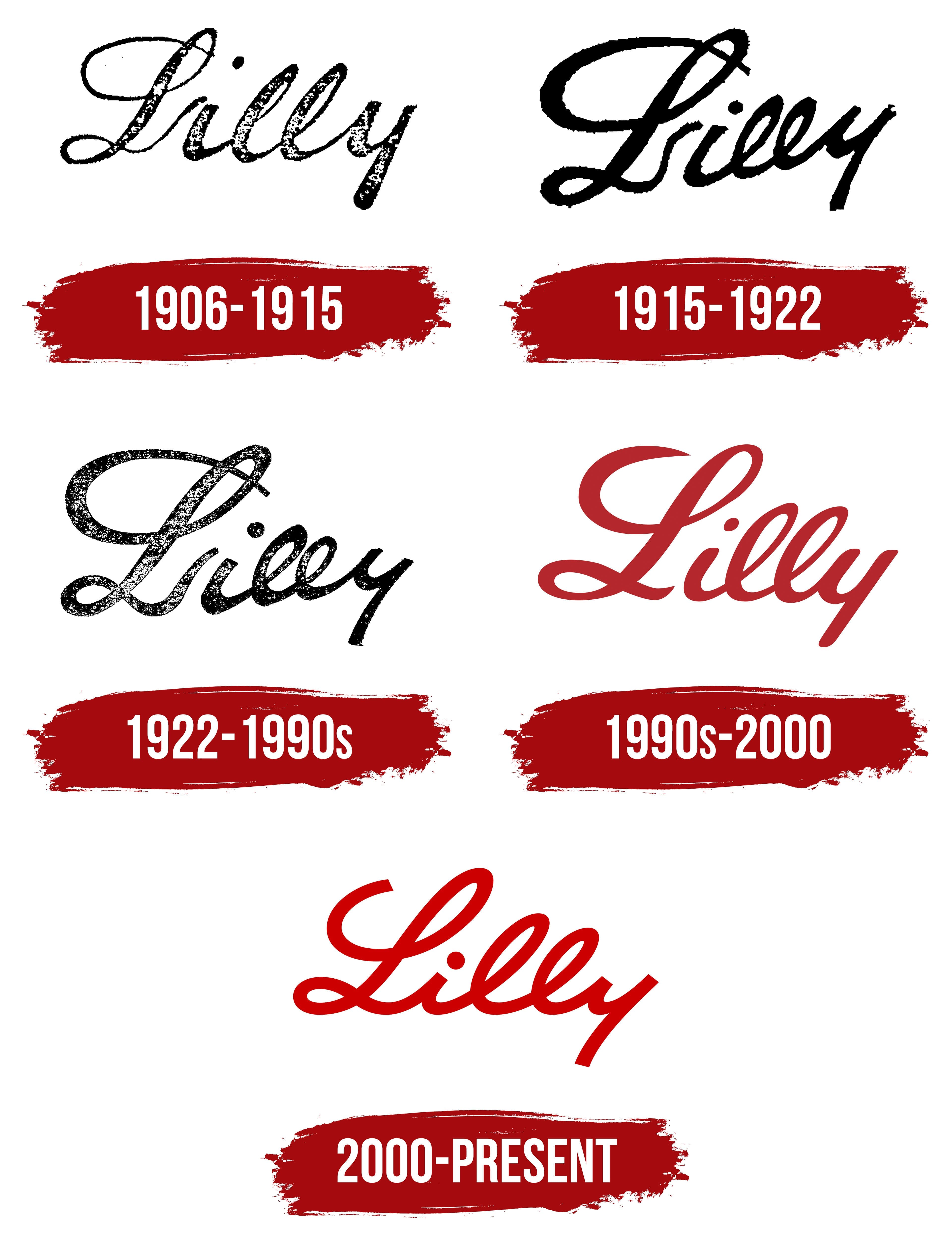
1876 – 1906
Eli Lilly was established in the late 19th century, when visual identity wasn’t as important as it is today. Many manufacturers labeled their products with simple inscriptions of their name, address, and product information. Consumers relied solely on the brand’s reputation to make a final purchasing decision.
Eli Lilly medicine bottles were recognizable by the elegant handwriting of the man who founded the company in 1876. Colonel Lilly, who named the pharmaceutical company after himself, signed each label as if confirming the product’s authenticity. Over time, his name became a globally recognized symbol of quality and reliability.
1906 – 1915
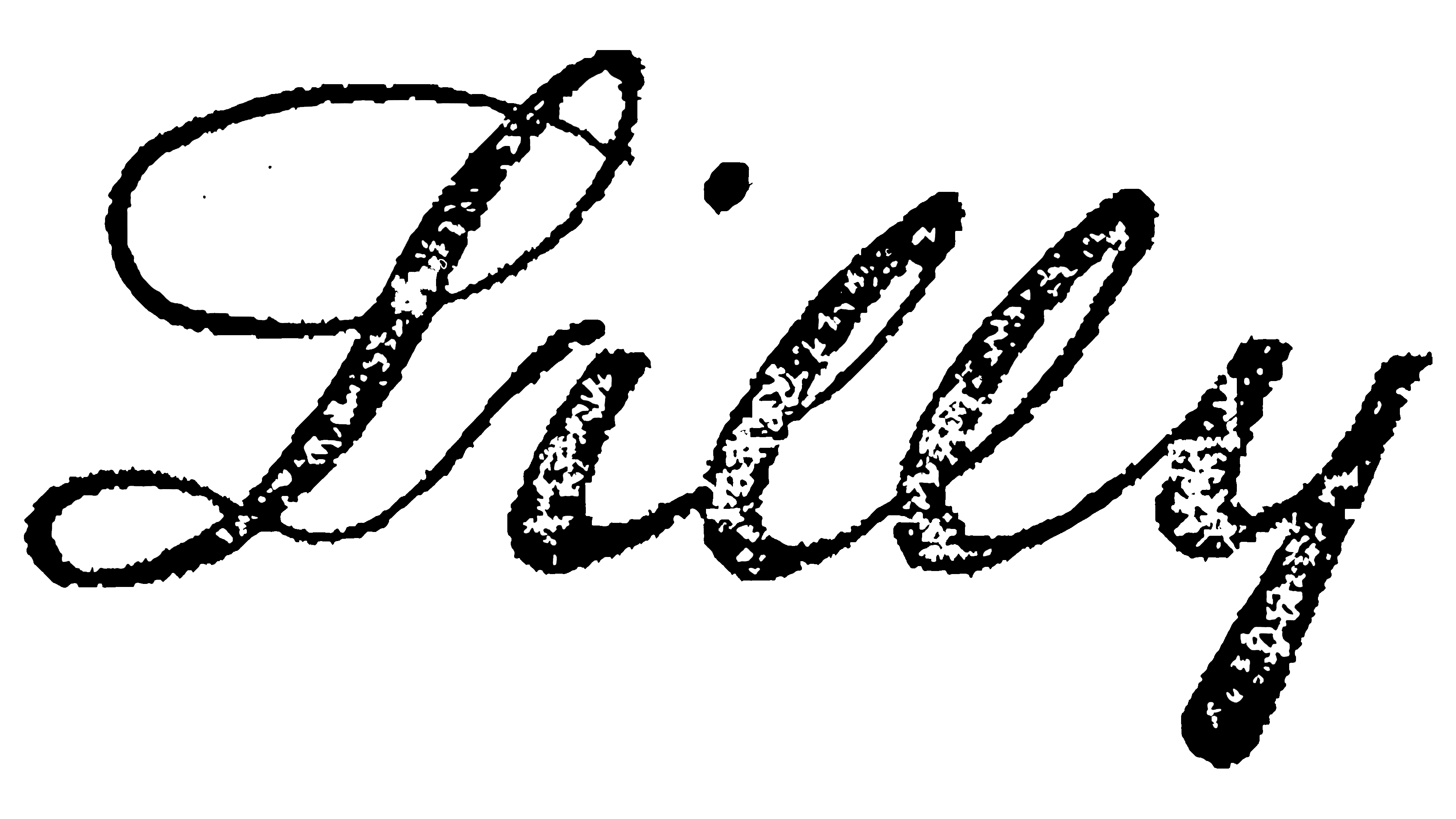
The founder’s signature became an official logo in 1906 when the Pure Food and Drug Act was enacted in the United States. This law set new safety and marketing standards, requiring pharmaceutical manufacturers to list all active ingredients on their labels. These labeling changes prompted Eli Lilly to adopt a permanent emblem to make its products more recognizable.
The visual symbol the company began to use for product promotion looks exactly like the personal signature of the business owner, pharmacist Lilly. He used to autograph each bottle, confirming the high quality of the medicines. The new logo significantly simplified the labeling process, as the founder’s signature began to be automatically printed on the labels.
Designers standardized the inscription, preserving the original features of Lilly’s handwriting. However, the font used in the logo appears overly neat, as if it’s an idealized version of the autograph. The even slant of the letters, graceful flourishes, and smooth curves make it a model of calligraphy art. The only imperfection is the missing loop on the “y,” turning the letter into something resembling the number “4.”
Despite its elegant form, the logo is colored in a somber black. This choice is explained by the limited printing capabilities of that era, as producing color images in the early 20th century was technologically challenging and costly.
1915 – 1922
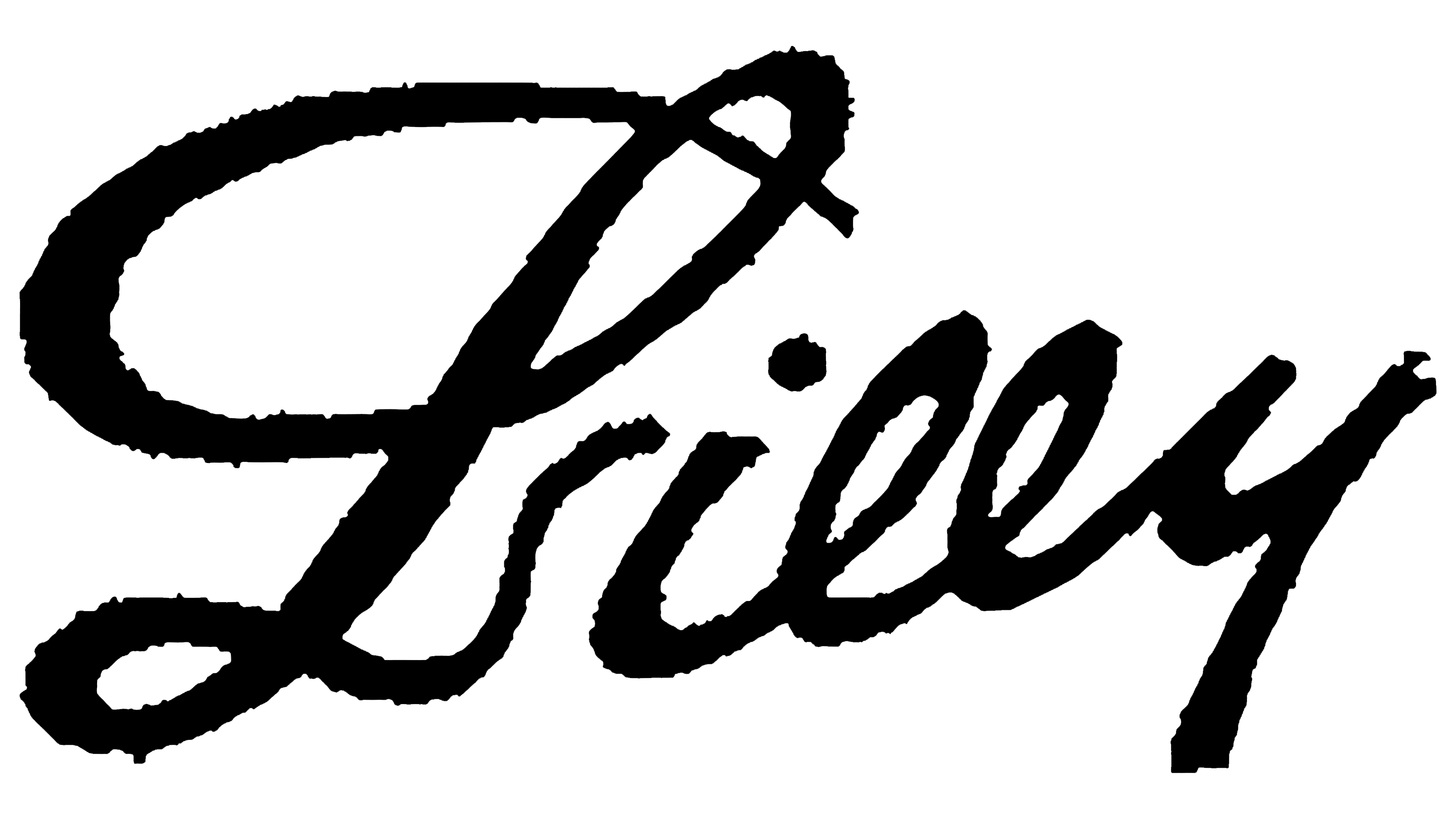
In 1915, Eli Lilly’s era of black-and-white emblems continued. Designers only slightly modified the inscription’s shape, making it less perfect and more like a real person’s autograph. The line, which had been perfectly straight, now curves gently upward, hinting at the company’s growth prospects. This dynamism became a symbol of the pharmaceutical brand’s continuous movement and development, focused on developing new medications.
The word “Lilly” lost some of its charm because of the roughness of the letters. The lines are no longer as sharp as before. They became much thicker and appeared messy, with blurred edges. Even the decorative loop of the “L” no longer impresses with its elegance, as the altered design made it visually heavier. Yet, the “L” remains disconnected from the “i,” as a separate logo element.
The two flattened “l”s closely resemble “e”s, which reduces the inscription’s readability, especially when combined with the unclear “y.” However, the emblem remains recognizable even in this form, as the founder’s signature has been used on product packaging for several decades.
1922 – 1990s

This is another black-and-white version of the chemist-pharmacist Eli Lilly’s signature. Here, designers outlined the edges of the letters to give them a defined shape and achieve a hypnotic smoothness in the lines. The elegant beauty of the capital “L” became apparent, with each curve forming decorative loops at the top and bottom, perfectly balanced.
The letter “i” is now more compact and tidy, making the inscription elegant. However, the two lowercase “l “s remain very small and look almost like “e” s, which detracts from the overall impression of the logo. Yet, the designers are in no hurry to correct the disrupted proportions, as this imperfection highlights the brand’s uniqueness and enhances its recognition in the pharmaceutical market.
In the new emblem, the end of the word “Lilly” is slightly raised. This heightens the inscription’s dynamism and simultaneously creates a counterbalance to the pronounced slant of the letters, characteristic of the founder’s sweeping handwriting. The visual movement fills the logo with emotions linked to the triumph of medical achievements, yet the somber black color tempers this expression.
1990s – 2000
The company decided not to change the old concept but to infuse it with new meaning. To do this, designers adjusted the inscription’s shape, adding more elegant elements and correcting the proportions of some letters.
- The ends of the capital “L” were shortened so that the top line no longer passes through the loop, ending just before it. The lower part no longer hangs over the “i,” eliminating the logo’s overwhelming sense of dominance.
- The lowercase “i” became elegant due to the absence of angles. The dot was reduced and flattened diagonally, giving the impression that it bounced like a tiny ball. The visual dynamism aligns with the brand’s character, focusing on pharmaceutical innovation and ongoing drug research.
- Both “l” s no longer resemble “e” s, making the word “Lilly” clear and readable. The logo developers corrected the shape of the double letters, stretching them vertically so they were finally taller than the “i.”
- However, the “y” still lacks the traditional loop and looks more like an “h” rotated 180 degrees. This is a recognizable feature of the founder’s handwriting, and designers preserved it as a symbol of authenticity.
Overall, the emblem features an improved version of Eli Lilly’s autograph. The shape of the glyphs was corrected, the number of smooth curves increased, and the line contrast was enhanced. The only angular elements remaining are the sharp ends of the initial “L.” The burgundy color adds emotion to the emblem, which pairs well with the italicized font’s dynamism.
2000 – today
The logo featuring the word “Lilly” dates back to the pharmaceutical brand’s origins, as this short five-letter word has adorned the medicine bottles of the American manufacturer for over a century. Initially, it was the company’s founder’s signature: he marked each label with his surname to prove the product’s authenticity. Over time, his autograph became an authentic emblem, more suited to a cosmetics or fashion accessories brand.
Using an elegant logo, the Eli Lilly brand stood out among competitors. It has always remained true to its chosen style, so the 2000 redesign didn’t bring revolutionary changes: the wordmark remained as elegant and refined as ever. The inscription became more aesthetic because the developers balanced each stroke.
All the letters have the same thickness, giving the impression that the word is formed from a single continuous line that begins at the top loop of the “L” and ends at the lower part of the “y.” To enhance this artistic effect, the designers connected the “L” to the “i” for the first time in many years, so the inscription no longer appears disconnected.
Another change affected the size of the letters: the second-to-last “l” became shorter, as in Eli Lilly’s original signature. Yet, it remains tall enough not to resemble an “e.” The logo’s creators found a golden mean, achieving historical accuracy in the font while maintaining the word’s readability.
The slant of the glyphs was increased to compensate for the absence of refined lines. The ends of the letters are no longer rounded; the designers restored the missing angularity. In this version, the inscription looks more natural, as the rough, angular shape helped balance the excessive softness of the elegant curves and loops. This contrast makes the logo visually intriguing and emphasizes the brand’s dynamism.
The wordmark cannot be called conservative, even though it is based on a real person’s signature. The designers made it unique by coloring “Lilly” a rich red. This vibrant hue is associated with vitality and a desire for change, making it well-suited to the development of innovative medicines. It expresses the company’s passion for its mission and reflects its almost aggressive drive to remain a leader in the pharmaceutical market.