


Historically, the crown is considered a symbol of power, one of the main regalia of monarchs and titled persons. Emperors and kings, princes and dukes, counts, and Roman popes wore them. In people’s mythology and beliefs, they “equipped” various deities with inhuman abilities, strength, and power. Throughout human history, crowns have taken various forms and were often made of pure gold or silver, inlaid with precious stones. Native Americans, even before the first European colonists arrived, incorporated beautiful bird feathers into their jewelry. Today, many brands use this mark in their logos as a symbol of power, strength, and superiority, highlighting their advantages over competitors in their respective fields.
Why do automobile manufacturers choose a logo with a crown?
As part of the logo, the crown emblem does not demonstrate superiority; rather, it serves as an image element that conveys the prestige of its bearer. That is why most companies actively use it in their trademarks. In addition, many associate this symbol with authority, which confers high status on the organization in the client’s eyes. By incorporating regalia imagery, large corporations project a high-status image built over time. This element also helps establish the product’s price category and corresponding quality level. Although the wreath is often featured in logos, each instance has a unique graphic design.
Toyota Crown
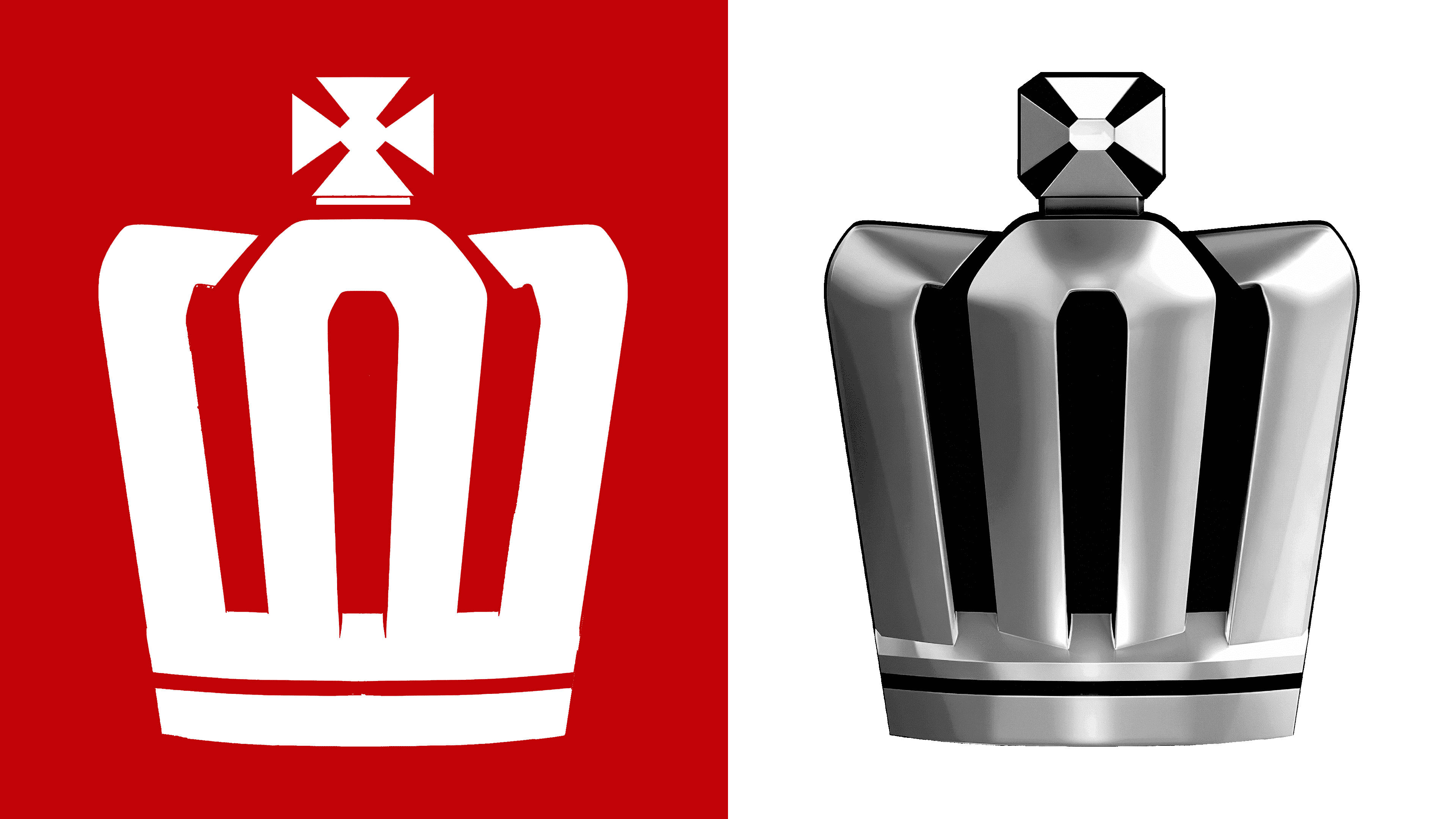
Toyota Crown is a line of full-size sedans. During its existence, the brand has created 15 generations of the series. The car belongs to the Premium category. Its unique design adds elegance and highlights the owner’s character. The main sales objective is to target Japanese and select Asian audiences.
Toyota Crown has taken a leading position in the brand’s model range, thanks to its unwavering reputation, established in 1955, the year of its first release. The interior design has evolved through numerous changes, becoming a model of privilege. The stylized image of the princely crown on the steering wheel and grille evidences this. Smooth lines and smooth curves suggest stability and nobility. The car embodies independence and refined thought, central features of the aristocracy.
Scania
The Swedish company, founded in 1891 as a manufacturer of bicycle cars, began producing buses, trucks, and commercial vehicles, as well as diesel engines for ships and industry, in 1920. From 1968 to 1995, it was part of SAAB, during which period it gained recognition for its heavy-duty trucks.
The modern version of the Scania logo was designed back in 1984 in collaboration with artist and sculptor Carl Fredrik Reitersvard. The main element was a crowned red mythical beast, a griffin. It was taken from the coat of arms of Count von Skane and symbolized speed, attention to detail, courage, and strength. With digital technology, the sign has a clearer visual representation. Freed from visual overload, it became more concise and easier to perceive, ensuring memorability and brand recognition. The circle represents integrity, and the elements outside it symbolize development and cooperation. The blue background in the corporate identity inherently reflects honesty and fidelity to the stated principles.
Saab
Founded in 1937, Svenska Aeroplan Aktiebolaget originally produced bombers and fighters for military use. The most famous brainchild is the Viggen 37 single-seat airplane. In 1949, the company began producing automobiles, prompting a change to its acronym to Svenska Automobil Aktiebolaget.
With the advent of Stockholm Design Lab AB, the company received a new brand identity and visual representation. After SAAB and Scania separated, the company adopted a red griffin head framed by a gold crown with three tips. This was a tribute to the former union of the companies. At the same time, the element combines the regal qualities of beasts and birds, hinting at the available power and vigilant attention to detail. Below the silver color is the SAAB name, typed in Sequel 100 Black 95 font, with an original refinement that combines the letters into a single structure. The rings surrounding all the parts symbolize the company’s integrity and independence.
Noble
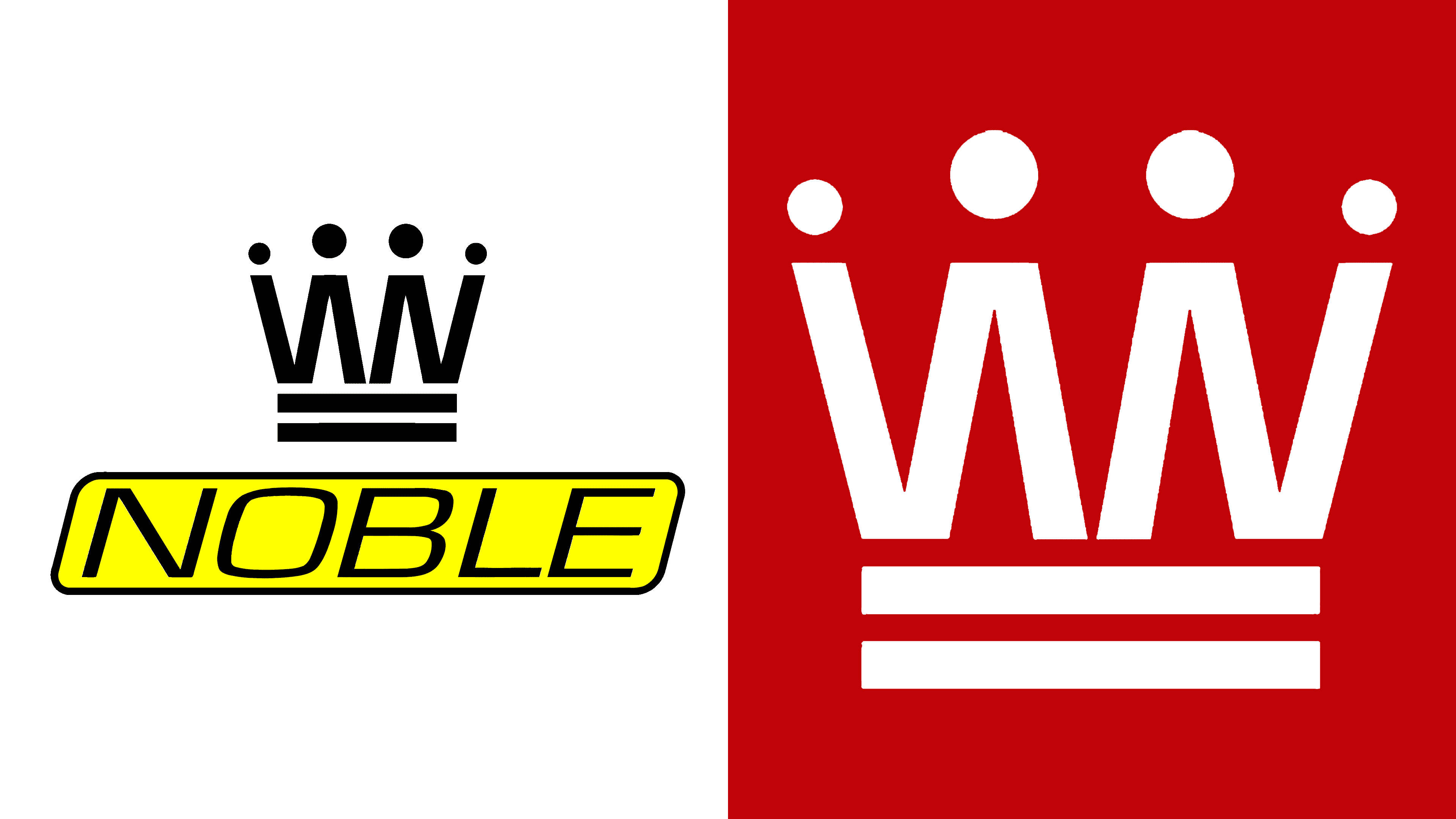
Since 1999, Noble Automotive Ltd, a British automaker based in Leeds, Yorkshire, has been supplying high-speed sports cars to the market. It gained notoriety with the M600 model, which boasts a top speed of 362 km/h. However, by 2012, the company was on the verge of bankruptcy, leading to the closure of its serial and custom production.
The brand symbol reproduces the first letter of the surname of the founder, chief designer, and company director, Lee Noble. The mirror arrangement of letters visually evokes a chess piece, such as a queen or a four-pointed crown, which speaks to aristocracy and the superiority of the cars it produces. Two crossed flags symbolize the car’s sporty orientation and its focus on speed.
Pininfarina
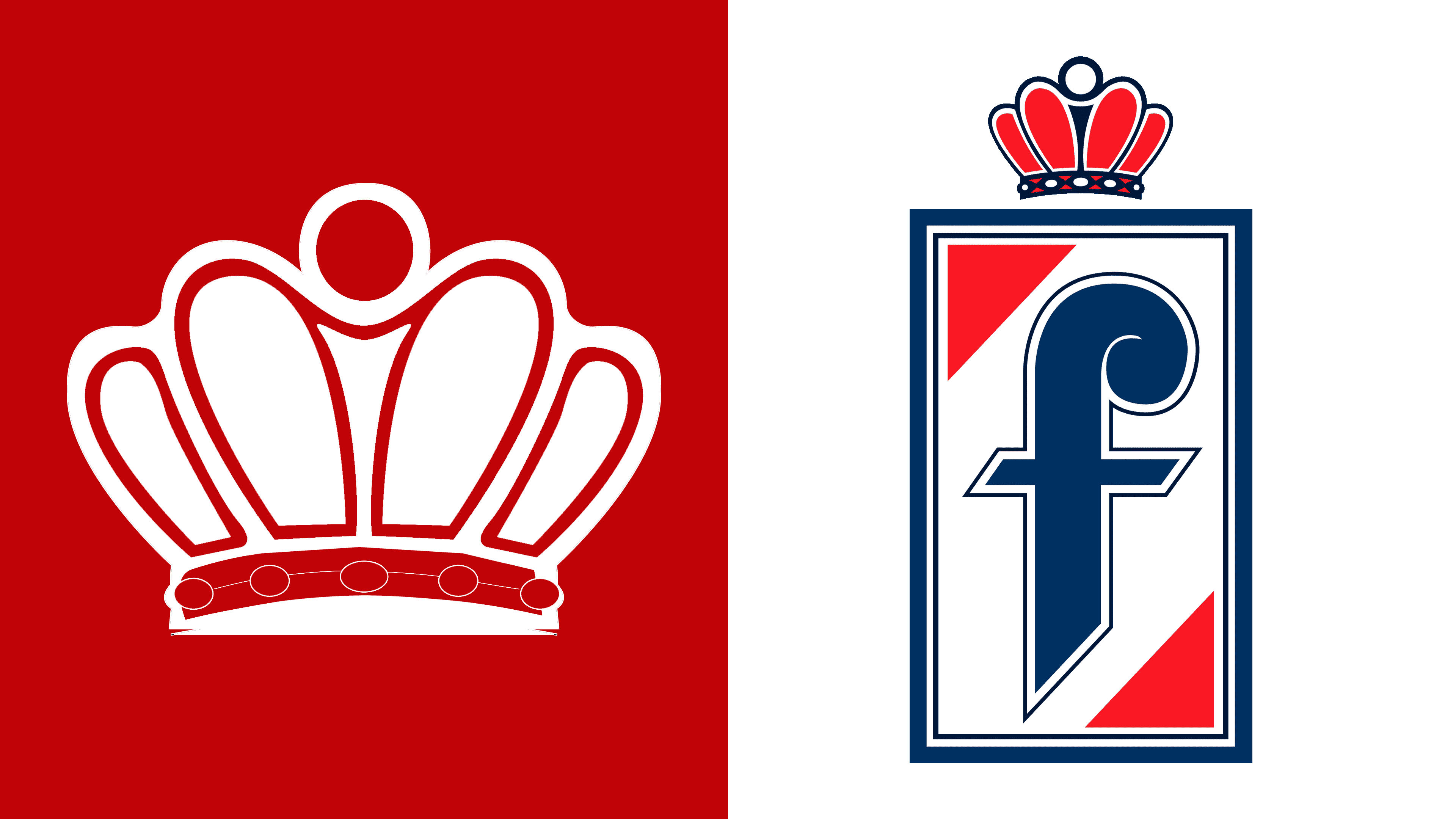
The Italian company Pininfarina was founded in 1930. It specializes in developing bodies and exterior styling for passenger cars. It gained fame through contracts with American companies. With the advent of the hybrid engine era, the company produced its first electric car, the Bellore.
The Pininfarina logo consists of the brand name in a square, italic font with lowercase letters. It effectively reflects the harmony of classic and innovation, conveying a sense of impeccable style and experience. The mark is presented in the form of a vertically arranged rectangle, in the center of which there is an accentuated bold letter “F” with a curved rim, which is the first letter of the founder’s surname. A red crown with an elegant pearl highlights the brand’s rich heritage. Thanks to digital technology, the brand has undergone minor graphic changes to improve clarity and quality. The color scheme reflects a loyal, high-quality design approach.
Alfa Romeo
Anonima Lombarda Fabbrica Automobili is an Italian automobile company founded in 1910 that, in 1915, came under Nicola Romeo’s ownership and was renamed Alfa Romeo Automobiles S.p.A. At every stage of its development, it achieved brilliant results, competing in Formula 1 races. The brand gained fame for its innovative approach to design, interior design, and advanced positioning in the automotive industry.
To mark its 110th anniversary, Alfa Romeo commissioned a logo redesign in partnership with the Robilant Association studio. Laconicity and digital technology made the new version more presentable. The color scheme retains the red cross, blue ring, and green snake. The font is Distancia ExtraBold, with serifs symbolically conveying the movement and speed inherent in this category of car. The dividing bar was removed, and a silver structure replaced the blue-and-white background. This allowed the number of turns in the crowned Biscione to increase or decrease, uniting it with the cross of the Milan coat of arms and paying homage to the country’s and nation’s history.