


The stars have always been a source of power and inspiration for mankind. The heavenly luminary seems unattainable. Everyone knows the phrase of the ancient Roman philosopher Seneca: “Through difficulties to the stars,” where the stars are associated with victory, success, and glory. Ancient peoples believed that the luminaries were gods and that Polaris was the center of the universe.
What are all-star car logos?
This list includes car logos adorned with stars of different shapes, sizes, and colors. Many car manufacturers worldwide use this geometric figure in their branding.
Stars also appear on the flags of various countries, such as Turkey, the USA, Cuba, and Algeria. The automotive industry has not overlooked the symbolism. Stars in logos symbolize the pursuit of perfection, impeccability, protection, and reliability.
Englon (China)
The brand appeared on the market relatively recently, in 2010. Englon is also a subsidiary of another Chinese manufacturer, Geely. The brand produces cars in the classic British style. The bright logo is also visible on London cabs, as Geely acquired the London Taxi Company in 2013. The Englon logo is divided into two parts: a blue palette with stars and a fiery palette featuring a goddess. The company’s stylized gold lettering, resembling handwriting, sits at the top of the logo.
Askam (Turkey)
The Turkish company Askam manufactured trucks. In 2015, the brand filed for bankruptcy and ceased selling its products. In 1962, the company began operations with support from Chrysler. The famous brand supplied production cabs. The Askam logo is a star enclosed by lines inside an oval. Below it, the company name complemented the logo. The designers made the logo three-dimensional and added reflective details.
Western Star (USA)
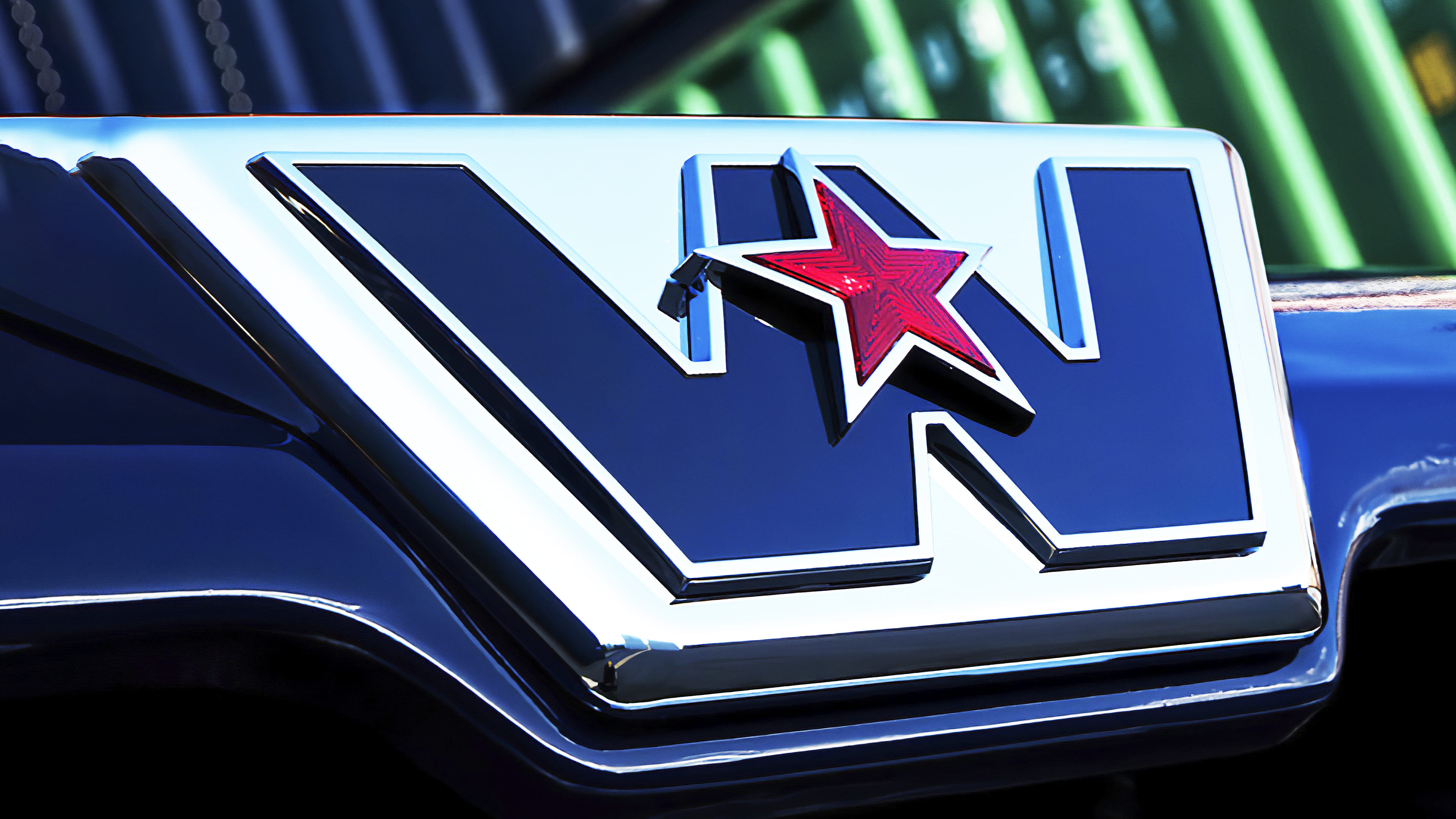
This truck manufacturer is deeply rooted in the American spirit, as reflected in both its name and logo. Founder William Signius Knudsen founded the company in 1967, and it focuses on the B2B segment today. He worked for companies such as General Motors and Ford, which helped the company achieve early success. The brand logo consists of a large letter “W” with a red star inside. The figures are outlined in metal with a distinctive shine.
Venucia (China)
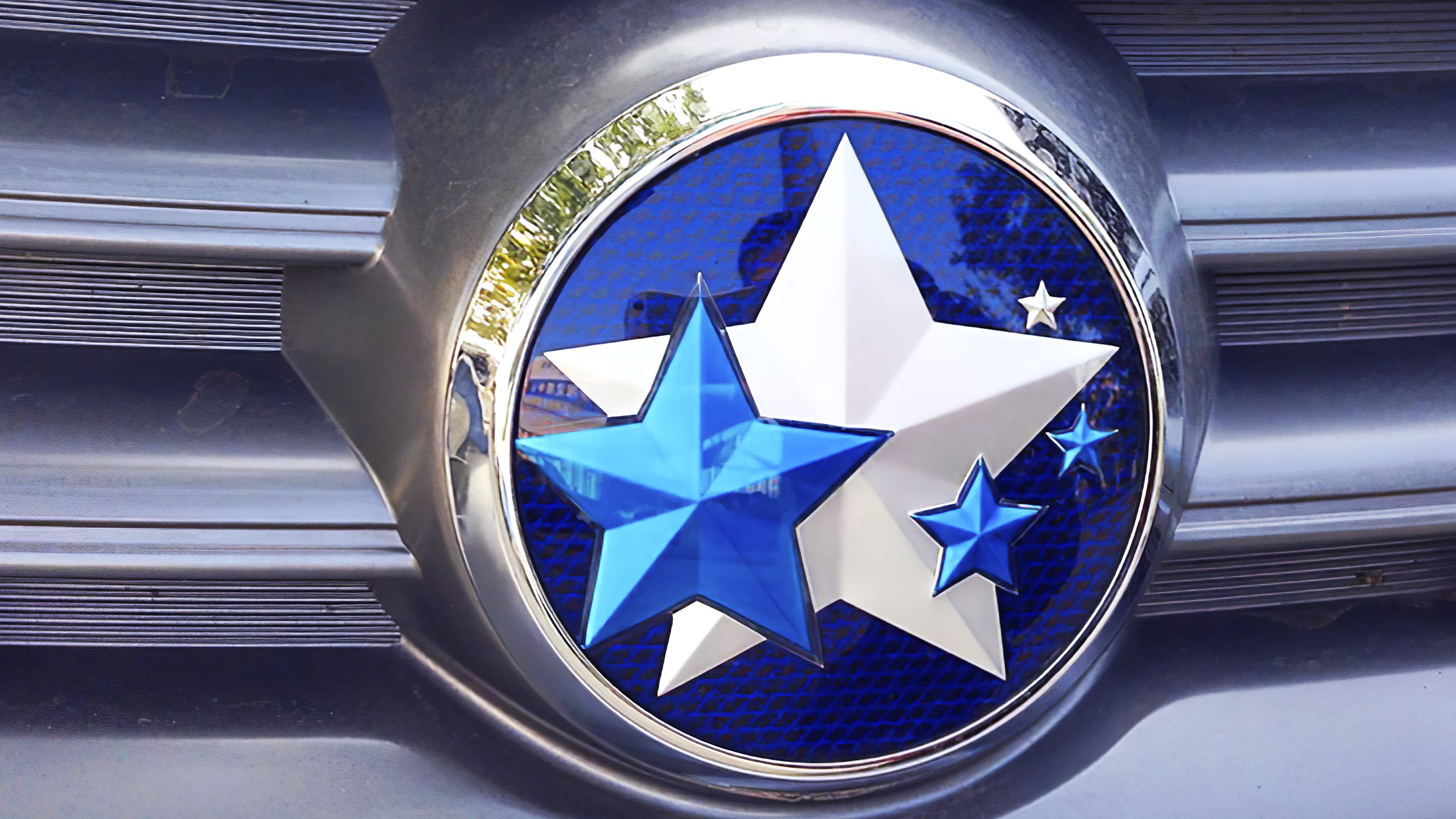
The Chinese manufacturer is a subsidiary of Dongfeng Nissan Passenger Vehicle, founded in 2010. The company’s first logo had five stars in different shades of blue and silver. In 2017, the company simplified the image. The designers kept the two visible silver stars and added one outline star on a blue background. The name Venucia directly means “Morning Star” or “Beginning of a New Day.” The brand’s symbols embody its core values: creating the ideal, building trust, and reaching a new world standard.
Facel Vega (France)
The company’s history dates back to 1939, when the brand specialized in manufacturing aviation products during the war. Then, in 1945, Facel Vega developed coupe bodies for the respected Panhard, Simca, and Ford brands. Production of our models began in 1954, while the brand itself lasted only 10 years.
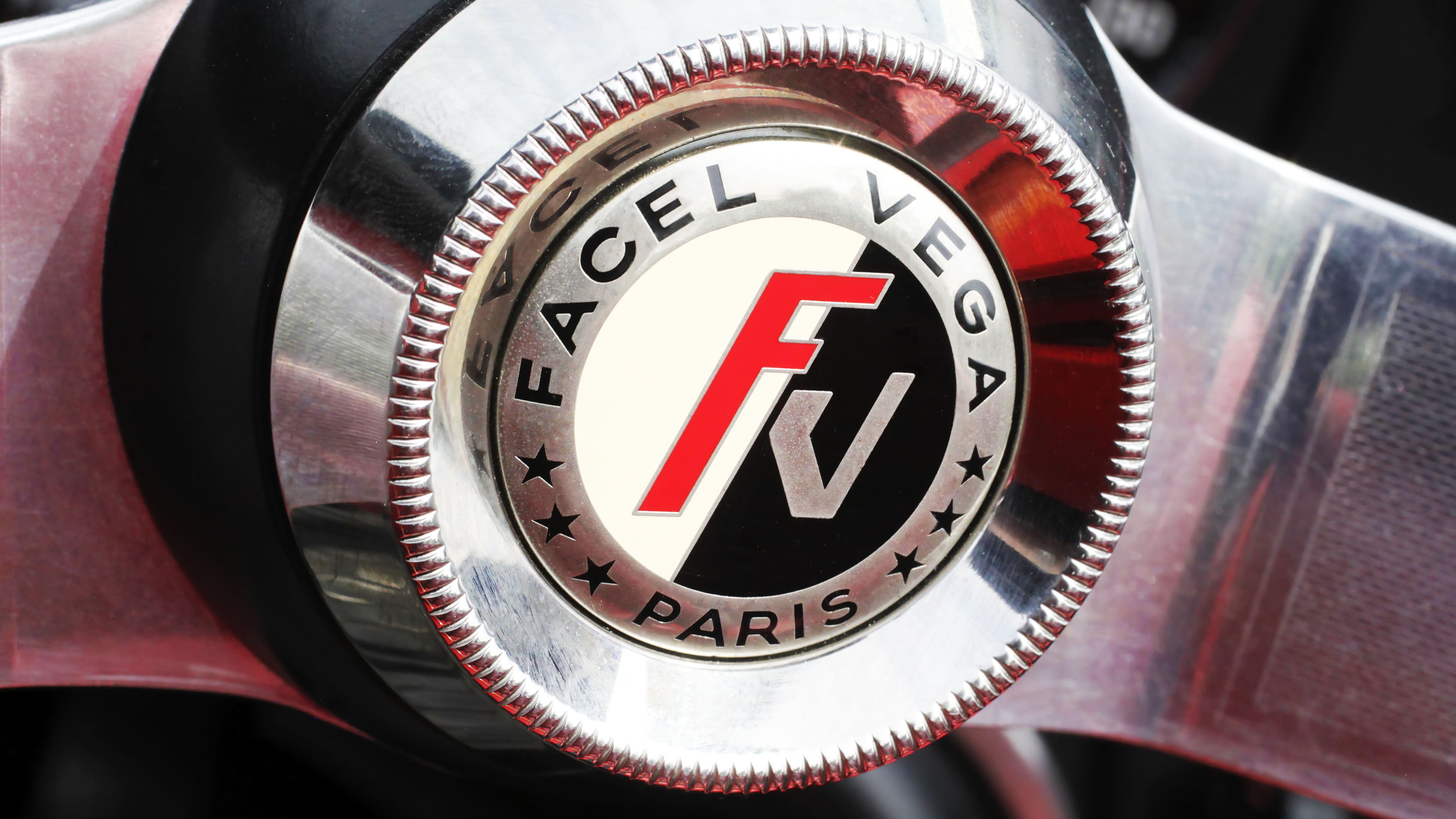
The Facel Vega logo features red, yellow, black, and silver. Lines separate the colors, arranged in a circle, each accompanied by an abbreviation. The full name “Facel Vega” and six stars are printed on the bezel. The company went bankrupt after losing customer confidence because it used a low-quality Pont-à-Mousson engine.
Berkeley (UK)
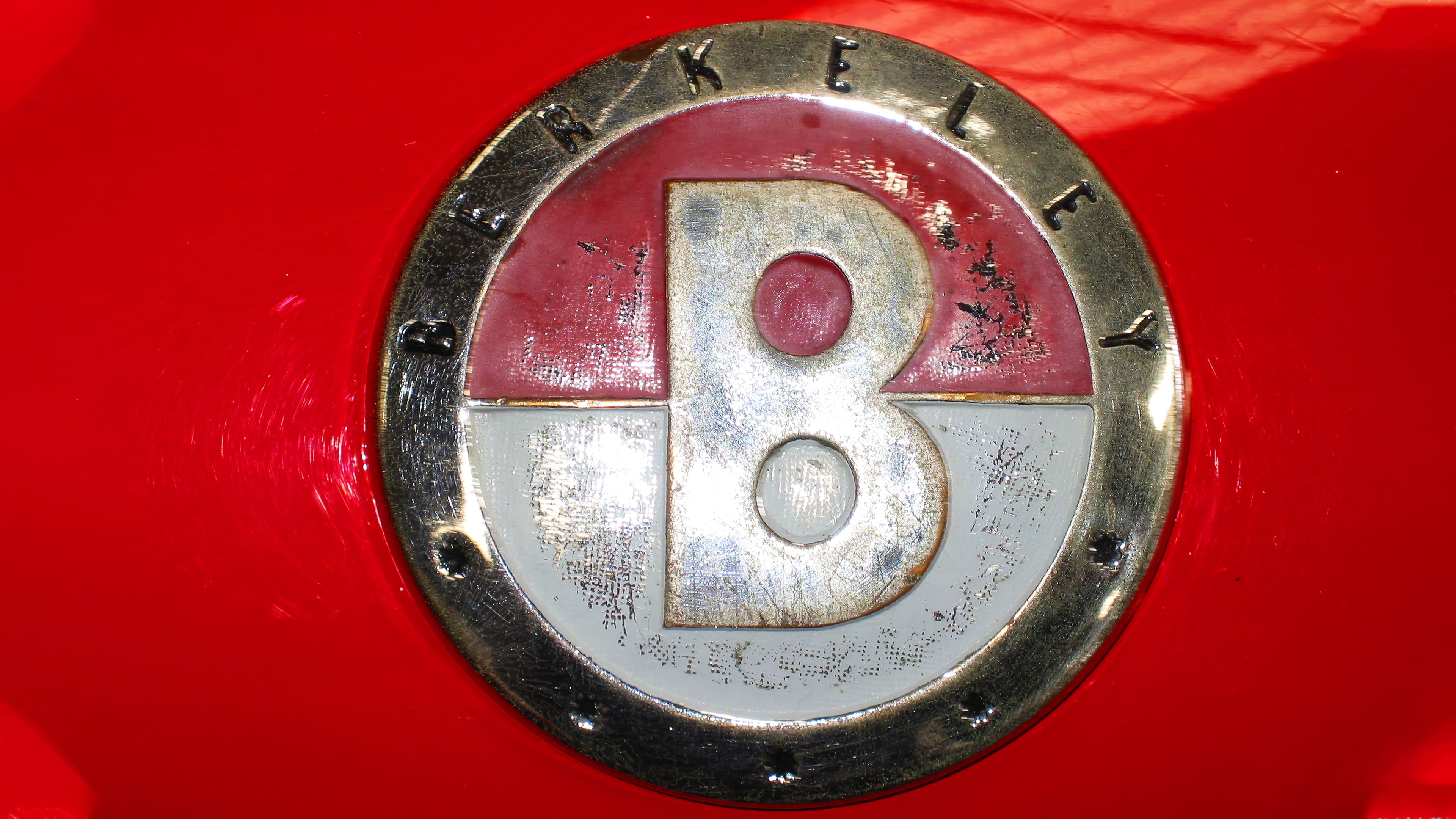
Berkeley is a British manufacturer that competed with Mini and developed sports cars. The brand’s logo was bright and recognizable. Red and gray fill a circle, separated by a straight line. Inside the circle is a large letter B. A gray stripe runs along the figure’s contour, with the name and five stars. The company’s early success was substantial, and Berkeley grew rapidly. After experimenting with several models, the product’s market share declined, and in December 1960, the firm declared bankruptcy.
Subaru (Japan)
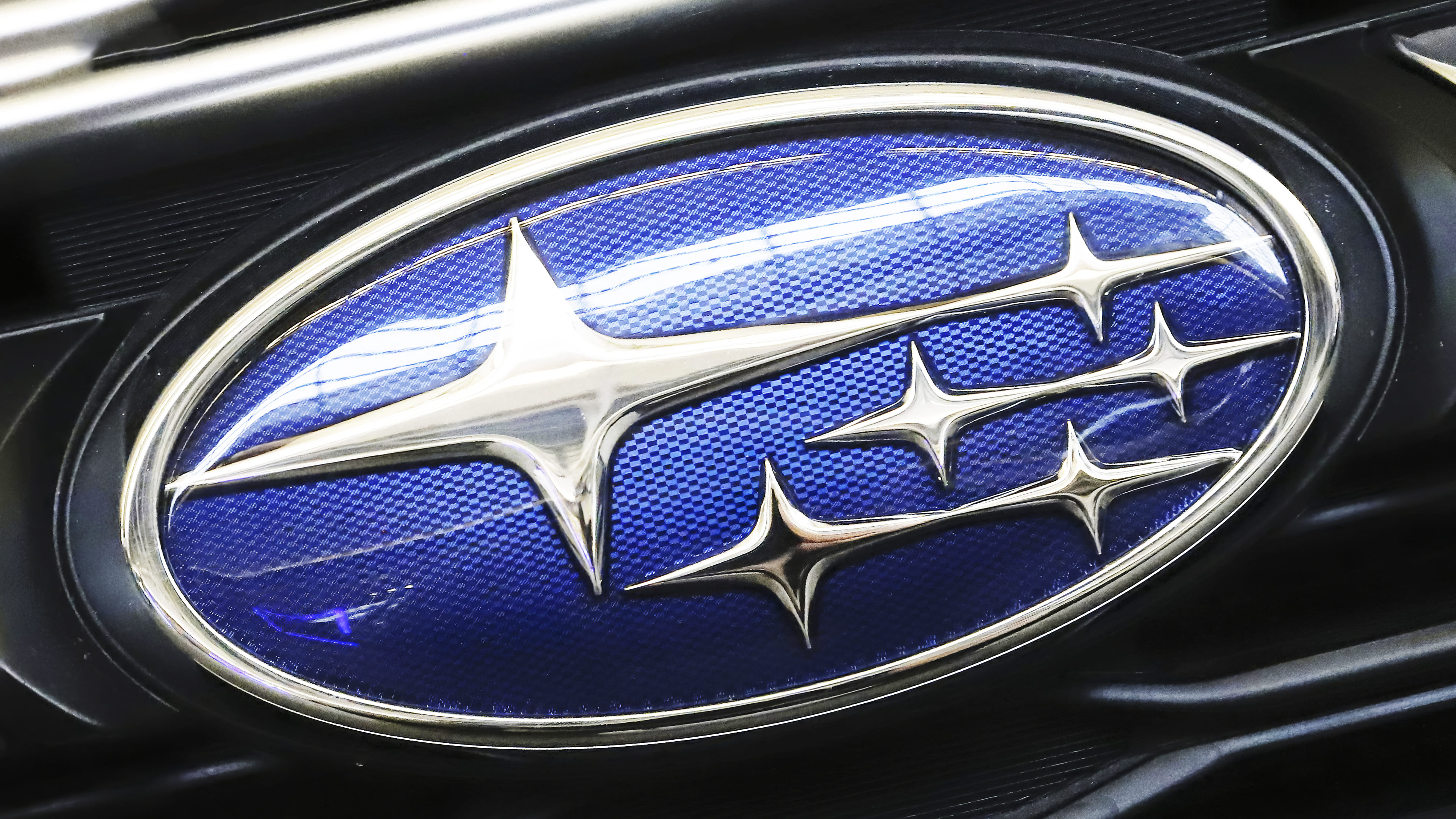
The Japanese brand name, like the logo, has a special meaning and an interesting history. Subaru’s founder, Kenji Kita, wanted to give his brainchild a Japanese name. He even organized a contest for the best name, but never chose the right one. The winner was “Subaru,” meaning “to assemble, to join.” It also refers to the Pleiades, a star cluster in the constellation Taurus. The logo features six silver stars of varying sizes on a blue background. Stars have accompanied the company throughout its history, unsurprisingly. Only the colors, background, and location have changed.
Pontiac (USA)
Pontiac is a General Motors division that ceased operations in 2010 after producing its final car. GM’s financial problems led to the liquidation. The brand was named after an Indian chief who led an 18th-century rebellion against the British. Paying tribute to history and roots, the first logo featured an Indian headdress. In recent years, Pontiac has adopted a more concise version featuring a downward-pointing red arrow. This logo is also known as the “Dart.” At the top of the arrow is a silver star.
Mercedes-Benz
One of the oldest automobile brands has a concise logo shrouded in many stories and mysteries. Several versions of how the famous logo came to be exist. Gottlieb Wilhelm Daimler, one of the brand’s founders, first used the future logo. He sent his sons a postcard with views of Cologne. The engineer marked his house with a three-pointed star.
The manufacturer supplied its engines not only for automobiles but also for aviation and marine transportation. The three rays symbolize the founder’s profession. In another version, Gottlieb Wilhelm Daimler decorated his house with a star, and his sons incorporated his idea into the Mercedes logo.
The famous logo features a three-pointed star within a wheel. Originally, a laurel wreath symbolized success and victory. The symbol’s placement on the car shifted from the hood to the radiator grille to reflect the sporty style of premium models.
Polestar

Polestar is a Swedish company that has specialized in passenger-car production since 1996. Volvo currently owns it and develops electric cars and racing models. The company also produces electric motors.
The Polestar logo is a polar star formed by two intersecting arrows. The company uses shades of gray and white. One half is darker to create a shadow effect. When the logo is placed on the car itself, it becomes clearer and more saturated. The brand uses a glossy finish, which adds extra shine and makes it look more premium than the paper version.
Polestar is banned from using its logo in France because of a legal dispute with manufacturer Citroën. In addition, the court ordered Polestar to pay a € 150,000 fine.
JAC
The Chinese automaker updated its logo a few years ago and now uses its name inside an oval. JAC was once recognizable for its red star logo. The thin five-pointed star within a large circle was popular at the time and symbolized harmony and safety. Using white lines made the logo appear more three-dimensional. Ultimately, the brand felt the emblem was too large for cars and switched to a more minimalist version.
Initially, the Chinese company specialized in truck production. In the late 1980s, JAC produced a frame chassis, which saved the company from bankruptcy. Since 2001, the brand has begun producing additional passenger cars. JAC produces more than 500 thousand cars per year.
Jeep

The Jeep automobile brand began using the “star” logo during World War II. Before the outbreak of hostilities, a large number of cars were exported from the United States to other countries. When they left the factory, they received an identification number and a star logo. When World War II began, the U.S. needed to distinguish enemy cars from American cars. So, Willys also added a circle around the star using a special stencil.
Today, Jeep uses a simple logo with the brand name. By the way, there are several versions of the name’s origin. Three relate to World War II, and the fourth says Jeep is named after Eugene the Jeep from the Popeye comic strip.
Chrysler-Dodge
This brand has changed its logo symbolism multiple times and has returned to the stars several times. The star first appeared on the logo in 1962. Designer Robert Stanley created the five-pointed symbol. Lynn Townsend, one of the company’s directors, selected a logo from 700 options that conveyed modernity and versatility. Some say the five-pointed star represents Chrysler’s five divisions. But it turned out to have no hidden meaning; management simply liked the logo.
In 2008, the company returned to the “star” logo. The symbol was placed in a pentagon, and the color changed to gray. The star became more prominent, and the clear lines symbolize strength, precision, and confidence. In addition, the designers increased the logo’s volume and shaded certain parts of the star. Chrysler-Dodge now uses a simple logo with the company name.
Durant Motors
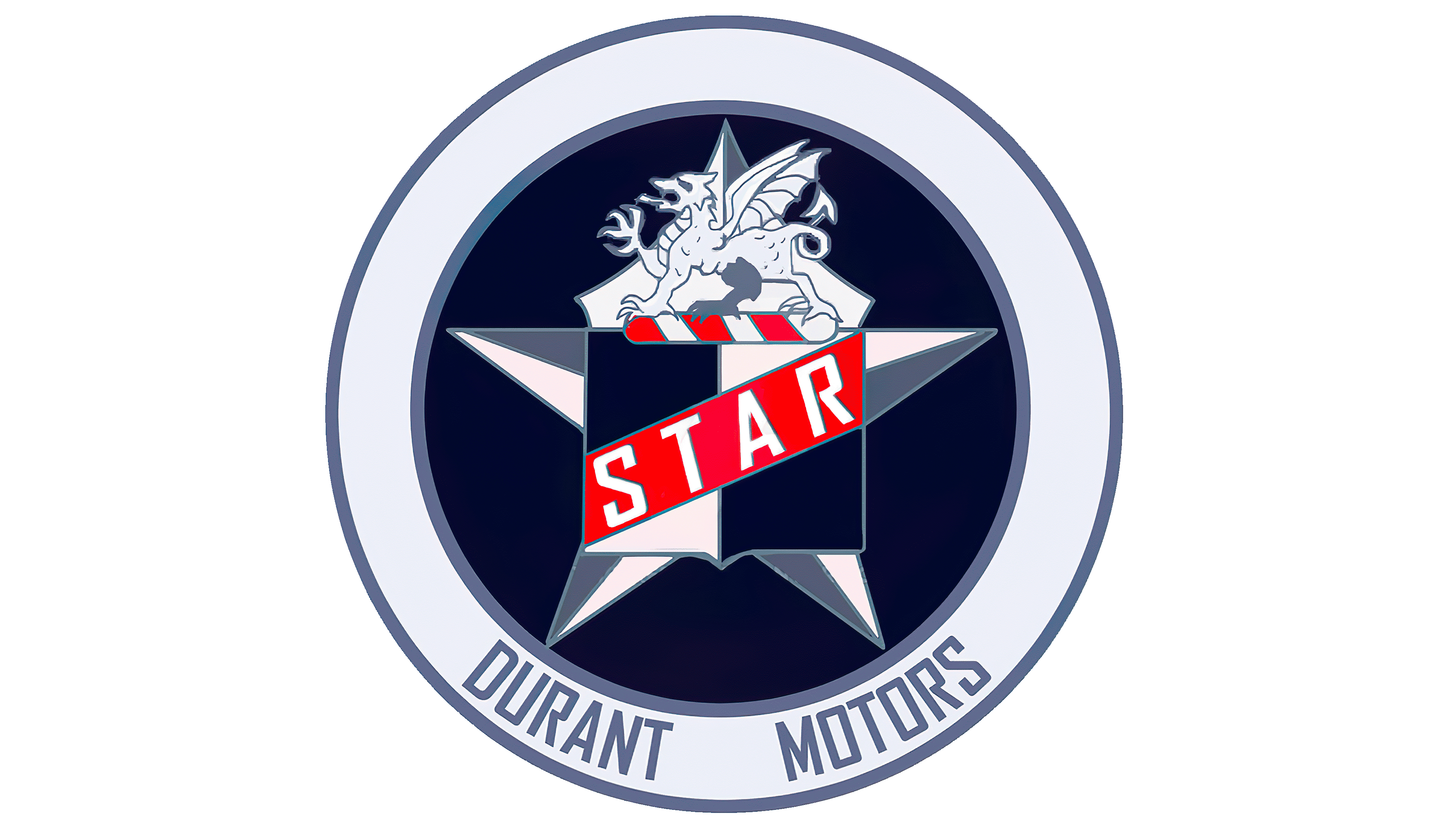
William “Billy” Durant founded Durant Motors in 1921, and it lasted only ten years. After leaving General Motors, the company’s founder founded his own business. One of the most famous Star logos appeared on the Star Four automobile, which the company produced from 1922 to 1928. The car was popular and came in several body styles.
The logo that accompanied the successful model is presented in shades of blue, white, and gray. The center of the image features a star with a shield and a dragon on top. The shield itself reads “Star,” with “Four” and Durant Motors below. The company’s main logo featured the same shield and dragon, but in red instead of blue.
Video
Stars aren’t the most popular choice among automobile companies. A car emblem with stars evokes strong associations, as countries and large organizations often use this symbol. Still, you can see a trend: popular brands such as Mercedes and Subaru use this image on their cars. Behind a car with a star symbol, there is often an interesting story or a reflection on the significance of the company’s founders.