


In 1853, a chef named George Crum invented the first chips in New York by thinly slicing potatoes and frying them until they were nice and crunchy. People loved this new snack at his restaurant. This was the start of chips becoming a favorite snack for many.
In 1925, a Pennsylvania company called Hanover Home Brands began making chips in large quantities using a special frying method. This made it easier and cheaper to produce many chips. After World War II, chips became even more popular. New technologies made it easy for everyone in America to enjoy them, and the companies that made chips grew.
Nowadays, chips are super popular worldwide. Many kinds are made from potatoes, veggies, fruits, and grains. There are so many flavors and types to choose from.
Logos are really important for selling chips. A good logo makes people remember and feel happy about their favorite snack:
- Many chip brands have pictures of chips on their logos, making you think about their taste.
- Chip bags are often bright and colorful. The colors can remind you of the flavor, like the warm brown of potatoes, the red of tomatoes, or the zing of peppers.
- Big chip brands use special fonts that people immediately recognize in-store, making them think of that brand.
- Brands use catchy phrases in their logos to talk about how fresh, crunchy, and yummy their chips are.
A fun, easy-to-remember logo is important for a chip brand to stand out and make people want to buy and try its chips.
Lay’s
Herman Lay started selling potato chips from his truck in Nashville, Tennessee, in 1932. This small start led to the creation of Lay’s, a favorite chip brand for many people. Lay opened a chip factory in 1938, making Lay’s a well-known name. The brand grew even bigger by partnering with restaurants and spreading throughout the South.
By 1944, Lay’s had over 150 salesmen and was easy to find in stores across the Southeast U.S. In 1961, Lay joined the Frito Company, which became Frito-Lay, Inc. This made Lay’s available nationwide. Then, in 1965, Frito-Lay and Pepsi-Cola merged to form PepsiCo. This helped Lay’s grow even further by adding many new flavors.
Now, Lay’s is known worldwide and has many different flavors. It’s still America’s top potato chip brand. The Lay’s logo, with its happy white letters, red swoosh, and yellow background, shows what the brand is all about: light, crispy chips with many flavors.
Doritos
Doritos began at Disneyland in the 1960s and quickly became a popular snack. They’re known for their triangle shape and bold flavors. The Doritos logo resembles a fire or lightning bolt and uses bright colors to convey the snack’s fun and daring spirit.
The snack first came out in 1964, made by Frito-Lay, a part of PepsiCo. It was first sold at Disneyland in Anaheim, California. Doritos means “little golden things” in Spanish. They began with simple flavors like basic and taco, but soon added more, including taco supreme and nacho cheese, which people liked.
Throughout the 1970s and 1980s, Doritos became increasingly popular, adding new flavors regularly. In 1994, they launched a cool ad campaign called “Crash the Super Bowl,” which let people create their own Doritos ads. The 1990s and 2000s brought more flavors and fun marketing, including partnerships with video games like Halo.
Now, Doritos is one of the top snack brands in the world, generating over $1.5 billion in annual sales. They keep introducing new flavors and are sold worldwide. Over 50 years later, Doritos remains a favorite for its bold flavors and fun spirit.
Pringles
Pringles started making its unique chips in the 1960s. They made chips that looked like saddles and could be stacked easily in a tube that could be closed again. The Pringles logo has a funny character with a black mustache and happy eyes on a red background. This shows how fun and creative Pringles wants to be.
The idea for Pringles came from Fredric Baur, a scientist at Procter & Gamble. He wanted to make a snack that looked the same every time and could be made without breaking like other chips. Pringles first emerged in 1968 and changed how we think about snack foods by always looking and tasting the same.
Pringles became popular and was the second-biggest chip brand by the mid-1970s. To keep everyone interested, they kept making new flavors, such as pizza, cheeseburgers, and loaded baked potatoes.
In 2012, Procter & Gamble, the company that made Pringles, sold it to Kellogg’s for $2.7 billion. Kellogg’s is a big company that knows a lot about food and snacks. With Kellogg’s, Pringles has made even more flavors and sells chips in over 140 countries. It makes a lot of money, and people worldwide love eating Pringles. Even though a different company now owns it, Pringles is still a favorite snack for many people.
Ruffles
Ruffles is a famous brand of potato chips founded in Adrian, Michigan, by Bernhardt Stahmer in 1948. He wanted to create a new kind of snack, so he made chips with deep ridges for dipping. At first, they were called “Ripples,” but later changed to “Ruffles” to trademark the name when Bernhardt Food Corporation was formed in 1958.
People in Michigan, Ohio, Pennsylvania, and the Midwest loved these chips because of their unique shape, great crunch, and strong potato flavor. By the 1960s, Ruffles became popular in the area. In 1961, the Frito Company bought Ruffles, making it known nationwide during that decade through Frito-Lay and PepsiCo.
Over the years, Ruffles has introduced many flavors and is now sold worldwide. Still, the chips have kept their famous ridged texture, which people have loved for over 60 years. The Ruffles logo, with its big red letters and blue outline, shows the chip’s unique texture, making it a well-known snack brand.
Kettle Brand
Cameron Healy started Kettle Brand in Salem, Oregon, in 1978 with just a coal-fired kettle to cook potato slices. These chips turned out thicker and crunchier than most, making them a hit, especially in Portland and Seattle. People loved how they tasted and felt.
In 1982, Kettle Foods Inc. was created, focusing on making small batches of these special chips. This careful way of making chips helped the brand grow. Throughout the 1980s and 1990s, Kettle Brand spread its snacks across the West and, by the 2000s, all over the country. This growth caught the attention of big companies. Lion Capital bought it in 2006, then Diamond Foods in 2010 for $615 million because it was doing so well, making over $170 million a year. In 2016, Snyder ‘s-Lance was acquired, and in 2018, Campbell Soup Company bought it, adding Kettle Brand to one of the biggest snack food groups.
The Kettle Brand logo, a rugged green text, shows the company’s focus on natural ingredients and environmental care. The modern look of the word “Brand” below highlights their commitment to quality and green practices, showing how Kettle Brand has always looked to the future while remembering its roots.
Cape Cod
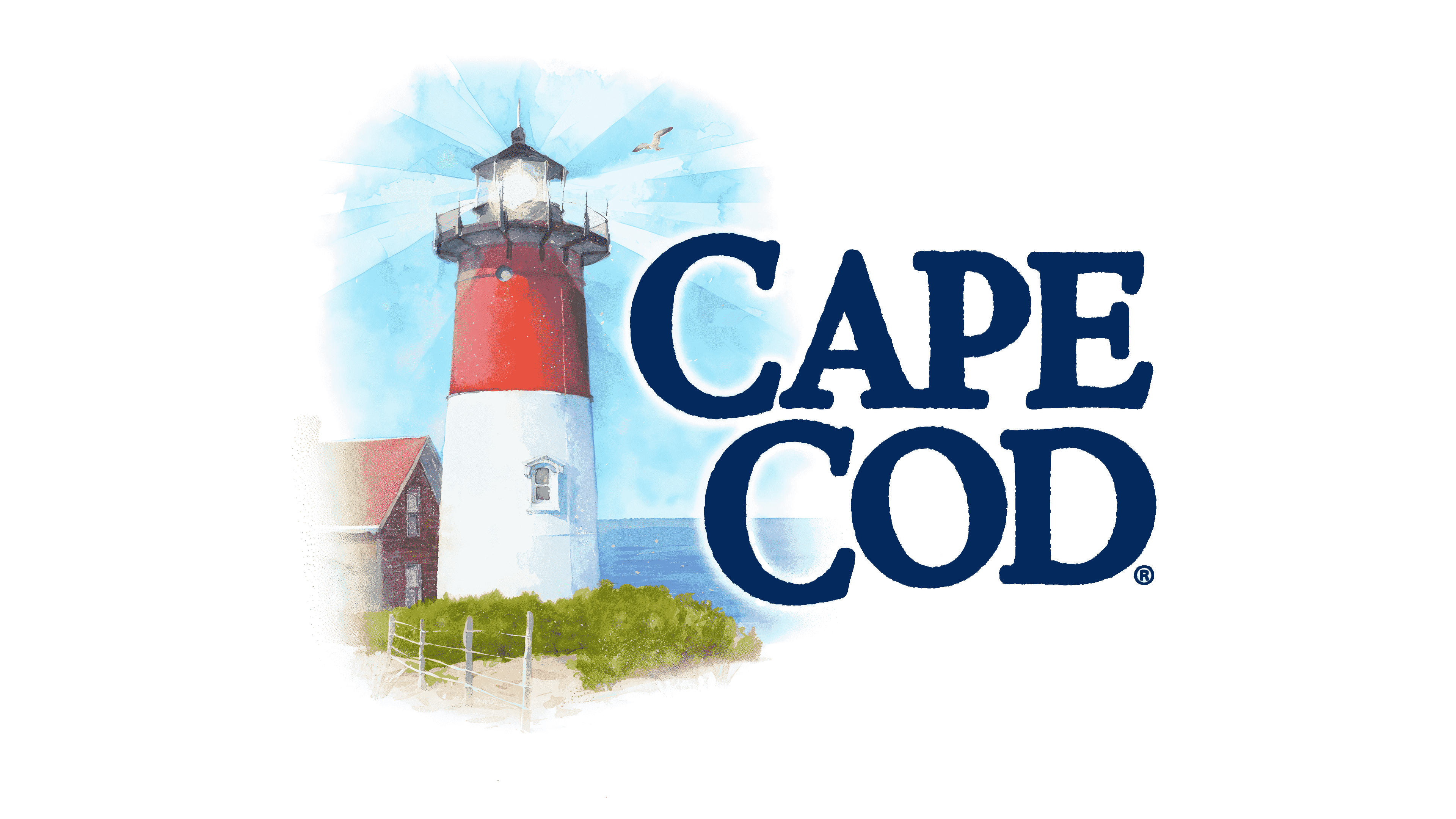
Cape Cod Potato Chips started in Hyannis, Massachusetts. The brand was created by Steve Bernard in 1980 because he wanted to make chips just like his family used to. He began making these special kettle-cooked chips in his kitchen, and people in his town soon loved them. They were known for being crunchy and tasty, and at first, you could only buy them at local stands and shops around Cape Cod.
The company has grown over the years. In 1985, a large company called Anheuser-Busch bought Cape Cod Potato Chips, helping them sell their chips in more places. Later, other companies, like Snyder ‘s-Lance and Campbell Soup Company, acquired it in 2018. They all helped the brand grow while keeping the chips delicious as they’ve always been.
Now, Cape Cod Potato Chips is a well-known snack brand in America. It’s famous for its quality and for capturing New England’s special feeling. The logo features a lighthouse and a cottage against the ocean, suggesting that Cape Cod Potato Chips is all about bringing the taste of New England to everyone.
Tostitos
Tostitos was started in 1979 by Frito-Lay and quickly became famous for its tortilla chips and yummy dips, perfect for parties and fun times. They wanted to make snacks that tasted like authentic Mexican food because many people in the United States began to like Mexican dishes in the late 1970s.
First, Tostitos were tested in California, and people loved them because they tasted authentic but were still mild enough for everyone. After doing well in California, Tostitos became available nationwide. During the 1980s and 90s, they didn’t just stick to chips; they made salsa and queso dips. Tostitos became popular in the United States, Australia, Europe, and Latin America.
Tostitos is one of the biggest names in the tortilla chip world, generating more than $1 billion in annual sales. This shows how much people enjoy Mexican flavors and how Tostitos helps make snack time a fun time with friends and family.
The Tostitos logo is fun and colorful, expressing the brand’s happy, party-like vibe. It tells you that Tostitos is more than snacks; it brings people together to enjoy good times.
UTZ
UTZ was started in 1921 in Hanover, Pennsylvania, by William and Salie Utz. They began making potato chips in their kitchen with $300 they borrowed from their car. This was the start of something big. UTZ has grown a lot since then. They built their first factory in the 1930s because more and more people wanted their snacks, especially during World War II.
In 1952, their son, Arlene, took over, and UTZ grew even bigger, making more snacks and selling them farther away. By 2001, the people who worked at UTZ owned the company. They continued to grow by acquiring other snack brands, such as Zapp’s Potato Chips, in 2007.
UTZ is one of the biggest snack companies in America, and families still run it. They’re known for making a wide variety of tasty snacks.
UTZ’s logo is special, too. It features a picture of a girl in red, looking happy as she eats a UTZ chip. This logo shows that UTZ cares about making good snacks and has been doing it for a long time.
Herr’s
James S. Herr started a small snack business in 1946 after returning from military service. He used the $1,100 he saved to make potato chips in his family’s kitchen in Philadelphia, Pennsylvania. The company, Herr’s, has a red-and-white logo that reflects its long history and focus on making tasty snacks.
James worked hard with his wife to make every batch of chips. By 1952, they officially launched their company, Herr Foods Inc., and soon had to produce more snacks in new facilities in Philadelphia and Baltimore due to high demand. James devised new ways to make chips faster and added popular flavors like sour cream and onion in the 1970s, making Herr’s even more popular.
After James died in 1997, his wife, Miriam, and their son, Ed, took over. They kept the business growing in the Mid-Atlantic and Northeastern United States. Herr’s has over 1,100 workers and is known for its commitment to quality and keeping the family’s legacy alive for over 75 years.
Wise Foods
Wise Foods started in 1921 in Berwick, Pennsylvania. A small family business grew big when it found a smart way to use extra potatoes: making potato chips. Wise is known for many tasty snacks; people can easily spot them with the yellow owl logo. This logo looks fun and smart, which fits the Wise brand perfectly.
At first, Wise was just making chips in a restaurant kitchen, but by 1925, they needed a bigger place to make enough chips for everyone who liked them. This was the start of selling their chips in more places, not just in Pennsylvania but later in other parts of the East Coast and Midwest. Over the years, they kept making new snacks and even worked with the Philadelphia Eagles to get more people to know about their chips.
In 2010, Arca Continental bought Wise. This helped Wise grow even more, thanks to new investments and ideas. Today, Wise is still about making good snacks and keeping up with what snack lovers want, which their owl logo has always stood for.
SunChips
In 1991, Frito-Lay, part of PepsiCo, launched SunChips as a new snack. These chips were different because they were made with whole-grain corn, making them a tasty yet healthier option than regular potato chips. SunChips first came out in flavors like Harvest Cheddar, Garden Salsa, and French Onion, which had less fat.
Over time, Frito-Lay added more flavors, including Sweet and Spicy BBQ, and a baked-chips line with less fat. In 2010, they tried using compostable bags to be more eco-friendly, but switched back because people found the bags too noisy.
Today, SunChips offers many flavors, including the original ones, as part of PepsiCo’s effort to make snacks that are good for you. The SunChips logo features a bright half-sun and a blue sky, symbolizing the brand’s commitment to great taste and environmental stewardship, such as using solar energy to make the chips.
Zapp’s
Zapp’s Potato Chips started in Gramercy, Louisiana, in 1985. The founder, Ron Zappe, turned his mom’s special recipes into a tasty lineup of kettle-cooked chips. These chips are all about the big taste of Louisiana, with flavors like Spicy Cajun Crawtator, Jalapeño, and Voodoo. They quickly became popular in Baton Rouge and New Orleans, all over the South, the Midwest, and the Northeast by the early 2000s.
In 2006, Zapp’s opened a new facility to make its chips, enabling it to produce more chips and hire more people, reaching 100 employees by 2011. That same year, Utz Quality Foods bought Zapp’s, but the chips kept their unique flavors, like Mesquite Bar-B-Que, Hotter N’ Hot Jalapeño, and Cajun Dill Gator-tators, reaching even more people.
The look of Zapp’s, with its fun red lettering and a picture of a crawfish, showcases its Louisiana roots and spicy chips. The logo reminds everyone that Zapp’s chips are all about bringing the taste of Louisiana to every bite.
Miss Vickie’s
Miss Vickie’s started in a small kitchen in 1987. Vickie and Paul Heron made potato chips that tasted like home. They cooked their chips just right to make them crunchy and full of flavor. Their logo is a fancy maroon color, showing they care about making good chips.
They began in New Brunswick, Canada, and quickly became popular for their tasty chips. By the early ’90s, people in Eastern Canada loved their Salt and Vinegar, Barbeque, Jalapeño, and Sea Salt and Malt Vinegar chips.
In 1994, a large company, Hostess Frito-Lay Canada, bought Miss Vickie’s. This helped them sell chips all over Canada and the United States. They made new flavors like Sweet Chili and Sour Cream & Onion, which people liked.
Later, Miss Vickie’s started selling its chips in Europe and Asia, making it known worldwide. Today, it still makes its chips as it did in 1987, keeping the yummy taste and crunch everyone loves.
Takis
Takis is a snack known for its spicy, bold flavors. These snacks are spicy rolled tortilla chips. The Takis logo is bright yellow with a red twirl, showing it’s all about spicy flavors.
Takis was launched in Mexico in 1999 by Barcel, a subsidiary of Grupo Bimbo. They made Takis the best spicy snack. Their first flavor was Fuego, a spicy blend of chili, lime, and salt; people liked it.
As more people started liking Takis, they made new flavors, including some that weren’t as spicy. In 2009, Takis decided to sell their chips in the United States, especially in places where a lot of Mexican and Mexican-American people live, like California and Texas. They made flavors that they thought people in the U.S. would like.
Takis became very popular in the U.S. thanks to good marketing and partnerships. They even made a special flavor called Chipotle Comet. Takis is one of the top spicy snacks in North America, and they are still made in Mexico to meet the high demand.
Terra Chips
Terra Chips changed the snack game by making veggie chips fancy. Two chefs, Dana Sinkler and Alexander Dzeduszycki, started it to make a healthier, yummy snack. They picked special veggies like yucca, taro, sweet potato, and batata to make their chips taste good and look bright. They didn’t use things like celery and lotus root because they didn’t fit their desired taste.
Right from the start, Terra Chips stood out for using natural ingredients, making their chips taste great, and ensuring they were of good quality. This made them popular quickly, and fancy places like Saks Fifth Avenue began selling them. Being part of the Hain Celestial Group helped them grow by using better tech to keep making good chips.
Now, Terra Chips is a big name for healthy snacks. They’re not just snacks; they’re like a special treat. Every bag is full of flavor and color, making snacking fun and different. Terra Chips continues to develop new, tasty, healthy flavors that people love.
Their logo is fancy, too, with “real vegetable chips” written in a nice style. It shows that Terra Chips is all about authenticity and quality. Their chips aren’t just snacks; they make snacking a fancy experience.
Food Should Taste Good
In 2006, Pete Lescoe founded Food Should Taste Good to make healthy snacks that still tasted good. He noticed a few snacks like this, so he made his own. He made tasty chips from Whole Foods. He began with three flavors, Sweet Potato, Multigrain, and Olive, and sold them in natural food stores.
Food Should Taste Good stood out because it focused on making snacks without GMOs and gluten, which was great for people with different dietary needs. The packaging was unique and easy to spot, and they kept introducing new flavors, such as Chia & Quinoa tortilla chips and Blueberry Vanilla Sunflower crackers.
In 2011, a larger company, The WELD North Company, bought Food Should Taste Good. This helped the brand grow and get its snacks into more stores nationwide. Food Should Taste Good now offers over 30 snacks in over 25,000 stores. The brand stays true to its goal of using high-quality ingredients to make sophisticated, delicious snacks. The logo is simple, featuring black-and-white letters that convey the brand’s focus on simplicity and quality.
Popchips
Popchips launched in 2007 as a new kind of snack. Instead of frying chips, which add a lot of fat, they found a way to “pop” them, making them healthier but still tasty. The logo is simple and fun, with the name in big, round, red letters. Patrick Turpin and Keith Belling created Popchips because they wanted a crunchy snack that wasn’t fried or baked. They spent two years perfecting how to pop the chips and picking the best potatoes. In 2009, they began selling Popchips in just two flavors, targeting healthy food stores.
People liked that Popchips had fewer calories and tasted good, so they became popular in the U.S. and Canada. They even added new flavors like Sour Cream and Onion. In 2012, a major investment enabled them to produce more chips and market them more effectively, which helped Popchips grow even further.
Popchips became a common choice in grocery stores across North America as more people wanted healthier snacks. In 2018, a new company bought Popchips, planning to sell them worldwide and create new snack varieties while still focusing on popped snacks.
Boulder Canyon
Boulder Canyon was started in 1994 by John and Mark Maggio and Don and Jay Poore. They wanted to make snacks that were better for you than usual. They knew a lot about making food and chips and used that knowledge to make Boulder Canyon. Their big idea was to make snacks with natural ingredients, without any fake ingredients.
Boulder Canyon makes its chips with high-quality oils, like olive and avocado. This makes the chips better and free of fake ingredients. Now, Boulder Canyon offers more than 30 chip flavors. People like them because they taste good and are a healthier choice.
A company called Utz bought Boulder Canyon, which shows that Boulder Canyon is doing well and reaching more people.
The Boulder Canyon logo has the name in big, red letters and a picture of mountains under it. This shows they care about using natural materials and making snacks for people who like adventure.
Fritos
In 1932, Charles Elmer Doolin started Fritos in San Antonio, Texas. For $100, he bought a corn chip recipe, equipment, and a few customer accounts. That was the beginning of Fritos, a big name in American snacks. The chips are known for their unique shape and crunchy taste.
Doolin’s small idea turned into a big business. He first made chips in his mother’s kitchen with a simple tool, then quickly moved to a larger place to make more. Fritos became so popular that they had to open more factories in Dallas and Tulsa to keep up with demand.
In 1961, Fritos joined forces with H.W. Lay & Company, another snack company, to form Frito-Lay Inc., the largest snack company in the U.S. Then, in 1965, PepsiCo bought Frito-Lay, helping the brand grow even more. Fritos come in many flavors, like honey BBQ and chili cheese.
The Fritos logo is a red oval with the brand’s name in big, white letters. It shows what Fritos is all about: classic, comforting, and very American. This logo and the tasty chips are a big part of snack time in America.
Red Rock Deli
Red Rock Deli is an Australian snack company that makes tasty potato chips. They use old-school methods and add new and exciting flavors. They are now sold in America through PepsiCo, adding something special to Frito-Lay snacks. Their chips are made with special potatoes cooked in sunflower oil and come in flavors like Red Curry with Coconut, Himalayan Pink Salt, and Lime with Black Pepper. They care greatly about using real, good-for-you ingredients, so they have a Non-GMO Project certification.
Their logo is simple but cool. It’s a black circle with the brand’s name and a white starburst. This design is perfect for showcasing what they’re all about: bringing new and exciting flavors to everyone. Red Rock Deli gives people something different and delicious to try, making snacking fun.
Simply 7 Snacks
In 2011, Alicia, Andrew, and Gabriella Levine started Simply 7 Snacks after a trip to South America. They wanted to make simple and healthy snacks, focusing on supergrains like quinoa. They began with Rainbow Quinoa Chips, which they made in their home in Houston, Texas. Their snacks are healthy, gluten-free, GMO-free, and free of fake stuff.
The Simply Seven logo is also simple, featuring white font on a dark circle and a leaf. It shows that they care about using real, simple ingredients.
The company grew fast, going from its kitchen to stores in Texas and then big names like Whole Foods Market, Kroger, and Sprouts, plus online on Amazon. By 2020, they had more types of snacks, like organic veggie chips and puffs, and you can find them in over 10,000 stores in the U.S. They focus on snacks that are good for you, with lots of choices for everyone.
Simply 7, still run by the Levine family in Houston, continues to make new snacks with healthy ingredients worldwide. They aim to grow and continue bringing out new snacks for people who care about what they eat.
Siete Foods
Siete Foods started in San Antonio, Texas, because the Garza family wanted to make Mexican food without grains. Veronica Garza created new recipes for a special diet using cassava and coconut flour to make tortillas, taco shells, chips, queso, and hot sauces. This was great for people who didn’t eat gluten or were on the Paleo diet.
The company began in 2015 with a small shop and grew as people liked its healthy foods. By 2016, they were selling their products in big stores like Whole Foods, Sprouts, and Kroger across the Southwest. They kept growing, adding more grain-free foods like churros mix to their line.
Siete Foods has a distinctive logo featuring a golden Aztec eagle that conveys strength, a commitment to quality, and a sense of its Mexican heritage. The company is still in San Antonio, Texas, making healthy Mexican-American food for everyone.
Tyrrell’s Chips
Tyrrell’s Chips is all about making tasty snacks the simple way. They use good, local potatoes from England to make yummy chips. The logo looks fancy, with black font and a green leaf, showing that they like to keep things natural and care deeply about making their chips.
In 2002, a farmer named Edward Tyrrell didn’t like the bland taste of most chips and started making his own. He picked special potatoes, cooked them slowly to preserve their taste, and made them thicker for a nice crunch. He used real ingredients like sea salt and cheese for flavor.
People loved his chips from the start, buying them at local markets. Then, a big store in London called Harrods started selling them, and more people started to notice. The company grew and even moved to a bigger place in 2007. Even though they grew and joined another snack company, Tyrrell’s Chips stayed true to their roots, and Edward’s sons now help run things.
By 2022, Tyrrell’s Chips had been around for 20 years and was known for its great taste and quality. This shows how much people love snacks made with care and good ingredients.
Mi Rancho
Mi Rancho is a family-owned business that makes Mexican food, including tortillas and chips. It was founded in 1939 in Elk Grove, California, by Efren and Maria Berber. They loved making traditional Mexican tortillas and decided to sell them. Their food became popular, and they expanded their business.
The logo of Mi Rancho features a simple image of a ranch house in earthy red, which suggests they care deeply about staying true to their roots and making high-quality food.
In the 1950s and 1960s, their sons, Augie and Ray, helped the business grow by selling their products in supermarkets all over Northern California. This was smart because more Latino people were living there, and they liked Mi Rancho’s food.
In 1988, they built a larger food production facility in Elk Grove because more people wanted it. In the 1990s, they started selling their food in more places in the western United States.
The founder’s grandsons, Augie Jr. and Ray Jr., run the company. They still make tortillas and other Mexican foods following their grandparents’ recipes. They are known for making authentic Mexican food and are successful in the United States.