


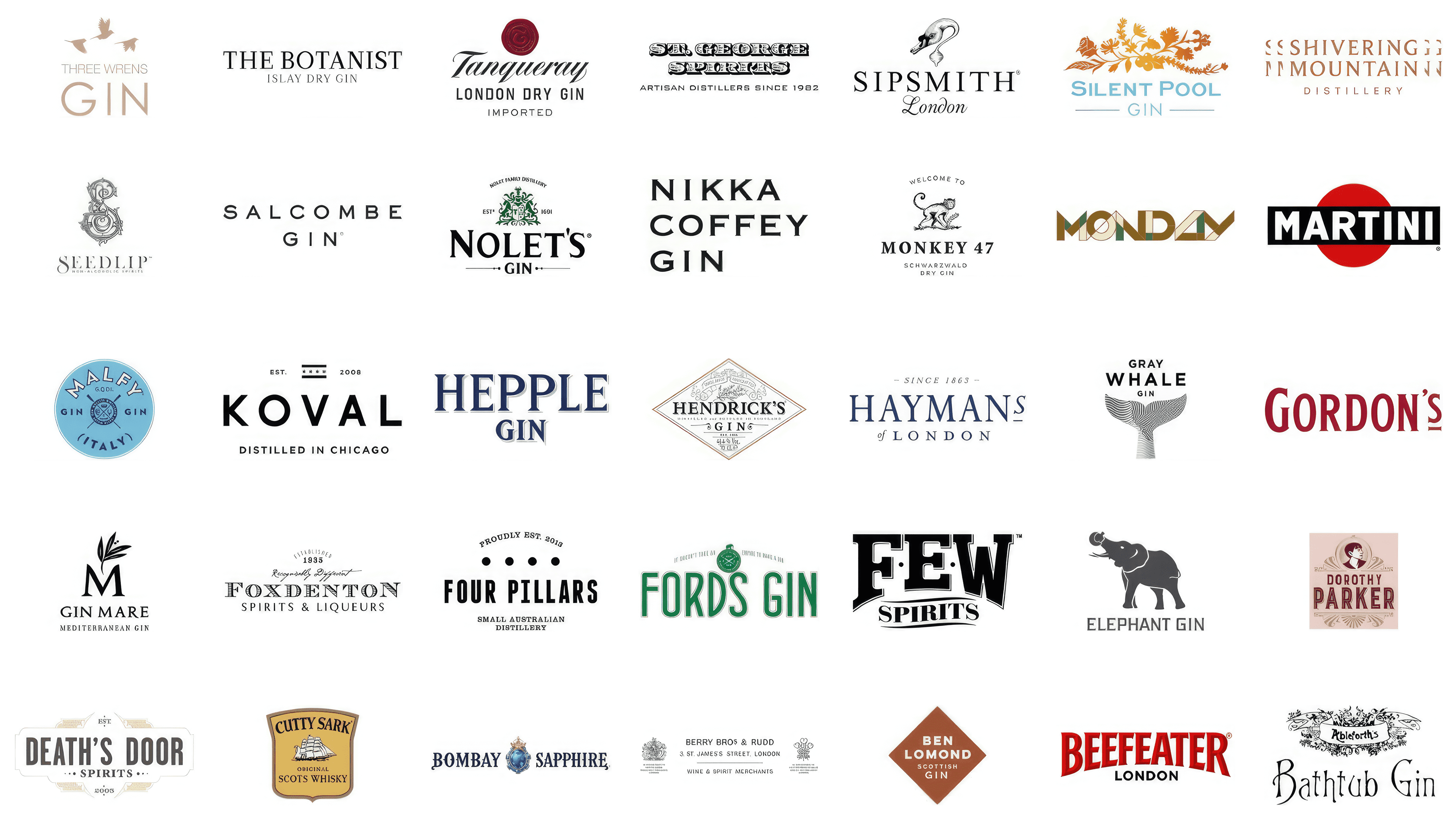
The story of gin starts with a Dutch doctor named Franciscus Sylvius in the 1500s. He made something new by mixing grain alcohol with herbs, roots, and berries. This mixture was the early version of what we now know as gin.
In the 1600s, in the Netherlands, gin started to be made and sold more widely. People liked to mix it with tonic to make it taste better. But it was in England where gin became popular, especially when William of Orange was in charge. By the 1850s, everyone in England loved gin for its distinctive taste and herbal blend.
Later, in the 1800s, a new kind of gin called London Dry emerged. This gin was aged and had fewer spices. Over time, people added fruits and spices to gin, making it even more varied and interesting.
Today, gin is a popular drink worldwide. There are many different kinds of gin and brands to choose from. The way gin looks on the bottle, especially its logo, is really important. It helps people know what kind of drink it is and makes them want to buy it. Logos might feature citrus peels, juniper berries, and herbs to signal that the gin is natural and made the old-fashioned way. If a gin has been around for a long time, its logo might include the date it was founded, highlighting its long history. Fancy gins might feature special designs or royal symbols to look more exclusive. And some new gins have bright colors and modern designs to stand out. So, the logo tells you a lot about the gin and makes it stand out from other drinks.
Tanqueray Gin
In 1830, in London, Charles Tanqueray started making gin. This was a big deal because his family had been doing something similar since his grandfather opened a distillery in 1738. Tanqueray gin was special because it was one of the first to make London dry gin. This gin tastes fresh and has a strong juniper flavor because it only uses four ingredients: juniper, coriander, angelica root, and licorice. They don’t add any sugar.
Tanqueray became very famous; even the British royal family chose it as their gin, and it started being sold in other countries, including the US, after Prohibition ended. Charles Tanqueray’s son helped the company grow by adopting new technologies, such as steam power. Now, they use nine different plants to make the gin.
Over the years, different companies owned Tanqueray until Diageo acquired it in 2015. Now, it’s one of the best-selling gins in the world.
The logo of Tanqueray is important. It shows the brand’s history and quality. The name is written in fancy, and a big red seal has a “T” on it. The bottle is green, which makes it stand out. It clearly says “LONDON DRY GIN” on it, showing it’s a high-quality gin from London.
Bombay Sapphire
In 1761, in Laverstoke, England, a distillery began producing Bombay Sapphire gin, known for its distinctive taste. This gin was first made in 1986 and stood out because of how it was made. It was made using a special method that perfected its taste: mixing spices like juniper and lemon peel.
In the 1990s, when Bacardi bought Bombay Sapphire, the gin became even more popular. It became a favorite for cocktails and was seen as a high-quality drink. The distillery underwent a major £50 million renovation in 2003, making it even better at producing gin for more people.
Now, Bombay Sapphire is sold in more than 60 countries worldwide. It’s famous not just for its taste but also for its distinctive blue bottle.
The logo, with a sapphire and a golden crown, shows that the gin is like a treasure, very special and elegant. The blue bottle and the design show it’s a top-notch gin, offering a rich, refined taste with every sip.
Gordon’s

Gordon’s Gin started in London in 1769 and quickly became famous. Alexander Gordon, who founded it, made a special gin that people liked. This gin had a strong juniper flavor, a characteristic of gin. Over time, Gordon’s became known as one of the best gins available.
By the end of the 1700s, everyone knew Gordon’s was a top-notch gin. They even improved their gin-making process in 1898 by installing a new still, enabling them to produce more gin without sacrificing quality. As the British Empire grew, so did Gordon’s, becoming popular worldwide.
In 2006, Diageo took over but didn’t change the original recipe. Gordon’s gin has maintained its reputation for quality and is now known for its square bottle, a favorite in the UK for gin & tonic.
Gordon’s logo, with its red letters and green background, is simple but shows its long history in Britain. It’s more than just a drink; it’s a piece of British history.
Beefeater

In 1863, Beefeater was named after the famous guards at the Tower of London. It has become a top gin brand worldwide. Beefeater’s special taste comes from carefully blending nine ingredients, including juniper and orange peel. Its logo, with bold red letters, shows its British background and the reliability of the Tower’s guards.
James Burrough Ltd first produced Beefeater London Dry Gin in London, England, in 1876. It quickly became known for its good quality and strong juniper taste. By the late 1800s, not only did people in London love it, but it also became popular in other countries, including America.
The 1960s were important for Beefeater because more people worldwide wanted London Dry gin. This helped make it the classic English gin. In 2009, Pernod Ricard, the company that owns Beefeater, introduced Beefeater 24 and other high-quality gins.
Today, Beefeater is still one of Pernod Ricard’s most important gins and is the best-selling premium gin in the world. It is still made in London, staying true to its original method and maintaining its high reputation in the world of spirits.
Sipsmith London Dry
In 2009, three friends, Sam Galsworthy, Fairfax Hall, and Jared Brown, started a gin company called Sipsmith in London. They wanted to make gin the old-fashioned way, which hadn’t been done in London for nearly 200 years. They set up the first small distillery and made gin using a special recipe with ten different plants, including juniper berries from Macedonia.
Sipsmith wasn’t just about making gin. It was about bringing back a piece of London’s history with gin. They made their first batch in 2009; by 2011, bars and stores all over London wanted to sell it. People loved it because it was high-quality and made with care, following old traditions. The company won many awards and started selling its gin in other countries.
In 2016, the large company Beam Suntory bought a stake in Sipsmith, but the gin is still made in London. In 2018, they launched a new gin called V.J.O.P., which was even more focused on juniper, a key ingredient in gin.
Sipsmith’s logo features a swan, symbolizing the brand’s elegance and pioneering spirit. They mix old methods with new ideas to keep making great gin. Sipsmith shows that when you care about making something well, using tradition and a bit of creativity, you can create something people love.
Monkey 47
Monkey 47 is a special gin from the Black Forest in Germany. It’s made with 47 plants, including some rare herbs and berries from the area. This mix gives the gin a unique taste. The picture on the bottle of a monkey holding a plant shows all the different ingredients used to make this gin. The writing on the logo shows that the makers care deeply about making a high-quality product.
The story of Monkey 47 began in 2006, when Alexander Stein tasted a gin in Berlin made with plants from the Black Forest. He liked it so much that he wanted to make his own. He worked with Christoph Keller, a distiller from the Black Forest, to create a new gin recipe with 47 plants, including lingonberries and spruce tips, which gave the gin a distinctive flavor. They picked the number 47 because it was special to Stein.
By 2010, they produced the first batch of Monkey 47 gin, which quickly became popular. By 2011, it had already won a big award. The gin got so popular that they started selling it in other European countries and then the United States. Even though it’s sold worldwide, they still make Monkey 47 gin in small batches to ensure it retains its special Black Forest taste.
The Botanist
The Botanist gin comes from Islay, Scotland, and it’s all about celebrating the local plants and nature there. Made with care for the environment, this gin mixes 22 plants found in Islay, along with nine usual gin ingredients, to create a special taste that shows what Islay is all about. Some of the local plants in it include apple mint, bog myrtle, and creeping thyme. Jim McEwan, who has been leading its making since 2011 at the Bruichladdich Distillery, wanted to make a gin that used what Islay had to offer.
The name “The Botanist” suggests they pay close attention to selecting the right plants from Islay. They make the gin by mixing old whisky-making with new ideas to bring out the best flavors. Since it launched, people have liked it, calling it one of the best new types of gin and awarding it over 25 major awards. Because so many wanted it, they even had to make more room at the Bruichladdich Distillery.
The way The Botanist looks when you see its bottle is simple but stylish. The logo and the way the name is written are modern, with “THE BOTANIST” and “ISLAY DRY GIN” clearly showing its roots in Islay and its gin type. This design tells you the gin is all about quality and its special connection to Islay.
Hendrick’s

In 1999, a new gin came out from Girvan in Scotland. It was made by a family business called William Grant & Sons. They wanted to make a special gin, so they created Hendrick’s Gin. This gin was special because it was made in small batches and blended with cucumber and rose, resulting in a fresh, unique taste.
Lesley Gracie came up with this gin. She decided to use a special old machine from 1948 and mix it with cucumber and rose to make the gin light yet full of flavor. They also made up a fun story about “Ms. Hendrick’s” from the 1800s to make the gin even more interesting. The gin bottle looked old-fashioned, like something from a long time ago, which made people notice it more.
Hendrick’s Gin became popular, especially with bartenders. It helped bring people back to gin and led to many new gin drinks. Lesley Gracie kept making the gin the same way, in small batches, to make sure it always tasted great.
The logo for Hendrick’s Gin is simple but pretty. It has a picture of a rose, one of the things they use to flavor the gin. The name Hendrick’s is written in a fancy font on the bottle, and it all looks elegant, like something from a long time ago. This logo and the way Hendrick’s is made show that Hendrick’s is all about making something nice and different from other gins.
Four Pillars
In 2013, three friends, Cam Mackenzie, Matt Jones, and Stu Gregor, started Four Pillars Gin in Australia. They wanted to make a special kind of gin that shows how great Australia is. They set up their company in the beautiful Yarra Valley and used a special copper-made machine to make their gin. They worked hard and created their first gin, Rare Dry Gin. It tastes fresh and has special Australian plants like Tasmanian pepperberry and lemon myrtle. People all over the world love it.
Four Pillars became famous for using local plants in their gin, giving it a unique taste. Their Rare Dry Gin was a big hit, winning awards and making gin lovers happy in Australia and around the world. They kept making new gins with different Australian plants, which made them even more popular. By 2019, they were named the “World’s Best Gin,” a huge deal.
Four Pillars has two distilleries in Victoria, Australia, and people in more than 25 countries enjoy their drinks. They keep winning prizes, showing they’re good at what they do. Their simple but stylish logo shows they focus on making high-quality gin. It represents their love for making gin, their community, and the tradition of Australian gin-making.
Hayman’s
Hayman’s Gin was started in the mid-1800s by the Hayman family’s great-great-grandfather. It’s known for making a good type of gin called London Dry gin, which blends juniper and citrus flavors. This 1863 recipe set a high bar for what good gin should taste like. The family has kept making gin this way for a long time, ensuring it always tastes great and keeps its good name in England.
By the 1900s, many people in South England loved Hayman’s Gin. It was sold in other countries. But in the 1980s, gin was facing tough times. Christopher Hayman focused on making gin the old-fashioned way to bring back the family’s good name. In 2007, they even opened a new place to make gin, but they still used old recipes and a traditional copper pot to ensure the gin stayed true to its roots.
More than 150 years later, Hayman’s Gin is still loved for being a classic London dry gin. They make it carefully, respecting how it was originally made. The logo reads “Since 1863” and “of London,” reminding everyone that Hayman’s Gin has a long history and is proud to be from London. It’s all about making good in the same way they always have.
Malfy Gin
Malfy Gin comes from Italy, near the beautiful Amalfi Coast, and is famous for using many local lemons and Italian botanicals in its drinks. This makes the gin taste fresh and reminds people of the Italian seaside. The logo of Malfy Gin is bright blue, with big letters and images of lemons, highlighting its lemon flavor and Italian style.
The Vergnano family began making Malfy Gin in the Italian Alps in the late 1800s. They wanted to make a special gin that people worldwide would like. In 2016, they introduced a new Malfy Gin with a strong lemon flavor. Then, in 2017, a major company, Pernod Ricard, bought Malfy Gin, helping more people worldwide try it. They even introduced a new variety, pink grapefruit from Sicily, in 2020.
Malfy Gin is known for being a modern Italian gin that still remembers its roots and the Italian way of making things nice and elegant.
NOLET’s
Nolet’s distillery started in Schiedam, Holland, over 300 years ago. It’s known for making high-quality gin, especially NOLET’s Silver Gin. This gin is special because it has ingredients like Turkish rose, peach, and raspberry. It tastes different from other gins and looks fancy thanks to its logo, which features mythical figures and pretty writing. This shows how the Nolet family has been making drinks for a long time and mixing old gin-making methods with new ideas.
The Nolet family began making drinks in 1691 when Joannes Nolet opened the first distillery. They first made a drink called jenever, a bit like gin. Over time, the family found new ways to improve their drinks, like using copper pots in the 1800s. This made their drinks very good. Later, they began producing more types of drinks and became famous outside Europe.
In the 1900s, the Nolet family began selling their gin in America, thanks to Carolus Nolet Sr., who introduced new types of gin that people liked. Now, Carl Nolet Jr., from the 11th generation of the family, runs the distillery. They still make their drinks in small batches using copper pots, which shows they care deeply about quality. The Nolet family has kept their tradition alive for over 325 years, occasionally changing it to create drinks people worldwide enjoy today.
Gin Mare
Gin Mare was created in 2010 by a Spanish company called Gin MG. It’s made in a small coastal town called Villanova i la Geltrú, near Barcelona. This place has a history of making wine and spirits back to the 19th century. The gin is named after the Mediterranean Sea, which is important to the area’s history and culture.
They make Gin Mare with special ingredients like arbequina olive, thyme, basil, and rosemary. These aren’t just common in local food, but they also give the gin a special taste that’s different from the usual. The idea was to make something that evokes the Mediterranean’s tastes and smells.
Gin Mare became popular worldwide, was sold in over 70 countries, and won awards. Its blue bottle, adorned with a design resembling a maze of plants, is well-known and shows what the gin is all about.
The Gin Mare logo is special. It has a fancy ‘M’ intertwined with an olive branch, highlighting the gin’s Mediterranean background and the unique plants used to make it. This logo represents the company’s pride in Mediterranean culture and its desire to share it through its gin.
Silent Pool
Silent Pool Gin was started in 2013 by two friends, Ian McCulloch and CJ Petersen. It quickly became popular in England after its launch in 2014. This gin is made near a beautiful, quiet place called Silent Pool in the Surrey Hills, England. It has a special recipe that uses 24 different plants, like local lavender, lime, chamomile, and honey from nearby bees. This mix makes Silent Pool Gin taste very special; people like it.
The look of Silent Pool Gin’s bottle is inspired by where it’s made. The logo features plant imagery and is warm, with a touch of blue that evokes the peaceful water of Silent Pool.
In 2015, William Grant & Sons bought Silent Pool Gin. This helped it become known worldwide while preserving the gin’s special taste and production method. Even though it’s now made in Scotland, it still holds the spirit of Silent Pool. Today, Silent Pool Gin is known worldwide for its taste and as a symbol of English skill in making spirits.
Gray Whale Gin
Gray Whale Gin tells a story about loving nature and wanting to keep the ocean safe. Marsh and Jan Mokhtari, who met in a bar in Chicago 20 years ago, started this journey together. They were inspired to make this special gin while visiting Big Sur, California, after learning about the beautiful gray whales there.
They care a lot about the Earth, so everything about Gray Whale Gin is made to be good for the planet. The packaging is eco-friendly, and the plants used in the gin show the variety of life in California. They work with groups like Oceana and One Percent for the Planet to help protect the ocean. Buying a bottle helps save the ocean.
Marsh and Jan created the Golden State Distillery to make drinks that showcase California’s beauty. Marsh loves cooking and adventures, and Jan is a creative director. They used their skills and love of nature to make Gray Whale Gin, which reflects their values and love of the outdoors.
Gray Whale Gin isn’t just a drink; it’s a way to experience the beauty of California and help protect the big, beautiful whales and their homes. The logo has a whale’s tail that looks neat and shows the path along the Pacific Coast. It’s all about using natural things and taking care of the environment.
Fords Gin
Ford’s Gin is made by two experts, Simon Ford, who knows much about spirits, and Charles Maxwell, a master at making gin. They worked together to make a great gin cocktail called “Cocktail Gin” because it works well in many different drinks. They talked and tested 83 times to mix nine special ingredients just right.
This gin was made with bartenders for bartenders, including the guys who started a famous bar in New York. In 2019, a major company, Brown-Forman, decided that Ford’s Gin was so good that they wanted to include it in their collection.
The bottle is designed to be easy for bartenders to use, with special notches and lines to help pour the right amount. The gin is not just about good taste; it’s about celebrating the people who make it and those who enjoy it in cocktails.
The Fords Gin logo has a strong, green look and features an elephant to highlight the strength of its ingredients and its global sourcing. This shows that gin is about keeping things simple and real.
Elephant Gin
Elephant Gin is a special German drink created by three friends, Robin, Handel, and Roland. After visiting South Africa in 2012, they got the idea and started making the gin in Hamburg in 2013. This gin is different because it uses special African plants, giving it a unique taste.
The company helps save African elephants. They give some of the money they make from selling gin to help protect these animals. The gin’s logo features an elephant, symbolizing their love for elephants and their efforts to help them. The logo is simple but fun, with the elephant looking like it’s drinking.
Right after they started selling it, Elephant Gin became very popular. They developed a stronger version in 2014 and won awards worldwide. People liked the taste and were happy that buying it helped elephants. In 2016, one of their gins won a big award in San Francisco. They made a new kind of gin in 2020 that was aged in oak barrels, making it taste even better.
Now, they sell over 100,000 bottles annually in more than 60 countries. People like it for its taste and for the company’s efforts to protect wildlife. Elephant Gin shows that a business can do well while doing good for the world.
Death’s Door
Death’s Door Gin comes from Wisconsin and has a simple mix of juniper, coriander, and fennel. This mix gives it a modern taste that classic gin lovers and those looking for something new will enjoy. The logo combines old-style charm with a modern look, with detailed designs that evoke Art Nouveau. The name “Death’s Door” comes from a mysterious body of water between Door Peninsula and Washington Island, which makes the brand even more interesting.
The story began in 2005, when Brian Ellison founded Washington Island Spirits, using local wheat and plants. By 2009, it became known as Death’s Door Spirits, named after a famous local waterway. Soon, they made their main gin using an old-style still, focusing on local juniper, coriander, and fennel.
Death’s Door added vodka, whisky, and brandy to its line in the following years and moved to Middleton, WI, for more space. Now, Death’s Door makes its gin and other spirits in small batches, earning widespread praise for using local ingredients and making high-quality spirits. It’s a top craft distillery in Wisconsin, famous for its careful craft.
Berry Bros & Rudd
Berry Bros & Rudd started as a small wine shop in London in 1698, opened by the Widow Bourne. It quickly became known for its quality wines, especially claret and port, and even caught the eye of King George III in the 18th century. The company grew over time, especially in the 1830s when George Berry and Hugh Rudd joined forces, making it even more famous for its wines and spirits.
Despite tough times, such as when their cellars were damaged in World War II, Berry Bros & Rudd rebuilt and grew even bigger by buying Justerini & Brooks in 1963. They opened a new shop on St James’s Street in 2001 with over 5,000 wines and spirits, showing how much they’ve grown.
Berry Bros & Rudd is known for over 300 years of top-notch wine and spirits, still owned by the same family. They make a special gin that showcases their long history and skill in selecting the best ingredients.
Their logo, with two crests and a simple design, shows their long and respected history. The black-and-white color palette and clear font highlight their role as Britain’s oldest wine and spirit seller, conveying elegance and a reputation that has endured for centuries.
Ableforth’s Bathtub Gin
In 2011, three friends founded Ableforth’s to make special, tasty spirits and liqueurs. They first focused on making a special gin called Ableforth’s Bathtub Gin. This gin won awards for its great taste, thanks to a unique blend of traditional and new ingredients that delivers a balanced flavor.
The logo for Ableforth’s Bathtub Gin is old-fashioned and fun, evoking secret bars from the past. The way the logo is drawn shows that the brand cares deeply about making things well and about trying new ideas.
Ableforth’s didn’t stop at gin. They made other kinds of drinks, like rums, liqueurs, and cocktail ingredients, always using special methods and unique flavors. Even now, in the 2020s, Ableforth’s is known for making drinks that stand out from the usual.
Dorothy Parker
The New York Distilling Company made a special gin named Dorothy Parker Gin to celebrate Dorothy Parker, a famous gin lover. This gin mixes old-time flavors like juniper berries and cinnamon with new tastes like citrus fruits and hibiscus, making it great for all kinds of drinks, from the classics to new inventions.
Allen Katz, who started making cocktails in the 1990s, helped create this gin. He opened The Shanty, a bar connected to the distillery, where people can try many different spirits, including Dorothy Parker Gin. The gin’s name celebrates Dorothy Parker’s impact on the drinks world. Milton Glaser designed its label, which features ingredients perfect for classic drinks like Martinis, Negronis, and Gimlets.
The New York Distilling Company focuses on maintaining the gin’s consistency and honoring its history. They want this gin to be a favorite among gin fans.
Dorothy Parker Gin blends old and new flavors, including juniper, elderberries, citrus, and hibiscus petals, for a unique, rich taste. The logo features Dorothy Parker in a style that evokes the Jazz Age and her cleverness, with a design that takes you back to the typewriter era, connecting the gin to its literary inspiration.
Hepple Gin
Hepple Gin is made in Northumberland, a beautiful, wild place. They make their gin in a special three-step process. This ensures they get the best flavor from every plant they use, especially the juniper from the area. Their gin tastes good and fresh because of this method.
Northumberland is a big part of what Hepple Gin is. The clean water, old juniper trees, and strong winds there help make their gin special. They care deeply about the animals and nature around them and work to protect the environment.
The team behind Hepple Gin includes Valentine Warner, Nick Strangeway, Chris Garden, and Walter Riddell. They combined their skills to create a new kind of gin that honors traditional gin while also being new and exciting. They use wild plants from Northumberland and modern ways to make the gin.
Hepple Gin works to help the environment. They have a project to plant more than 2,000 juniper trees to ensure they remain for a long time.
Drinking Hepple Gin is like celebrating the wild beauty of Northumberland. Their logo looks classic, but shows that they are doing new things in making gin.
Salcombe Gin
Salcombe Gin started in the beautiful coastal town of Salcombe, Devon. Two guys, Angus Lugsdin and Howard Davies, wanted to make a special gin that showcased the sea and the nature around them. In 2016, they made a gin with cool ingredients like juniper, citrus fruits, and special Devon violets, which give it a sweet, distinctive taste.
After they started selling it in October 2016, people liked it because it tasted great and felt smooth. They even designed the bottle to look like it belonged by the sea, which made more people want to try it. The makers saw that people were interested, so in 2017, they opened their distillery for tours, where people could learn how they make the gin and try different kinds.
They kept making new kinds of gin, like ones aged in barrels or mixed with fruits, which helped them stand out. Salcombe Gin has won over 450 awards, and you can find it in 30 countries. It’s known for its top-quality products and for staying true to its sea-loving roots. The logo is simple and stylish, just like the gin, showing it’s a high-end drink connected to the coast of Salcombe.
Few Spirits
Few Spirits started in Evanston, Illinois, a city known for its Prohibition-era history. This company makes a special kind of gin that tastes different because they use unique ingredients like fennel and grains of paradise. Their logo looks old-fashioned yet modern, reflecting what the company is all about: making something new while remembering the past.
In 2011, a guy named Paul Hletko decided to start making his gin and whiskey in a place that used to be a car repair shop. He wanted to use ingredients from nearby places and make good drinks. People started noticing his drinks because they were good and used local ingredients.
By 2013, many people worldwide knew about Few Spirits because their whiskey had won a big award. The company kept growing, adding more kinds of drinks to its list and selling them in many states. They even moved to a bigger place to make all their drinks.
Now, in the 2020s, Few Spirits is a big deal in the United States craft drinks scene. They’re known for making drinks that taste like Chicago and doing things in new ways while still remembering where they came from.
KOVAL
KOVAL Distillery in Chicago is known for making special gin and whiskey. It was started by Dr. Robert Birnecker and Dr. Sonat Hart, who love science and old ways of making drinks. They use special spices and plants to make their gin taste good. They care a lot about using organic ingredients and making everything from scratch, as you can see in their simple, modern logo.
They began making drinks at home in 2004 and officially started KOVAL in 2008. They were among the first in the US to make whiskey from millet and oats, which earned them widespread praise. In 2016, they moved to a bigger place in Chicago with more room to make and bottle their drinks, enabling them to produce even more without sacrificing quality.
By 2020, KOVAL had launched a ready-to-drink Old Fashioned cocktail made with its bourbon, cherry juice, and bitters, demonstrating that it knows what today’s drinkers like. KOVAL keeps growing and winning awards, proving they’re good at making quality, interesting drinks.
Ben Lomond Gin
comes from Scotland, known for its stunning natural beauty and mountains. They make their gin with local ingredients like blackcurrants and rowan berries, so it tastes distinctive. Their logo is simple, with a diamond shape and clear letters in a color that evokes Scotland’s outdoors. This shows they like things straightforward and reliable.
The Loch Lomond Group has been around since 1842 and makes Ben Lomond Gin. They started making this gin in 2020 and added it to their Loch Lomond Whiskies and Glen Scotia Whisky. The gin’s name comes from Ben Lomond Mountain, a famous landmark in Scotland, linking it closely to its Scottish origins.
They produce the gin near Loch Lomond, using ten special ingredients, including juniper and rosemary, for a unique flavor. It smells and tastes of pine, spices, and green apples, making it feel like a short journey through Scotland’s landscapes. This process ensures every sip brings a piece of the Scottish Highlands’ beauty and taste.
Foxdenton
In 1935, Reginald Foxdenton started a gin company in Buckingham, England, called Foxdenton Estate. It’s known for making good London Dry Gin and fruit-flavored gins. They use old ways of making gin and are proud of their long history in gin-making. The Foxdenton logo mixes old- and new-style writing to show they respect the past but also like new ideas. They use the words “Recognisably Different” to show their gin is special.
Foxdenton’s story goes back four generations. It started with Reginald, who made a popular gin in Buckinghamshire. His son, Thomas, grew the company in the 1950s by expanding sales across the UK and introducing new fruit-based drinks made with local farm produce.
In the 1990s, Mary took over and updated the company, making it even more famous. She started selling their gin in Europe and America.
Now, Edward, Reginald’s great-grandson, is in charge. He keeps making new kinds of gin and liqueurs using ingredients from nearby. Foxdenton makes their gin in small batches, right there, and they even let people come see how it’s made. Their London Dry Gin and fruit liqueurs are loved worldwide because they’re made with care and showcase the best of British gin-making.
MONDAY

MONDAY Gin is a special kind of gin with no alcohol in it. It’s made for people who want to enjoy a fancy drink without alcohol, focusing on staying healthy and clear-minded. This gin comes from Southern California and uses natural ingredients to deliver a good taste for those who care about their health but still want a fun drink.
The MONDAY Gin logo looks modern and smart, with shapes and empty spaces that convey the brand’s focus on new ideas and looking good. It tells everyone that MONDAY Gin is all about enjoying great drinks without alcohol, leading the way in ensuring people can have a good time and stay healthy.
Nikka Coffey Gin
Nikka is a company known for making good Japanese whisky. They make a special kind of gin called Coffey Gin. This gin uses a special machine called a Coffey still to mix traditional gin ingredients with Japanese ones like yuzu fruit and sansho pepper. This mix makes the gin taste unique and good. The logo for Nikka Coffey Gin is simple but shows that this gin is a new twist on an old favorite. The name “Coffey” comes from the special still they use to make it.
Nikka was founded in 1934 by Masataka Taketsuru. By 1963, they made their first gin using the Coffey still, originally from Scotland. This still helped them make a gin that tastes fresh and is great for cocktails. In 2018, they made a new kind of gin aged in oak barrels, adding new flavors like vanilla and spices.
Today, Nikka Coffey Gin is known worldwide as a top-quality gin. It tastes like citrus, with lemon and orange, and has other flavors like coriander seed, angelica root, and cinnamon. The Coffey still is a big reason why this gin is so good, making Nikka Gin a favorite for many people.
Shivering Mountain
Shivering Mountain Gin is made in the Peak District, a beautiful region known for its natural beauty and history. The people who started this gin brand were friends who loved the area and wanted to make a gin that reflects its specialness. They use local plants to make their gin, which adds a special touch.
The distillery is in Hathersage, surrounded by nature and history, like the stories of Charlotte Brontë and Robin Hood. They even named their copper still Little John after a character from Robin Hood. This shows how much they care about the area’s history.
They offer experiences for visitors to learn about gin and the local area, which they call “Ginology.” The brand’s look is inspired by a local hill called Mam Tor, or Shivering Mountain, which is important to the area. The gin bottle’s logo and colors are designed to evoke the Peak District.
The story of Shivering Mountain Gin is about bringing people together, loving nature, and being proud of where you’re from. They even made a special gin for the Craft Gin Club, inspired by the founder’s childhood and the natural beauty of Derbyshire’s Hope Valley.
Three Wrens Gin
Three Wrens is a gin company based in Cheshire, England, founded in 2019. It makes special gins like Bison Grass Gin and Apple Crumble Edition. The company was started by Nick Wadeson, who loves nature and finding new ways to make gin. Their logo features three birds and conveys a sense of freedom and lightness. The way “GIN” is written on the bottles tells you that’s what they’re all about, and the gold color shows the gin is good.
Nick Wadeson built the distillery in an old barn in Cholmondeley, his hometown, and ensured everything showed his care for quality and tradition. The name Three Wrens comes from an old local story about three wrens who helped find hidden rebels, which is a cool way to connect the gin to local history and the idea of discovery.
They make their gin in a special copper still called “Betty the Boiler” and use 12 plants, including juniper and elderberries from the area. Soon after they started, they won a silver medal at a big gin competition in 2019. Even though more people want their gin now and they’ve grown, they still make it the same careful way. They even opened a place in 2022 where people can learn about and taste their gin.
Now, Three Wrens is known for making their gin in small batches with great care, and you can buy it from them or in stores across Northwest England. They’re all about new ideas and the beauty of nature in every bottle of gin they make.
George Spirits
In 1982, a German named Jörg Rupf founded St. George Spirits in Alameda, California. He loved making special kinds of alcohol like eau de vie and liqueurs. When Lance Winters joined him in 1996, they began making even more interesting drinks, including unique gins, whiskeys, and other spirits. They used special stills for distilling and included plants from California to make their drinks special.
In 2005, they made a different gin called Terroir Gin because it tasted like the California outdoors, using local plants. This gin helped create a new style of gin in the US, called “New Western.” St. George Spirits became known for making drinks in new and creative ways.
They’ve made many different drinks over the years, like gin, absinthe, vodka, and whiskey, and many people like them for their uniqueness and high quality. The people who make these drinks are very dedicated to trying new things and making drinks that stand out.
The logo of St. George Spirits looks like something from the Wild West and is handcrafted, reflecting the company’s long history of distilling dating back to 1982. It shows they’re all about making things by hand and taking pride in their work. This logo lets them share their commitment to making good drinks with everyone.
Seedlip
Seedlip was founded in 2015 by Ben Branson, who wanted to create special non-alcoholic drinks. Ben was really into plants and old recipes for herbal drinks from the 1600s. He mixed peas, herbs, tree bark, and citrus peel to make Seedlip’s first drink. It was a big deal because it didn’t have alcohol, sugar, or calories, but it tasted great.
When Seedlip first came out, people were excited. They started selling a drink called Seedlip Garden 108 in London, with peas and herbs like spearmint and rosemary. It was different from other soft drinks and perfect for fancy cocktails. Soon, they made more flavors and started selling them in many places, including the United States, which became their biggest market.
Seedlip’s logo looks cool and natural, showing they’re all about using real plants and being innovative. In 2019, a major company, Diageo, helped Seedlip grow further, and now you can find it in over 25 countries. Even though it’s made like alcoholic drinks, Seedlip doesn’t have alcohol. It’s become a popular choice for people who want something special to drink without alcohol.
Cutty Sark
Cutty Sark started as a famous Scotch whisky brand and later launched gin, blending old ways with a new style. They use a special blend of plants to give their gin a unique taste. Their logo features the famous ship, the Cutty Sark, on what appears to be an old piece of paper, evoking the adventures of the sea and the history of trade.
The story began in the 1860s with the Glenrothes Distillery in Scotland. The brand, named after the fast tea clipper ship Cutty Sark, was started on March 23, 1923, by Berry Brothers & Rudd. By the 1930s, it was popular in America, even during tough times like Prohibition and World War II.
In 1955, The Glenlivet Distillers Ltd. took over, marking a new chapter in their story. Then, in the early 2000s, a French company, La Martiniquaise, bought it, keeping Cutty Sark at the top of the whisky world. Now, Cutty Sark is known all over, especially in America, for its golden color and smooth taste. It keeps making whisky lovers happy, and now gin fans, too, with its new drinks.
Martini
Martini is a famous Italian brand that started in 1863 in Turin, Italy. It was created by Alessandro Martini, Luigi Rossi, and Teofilo Sola. At first, Martini was all about vermouth, a type of wine, but then they started making sparkling wines and gin, too. They wanted to be the best in drinks, always trying new things.
Their gin, Martini Gin, is special because it uses a secret blend of plants and juniper berries, giving it a distinct taste from British gin. It became popular in America during the Jazz Age, especially in the Martini cocktail.
Since 1993, Bacardi has owned Martini, and they’ve introduced new gin and gin liqueur varieties, but Martini Gin remains their main gin. Now, Martini Gin is known all over the world, showing how great Italian flavor can be.
The Martini logo looks Italian, with bright colors, big letters, and a red circle. It shows how Martini loves its Italian roots, good taste, and a spirit of adventure. Martini is a big name for quality drinks everywhere.