 Boys and Girls Clubs Logo PNG
The Boys & Girls Clubs logo embodies strength, determination, and unity. It shows how important support is to both achieving dreams and self-development. Going hand in hand means stepping up to a new level, keeping pace with the environment, living by a shared ideal, and striving for a strong friendship.
Boys & Girls Clubs of America traces its roots to 1860 in Hartford, Connecticut. Mary and Alice Goodwin, Elizabeth Hamersley, and Louisa Bushnell began helping boys who spent their days on city streets. They used a room in a mission school on Morgan Street for reading, music, and simple activities. The group became known as the Dashaway Club, but its work was interrupted by the U.S. Civil War.
In 1880, Mary Stuart Hall, the first woman lawyer in Connecticut, reorganized the club as the Good Will Boys Club. She believed boys from difficult street backgrounds could adapt to social rules through guidance and practical training. In 1889, with local donations, including support from Henry Keney, the club bought a former girls’ seminary on Pratt Street. It expanded into carpentry, plumbing, printing, and its own newspaper, Good Will Star.
As similar clubs appeared in other cities, 53 local organizations met in Boston in 1906 and formed Federated Boys’ Clubs. William Edwin Hall, a New York lawyer and Medal of Honor recipient, led the movement from 1916 to 1954 without salary. In 1931, the organization became Boys’ Clubs of America. On September 12, 1990, it changed its name to Boys & Girls Clubs of America, reflecting the growing participation of girls.
The organization is now headquartered in Atlanta, Georgia, and operates under a federal charter from the U.S. Congress. Its work has long overlapped with YMCA youth programs and Big Brothers Big Sisters of America, both of which also served young people through mentoring, recreation, and community support.
Meaning and History
The BGCA (Boys & Girls Clubs of America) youth movement started in Hartford, Connecticut, at the initiative of sisters Alice and Mary Goodwin and their like-minded associate Elizabeth Hammersley. Initially, only young boys were included, so the organization was called the Federated Boys’ Clubs. The first organization appeared in 1860; by 1906, there were 53. In 1931, they had grown so much that the leaders had to rename them again: this time to Boys’ Clubs of America. The current name emerged in 1990.
Alongside the name, the youth organization’s visual identity also evolved. It has come a long way from a universal geometric shape to a deeply conceptual symbol. The designers emphasized unity, as many BGCA branches emerged across the United States over time and required a common set of guidelines. The emblem has always been and remains the same for all.
What is Boys and Girls Clubs?
Boys & Girls Clubs (shortened as BGCA) is a non-profit organization operating in the United States. Its mission is to teach young people a range of skills, develop their talents, and enhance their knowledge. It has many local branches, with its headquarters located in Atlanta, Georgia.
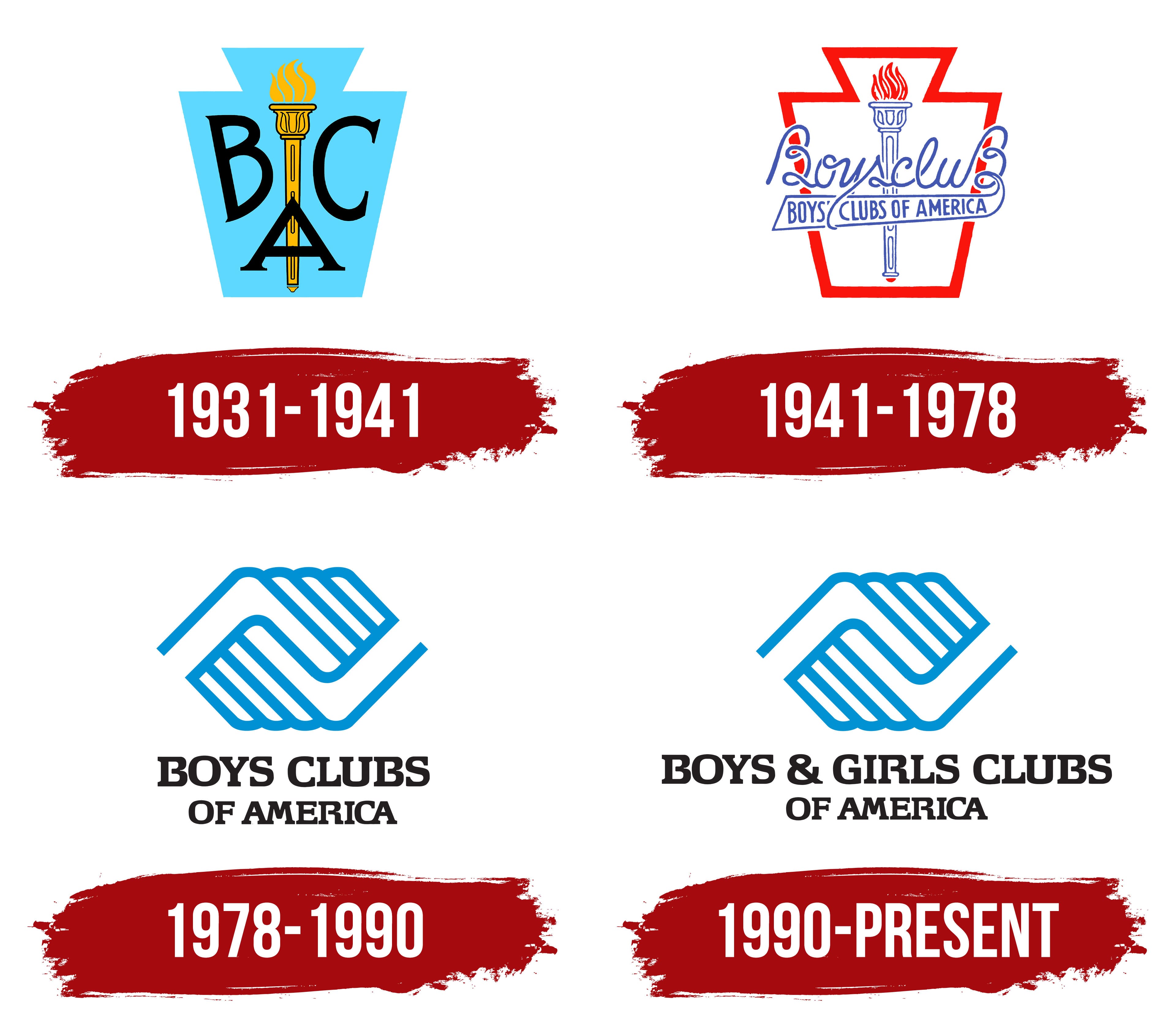
1931 – 1941
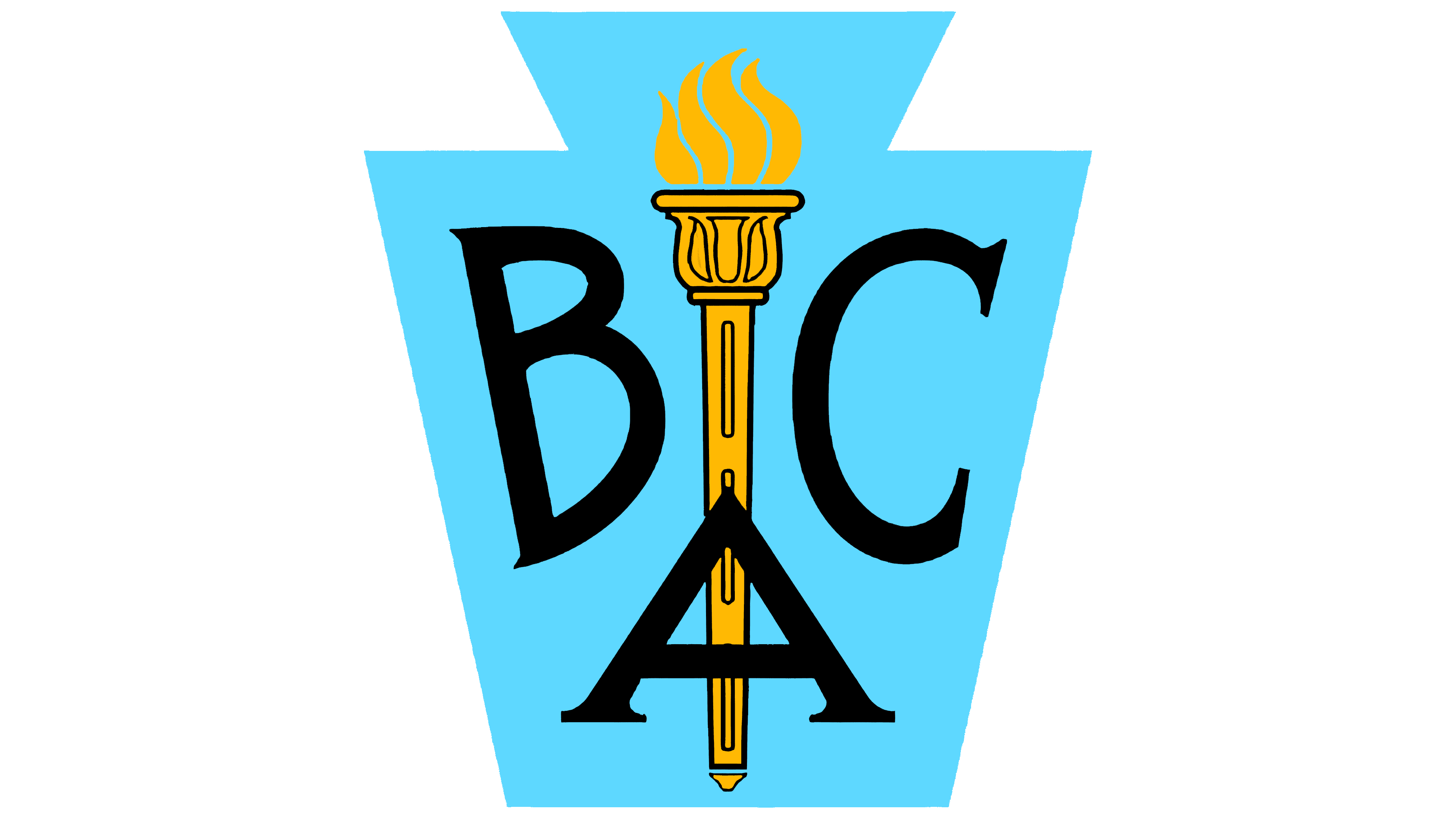
After rebranding as Boys’ Clubs of America, the organization updated its logo to a more contemporary design. It consists of a geometric shape resembling a trapezoidal amphora. The abbreviation of the youth movement is written in black letters: “B” on the left, “C” on the right, and “A” in the center. A vertically placed burning torch, drawn in an antique style and painted yellow, is also featured. The background is blue. The logo symbolizes progress, the pursuit of knowledge, and the love for personal development.
1941 – 1978
The redesign resulted in an outlined emblem with a red border and an “empty” center. The feeling of emptiness comes from the white color replacing the blue. The trapezium’s content also changed: it now features a connected inscription with wavy elements and rings. The word “BoyscluB” has two capital letters – at the beginning and the end. They are almost identical, differing only in the lower curls, which are directed to different sides, and in the transition to the second line, where the organization’s full name is written in uppercase letters. The torch, like all inscriptions, is repainted in blue, and the fire in the bowl has become red.
1978 – 1990
After another rebranding that changed the name to Boys & Girls Clubs of America, the logo was completely transformed. Designer Saul Bass was involved in creating the new symbol.
- Firstly, it was divided into two zones: graphic and text.
- Secondly, all previous elements disappeared.
- Thirdly, it obtained a modern design, most importantly, conceptually accurate.
The emblem features two connected hands, or more precisely, palms. One is placed higher than the other, creating the impression that they are tightly clasped. The hands are composed of triangular elements and wide strips with rounded ends that represent fingers. They are drawn in a single line, forming long ridges. At the bottom is the organization’s name, typed in black, uppercase, serifed letters.
1990 – today
The renaming of the youth alliance to Boys & Girls Clubs prompted a logo update. A new variant of the name was introduced. The designers arranged it in two rows, but the font and writing style remained the same: black capital letters with serifs. Only the color of the top element was changed: after the adjustment, the blue became slightly lighter.
Font and Colors

The organization’s guidelines state that writing “and” instead of “&” is prohibited: only the ampersand should be used. The name is set in bold Arial font. The letters are squat and wide. In the top row, they are slightly larger than in the bottom row.
The hand symbol’s color can be either BGCA Blue or Bold Black. Both are present in the logo and can alternate. The preferred background is white.