


This automobile’s history dates back almost a century and a half. According to official records, the world’s first registered Benz Patent-Motorwagen is considered a car powered by an internal combustion engine. It was created in early 1885. A year later, the inventor was granted the first patent for the technique. However, this transportation prototype was invented and assembled long before the official one. For example, few people know of an early automobile ancestor: the “small cart of Cugnot,” a steam-powered vehicle built by Nicolas-Joseph Cugnot in 1769. This is because history often loses information that never made it into official documents.
What car brands begin with the letter B?
Based on the collected information on existing and closed car brands, the letter “B” appears in many more car brands and companies than the letter “A.” The most famous, known even to non-professionals, are BMW and Bugatti, Bauer and Bentley, Benz and Beuk, and many others.
Today, the task is to preserve, as fully and accurately as possible, the history of how humanity invented and developed the automobile, the difficulties encountered along the way, who contributed to this development, and what the future may hold for the automotive industry. Collecting and grouping all available information in documents, photographs, and memoirs online is especially important. This information serves as testimony to human history and is useful for academic papers, research, professionals, collectors, and car enthusiasts.
B Engineering

B Engineering stands out among modern Italian automakers for its focus on designing and producing exclusive supercars. Today, it has released the original Edonis design. For its execution, the Bugatti EB110’s basic data was used. At the same time, the company creates spare parts for Bugatti. After acquiring the capabilities and technologies of the bus manufacturer Padane, the company expanded production to include components for this technique.
Babcock
Founded in 1905, the American coachbuilder Babcock simultaneously created bodies for Dodge, Ford, Lincoln, and Wills-St. Claire’s cars. Among its first cars was the eponymous Babcock, produced from 1909 to 1913. During World War I, the company produced bodies for military ambulances. In 1920 and 1921, devastating fires at the brand’s factory reduced capacity. In 1926, the company filed for bankruptcy, and C. Wesley Gamble bought it.
Briggs Automotive Company (BAC)
Briggs Automotive Company (BAC), a British supercar brand, was founded in 2009. The company’s founders were brothers Neill (director of product development) and Ian Briggs (design director). The brand focused on design and engineering consulting, as well as lightweight technology. The brothers also realized their own dream in the form of a lightweight, single-seat, open-top sports car suitable for regular roads: the 2011 BAC Mono. In 2019, BAC launched the Mono R mini-series.
British American Daytonas (BAD)

British American Enterprise British American Daytonas (BAD) was founded in 2004 by Ian Briggs, owner of British American Engines, and Ross Hollifax, a racing driver. The company’s office was located in Sutton, Surrey, UK. The brand existed for only four years and was focused on producing components. It is known for its Daytona Coupe model, a replica of the 1965 Shelby Daytona Coupe that won the European model competition dominated by Ferraris.
BAIC Group
One of China’s leading automobile brands, BAIC Group includes subsidiaries such as BAIC Motor Co., Ltd., founded in 2010, and Beijing Hyundai, founded in 1958. The brand is a state-owned enterprise. Its main business is producing commercial and passenger cars (Beijing Motor), military vehicles, BAW light-duty trucks, Foton Motor buses, and agricultural machinery. Its products include Hyundai and Mercedes models, assembled exclusively for the domestic market.
SR Bailey & Company

SR Bailey & Company of Boston, Massachusetts, USA, operated from 1907 to 1916 and was an American brand. As one of the largest manufacturers of automobile bodies, the company began producing complete automobiles in 1907. Bailey Electric, one of the first companies in American history to begin producing electric cars, used Edison’s battery pack. The company assembled the cars in Amesbury, Massachusetts. In 1916, Biddle and Smart were sold.
Bajaj Auto Limited

Bajaj Auto, India’s oldest automobile manufacturer, founded in 1945, manufactures three-wheeler vehicles. Based in Pune, Maharashtra, it has plants in Chakan (Pune), Waluj (near Aurangabad), and Pantnagar (Uttarakhand). Initially, it imported three-wheelers. Bajaj Auto’s core business is manufacturing three-wheelers and tricycles, which is why it ranks third in India. After acquiring Tempo shares in the early 2000s, Firodia renamed the company Bajaj Tempo, but changed the name to Force Motors in 2005 at Mercedes-Benz’s request.
Baker Electrics

An American brand from Cleveland, Ohio, USA, Baker Motor Vehicle Company, with an office on Euclid Avenue, produced Brass Era electric cars from 1899 to 1914. The first car was Thomas Edison’s first personal automobile. In 1904, the brand produced two two-seat models, the Runabout and the Stanhope. In 1906, the company produced 800 cars. By 1907, the brand had 17 models. In 1914, the company merged with another manufacturer and was renamed Baker, Rauch & Lang. Operations ceased in 1916.
Ballot
Founded in 1905 by the French Ballot brothers Edouard, an engine engineer and former naval officer, and Maurice, the Ballot automobile brand lasted until 1932. Until 1918, it produced engines for ships and industry. From 1910, it added automobile engines. The company was renamed Etablissements Ballot SA. Notable brand cars include the 1925 Ballot 2LTS Cabriolet and the 1930 Ballot RH3 Berline.
Bandini

Ilario Bandini founded the Bandini brand in 1947, a farmer from the Italian town of Forli. After specializing in mechanics, Ilario Bandini started producing cars. Since 1947, his company has produced 75 cars. Most were small racing cars produced immediately after the war, followed by luxury sports coupes and touring cars. The brand also produced engines of various sizes in the 60s. The founder’s death in 1992 led to the brand’s closure.
Baojun
Baojun is a Chinese budget car brand founded in 2010 by SAIC-GM-Wuling Automobile (General Motors, SAIC Motor, and Wuling Automobile Company Limited). The first model released from the Luzhou warehouses in 2010 was the Baojun 630 sedan. The lineup includes seven models: 310, 330, 560, 610, 630, 730, and Baojun Le Chi. Among the latest is the Baojun E100 two-seater electric car. A plant to produce Baojun “horses” is planned for the Chelyabinsk region. The brand continues to develop.
Guangzhou Baolong Motors Co., Ltd
Chinese automobile manufacturer Guangzhou Baolong Motors Co., Ltd., founded in 1998 by Yang Longjiang, is a private enterprise. The headquarters were located in Guangzhou (People’s Republic of China). The company produced cars under the Baolong brand at three plants in Guangzhou and one in Zhanjiang. The first cars were designed for personal protection and were bulletproof. Until its closure, the brand produced only one ordinary passenger car, the Baolong Pegasus MPV. The brand discontinued production in 2005.
Barkas (VEB Barkas-Werke)

Barkas (VEB Barkas-Werke) is a German car manufacturer from the GDR that produced B1000 vans, light trucks, and special vehicles from 1961 to 1990. The nationalized company was located in Karl-Marx-Stadt (now Chemnitz). Its most famous and popular product was the Barkas B1000 minibus, which was produced until its closure after Germany’s reunification in 1991 because it was not competitive. All facilities were scrapped.
Barley Motor Car Co.
American Barley Motor Car Co. was an automobile manufacturer from Kalamazoo, Michigan, USA, founded in 1916 by Albert C. Barley, Cloyd J. Kenworthy, and Carl H. Martin. Its famous models included the Roamer (until 1929), the Barley Model 6-50 (1922-1924), and the Pennant. In 1923, it produced sport and touring sedans. The cars were developed under a new name after the Barley brand was renamed Pennant in 1924. However, by 1925, production of all models under these brands had ceased. The company ceased to exist.
Bauer Taxicab Manufacturing Company

The Bauer Taxicab Manufacturing Company of Chicago, Illinois, contributed to the automobile industry. The company’s founders, Perry Bauer, Price E. Hertz, and A. L. Belle Isle, were all employed by the taxicab company. They formed their company in 1925 to realize their ideas for improving automobiles and to provide such services. The car featured an unusual door arrangement that let passengers enter without disturbing those seated. All models were produced under the Bauer brand. But in 1927, the brand went bankrupt.
Bay State Auto
Bay State Auto was founded in 1906 in Boston, Massachusetts, USA. It falls within the “Brass Age,” an era marked by experimental designs and alternative energy systems. Rossell Drisko and Frederick E. Randall founded the company, which later became state-owned. The brand operated for two years and produced the Bay State Forty Touring automobile, powered by a four-cylinder engine rated at 40 horsepower.
Bayliss-Thomas

The Coventry-based company, founded in 1896, was originally named Excelsior. It manufactured bicycles and motorcycles. Its owners were Bayliss and Thomas. In 1919, the company began producing cars, creating an experimental three-wheeled model. A year later, it was decided to switch to four-wheeled models under the Bayliss-Thomas brand, as Excelsior was already established in the UK. The 1923 model is particularly well known. Only 1,000 cars of this brand were produced. Production was discontinued in 1929.
BCK Motor Car

The American company BCK Motor Car, founded in 1919 as Kline Kar Motor Corporation in York, Pennsylvania, USA, by James Kline, is not well known in the automotive industry. Its product, the KlineKar 6-40, launched in 1910, was introduced by a few sellers. Those who wanted a doorless model could buy one. In 1912, the brand changed its name to BCK Motor Car and relocated to Richmond, Virginia; production ceased in 1924.
Bean Cars

Bean Cars was founded in England by A Harper Sons & Bean, Ltd., which began operations in 1919 at plants in Dudley, Worcestershire, and Coseley, Staffordshire. Commercial vehicle production began in 1924, and more than Austin and Morris were sold. Financial difficulties in 1926 led Hadfields Limited, a steel company, to acquire the brand; production ceased in 1929. Production was resumed under the Bean New Era brand name. However, component production was continued in 1933 under the name Beans Industries.
Beardsley Electric Company

In 1913, Volney S. Beardsley started his own automobile business in Los Angeles, California. In 1914, Beardsley began producing automobiles. Success necessitated a change of premises, and the brand moved to Culver City. World War I caused a parts shortage and halted production. The brand was closed in 1917. During this period, the company produced seven models, totaling 661 units. They were 2–, 3–, 4-, and 5-seaters. Among them is the 4-seater Light Runabout.
Bedelia

Bedelia is a French car brand founded in 1910 by coal traders Henri Devaux and Robert Bourbeau. Legend says a motorcycle accident prompted the decision. They decided to create a safe way to travel. The brand’s car design was simple and unconventional. Rather, it resembled a cart with a light drive. These were velomobiles. The simplicity of operation, in particular, attracted the buyer. During its existence, 2000 copies were produced until 1925. Today, only six Bedelia vehicles remain in operation worldwide.
Bedford Vehicles

From 1932 to 1986, Bedford Vehicles was a leading British commercial-vehicle brand. Vauxhall Motors, a subsidiary of General Motors, founded it, and it was based in Luton, Bedfordshire, England. The first trucks were produced under the Bedford Chevrolet brand, but the company later dropped the Chevrolet name. In the postwar period, the demand for the brand’s products was very high. By the end of the 70s, interest in it began to wane. Reorganization led to its abolition. Light vans were purchased from IBC Vehicles, and David Brown bought trucks, creating AWD Trucks.
BeiBen Truck

The Mongolian-Chinese company BeiBen Truck (Baotou BeiBen Heavy-Duty Truck Co) was founded in 1988. Its headquarters are located in Baotou (Inner Mongolia, China). The brand is part of North Industries Group Corporation (NORINCO). In 1988, BeiBen Truck signed a contract with Daimler-Benz to produce Mercedes-Benz trucks using Daimler-Benz components. In 2012, the company started production in South Africa and Ethiopia. In 2018, BeiBen’s products met the Euro VI standard.
Beijing Automobile Works

Beijing Automobile Works, a Chinese automobile manufacturer, was founded in Beijing in 1958. Its primary product was military SUVs. As the company expanded, it introduced a range that included civilian SUVs, light buses and trucks, and light-duty vehicles. Today, the brand is the second-largest and the largest in China. Bus production began in 2001 after a merger with an assembly plant in Beijing, forming Beijing Automobile Works Co., Ltd. (BAW).
Beiqi Foton
Another Chinese automobile manufacturer, Beiqi Foton Motor Co., Ltd., is a state-owned enterprise founded in 1996 and headquartered in Beijing. The brand was established following the merger of 100 enterprises from 13 regions and is a subsidiary of BAIC Group. Today, the brand’s product portfolio comprises cars and SUVs, vans and city buses, trucks and tractors, agricultural machinery, and engines.
Bell Aurens

Bell Aurens is a small German automobile manufacturer owned by Thomas and Holger Kalvelage. It became famous for its exclusive redesign of the Land Rover Defender 109 Station Wagon, called Bell Aurens ‘ Longnose ‘. Unlike the prototype, it became a two-door model, lost its roof, and gained a long front end, which added to its name. The unique car became the brand’s sole representative due to its high cost and the broader global economic downturn.
Bellanger

Bellanger, a French automobile manufacturer based in Neuilly-sur-Seine in the early XX century, was founded in 1912. The Bellanger brothers founded the company. They chose the motto, “It’s hood in silver, its silence in gold,” which matched the brand’s quietest-engine products. The cars were classified as luxury vehicles. The design was stylish and glamorous, facilitated by a hemispherical radiator designed by Robert Bellange. The first models went into production in 1913. In 1925, Peugeot acquired the company.
Bellier
Bellier is a French automobile manufacturer founded in 1968. The brand’s founder is Jean Bier, a specialist in energy storage systems and an innovator in battery development. Production focuses on minicars that do not require a license, and demand remains high. The first 40 kg model was designed for general road use across all age groups. Since 2010, the developer has focused on reliability, safety, and comfort.
Bentall EH Bentall Ltd
William Bentall founded one of the oldest industrial companies in 1790 to manufacture agricultural and industrial equipment. In 1839, the brand was named EH Bentall and Co. However, the company expanded its automobile production at the beginning of the 20th century. In 1904, the company produced two Q4 prototypes. In 1908, Bentall fitted more powerful 2.5- and 7-hp engines. In 1911, the company began using 16-20 hp engines. In total, the company built about 100 cars before it closed in 1912.
Bentley
Bentley Motors Limited, the UK’s most famous car manufacturer, began operations in early 1919. Walter Owen Bentley, Frank Burgess, and Harry Varley founded the company, which produced its first model in July 1919. The company focused on the luxury car category. The most prestigious model, the 8L, was released in 1930. It was the last car of the independent company. Subsequently, it became a division of the Volkswagen Group concern Audi AG. In 2020, Mulliner announced the Bacalar sports car. In 2021, Bentley introduced the Flying Spur, Continental GT, and Bentayga. Electric cars are in the plans.
Benz

Benz & Cie is the automobile company founded by Karl Benz in 1883 with Max Caspar Rose and Friedrich Wilhelm Esslinger. As early as 1886, it produced a three-wheeled self-propelled automobile. In 1893, it began producing four-wheeled Victoria models. A year later, it created the Velo car for the Paris-Rouen races. In 1895, it introduced the first truck brand and the world’s first buses. In 1909, it produced the Blitzen Benz automobile. In 1926, the brand merged with Daimler-Motoren-Gesellschaft. During its independent existence, it produced 47,555 vehicles.
Berg

Hart O. Berg was born in Cleveland, Ohio, USA, and founded an automobile company under his name in 1902. In 1904, it introduced the BERG CARS automobile with a 24-hp engine. It had a removable roof that was used as a trunk. It was distributed in New York, Chicago, Detroit, and Philadelphia. In 1905, the Worthington Automobile Company of New York purchased the brand but closed it a year later.
Berkeley Cars
Berkeley Cars is the best-known of the two British automakers that share the Berkeley name. Based in Biggleswade, Bedfordshire, the company existed for four years, from 1956 to 1960, and produced small, economical, sporty micro-cars with motorcycle-derived power units and front-wheel drive. Laurie Bond designed these models. The merger with Bond Cars, discussed before the brand’s closure, did not proceed. The company was closed in 1960.
Berliet

Berliet was a French automobile manufacturer founded in 1899 by Marius Berliet in Venissieux, France. It produced buses, cars, trucks, and military vehicles. From 1944 to 49, the company was under administrative sequestration. The brand existed until 1967, when Citroën acquired it. In 1974, Renault bought it and, in 1978, formed a new company, Renault Trucks. By the end of 1980, Berliet discontinued all production.
Berrien Buggy

Berrien Buggy Inc. of Berrien Springs, Michigan, a brand of recreational and off-road chassis and vehicles, began production in 1968. This brand’s buggies were characterized by powerful chassis and fiberglass bodies. Only high-quality raw materials were used. Over the years, the brand has created vehicles of various styles and types for dunes, country roads, forests, and streets. In 2012, Berrien Buggy merged with Acme Car Company of New Cumberland, Pennsylvania.
Bertone
In 1912, Italian Giovanni Bertone founded a company in Turin, Italy. The company became well known for its bodywork and automobile assembly. The company’s designers developed a distinctive and particularly attractive style. Over the years, Bertone has developed designs for many brands, including Abarth, Alfa Romeo, Aston Martin, Citroën, Ferrari, Fiat, Lancia, Lamborghini, Mercedes-Benz, Opel, and Volvo. “Family resemblance” is readily apparent across different brands and models.
Bestune
Bestune is a Chinese automobile company, part of the FAW group, founded in 2006 and located in Changchun, China. Its main products are passenger cars based on early Mazda sedan models, targeting China’s upper-middle class. Production targets worldwide sales, but the domestic market also produces several versions based on the Mazda 6. In 2012, the brand entered the Russian market with the introduction of the B50 model.
Buick
Buick is an American automobile brand with a rich history. Founded in 1899 by David Dunbar Buick as the Buick Auto-Vim and Power Company, the company was renamed the Buick Motor Company in 1903 and later the Buick Motor Division. General Motors acquired the brand in 1908 and still owns it. At its inception, the brand focused on producing premium cars, targeting the luxury segment between Cadillac and Chevrolet.
BFA (Bolle & Fiedler)
The German automobile manufacturer BFA, later known as Bolle & Fiedler, produced cars from 1923 to 1926. The company was based in Berlin-Charlottenburg. It produced sports cars with three-cylinder engines under the BFA brand, as well as a few racing cars with six-cylinder two-stroke engines. Information on one of their participations in the Berlin AVUS in 1923, including photographs, has been preserved. The brand was later renamed Bolle & Fiedler and became an engine factory.
BharatBenz

BharatBenz is the brand name of Daimler India Commercial Vehicles (DICV), based in Oragadam, Chennai, India, and founded in 2011. Daimler India Commercial Vehicles is a subsidiary of Germany’s Daimler AG. The Indian division was established to produce trucks and buses, primarily for mass production in Asian markets, and to assemble models for European markets. BharatBenz was first showcased at the Delhi Auto Expo 2012.
Bianchi
Bianchi is the Italian automobile company of Edoardo Bianchi, which began as a bicycle manufacturer in Milan in 1885. The brand’s first automobile was a single-cylinder motorized cart, developed in 1888 and 1889 and put into production. In 1915, the S1 model was introduced as a two-seater with a 1244 cc engine. From 1924 to 1929, the brand built 900 cars. The last model was the S9. Following the tragic death of Edoardo Bianchi in 1946, the company entered decline. In 1955, after selling all Fiat facilities, Autobianchi was founded.
Biddle
Biddle Motor Car Company of Philadelphia, Pennsylvania, United States, is an automobile brand founded in 1916. Its founders were McMaris and Charles Frye. They named it after one of the state’s cities. The plan was to create premium-class cars. Over the years, the brand produced six car models and sold several hundred units. The design closely resembled popular European models from Mercedes and Austro-Daimler. In 1921, the brand was sold and renamed the Biddle-Crane Motor Car Company, but it closed in 1922.
Bignan
The owner of the Bignan brand from 1918 was Frenchman Jacques Bignan, an entrepreneur who had manufactured engines in Courbevoie before World War I and decided to begin manufacturing cars. After the war, Jacques Bignan developed the first cars powered by his engine, which were assembled in Grégoire. In 1920, the first Bignan Sport model appeared; it was modified in 1921, when wheel brakes were added, improving chassis stability. In 1926, the company filed for bankruptcy, and Société La Cigogne acquired it.
Birkin
Birkin Cars is a South African sports car manufacturer founded by John Watson in 1982. The brand currently produces only the car it originally specialized in: the S3 Roadster, a replica of the 1968 Lotus Super 7. The brand’s founder is a direct descendant of the world-renowned racing driver Tim Birkin, after whom the company is named. Birkin cars are sold in the United States, Japan, and Europe.
Bitter

The German brand Bitter was founded by racers Peter Monteverdi and Erich Bitter after Italy halted car imports before production began in 1969. They built the sports cars on the Opel chassis. A notable development was the founders’ “luxury” dream car, the Astra, created in collaboration with the bodywork firm Frua. It was not realized in Germany. In 1972, the Bitter Diplomat disk was released. The next model was on the Senator chassis. The new car was named Bitter SC. The brand went bankrupt in 1986.
Bizzarrini
Giotto Bizzarrini, a former engineer at the Italian automakers Alfa Romeo, Ferrari, and Iso, founded Prototipi Bizzarrini Srl in 1962 to produce cars. It focused on sports and racing models, of which few were built during its seven-year existence. They were modern and high-tech, with competitive performance. In 1966, the brand was renamed Bizzarrini. In 1969, the company went bankrupt. However, it was revived in the 2000s because of demand for concept cars.
Blackjack Cars

In 1995, Richard Oakes founded a company in Helston (Cornwall, England) to produce three-wheeled cars called Blackjack cars. The first Blackjack Avion car was introduced in 1996 and produced until 2004. The Blackjack Zero replaced this model with an air-cooled VW Beetle powerplant, and in 2008, a modified lightweight version, the Blackjack Guzzi, was released, named after the Moto Guzzi engine installed on the car. Its production was discontinued in 2013.
Blitzworld Buggies Ltd

Britain’s largest buggy manufacturer, Blitzworld Buggies Ltd, was founded in 1996 in a railway center in Stoke-on-Trent. The business designs and manufactures four-wheel-drive off-road vehicles, buggies, and Blitzworld Honda Go-Karts. The company modifies and remodels products from other manufacturers. The range also includes children’s versions. Among them, Murray Kart was replaced by Blitz Kart (Honda engine). The Quadzilla 150cc Midi RV with an electric start is especially popular today.
Breese (BLM)
American automobile manufacturer BLM was founded in 1906 in Brooklyn (New York) by three enthusiastic men: Sidney S. Breese, Charles I. Lawrence, and Andrew Moulton. The founders formed the brand name from the first three letters of each founder’s surname. That same year, the company announced its first racing car, the BLM, launching a series of 250 units, with production planned to begin in 1908. But by the end of 1907, the company went bankrupt. Lawrence and Moulton attempted to return to their original idea, but by 1913, they had already founded a new company, LM, in Paris.
BMC
One of the largest British automakers was the British Motor Corporation (BMC), a holding company based in Longbridge, Birmingham. Founded in 1952, the company, based on the Austin Motor Company and Morris Motors, produced cars under several brands, including Austin, Morris, MG, Austin-Healey, Wolseley, and Riley. The most popular model was the 1963 Austin Mini Super-Deluxe. In 1966, the company was restructured as British Motor Holdings Limited (BMH), and in 196,8 it merged with Leyland to form British Leyland Motor Corporation.
BMC Sanayi ve Ticaret A.Ş.

The Turkish automobile company BMC Sanayi ve Ticaret A.Ş., founded in 1964, is well known in Asia. Located in Izmir, it specializes in producing a range of truck and bus models. It offers models in categories such as urban and intercity, and large, medium, and small. The most popular ones are the 40-seat Falcon 1100 11m, the 220 SLF 12m, and the 46-seat Probus 850 medium-duty intercity. In 2019, the brand introduced the new Tulga pickup truck. The brand also performs defense missions.
BMW
BMW AG (Bayerische Motoren Werke AG) is a leading German automobile manufacturer. Its product range includes cars, motorcycles, engines, and bicycles. Founded by Karl Rapp in the fall of 1916, it manufactured aircraft engines under the name Bayerische Flugzeug-Werke. That same year, Austrian industrialist Franz Josef Popp acquired the company and renamed it BMW AG. After the war, it produced only agricultural machinery and automobile brakes. In 1928, the brand’s automotive history began with the acquisition of an automobile plant in Eisenach.
BMW M

In 1972, BMW M GmbH (BMW Motorsport GmbH), a subsidiary of Bayerische Motoren Werke AG (BMW), was founded in Munich, Germany. The division’s primary task was to run the brand’s successful racing program in the 60s and 70s, after the factory team left various series and specially designed Ford Capri RS cars became widespread. The first project, the BMW 3.0 CSL, was sold to 1,100 private individuals. The company is also known as M-Technik or M.
BNC

In Levallois-Perret, France, engineer Lucien Bollack and financier René Netter founded Bollack Netter et Compagnie (BNC) in 1923. The first DZ was based on Müller’s bicycle car, the JMK. The late-1920s shift to producing large passenger cars and ultra-light racing cars proved unsuccessful. In 1928, Charles de Rico bought the company. In 1929, he launched Aigle. In 1931, having presented several unrealized projects, the brand was closed.
Bob
The German automobile company Bob Automobil-Gesellschaft Carpzow & Wachsmann OHG was founded in 1919 in Berlin. The shareholders included Karl Carpzow, Fritz Polenski, and Egon E. Wachsmann. In 1920, after Karl Carpzow and Egon E. Wachsmann left, the company was renamed Bob Automobil-GmbH. In 1922, the brand received a new name and became Bob Automobil AG. The company’s primary product was a two-seat small car. One of them participated in the 1923 Berlin AVUS. The brand discontinued production in 1925.
Bohse

Bohse is a German brand founded by Johann Bohse, a blacksmith who owned an agricultural machinery company. In 1987, he opened his Bohse Automobilbau GmbH in Dorpen, Lower Saxony. The brand created open cars by modifying vehicles from other brands. The first was the Sprinter. However, reworking the not-very-durable VW Golf Mk1, known as the Ems Blitz, required a replacement. It became the Soviet Lada 051, a cheap and durable car. It was the 6th Bohs model, named Euro-Star, with fiberglass trim. A Landau Safari was also produced based on the “eight.” Production was discontinued.
Bollinger Motors
Bollinger Motors, an American company based in Hobart, New York, founded by Robert Bollinger in 2014, focuses on producing a full-size SUV with mechanical drive. In 2017, the company unveiled a prototype three-door model, the Bollinger B1, featuring an easily removable rear roof section. In 2018, the company moved its headquarters to Ferndale, Michigan. In 2019, the company introduced two production-ready models, the redesigned B1 and the B2 4-door pickup. In 2020, the company moved its headquarters to Oak Park, Michigan.
Bolwell
The Australian brand Bolwell, founded in 1962, designs and manufactures unique sports cars. Its Mk models were available in various designs. These were all full-fledged variants and coupes with a mid-engine layout (the only variant in the world, the Mk VI or SR6 in 1968); the Mk VIII Nagari model with a V8 engine, available as a coupe and convertible; the Mk IX Ikara in 1979; and the Mk X Nagari in 2009. In 1979, the company stopped production and built only concept and demonstration models. However, in 2009, the production of new cars under this brand resumed.
Bond Cars Ltd

Bond Cars Ltd is a British automobile company founded by Paul Sharpe in 1922 as Sharps Commercials Ltd with headquarters in Preston, Lancashire. In 1963, it was renamed Bond Cars Ltd. In 1969, Reliant Motor Co Ltd acquired it. Reliant used the Bond brand until 1974, when it launched the Bond Bug. In 1949, Sharp’s Commercials began production of the economical three-wheeled sedan, the Bond Minicar, which would later give the brand a new name. The car underwent several modifications, culminating in the Mark G model in 1961. From 1963 to 1970, the sporty four-wheeled Equipe GT, also known as the Bond 875, was produced.
Borgward

The Borgward brand was founded by Carl F.W. Borgward and existed in Bremen, West Germany, from 1929 to 1961. The company produced several car brands: Borgward, Hansa, Goliath, and Lloyd. The Blitzkarren, a three-wheeled van, was the first vehicle to leave the factory gates. It was used as a compact truck, including by the postal service. In 1937, Hansa produced the Borgward 2000; two years later, it shortened the name to Borgward 2000. In the postwar period, the brand produced the 1954 Borgward Isabella 4-wheel-drive, a sporty model. But in 1961, the company filed for bankruptcy.
Bosmal

The Polish company formerly known as Ośrodek Badawczo-Rozwojowy Samochod Małolitraowych “Bosmal” is now renamed “Automotive Research and Design Institute Bosmal Sp. Z o.o.” It develops new cars for FSM (Fiat Auto Poland). The institute was founded in 1972. In 2010, it became a subsidiary of the commercial enterprise Instytut Badań i Rozwoju Motoryzacji Bosmal Sp. z o. It focuses on developing and producing passenger and cargo vehicles. The institute’s main products are the Beskid city car (1983), the Cinquecento Bombix small-speed car, and a children’s convertible (1991).
Bowler Manufacturing Ltd
Bowler Manufacturing Ltd was founded in 1985 by racing driver Andrew Bowler in Belper, Derbyshire, UK. It focused on producing off-road vehicles on Land Rover Defender and Range Rover chassis. In 2019, Bowler joined SVO, a Jaguar Land Rover division. The first vehicle was a Series 3 Land Rover, which Andrew Bowler personally remodeled in 1984. This led to the creation of a refinishing and manufacturing company. The first vehicle was the Bowler ARC, and in 1989, Bowler introduced the Tomcat. A concern assumed control of the brand in 2016 following the founder’s death.
BRA

BRA (Beribo Replica Automobiles) was founded in 1982 in Doncaster, South Yorkshire. The company’s founders are John Berry and Peter Ibbotson. The brand was established to manufacture automobiles and components. The first car, the 1981 BRA 1800-V8, was a copy of the famous AC Cobra. The BRA 427 model that followed was also a copy of the AC Cobra. In 1998, GOOD released the CV 3 tricycle. In 1993, following the founders’ deaths, the original brand ceased to exist. They developed and produced five models before their passing.
Brabus GmbH

Brabus, an automobile company, was founded in 1977 in Bottrop, Germany. Klaus Brackmann and Bodo Buschmann founded the brand. They derived the company name from the first letters of their surnames. Initially, the company specialized in selling Mercedes-Benz products. Today, it focuses on car remodeling, accessories, and body and engine tuning for Mercedes-Benz vehicles manufactured under the Daimler AG, Smart, and Maybach brands. Today, the brand is a leading exclusive tuning studio.
Bradley Automotive
Bradley Automotive was founded in 1970 by Gary Cournia and David Bradley Fuller. It was located in Plymouth, Minnesota, USA. Based on the Volkswagen Beetle, the first Bradley GT car appeared in 1970. During the brand’s heyday, the company produced cars such as the Bradley “T” Roadster, Bradley Bandit, and Bradley Baron. The Baron was a buggy with a rigid roof. Wings were used for extra showiness. The company went bankrupt in 1981.
Brammo

Brammo is an American automaker that produces electric motors and batteries. It was founded in 2002 in Ashland, Oregon, and is located in Talent, Oregon, United States. It is also widely known for manufacturing motorcycles. Company founder Craig Bramscher sought to create a car he could sit in comfortably, given his height of 1.91 meters. Ultima Can-Am was imported for components. The Enertia GT was built from 2004 to 2008. Models include the Pro GT (Rogue GT), the licensed Ariel Atom, and others.
Brasier

In 1904, a group of people started assembling four-wheeled vehicles in the suburbs of Paris. The Richard-Brasier company was registered in 1902 by Charles-Henri Brasier and Georges Richard. Before the First World War, the brand produced and sold approximately 1,000 cars. In 1919, it released two models, and in 1920, it released another. Then it released a sedan, the Conduite. In 1926, it released the Chaigneau-Brasier automobile. However, the problems of the late 1920s led to the company’s closure in 1930-31.
Brasinca

Founded by Ford dealer Gil & Schueler in São Paulo in 1949 as Inca (Indústria Nacional de Carrosserias de Aço SA), the company became the country’s first coach body manufacturer. In 1950, the brand was the first to produce steel city and road buses. In the early 50s, the company was renamed Brasinca. From 1964 to 1966, the Uirapuru model, a GT-class sports coupe, was produced under the Brasinca brand in Brazil. Seventy-three cars were produced. Spanish immigrant Rigoberto Soler Gisbert designed this model. The brand closed in 1999.
Bremach Industry

The Italian automotive brand Bremach Industry (Italy) is known today for its specialized all-wheel-drive utility vehicles. Rescue and fire departments widely use them in hard-to-reach areas. Founded in 1956 in Brescia, Italy, the company has significantly expanded its production and now operates in 30 countries across Europe, Africa, and Latin America. Well-known models include the Macchi MB1, Bremach’s first motorcycle; the Iveco Bremach TGR 35.4; and the Bremach Job. But it was declared bankrupt in 2018.
Brennabor

In 1871, the Reichstein brothers, Adolf, Karl, and Hermann, founded a bicycle and baby carriage brand. In 1881, the brand was named Bicycle, and in 1891, it was renamed Rover. In 1892, the company was renamed Brennabor. The company produced its first three- and four-wheeled vehicles in 1903. During the First World War, production was suspended. In 1919, the brand introduced the mid-sized P-class vehicles. Following the Great Depression, the company introduced experimental front-wheel-drive versions. The brand was discontinued in 1945.
Brewster & Co

American James Brewster became an apprentice to Charles Chapman, a carriage builder, in 1804, and in 1810, he opened his carriage workshop, Brewster Carriage Co. The brand has operated in the American carriage-building market for 130 years. It began in New Haven, Connecticut, and opened a workshop in New York City in 1827. The brand’s first body “tried on” an electric car in 1896. The next car on the Delaunay-Belleville chassis appeared in 1905. From 1915 to 1925, the company produced a line of luxury cars. In 1935, it produced a line of luxury bodies for the Ford V8 chassis. Bankruptcy occurred in 1937.
Bricklin

Bricklin is a Canadian automaker headquartered in St. John, founded in 1971. Millionaire Malcolm Bricklin founded it, and it began as a dealership selling non-Canadian and non-American car brands. The first project was a safety car. Marshall Hobart rejected the Gray Ghost prototype. The next project, introduced by Herb Grasse in 1972 and assisted by the St. Bricklin SV-1, was unveiled in 1974. However, the brand was declared bankrupt in 1975.
Briggs-Detroiter
The company is an automobile manufacturer based in Detroit, Michigan. In the United States, under the name Briggs-Detroiter Company, it existed for five years, from 1912 to 1917. To compete with the Brush Runabout, the company developed 2 Touring models, which differed in appearance and driving characteristics. One was developed in 1914 with a 32-hp engine, an L-shaped head, and a rounded nose. The second appeared in 1915 and featured a 3.3-liter V-8 powerplant. Its radiator was curved in cross-section. The car had five seats and was positioned as a touring car.
Brilliance China Auto
In 1992, in Shenyang (Liaoning Province, China), the state-owned automobile company Brilliance China Auto was established at the government’s initiative. Its structure is a holding company. It includes subsidiaries such as Brilliance China Auto and Jinbe. The state-owned Huachen Automotive Group Holdings Co., Ltd holds 40% of the holding company’s shares. The company produces minibusses for police and ambulances, specialty vehicles co-developed with Toyota, and city cars. In 2007 alone, production volume totaled 123,313 units.
Briscoe

Founded by Benjamin Briscoe in 1913, the automobile business in Jackson, Michigan, lasted eight years and was liquidated in 1921. Benjamin Briscoe was an American pioneer in the automobile industry. He began his business with Benjamin Briscoe & Co., a metal stamping company. Briscoe’s automobile assembly plant was established in Billancourt, France. In 1915, he introduced a new automobile with a single headlight. During its existence, the brand created models such as the Argo, Hackett, and Lorraine.
Bristol Cars

Among the luxury car manufacturers, a British brand stands out: Bristol Cars, founded in 1945. It was created as an offshoot of the Bristol Airplane Company (BAC) automobile brand. The management decided to do so with AFN Ltd and Frazer Nash. In 1946, the brand’s first product, the Bristol 400, was produced in several 700 units, including a convertible body. Several series of Type models with BMW and Chrysler powerplants were produced. A Fighter model has been produced from 2004 to the present day.
British Leyland Motor Corporation Ltd (BLMC)

The British automotive industry comprises numerous public and private companies, including the non-public British Leyland Motor Corporation Ltd (BLMC), founded in 1968. In 1975, the UK government converted the company into a holding company, British Leyland Ltd, and in 19,78 it was restructured as BL Ltd. Subsequently, the company was renamed BL PLC. It produced popular brands, including Jaguar, Rover, Land Rover, and Mini. Despite the merger, it went bankrupt in 1986 and was renamed Rover Group.
British Salmson
British Salmson, a British automobile manufacturer headquartered in Raynes Park, London, England, was a subsidiary of the French engineering company Salmson, which was headquartered in Paris. Car production continued until 1939. With the outbreak of World War II, the brand was reoriented to meet military needs. However, after the war, it stopped producing cars. The company moved to Glasgow (Scotland) and began producing printing equipment. Among the brand’s famous cars are the S4C, the 1937 S4D, and the S6D.
Briton

In 1909, the Briton Motor Company was formed, located in Wolverhampton. Edward Lisle Jr., son of the founder of the Star Cycle Company, headed it. Its first model was the Little Briton. In 1912, the company was renamed Briton Motor Company (1912) Limited and moved to the Shrubbery Iron Works premises on Walsall Street. From 1914 to 1915, it produced 2- and 4-seater luxury cars. In 1917-18, it produced small commercial cars and ambulances. Production resumed in 1919. In 1921, the company was liquidated. Charles A. Waite acquired the brand, and it operated until 1929. Since 1940, the company has been known as Tractor Spares Limited.
Broc
Broc Carriage & Wagon Co. is a Cleveland, Ohio-based coachbuilding company founded in 1903. Paul J. Brown was a partner and vice president. In 1908, the company’s management decided to switch to automobile production. Paul J. Brown, who dissented, left. The company was renamed Broc Carriage Company, and after fully transitioning to automobile production, it became Broc Electric Vehicle Company. In 1914, Broc merged with the American Electric Car Company. However, the company continued to sell automobiles under the Broc brand until it closed in 1916.
Brooke Cars
Brooke automobiles first appeared in 1901 as a product of the Brooke Marine division, manufactured in Oulton Broad, Britain. In 1913, only engine production remained. They made 4-wheel-drive, 4-seater versions with a protective windshield and no roof. A folding awning protected passengers from rain. The company produced engines until 1936. In 1999, car production resumed, specializing in light racing cars, including the Brooke Kensington ME 190 and Double R.
Brush

Brush Runabout Company founder Alanson P. Brush, an American, joined Leland and Faulconer, a manufacturer of automobile engines for Oldsmobiles, in 1899. In 1905, he and William Murphy founded the Oakland Motor Car Company in Pontiac, Michigan, but he left in 1907. In 1907, he established his brand in Detroit, Michigan, USA, realizing his dream of owning his production facility by producing the first lightweight two-cylinder automobile. The brand lost its independence five years later and became part of the United States Motor Company. In 1913, car production under the Brutsch brand ended.
Brutsch

Brutsch is the German automobile brand of Egon Brutsch Fahrzeugbau, an automobile design and manufacturing company based in Stuttgart, Baden-Württemberg. The brand was founded in 1950. It is known for developing and producing various microcar models in limited volumes, with subsequent license sales to other manufacturers. In six years, from 1952 to 56, it produced 11 models and 81 cars. The material used was the latest at the time: polyester with fiberglass in the body trim, and it had no doors. The brand discontinued production in 1958.
BSA
Birmingham Small Arms Company Limited, founded in 1861, was located in the Armory (Birmingham, England) and was the largest industrial association. From 1907 to 1912, it produced various types of automobiles under the BSA brand, including cars, buses, and specialty vehicles. The first was a car designed by E. Baguley, followed by models based on the Peking-Paris Itala. In 1912, BSA dropped the brand. But in 1921, the brand was renewed. In 1935, the successful Scout model appeared; it remained in production until 1936, when the brand was closed.
Bub

In 1921, in Milwaukee, Wisconsin, USA, the successful Zwebell brothers established a Model T speedster production facility to manufacture automobile bodies. The Peugeot variant, popular at the time, served as the basis. The Bub Speedster’s original, beautiful body was developed and promoted on a Ford chassis. After successful sales, it moved to Schleisingerville, Wisconsin. Here, a new replacement body, the Bub Sportcab, appeared beautiful and stylish but received less praise than the previous one. Production of the car was discontinued in 1923.
Buckler
Buckler Cars was founded in 1947 by British sports car manufacturer CDF Buckler in Reading, Berkshire, England. A notable feature of the car was its spatial structure, characterized by a lightweight, rigid truss construction. This provided high strength. They designed high-quality cars for assembly to suit the customer’s intended use: city driving, rallying, trials, high-speed climbs, or racing. The first of them was called Mark V. In the 1960s, the brand shifted to producing go-karts. The company was sold in 1962 and closed in 1965.
Budd

Budd, the largest automotive body supplier of the 20th century, was founded in 1912 by Edward G. Budd and is located in Philadelphia, Pennsylvania, USA. The company produced passenger cars, gliders, defense products, rockets, and spacecraft. In 1913, Budd introduced all-steel bodies and the blasting method, which made the company popular in the automobile industry. In 1962, the company released the XR-400, a youth-oriented, AMC-based sports-type concept car. The company was disbanded in 1987.
Buffalo Electric Vehicle Company
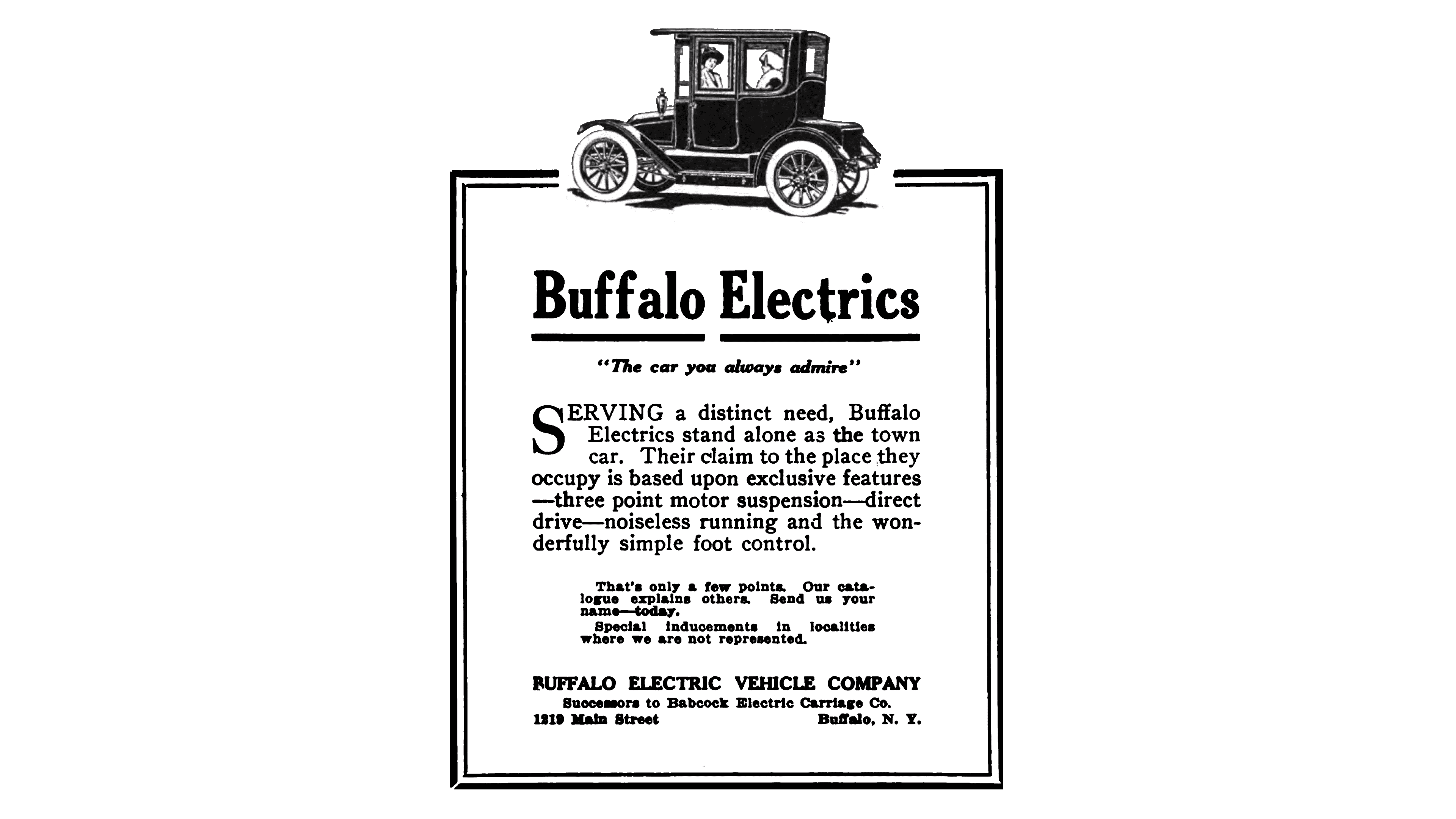
Among American electric car manufacturers of the early XX century, the Buffalo Electric Vehicle Company stands out. It produced its products from 1912 to 1915. It was formed in Buffalo (New York State) through a merger of 5 companies that produced different types of cars, trucks, engines, and electric cars. The brand marketed its products as women’s cars because the electric start was safe and eliminated the need for manual starting. Today, the building that housed the company is listed on the National Register of Historic Places.
Bufori

Bufori Motor Car Company is an Australian automobile company based in Kuala Lumpur, Malaysia, founded in 1986 by three Lebanese brothers. Inspired by 1930s American coupes, the brothers assembled three sports cars in their garage in 1986. It was a start. They created the company’s name by combining the initial letters of several words: B-Beautiful, U-Unique, F-Fantastic, O-Original, R-Romantic, and I-Irresistible. The company registered the trademark in Australia and Malaysia. Among the company’s famous models are the Bufori MKI, MKII, and MKIII La Joya.
Bugatti

Italian Ettore Bugatti founded the French automobile brand Bugatti in 1909 in Molsheim (Alsace, France). The company produces luxury passenger cars. In 1910, Bugatti introduced the racing Type 13, from which it produced models 15, 17, 22, and 23. In 1923, the Bugatti Type 32 “Tank” was released. In 1924, the brand produced the most successful racing car, the Bugatti Type 35. In 1963, the brand acquired the company Hispano-Suiza. In 1987, Romano Artioli revived the company under Bugatti Automobili S.p.A. in Campogalliano, Italy.
Buire
Buire is a French automobile company based in Lyon. It was founded in 1847 as a manufacturer of railroad-car chassis. Automobile production began in 1900, when the company Société de l’Horme et de la Buire merged with Léon Serpollet. At that time, the company adopted the La Buire brand name. In 1904, the company was renamed Chantiers de la Buire; in 1905, to Société des Automobiles de la Buire; and in 1910, to Société Nouvelle de la Buire Automobiles. In 1904, the brand produced its first models and subsequently produced one model almost every year. In 1930, production ended.
Bungartz

In 1934, in Munich (Germany), Dr. Verhard Bungartz and distillery owner Hugo Asbach founded a machine-building company, Bungartz & Co. Production began immediately after the opening, thanks to the invitation of the Jewish-German engineer Josef Ganz. He designed the first and post-war models. Before World War II, Standard (Gutbrod) “Superior,” Ardie, Adler, “Maikefer,” and Bungartz “Butz” small light cars were produced. After the war, the brand produced pumps, agricultural machinery, and equipment.
Burton

The Dutch brand Burton Car Company, founded in 1998 by Ivan and Dmitry Gebel, focused on developing sports cars. The first Burton was originally called Hunter, and its design drew inspiration from the legendary Bugatti, Jaguar, Talbot-Lago, Delahaye, and Alfa Romeo. The team developed the model over a year and a half and put it up for sale in 2000. At the same time, the company sold Lomax models in the Netherlands. During development, the company created a subsidiary, 2CV Parts, and, together with the parent company, put it up for sale in 2019.
Bush
Founded in 1916 in Chicago (USA) by John H. Bush, the American Bush Motor Company aimed not to manufacture but to assemble, convert, and sell other brands of automobiles. The Huffman and Piedmont models were offered with Lycoming and Continental power units. The Norwalk Motor Car Company, Martinsburg, West Virginia, was also for sale. This brand was discontinued in 1925. The owner sold its designs to various companies for assembly.
BXR Motors

The automobile manufacturer is BXR Motors, based in Fort Worth, Texas. The USA was the realization of Neil Bailey’s American dream; he built his first car, a Mustang Spirit Edition convertible, in his garage in 1972. He founded his brand in 2008, inspired by his work on cars from different makes and model years. There was everything from traditional classics to modern luxury and elegant exotics, all helping create a true American supercar. As a result, the Blade XTR embodied the founder’s idea, adopting curved forms that symbolized American strength.
Byd

BYD is a Chinese automobile manufacturer based in Shenzhen, Guangdong Province, China, founded in 1995 by Wang Chuanfu and Lu Xiang-yang. It has subsidiaries BYD Automobile and BYD Electronics, as well as BYD Co., an automobile manufacturer founded in 2003 in Shenzhen. One of the company’s most famous models, still in production today, is the Flyer. This was followed by the BYD F3 DM, which sold 10,000 units per month. The company’s models include the BYD Shang hybrid compact van and the BYD HAN luxury sedan, available in electric and hybrid powertrains.
Byton

The Future Mobility car brand was founded in 2016 to develop and manufacture an all-electric vehicle in China and Germany. In 2017, the brand was renamed Byton to develop the M-Byte electric SUV. Carsten Breitfeld and Daniel Kirchert joined the company’s management team. In 2018, First Auto Works funded the venture. The concept car was to be unveiled in 2018, and sales were planned for 2109. But in 2020, production was halted. In 2021, bankruptcy was declared.
Black Manufacturing Company
The Black Manufacturing Company was founded in 1896 in Indianapolis, Indiana. It developed and assembled phaetons, dos-a-dos, and business vans with 2.5-8 hp engines. The cars had a 2-speed manual transmission. Reports show that the company built the first car in 1891, even before it was officially registered. However, in 1900, the owners agreed to sell it for $20,000, leading to the brand’s complete closure.
Bi-Autogo
The Bi-Autogo was an experimental automobile designed and built by Detroit artist and engineer James Scripps Booth. The American cyclecar was produced for four years, until 1912. It had a three-seat body, a steerable front wheel, two regular wheels, and a small retractable wheel located slightly behind the passenger seating area. It was built as a one-off. Mobsteel of Detroit restored it in 2017. It is notable for its original design and unit performance.
Video