


 Dynamo Zagreb Logo PNG
The team has an unusual history, as shown by the Dinamo Zagreb logo. The emblem depicts two periods in the football club’s existence. In each period, the organization competed professionally.
Dinamo Zagreb traces its roots to 1911, when HŠK Građanski was founded in Zagreb and became a leading club in prewar Yugoslavia, winning five titles. In June 1945, the new authorities dissolved Građanski, HAŠK, and Concordia. On June 9, 1945, FD Dinamo was founded, inheriting its players, supporters, and blue color.
In the 1946–47 season, Dinamo finished second in the Yugoslav league, and in 1947–48 won its first title ahead of Hajduk Split and Partizan. Over time, it secured four league titles and seven cups, joining Hajduk Split, Partizan, and Red Star Belgrade as one of the top clubs.
In 1967, Dinamo won the Inter-Cities Fairs Cup. After losing the 1963 final to Valencia, the team defeated Leeds United in the 1966–67 final, winning 2:0 in Zagreb and drawing away. It remains the only Croatian club with a European trophy.
In 1991, the club was renamed HAŠK Građanski, and then in 1993 became NK Croatia Zagreb. Under that name, it won five Croatian titles and reached the Champions League group stage in 1998–99 and 1999–2000. On February 14, 2000, Dinamo Zagreb returned to the name Dinamo Zagreb. In 2011, it became GNK Dinamo.
From 2005–06 to 2016–17, Dinamo won the Croatian league for twelve consecutive seasons, collecting over twenty-five titles in the independent era. The rivalry with Hajduk Split remains central.
The academy produced Luka Modrić, Mario Mandžukić, Mateo Kovačić, and Davor Šuker. In 2018, many players on the Croatia national team had links to Dinamo. In 2020–21, the club defeated Tottenham Hotspur 3:0 after a first-leg loss, with a hat-trick by Mislav Oršić.
Meaning and History
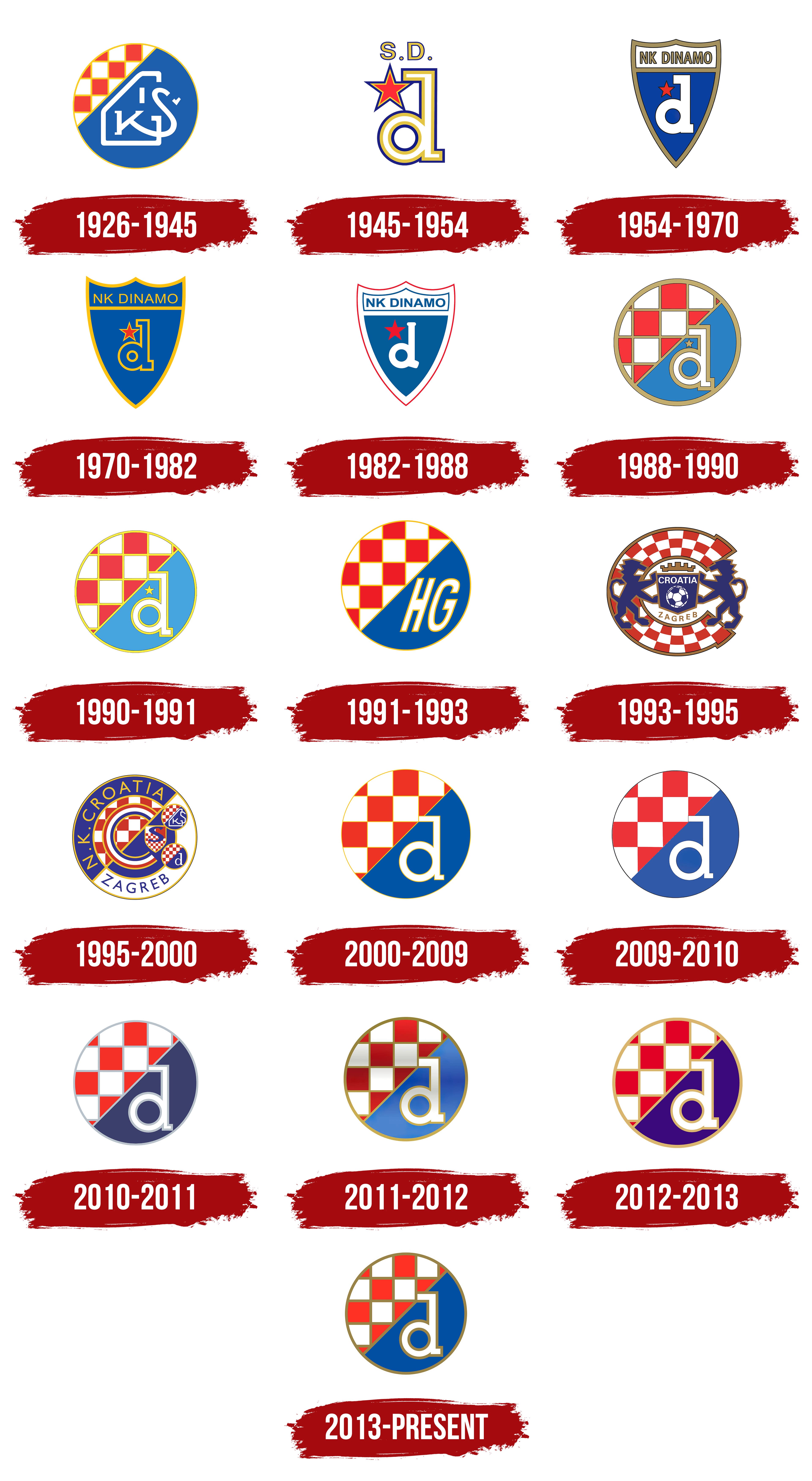
Most of the Dinamo Zagreb emblems are similar in shape and color, but they can be roughly classified into two groups. The first is the most numerous. It includes round graphic signs with a red-and-white checkerboard pattern. The second category includes triangular heraldic shields with the letter “d” and a red five-pointed star on a blue background. A “d” version without a shield is also available.
What is Dinamo Zagreb?
Dinamo Zagreb is a professional soccer team from Croatia, based in Zagreb. It was founded in 1911 as HŠK Građanski and was renamed in 1945. Today, it is the country’s most successful club, having won 23 Prva HNL titles, 6 Croatian Super Cups, 16 Croatian Cups, and 1 Yugoslav First League title.
1926 – 1945
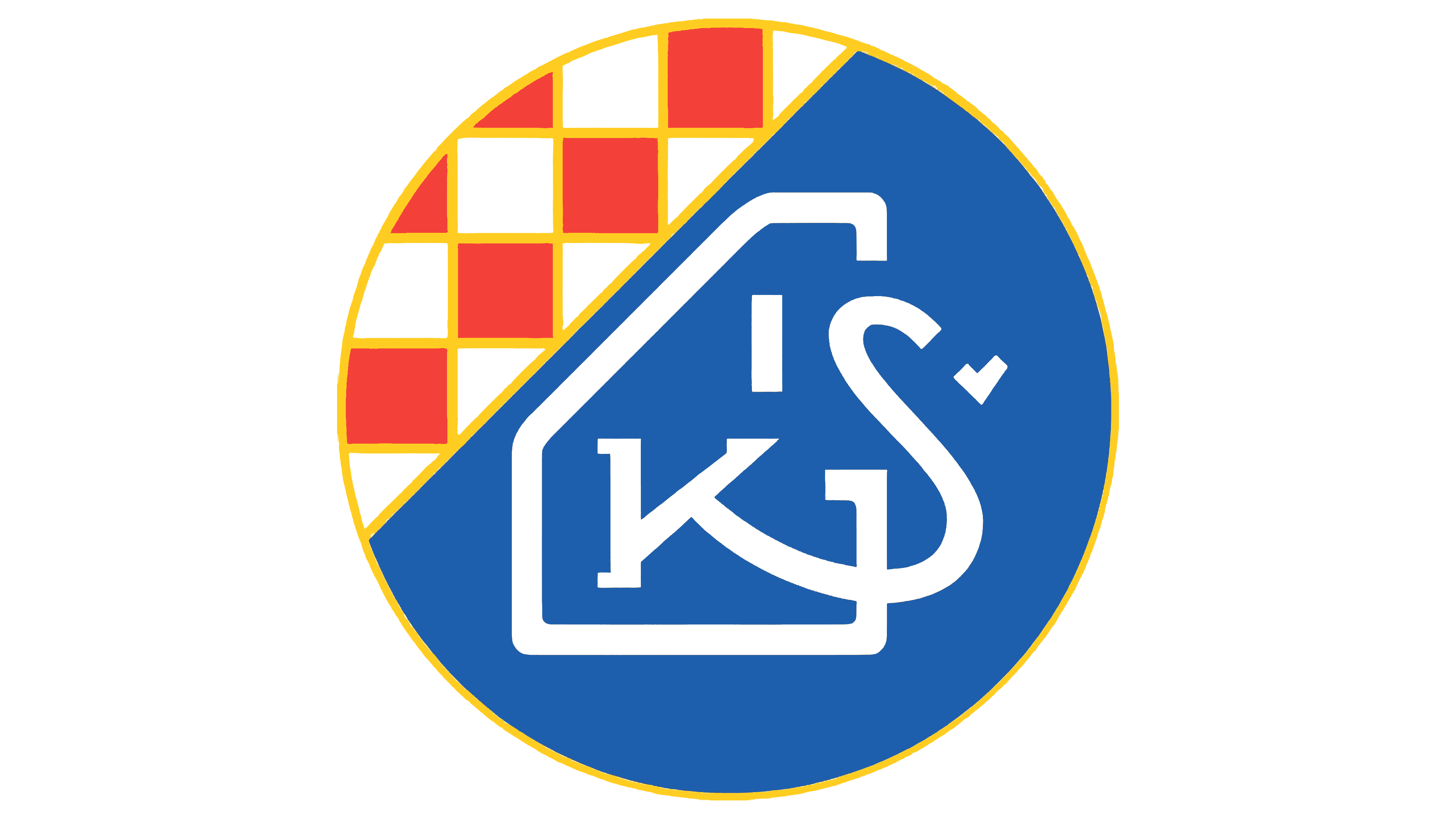
Many of the Dinamo Zagreb logos are derived from the latest club crest, HŠK Građanski Zagreb. It was a circle diagonally divided into two. Above was a pattern of alternating red and white squares, while below, the blue semicircle featured the monogram “GSK.”
1945 – 1954
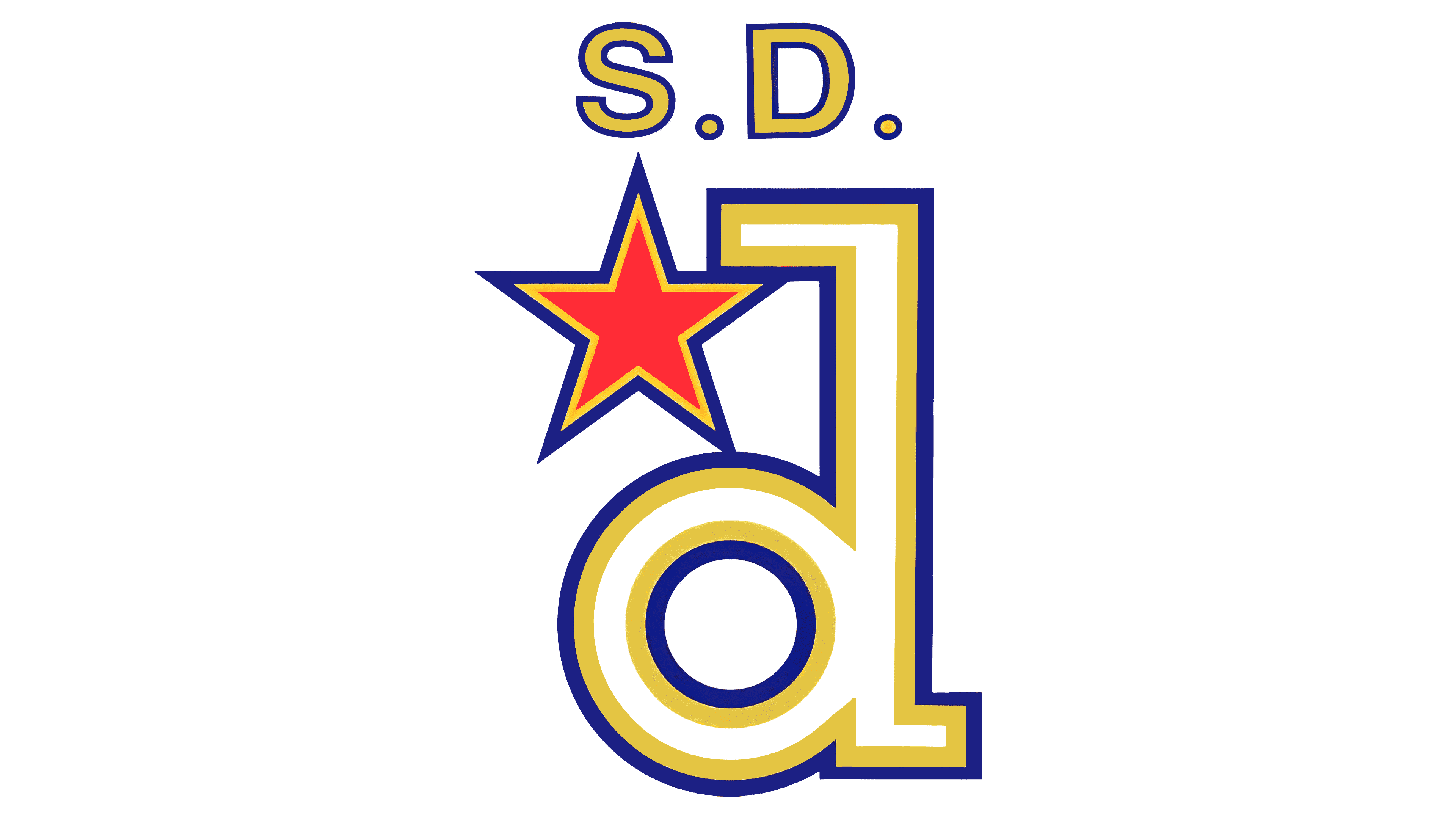
In 1945, the sports society Dinamo Zagreb was founded based on the disbanded pre-Yugoslav clubs. Its emblem featured two capital letters, “S.D.”, and one lowercase “d.” The single “d” was enlarged. Next to it was a red five-pointed star – a famous communist symbol.
1954 – 1970
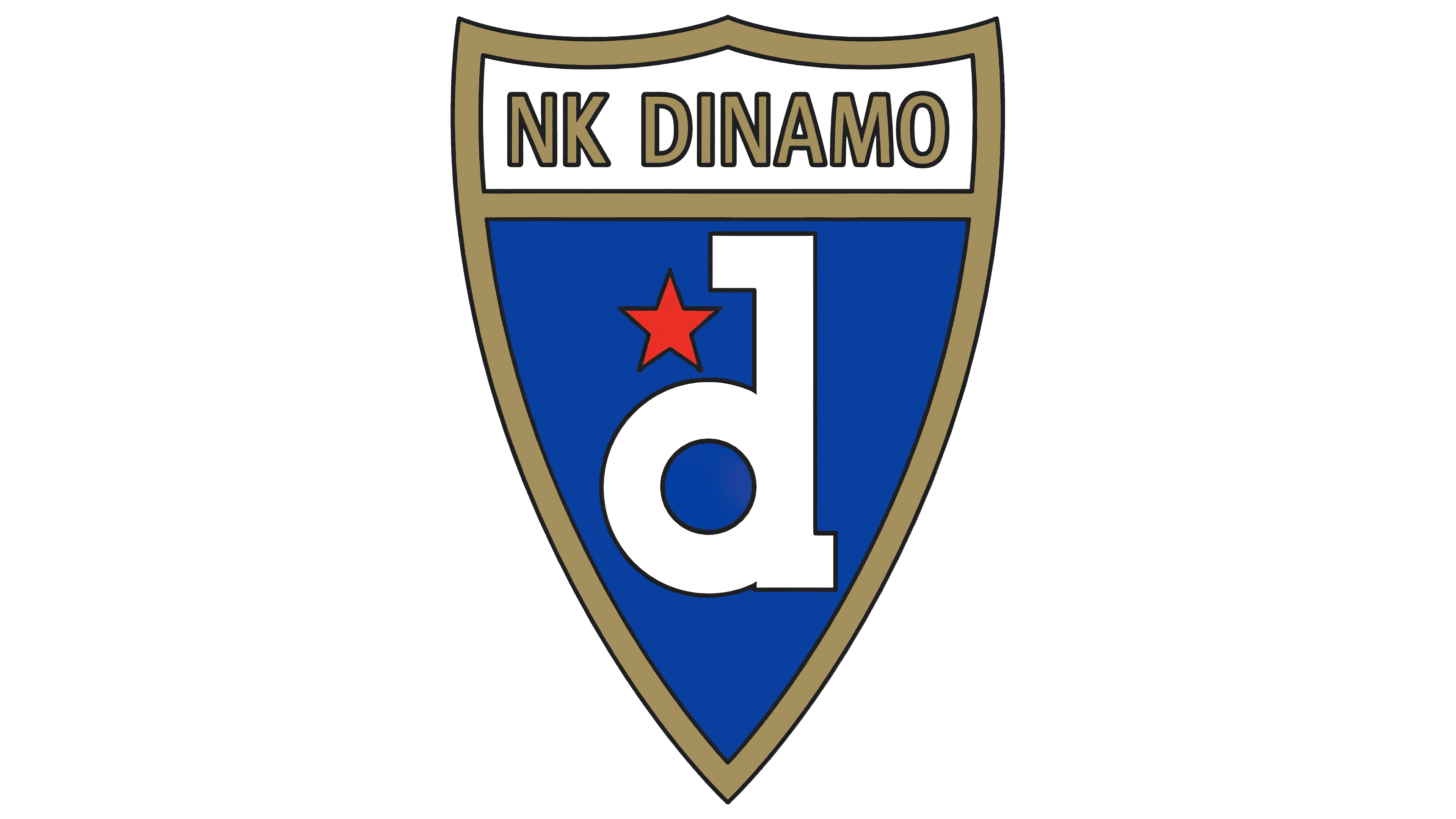
The designers placed the “d” on the blue triangular shield. The white top of the logo bore the words “NK DINAMO” because it was renamed Nogometni Klub Dinamo Zagreb.
1970 – 1982
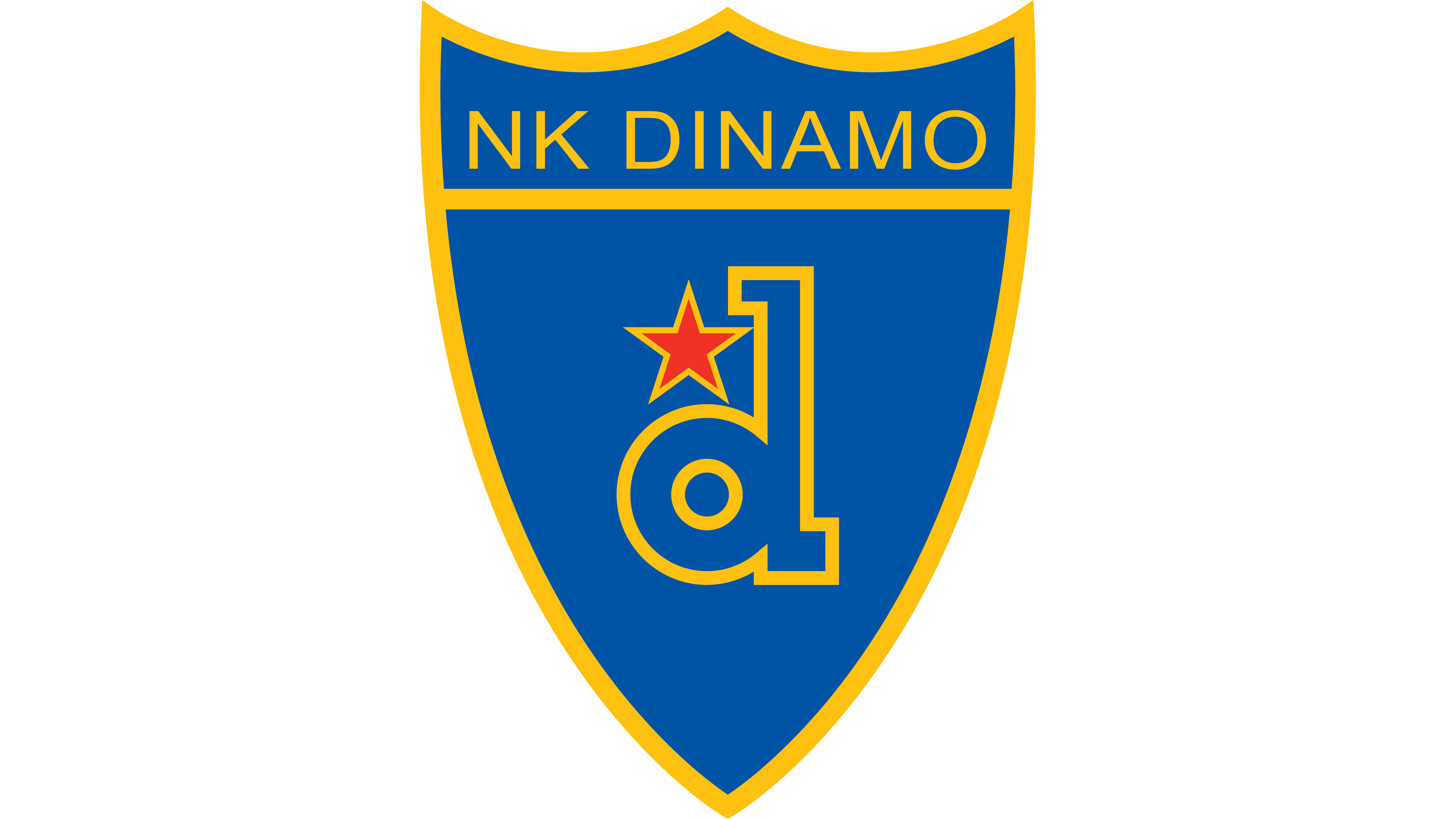
In 1970, the shield turned completely blue. Only the golden outlines of “d” and the team name stood out. The developers left the red star.
1982 – 1988
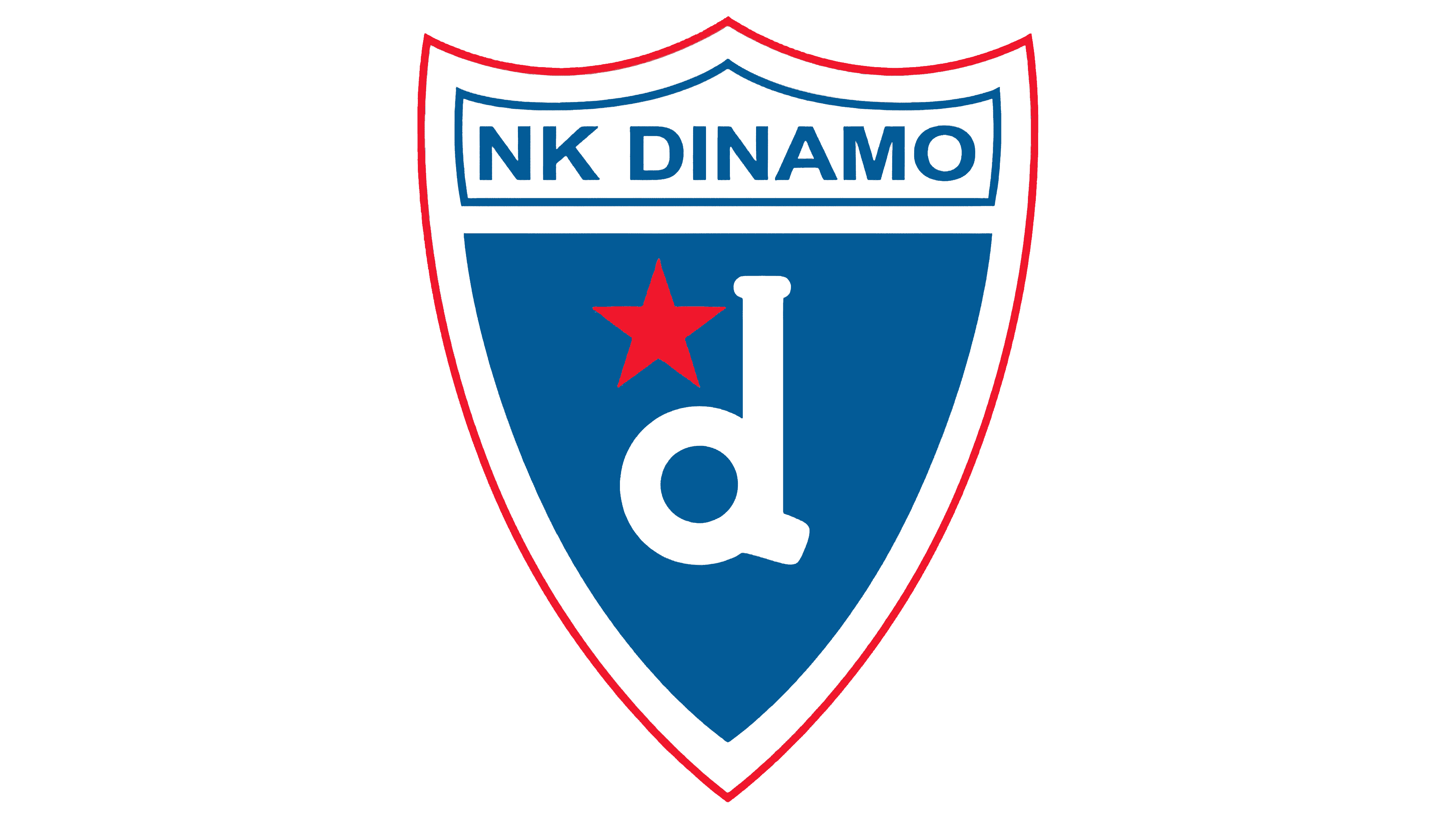
The emblem is back to white. A thin red line outlined the image’s outer edge.
1988 – 1990
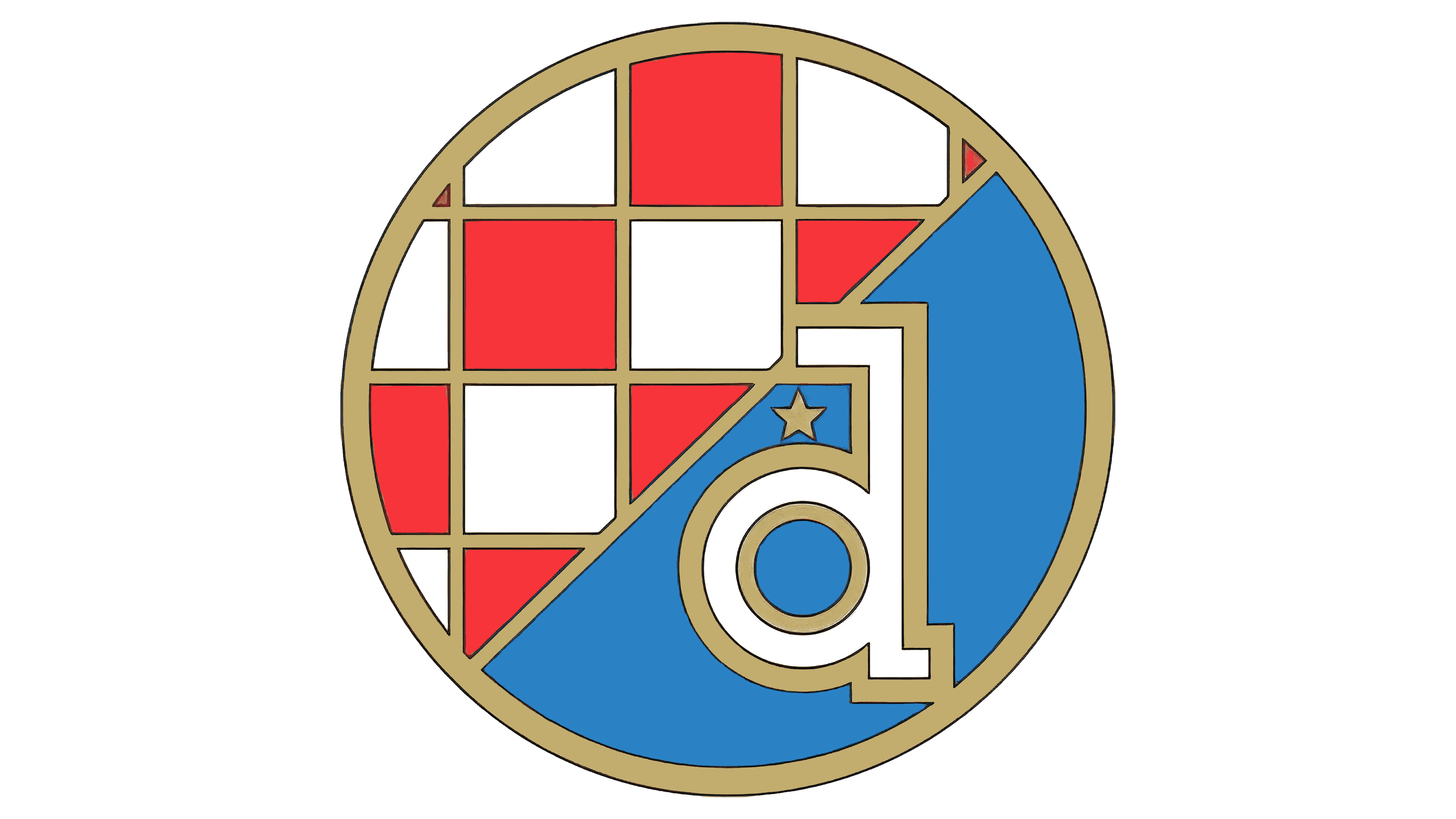
In the late 1980s, the club returned to a circular logo split in two. A checkerboard pattern of red and white squares occupied the upper half. At the bottom was the “d” with a mini-star. The letter was white, the background behind it was blue, and the outlines were gold.
1990 – 1991

The circle border and dividing lines are yellow.
1991 – 1993
After Yugoslavia’s breakup, the club changed its name to HAŠK Građanski. As a result, instead of the lowercase “d,” the logo now has the capital “HG” written in italics.
1993 – 1995
In 1993, the name changed again. The football team is now known as Croatia Zagreb, a name reflected in its identity. The designers retained the circular shape and the red-and-white squares pattern, depicting a large C. They placed a small blue shield with a ball in the center and the word “CROATIA.” Above the shield was a golden crown; below it was the inscription “ZAGREB” and two blue lions on the right and left.
1995 – 2000
The developers have complicated the logo by presenting it as a multi-colored set of concentric circles. On the right side were mini versions of the HŠK Građanski Zagreb and Nogometni Klub Dinamo Zagreb logos, as well as a miniature red-and-white shield with a blue “S.” The frame of the club emblem was divided into two half-rings with the words “N. K. CROATIA “and” ZAGREB. ”
2000 – 2009
2000 saw the beginning of the GNK Dinamo Zagreb era. It marked the return of an old logo similar to the one used in 1990-1991. The designers reshaped the “d,” updated the color scheme, thinned the yellow outlines, and moved the star to the center.
2009 – 2010

The circle’s stroke is now blue, and the thin yellow lines between the squares are gone. The mini star has also been removed.
2010 – 2011
In 2010, dividing contours appeared between the elements, but this time in light gray rather than yellow. The designers also chose a different shade of blue.
2011 – 2012

The logo’s creators changed the colors again. The main innovation of this period is a gradient that darkens toward the middle.
2012 – 2013

The gradient was removed, and the blue shade moved toward ultramarine.
2013 – today
In the current logo, the elements have wide gold outlines. The letter “d” is depicted against a dark blue semicircle.
Font and Colors
The graphic sign indicates that Dinamo Zagreb is a direct descendant of HŠK Građanski Zagreb. Designers often changed the design, but they always retained the classic elements: a red-and-white square pattern and the club’s initials on a blue semicircle.
The original “d” appeared in 1945. It was created from scratch without using fonts. The logo’s main colors are Dark Cornflower Blue (#1D3A8D), Lust (#E32118), white, and dark gold.