


 Dynamo Kiev Logo PNG
The sign indicates that you can get up from your knees and start the fight from scratch. The Dynamo Kyiv logo is a story about honor, glory, determination, and team spirit. Like epaulets, the emblem indicates that an athlete who joined the club has reached the highest rank.
On May 13, 1927, the Proletarian Sports Society “Dynamo” was registered in Kyiv as part of a network founded in Moscow in 1923 by the Cheka-OGPU. Early membership was restricted to security personnel; civilians joined later. The football team debuted on July 1, 1928, with a 1:2 loss, followed by a 1:5 defeat against the Belarusian SSR.
In 1936, Dynamo Kyiv entered the first USSR championship and finished second behind Dynamo Moscow. Rivalries with Spartak Moscow and Torpedo Moscow shaped the era. During the 1941 occupation, several players stayed in Kyiv; in 1942, they played the “match of death”, and four later died in a concentration camp.
The club won its first USSR Cup in 1954. In 1961, it became the first non-Moscow champion, with Valeriy Lobanovskyi in the squad. Under Viktor Maslov, titles followed in 1966–1968, with early use of pressing and zonal defense.
Appointed in 1973, Lobanovskyi led a new phase. In 1975, Dynamo beat FC Bayern Munich to win the Cup Winners’ Cup, then beat them again to claim the UEFA Super Cup. Oleg Blokhin won the Ballon d’Or.
In 1986, Dynamo again won the Cup Winners’ Cup against Atlético Madrid, and Igor Belanov received the Ballon d’Or. After 1991, the club dominated Ukrainian football, winning nine straight titles from 1992–93 to 2001.
Lobanovskyi returned in 1997 and led Dynamo to the 1998–99 Champions League semi-finals, including a 4:0 win over FC Barcelona. He died in 2002. Since the mid-2000s, Shakhtar Donetsk has been the main rival. In 2009, Dynamo reached the UEFA Cup semi-finals, beating Valencia CF and Paris Saint-Germain before losing to Shakhtar.
Meaning and History
The Kyiv club’s logo reflects its name, which it inherited from the Voluntary Sports Society “Dynamo.” Initially, this word was suggested by the head of the political department and a former employee of the electric machine-building enterprise “Dynamo.” The name chosen embodies movement, strength, and energy. True, only the first letter is depicted on many emblems – blue (as before) or white (as now).
What is Dynamo Kyiv?
Dynamo Kyiv is a Ukrainian football club. They play at the professional level in the Premier League and are based in Ukraine’s capital. The club’s actual founding date is 1927, but it was officially recognized in 1989, as it had previously been part of the Soviet Dynamo Sports Society.
1924 – 1926
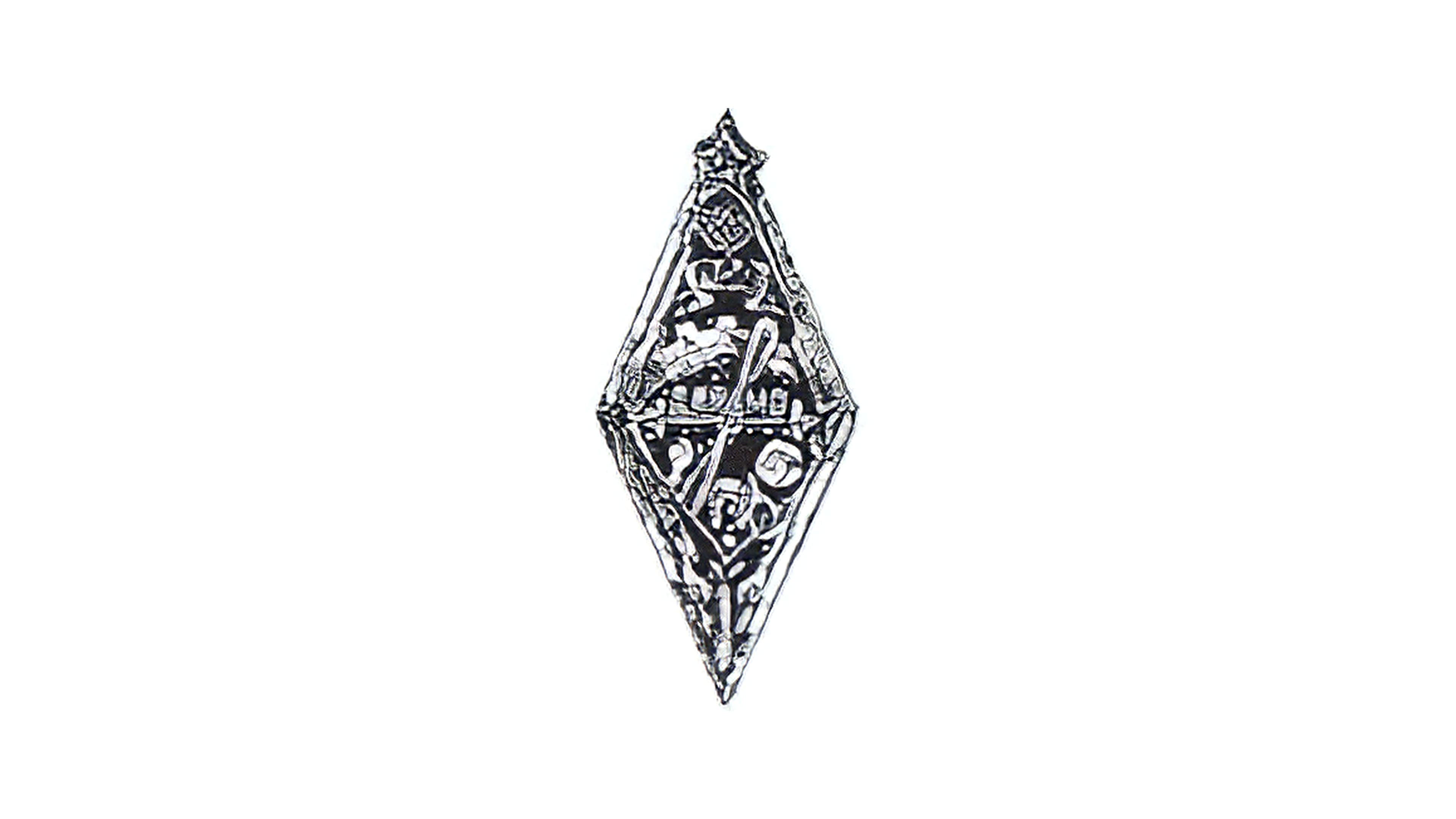
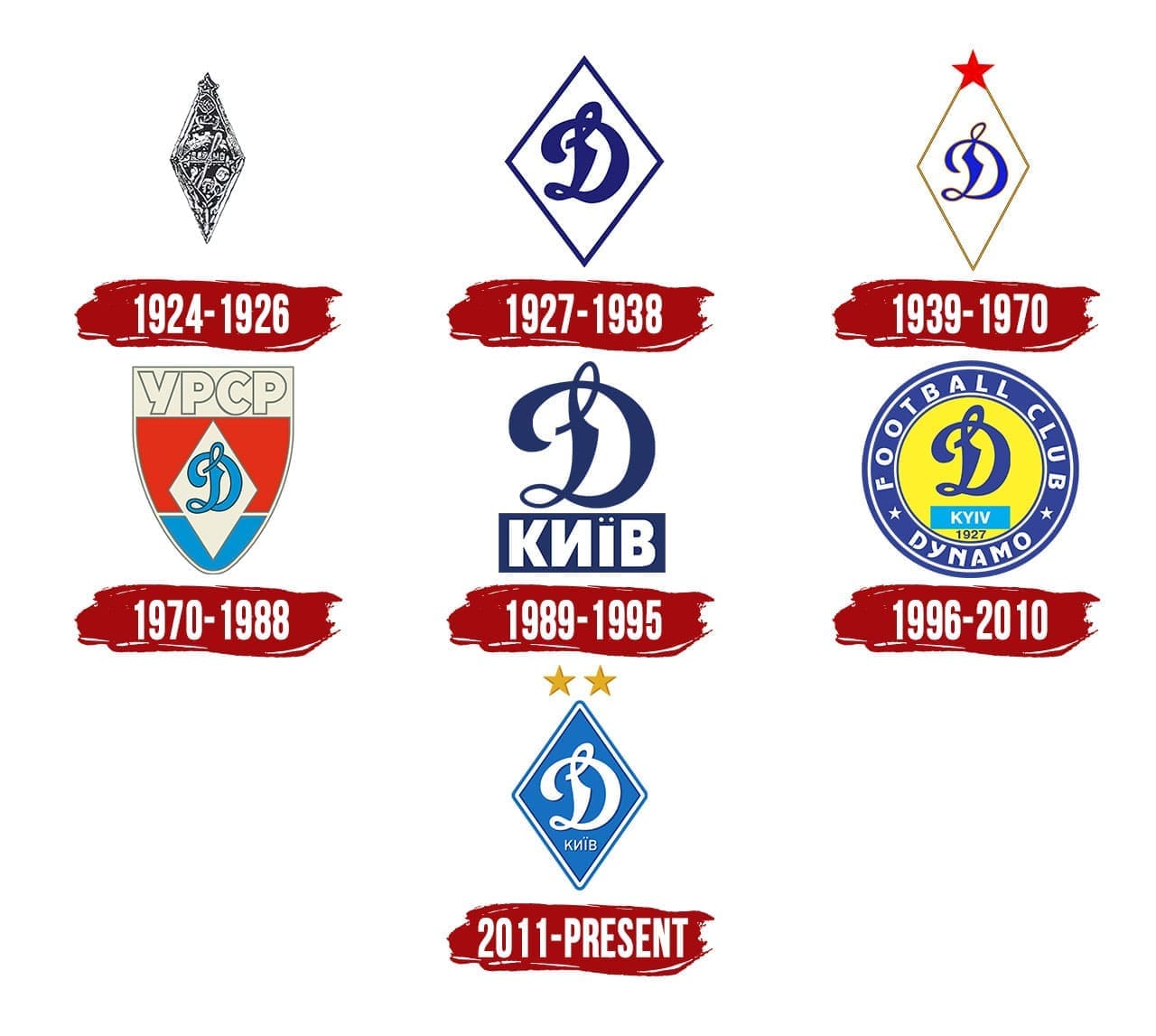
On October 8, 1924, the State Political Directorate of the NKVD issued an order to create a governing body for the sports society “Dynamo,” which appeared in various cities of the Soviet Union. At the same time, it approved its logo: a black-and-white diamond depicting eleven sports attributes, including a soccer ball. The top corner of the diamond featured a five-pointed star, and the organization’s name was written in the center.
1927 – 1938
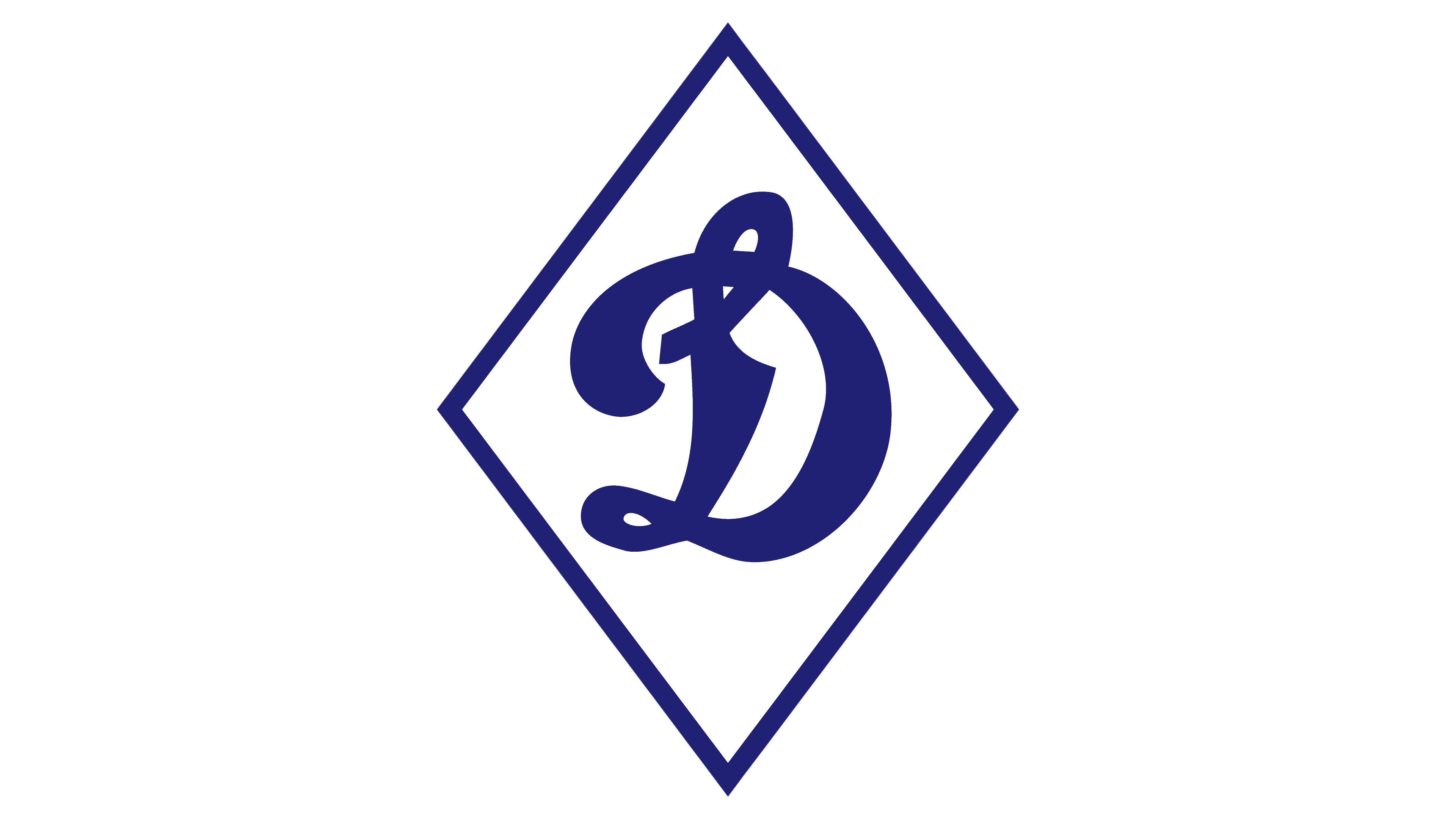
Dynamo Kyiv was founded in 1927 and adopted a simple, laconic emblem featuring a white rhombus with a blue outline and the capital Cyrillic letter “D”. The designers used a faux-handwritten font with loops and smoothly curving lines.
1939 – the 1970s
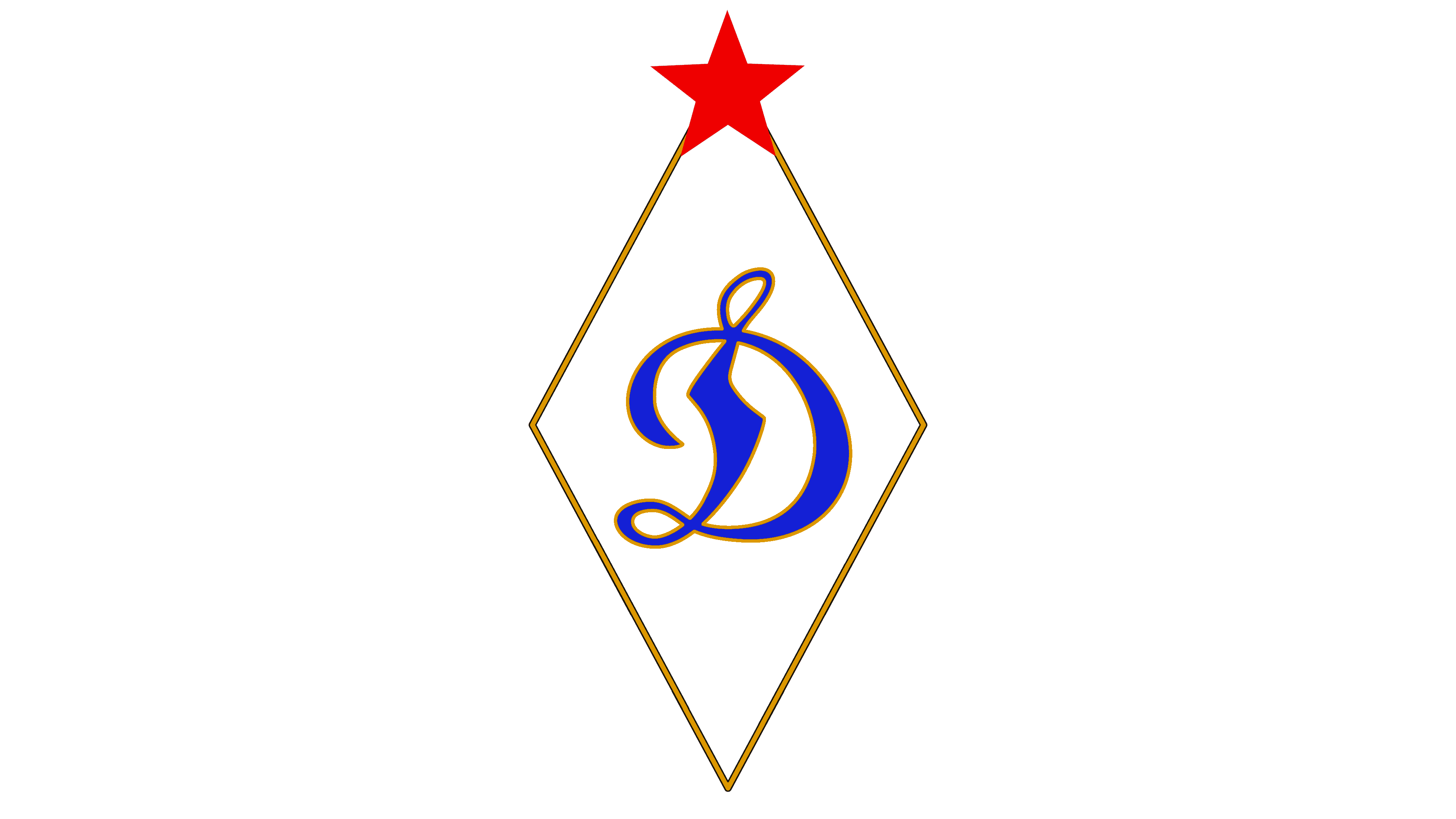
In honor of the 15th anniversary of the Voluntary Sports Society “Dynamo,” a small logo redesign was carried out to coincide with the receipt of a special award – the Order of Lenin. The letter’s style changed; the lines became thinner, and a five-pointed star with a red-and-white gradient appeared at the top of the rhombus.
the 1970s – 1988
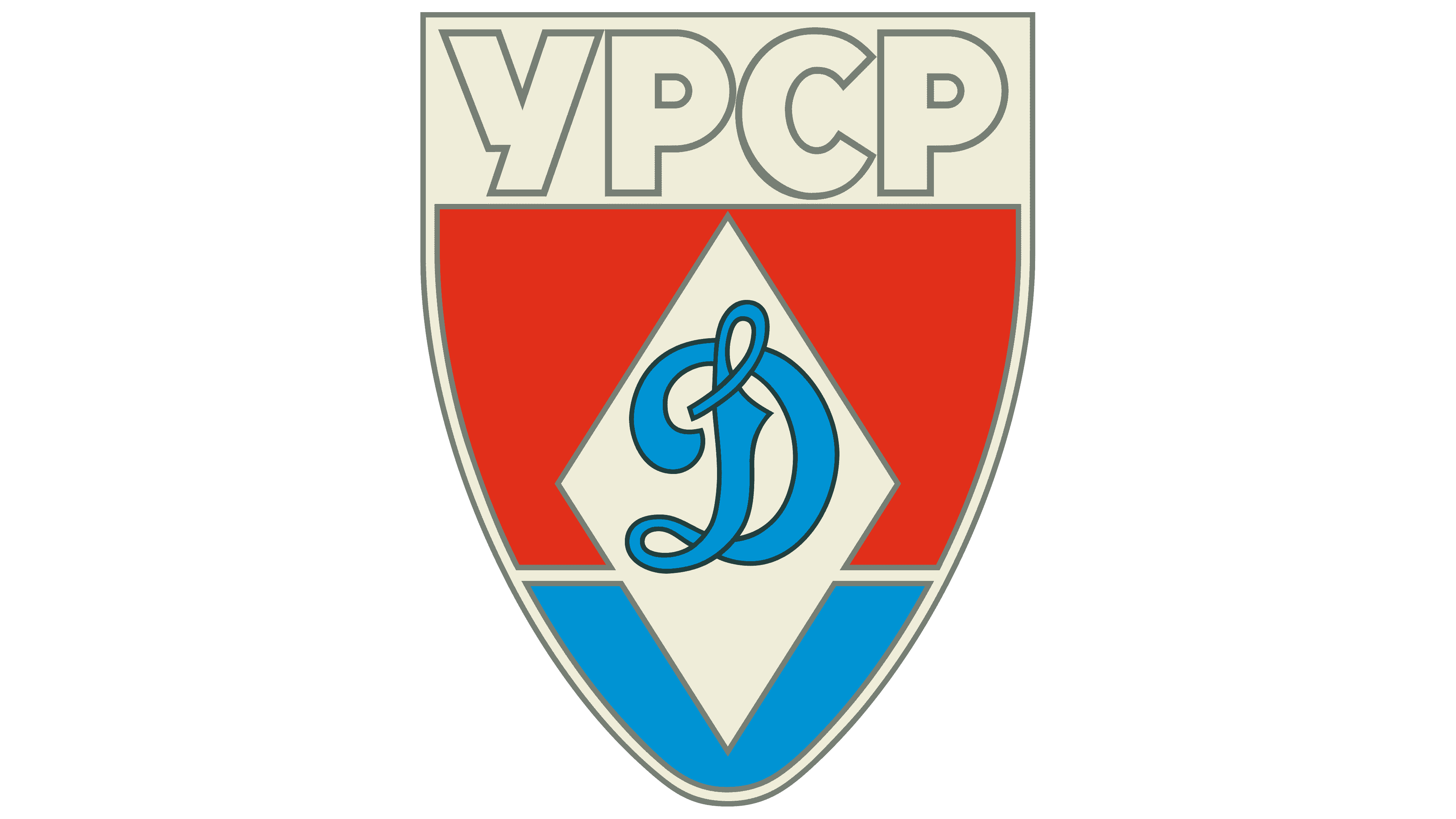
In 1972, the logo became a triangular heraldic shield with a rounded base. At the top was the Cyrillic inscription “URSR” (an abbreviation for the Ukrainian Soviet Socialist Republic). The diamond with the letter “D” was reduced and moved down into two wide red and blue stripes, representing the Ukrainian SSR state flag.
1989 – 1995
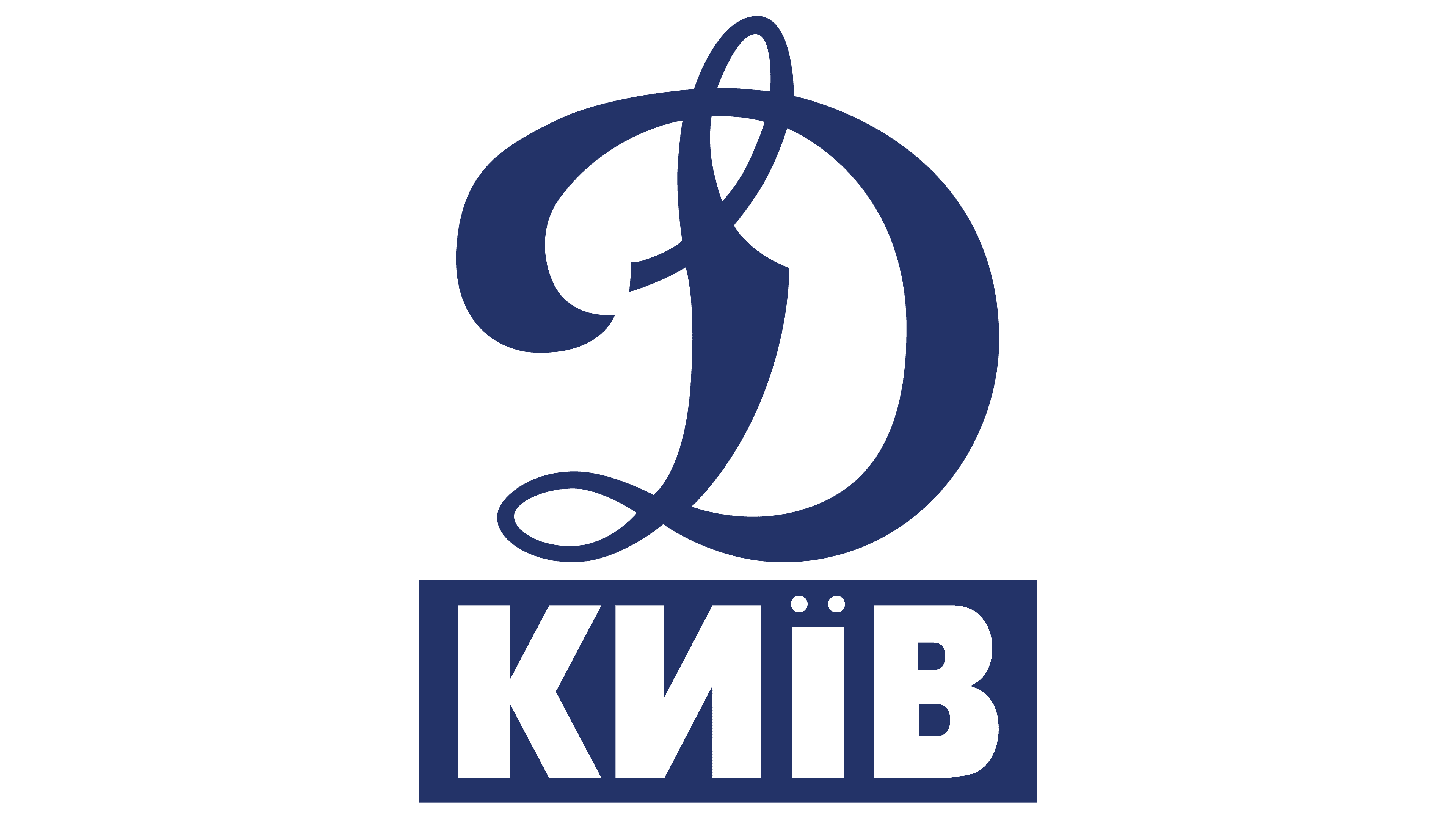
In 1989, based on the sports community Dynamo Kyiv, a football club of the same name was established. To mark the occasion, the management organized a competition for the best logo. After considering many options, the jury chose a minimalistic wordmark. It contained the already familiar letter “D” (above, without a rhombus) and the Ukrainian inscription “КИЇВ” (below, in a blue rectangle). The geometric shape that bore the city’s name turned yellow in 1991. This color was chosen as a tribute to Ukraine’s national flag.
1996 – 2010
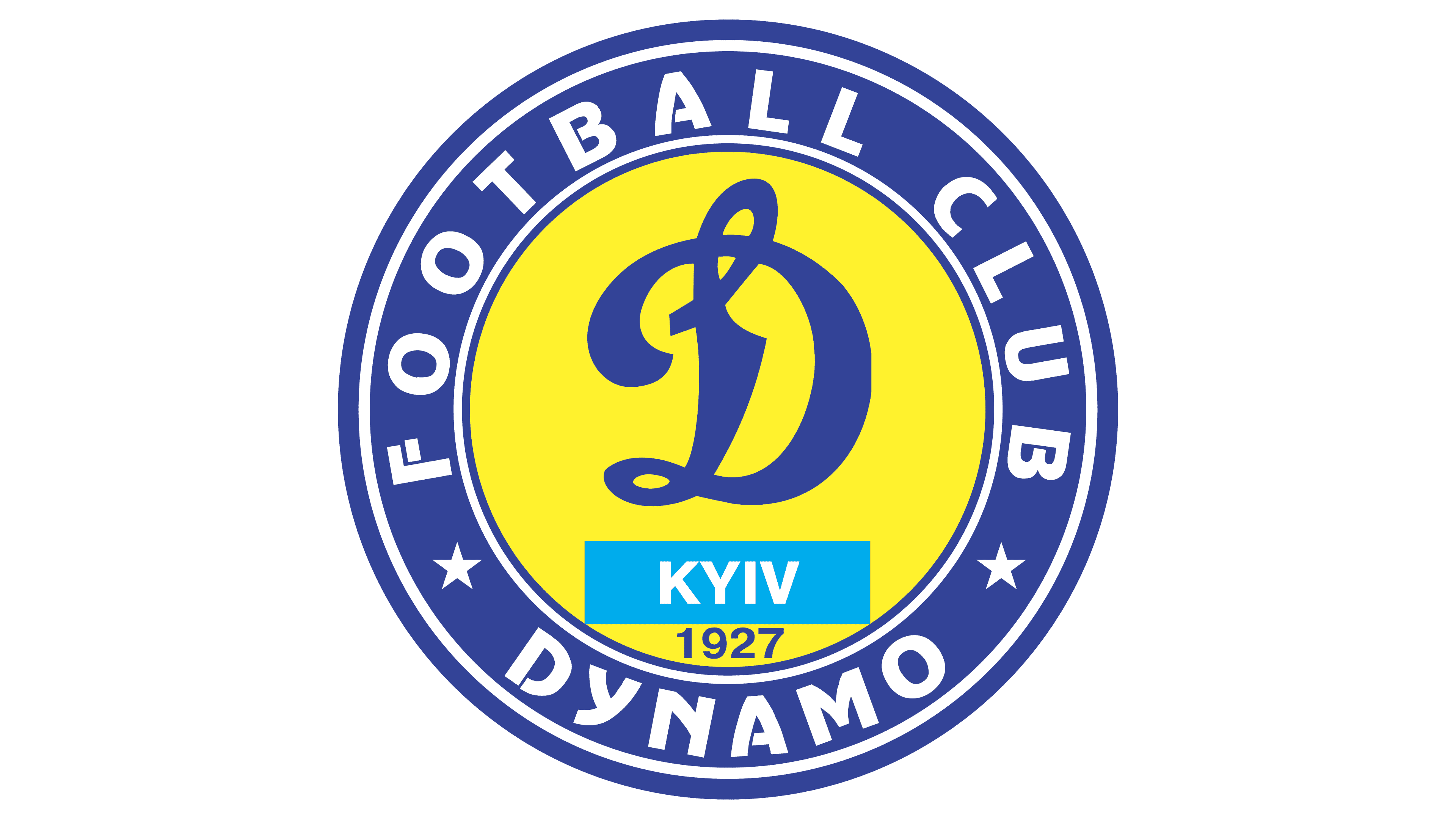
In 1996, Dynamo Kyiv’s new leaders changed the logo. As a result, the club crest became round like a seal. The center featured a yellow circle with a large letter “D,” a blue rectangle with the city’s name, and the number “1927.” A blue ring was used as a frame, with the Russian letters “FOOTBALL CLUB DYNAMO.”
In 2003, a single yellow star appeared above the logo, marking the victory in ten national championships. In 2008, a second star was added, reminding fans that the team had won 13 USSR championships.
2011 – today
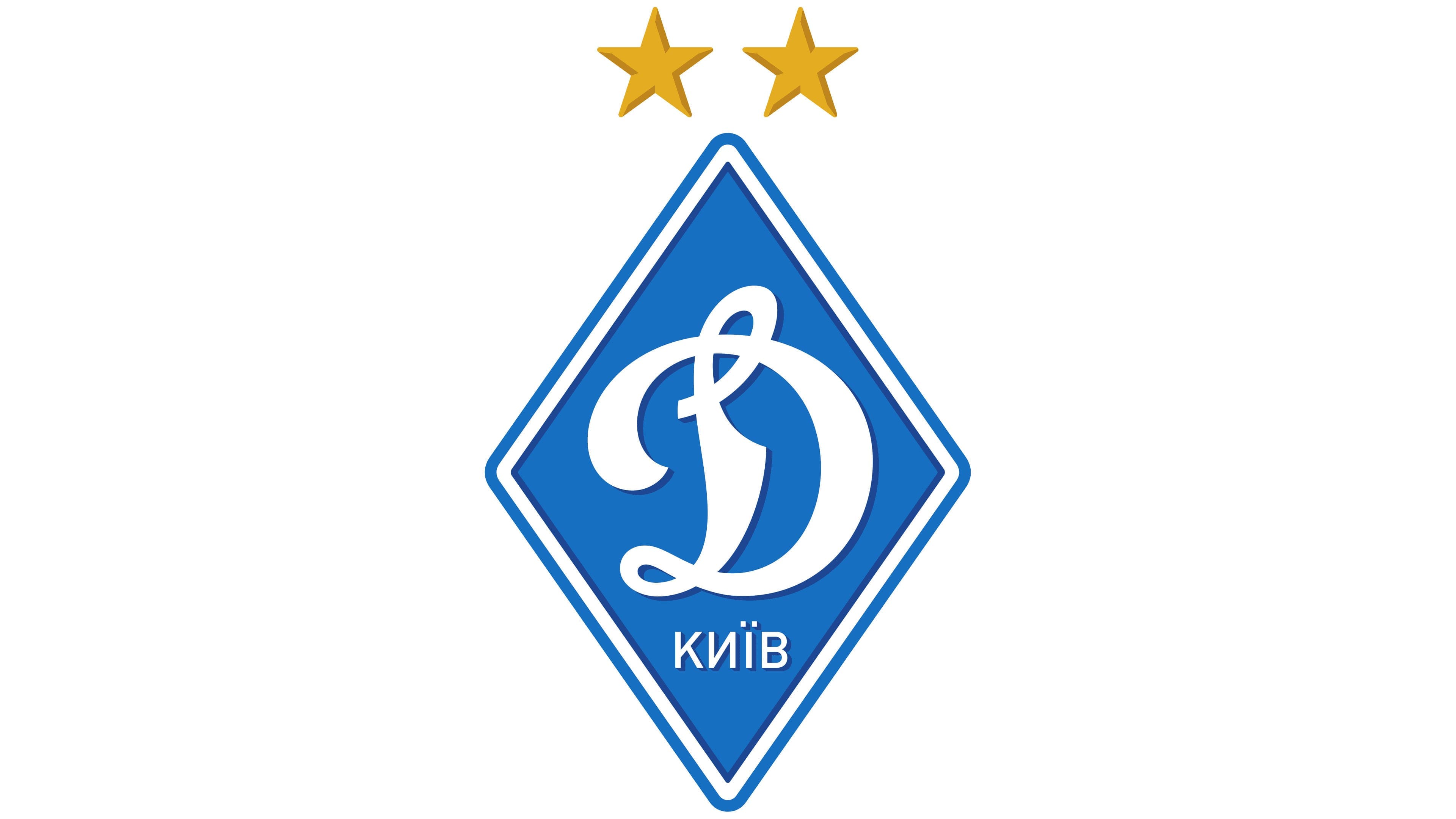
In the early 2010s, the club returned to its roots and adopted a diamond-shaped emblem with a capital letter “D.” It differed from previous versions by adding the word “КИЇВ” and a simple two-line frame.
To avoid visual similarity to the Moscow Dynamo sign, the designer chose a blue background and white inscriptions. The designer removed yellow because the yellow-and-blue palette belonged to the national team. Maria Priydan designed the new logo.
Font and Colors
Dynamo Kyiv’s main symbol is the Cyrillic letter “D.” It was developed for the visual identification of the Voluntary Sports Society “Dynamo” and later adopted by all sports societies with the same name in different cities of the Soviet Union. The Ukrainian club kept it in place to avoid losing touch with its origins.
The logo uses two radically different fonts. The first is handwritten, with rounded lines and decorative loops (the letter “D”). The second is printed, strict, sans serif (the word “KYIV”).
The main colors are white and blue. When the Voluntary Sports Society “Dynamo” was created, it symbolized the organization’s employees’ pure thoughts. Now it is simply an iconic palette, without which the Dynamo football club is unimaginable.