


 Kappa Logo PNG
Adopted in 1969, the sportswear brand’s emblem remains relevant. Like its previous versions, the Kappa logo symbolizes a commitment to gender equality and reflects a closeness to modernity and fashion trends.
In 1916, Abramo Vitale opened a small yarn workshop in Turin under Società Anonima Calzificio Torinese. Knitwear and socks quickly gained demand across Italy. During World War II, the company, led by Davide Vitale, supplied the Italian army. In 1943, the factory was destroyed by bombing and later rebuilt as a modern facility.
In 1956, a batch of defective socks triggered a crisis. New products were marked with the letter K and the word Kontroll. Customers began asking for “K socks,” and the Aquila name disappeared. In 1967, Kappa became the official brand. In 1968, Maurizio Vitale launched Robe di Kappa, while the Jesus Jeans campaign caused controversy and drew attention. Around 1969, the Omini logo appeared from a rejected photo of a man and woman sitting back-to-back.
In 1978, Marco Boglione pushed the shift toward sportswear, forming Robe di Kappa Sport, later simplified to Kappa. Partnerships followed with Juventus in 1979, the New York Marathon in 1981, the US athletics team in 1983, and Ajax in 1984. Athletes like Carl Lewis, Florence Griffith Joyner, and Edwin Moses competed in Kappa gear.
In 1994, after Maurizio Vitale’s death, the company went bankrupt during a contract with Barcelona. That year, Boglione acquired the assets and founded BasicNet, moving to a licensing model. In 1999, the company entered the Milan stock exchange and signed the Italian national team. In 2000, Kappa introduced the Kombat kit, later echoed by Nike and Adidas.
Meaning and History
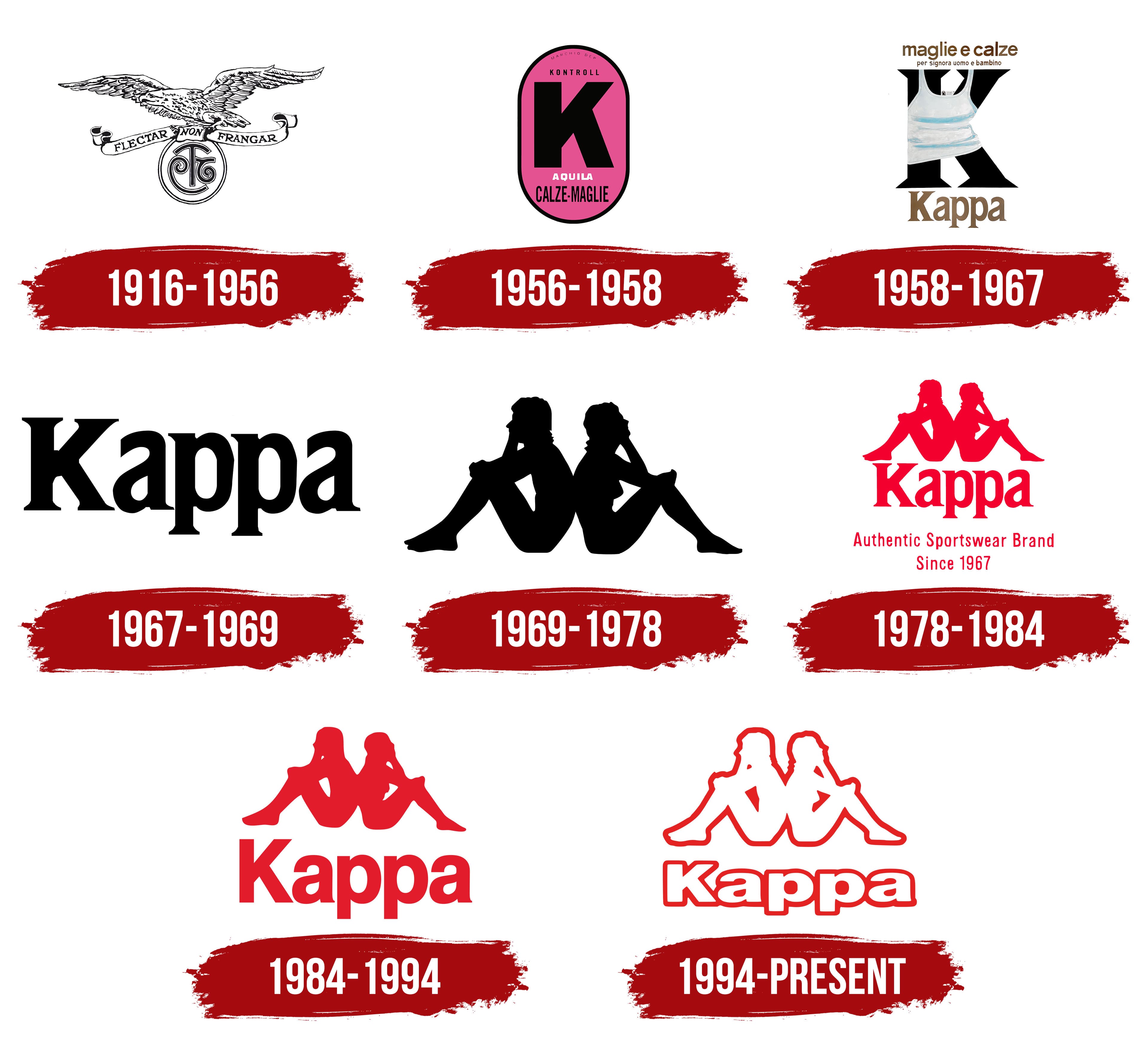
The brand began producing socks and underwear. In 1967, it expanded production, after which it underwent a major redesign and developed a widely recognized logo. Thanks to the new concept reflected in the trademark, it became known in the fashion industry as a leader of urban, sexual, and authentic fashion. Before that, it changed its symbolism several times until it found the most accurate one.
What is Kappa?
Kappa is an Italian manufacturer of sportswear and footwear for sports and active recreation. It was founded in 1978 and named after the tenth letter of the Greek alphabet. The brand became known thanks to its logo, which depicts two people sitting back to back. The company is also known for its soccer clothing collections, as it has collaborated with many sports clubs, including “Benfica,” “Napoli,” and “Juventus.”
1916 – 1956

The debut includes the company’s first name, Maglificio Calzificio Torinese, in abbreviated form. It’s written in rounded letters and enclosed in a circle with a double end. The logo also depicts a flying eagle with spread wings and the slogan “Flectar non frangar.” The slogan is written in capital letters on a ribbon with curled ends. The logo uses black and white.
1956 – 1958
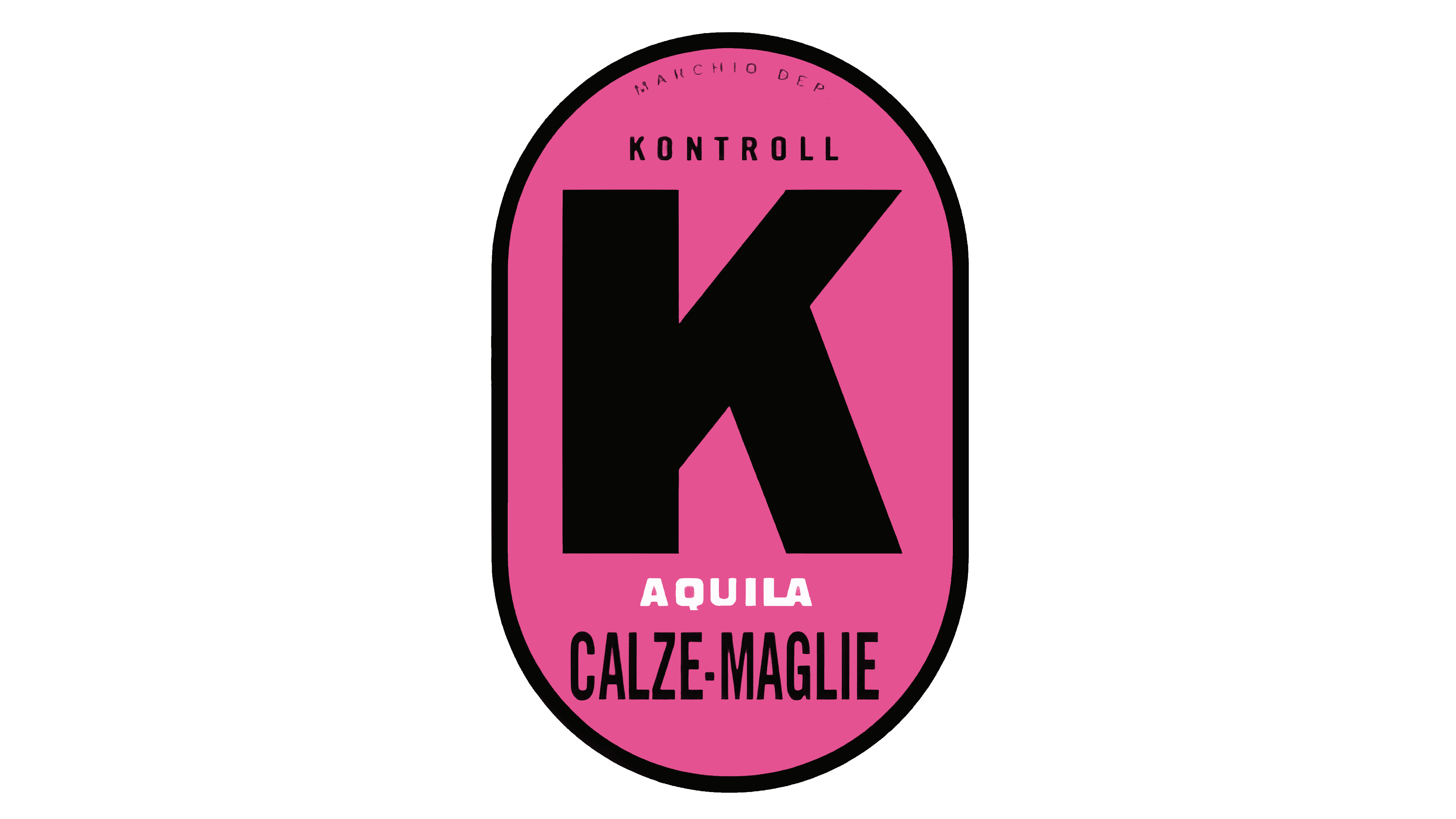
At this time, the company changed its name to Kontrollen, which was reflected in the brand style. The letter “K” first appeared then. On the pink oval with a thin black edge, two inscriptions also appeared: “Aquila” (replacing the eagle image) and “Calze-Maglie” (indicating the socks-shirt product).
1958 – 1967
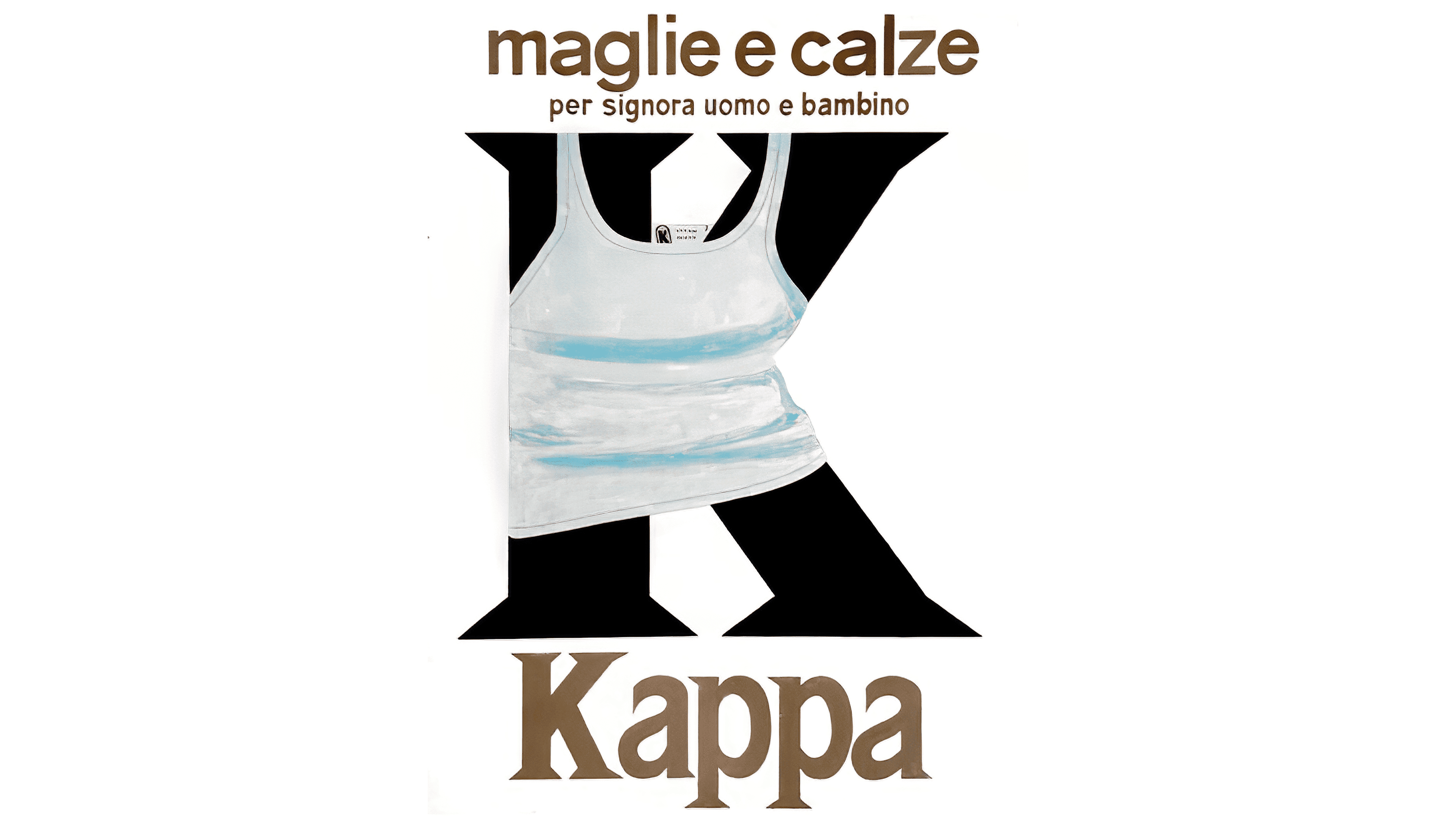
In 1958, the manufacturer first rebranded and then redesigned. As a result, only the large letter “K” remained on the emblem, but it now denotes a different name, Kappa, which is placed under it. The new name is derived from Greek roots and represents the tenth letter of the Greek alphabet. The phrase “Maglie e Calze” is supplemented with the qualification “per signora, uomo e bambino,” meaning “shirts and socks for women, men, and children.”
The writing varies depending on the information’s importance. The word “Kappa” is typed in a large serif font, “Maglie e Calze” in capital letters, and “per signora, uomo e bambino” in lowercase. The text elements are dark gold. The letter “K” has a shirt behind it, with barely visible letter outlines.
1967 – 1969

The updated brand received official registration and changed the emblem, simplifying it as much as possible. Black uppercase letters with serifs are depicted on a white background.
1969 – 1978

This is the most important period in the emblem’s history, as the famous version appeared in 1969: silhouettes of two people (a man and a woman) sitting back-to-back. This brand name appeared accidentally during a photo shoot for a swimsuit catalog. The developers presented it in two colors, black and red. The logo’s ideological task is to show support and equality between the two genders.
1978 – 1984

In 1978, the designers added the inscription Kappa Sport. They placed it on the sign in a thin red sans-serif font. But in 1981, they removed it and replaced it with the inscription “Authentic Sportswear Brand” on one line and “Since 1967” on the second. The company’s name appeared under the figures of the man and woman. It is done in large letters and painted in red, as are the other elements.
1984 – 1994

The artists enhanced all the logo details, outlined them with a white line, and placed them on a black background. They removed all extra inscriptions (except the brand name). This version aimed to feel modern and aligned with fashion trends.
1994 – today

In 1994, Kappa changed its logo design. It now consists of a white emblem and red-outlined text. The absence of dark colors brightens the brand’s style and emphasizes its connection to its legendary origins and fashion.
Font and Colors

For the fashion brand’s emblem, the developers chose a commercial font that closely resembles Helvetica Black, designed by Max Miedinger. Among the free fonts, Kyrilla Sans Serif Black by Manfred Klein is the closest match. The letters are classic, simple, and grotesque, placed almost close together, which beautifully resonates with the pictogram of two figures leaning against each other.

The color is bright and attention-grabbing: red contour lines and a white background with negative space. Other variations are possible: black, white, and gray, with or without contours, on different backgrounds, depending on the fabric color.