


 Milan Logo PNG
Club players on the field represent their hometown and fight for its honor. Every ball that enters the goal is scored for Italy’s glory. The Milan logo shows that being part of the football team is a path to the top echelon of the sporting elite.
On December 16, 1899, Herbert Kilpin and Alfred Edwards founded the Milan Foot-Ball and Cricket Club. They kept the English name, and red and black colors defined the identity. As captain, Kilpin shaped the club’s early image, giving rise to the “Rossoneri” nickname.
Success followed quickly. In January 1900, Milan won the King’s Medal, and on May 5, 1901, defeated Genoa C.F.C. 3:0 to claim its first Italian title, ending Genoa’s dominance. They won again in 1906 and 1907. In 1908, a split led to the creation of Inter Milan, forming a lasting derby rivalry.
After decades without major success, the club revived in 1949 with the “Gre-No-Li” trio. Titles followed in 1951, 1955, 1957, and 1959. In 1963, under Nereo Rocco, Milan won its first European Cup at Wembley, adding another in 1969 along with the Intercontinental Cup.
The late 1970s brought scandal. In 1980, Milan was relegated to Serie B over match-fixing, and again in 1982 amid a financial crisis. Stability returned in 1986 when Silvio Berlusconi acquired the club, appointing Arrigo Sacchi and signing Ruud Gullit, Marco van Basten, and Frank Rijkaard.
Milan won Serie A in 1987–88 and the European Cup in 1989 and 1990, defeating Real Madrid and Steaua București. Under Fabio Capello, the club went 58 league matches unbeaten between 1991 and 1993 and won the 1994 Champions League final 4:0 against FC Barcelona.
In the 2000s, under Carlo Ancelotti, Milan won the Champions League in 2003 against Juventus FC and again in 2007 versus Liverpool F.C. In 2017, Berlusconi sold the club, ending 30 years of ownership. In 2022, Milan won its first Serie A title in eleven years.
Meaning and History
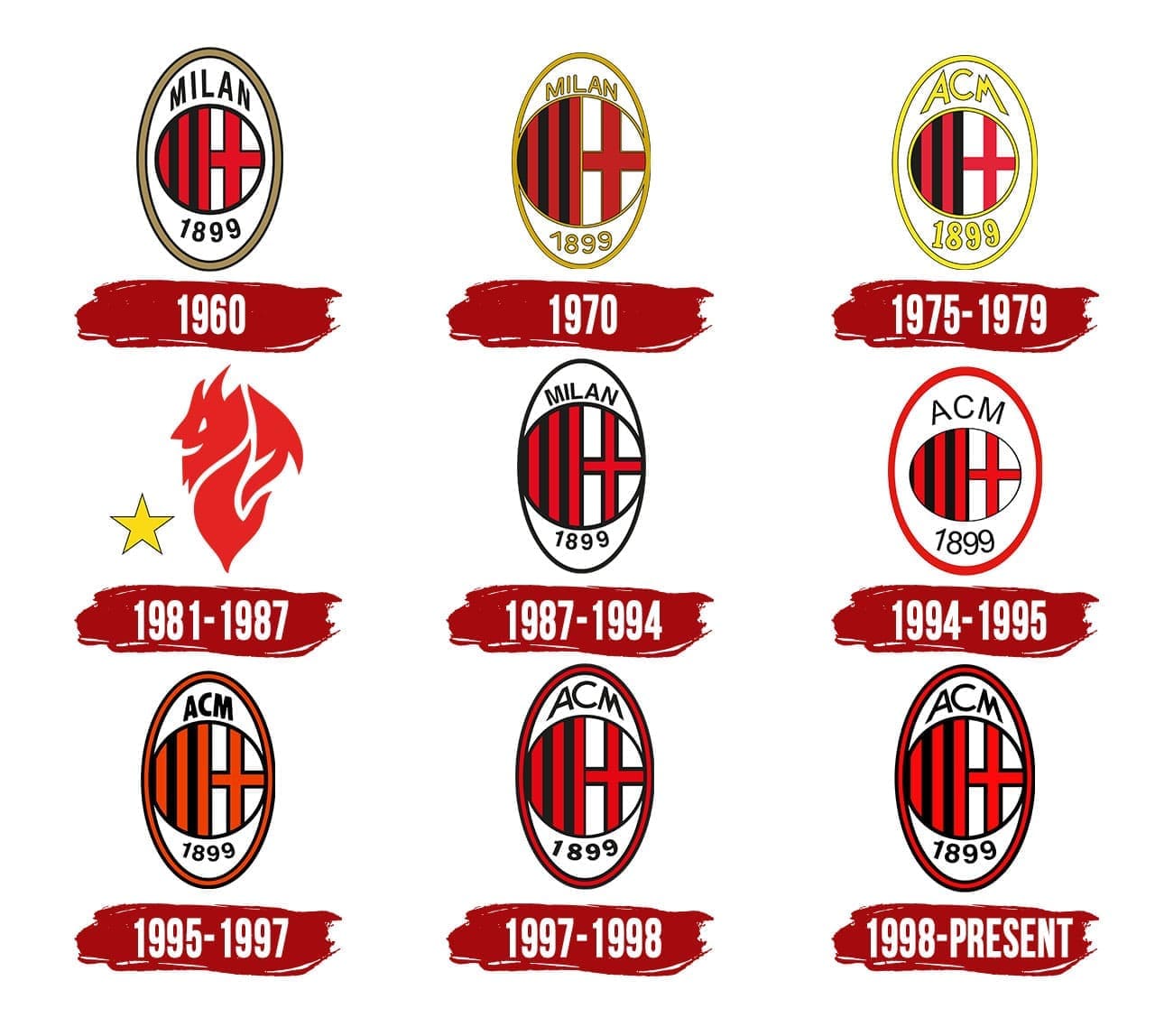
Between 1900 and 1940, the club’s logo was Milan’s state coat of arms. It consisted of two intersecting red stripes inside a white shield. But this is not the cross of St. George, as many are accustomed to think; the regional symbol is the cross of St. Ambrose. The same sign is present on the modern team logo.
What is Milan?
Milan is the short form of the Italian professional football club Associazione Calcio Milan. It was established in 1899 and has spent almost its entire existence in Serie A, except for two seasons. The club ranks fourth in the world rankings. They have won numerous prestigious high-level competitions, including three Intercontinental Cups and one FIFA Club World Cup.
The 1960s
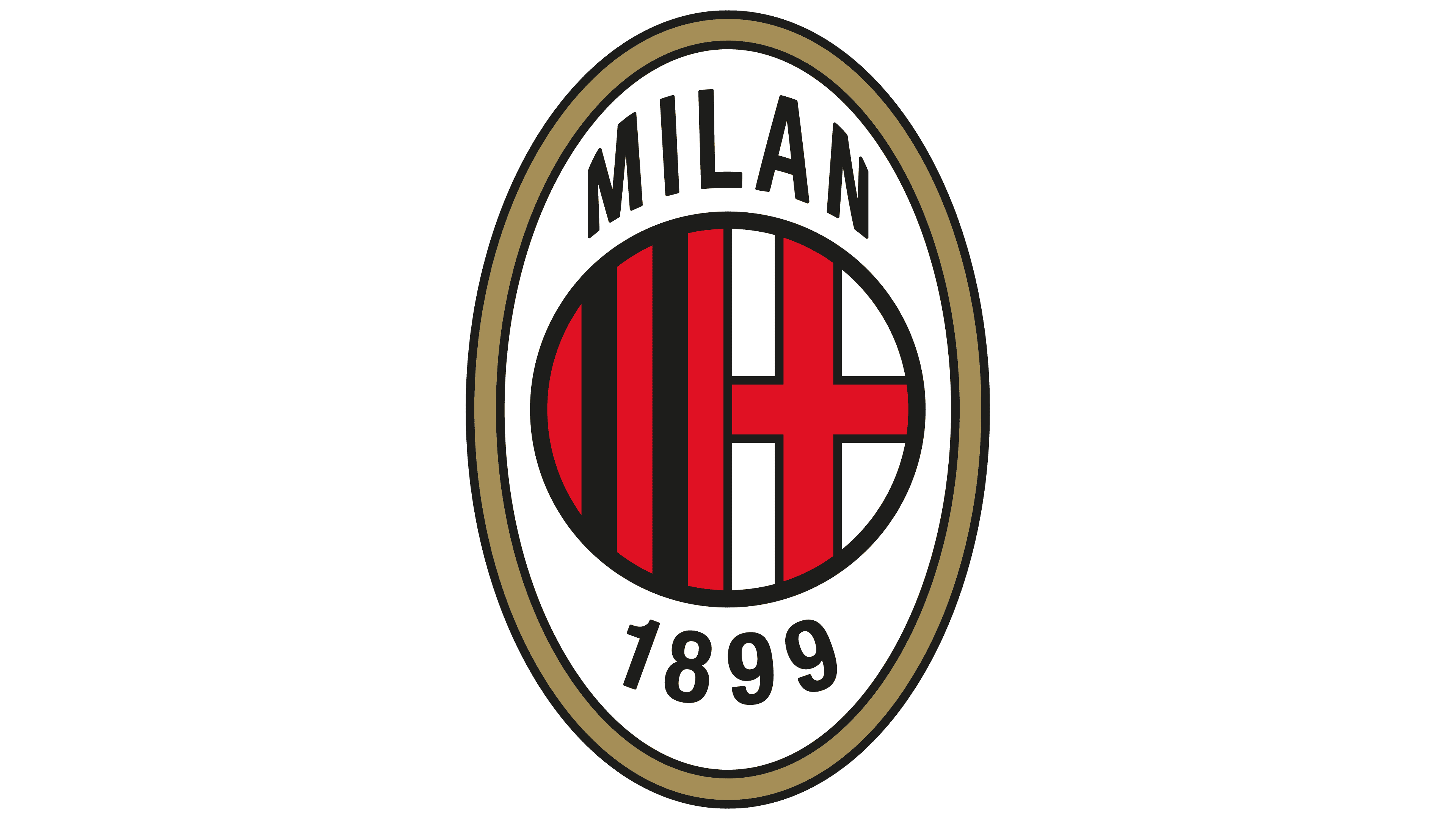
The emblem’s design changed after Silvio Berlusconi became the club’s owner. The final version looked like a large white oval with a light brown border. Inside was a circle enclosed in a black ring and divided into two parts. The left half featured red-and-black vertical stripes, and the right side showed a St. Ambrose. The name and year of the Milan foundation also fit inside the oval.
The 1970s
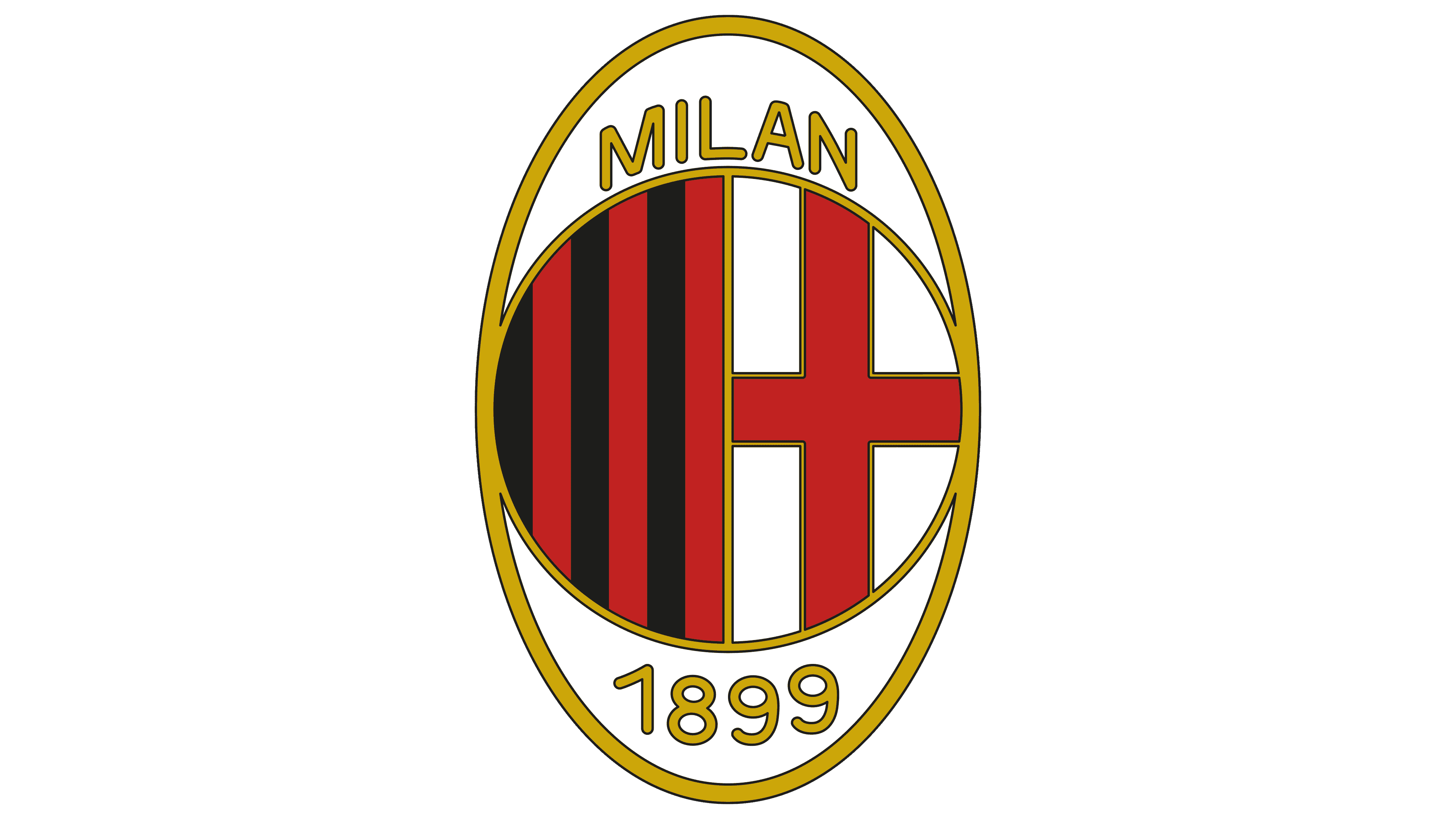
The central circle was enlarged in the 1970s, resulting in fewer inscriptions. Outlines, letters, and numbers turned to gold. An additional black stripe appeared on the left side.
1975 – 1979
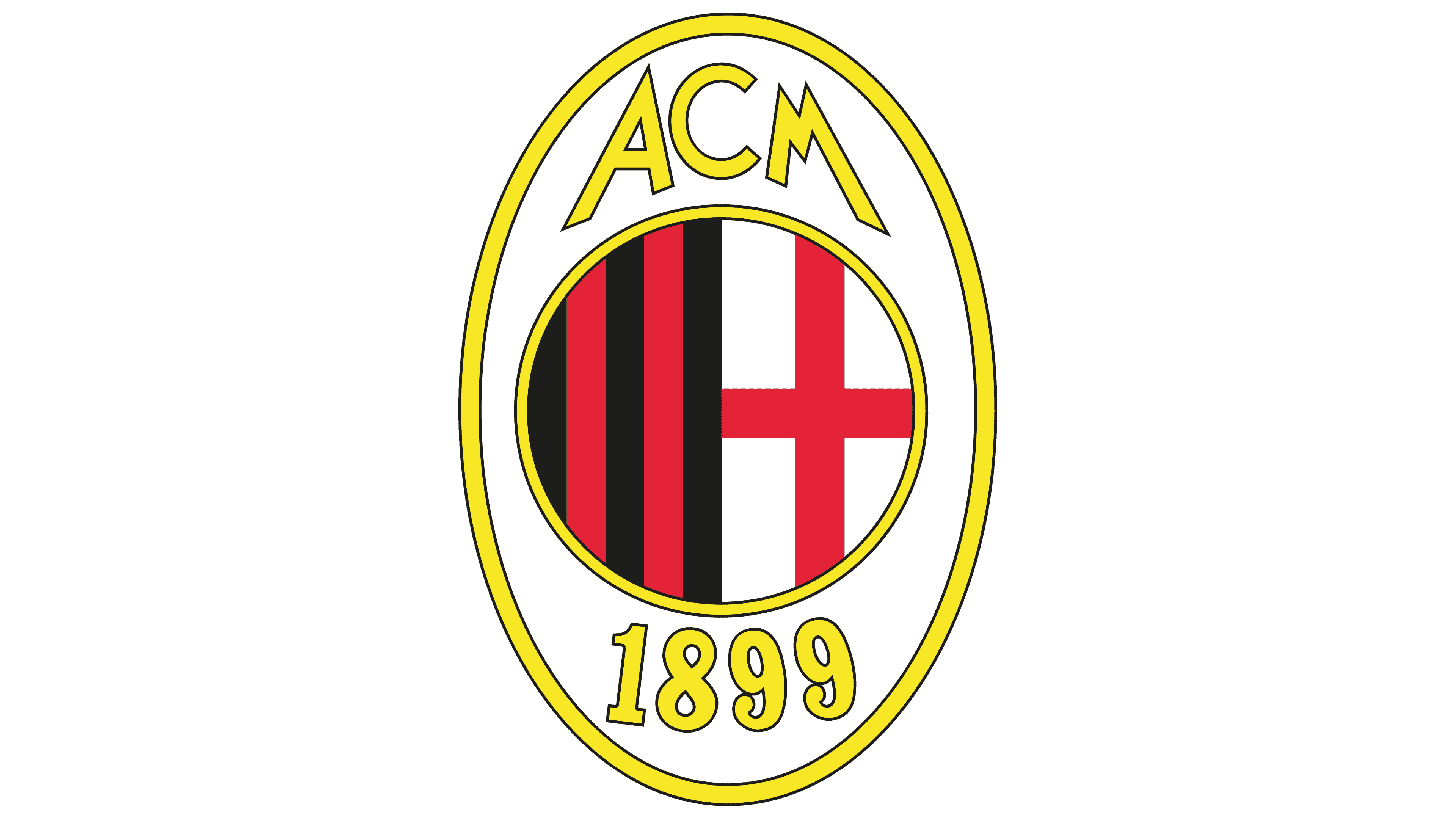
The creators returned the circle to its original size and replaced the word “Milan” with the acronym “ACM” (short for Associazione Calcio Milan). At the same time, they outlined everything in bright yellow.
1981 – 1987

In the early 1980s, the club got a logo that reflected its nickname, the Devil. The team got this unofficial name because of the uniform’s red color. The emblem’s main character was a cartoon demon. It looked abstract, made up of three red shapes that resembled flames. One fragment depicted a straight nose, a triangular eye, and a smiling mouth.
The lower-left corner featured the Golden Star for Sports Excellence. Milan received the right to use this sign in 1979 after winning the tenth championship, as is customary in Italian football.
1987 – 1994
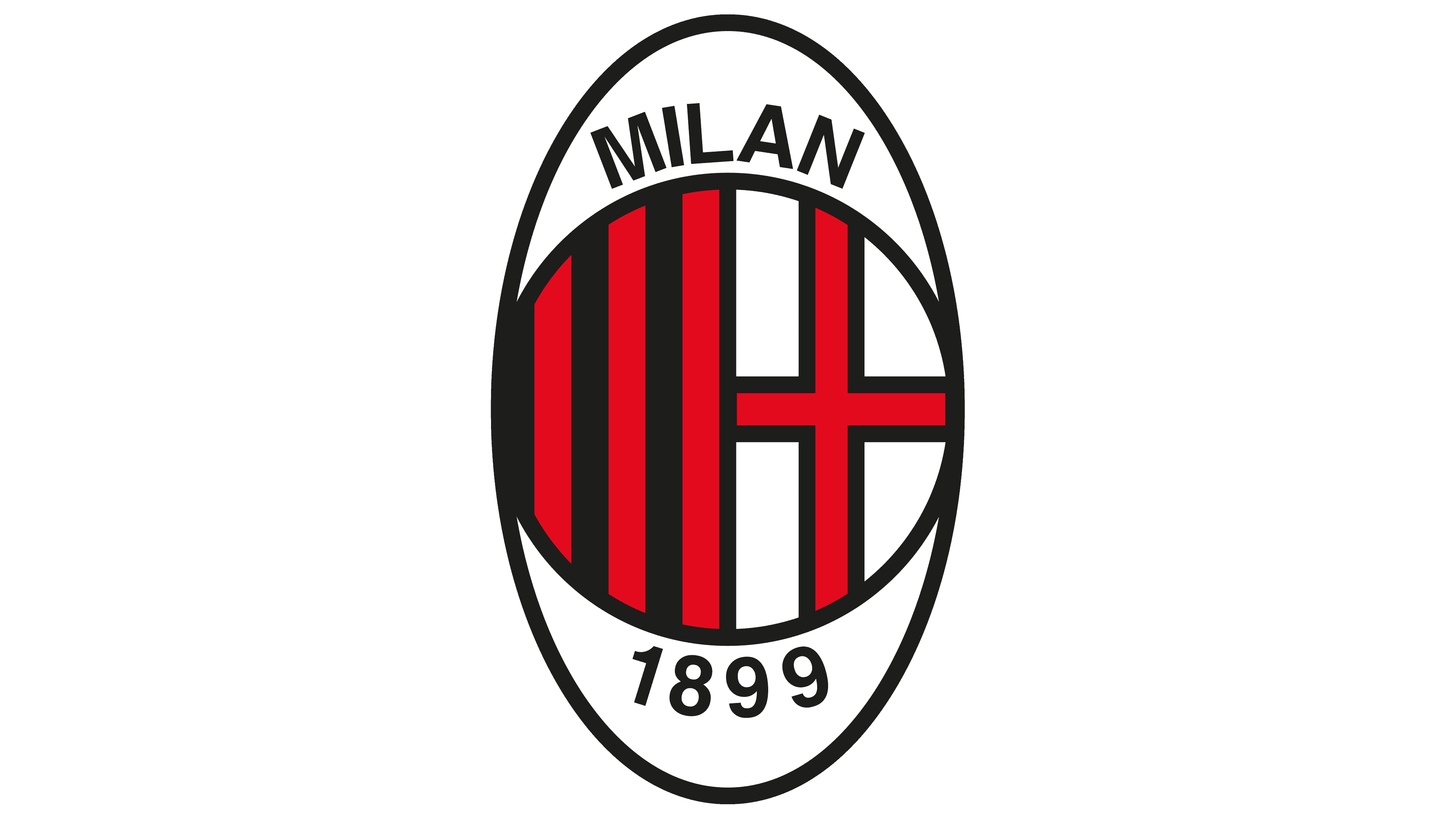
The club returned to the 1970s logo by making the outlines black and reducing the font size.
1994 – 1995
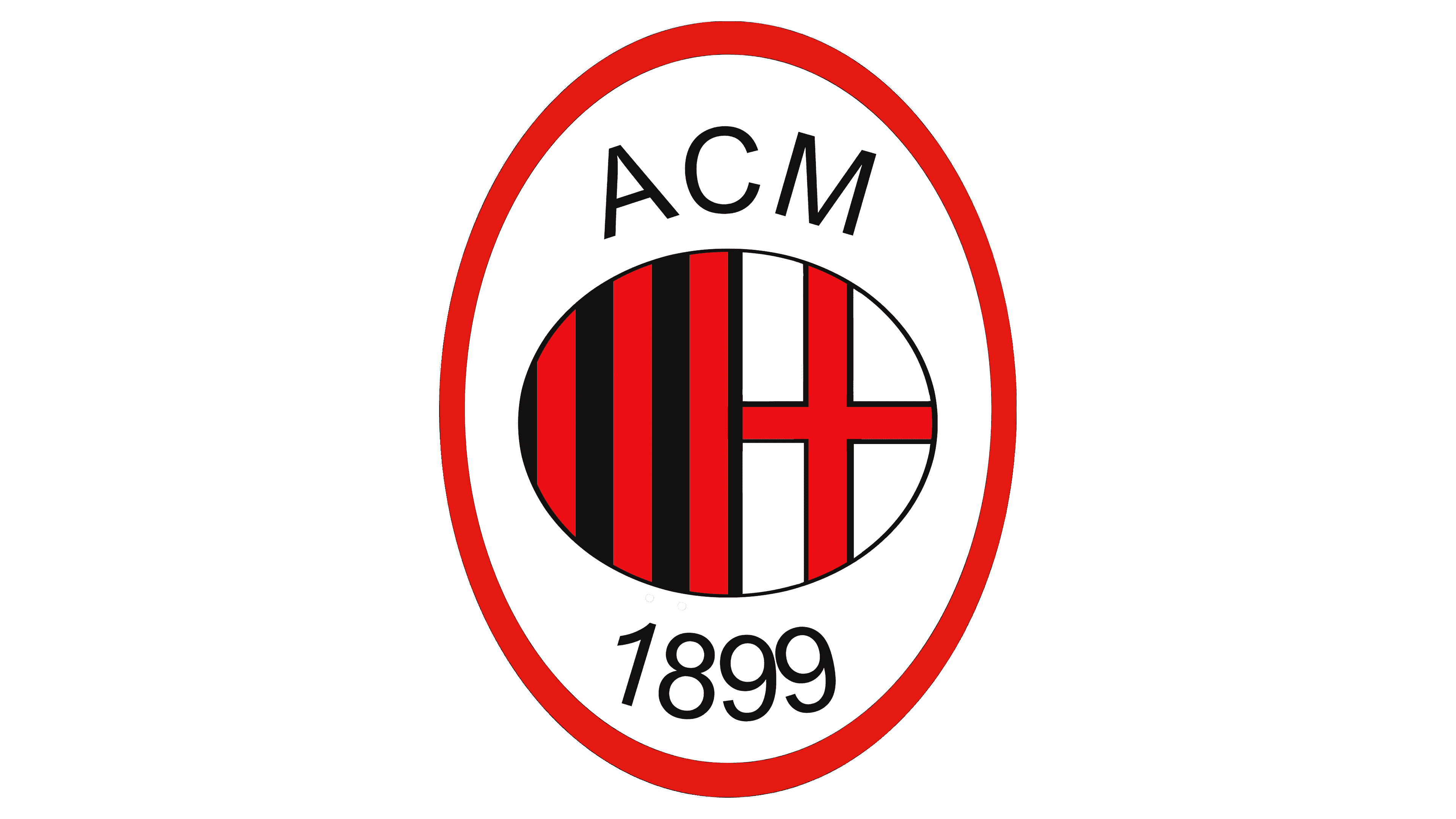
Another design experiment ended with the circle turning into a small oval and the large oval outline turning red. An acronym has again replaced the word “Milan.”
1995 – 1997
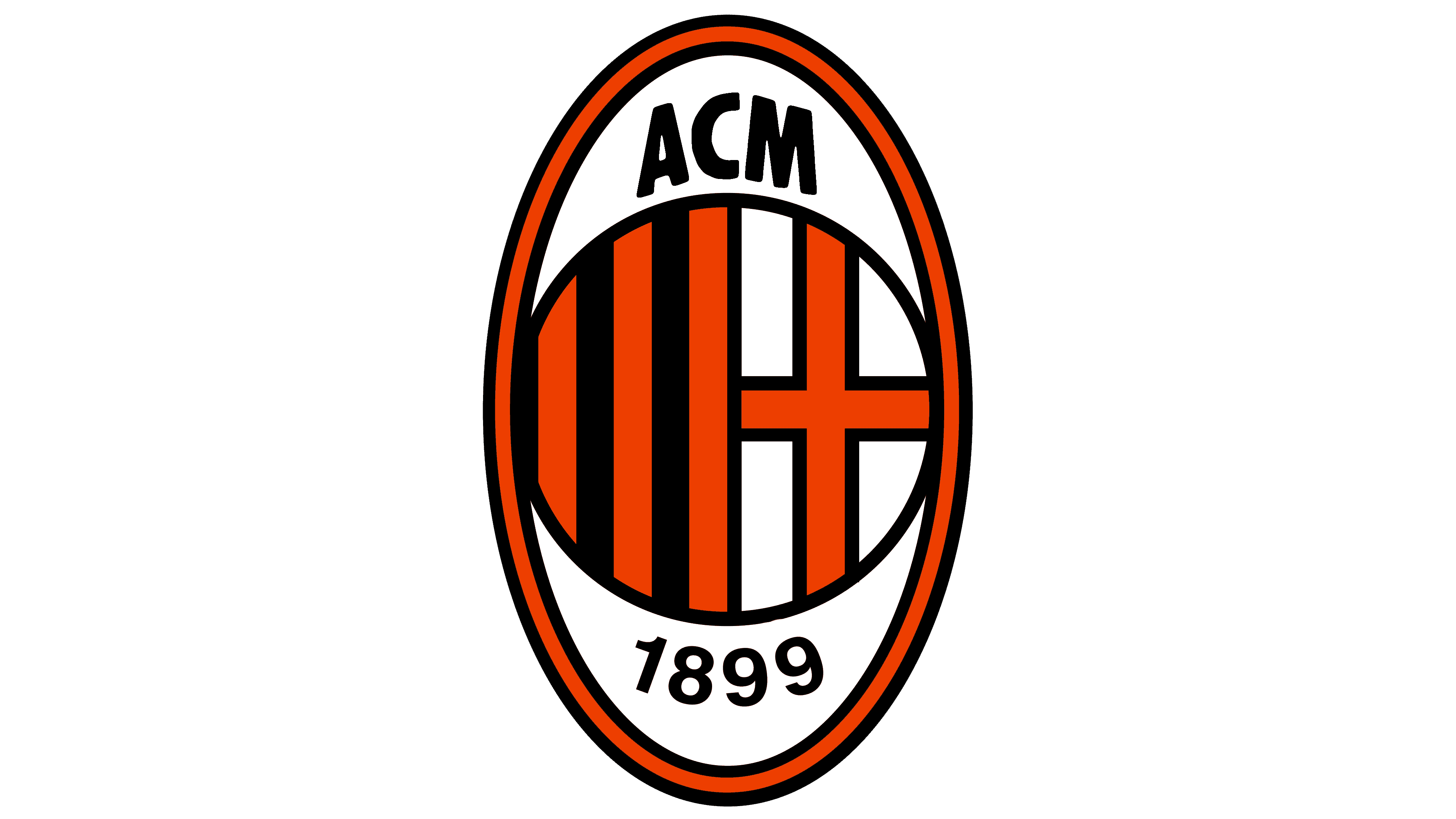
The center circle is back. The large white oval now has a black-and-red outline. The number of vertical lines has decreased; there are now five, as there were initially.
1997 – 1998
In 1997, the frame’s proportions around the oval shield changed: the right side is now wider than the left. During the same period, the emblem was supplemented with a red five-pointed star, which the club received in recognition of its ten championship victories. The designers removed the star and made the stroke symmetrical.
1998 – today
The latest redesign concerned only the typeface: the numbers below the circle indicating the year Milan was founded have been increased. The shades of red and black also changed, but only slightly.
Font and Colors
The football club’s main symbol is St. Ambrose, who resembles St. George. However, they should not be confused because the emblem of Milan and the coat of arms of the city of the same name depict the cross of St. Ambrose – two intersecting red lines on a white background. The modern logo features red and black vertical stripes, identical to those on the players’ shirts.
The individual font of the acronym “ACM” is unparalleled. The emblem creators developed the original lettering in the 1960s and refined it over time, culminating in the current version. The logo’s main colors are black (#000) and red (#FB090B). The first symbolizes opponents’ fear, and the second denotes the players’ zeal and will. A calm white background balances the emotional intensity.