


 Motion Picture Association Logo PNG
The Motion Picture Association’s logo is intrinsically linked to the central attribute of film production, the film reel. The emblem demonstrates the growing importance and dominance of cinema worldwide. It hints at the reach of the film industry’s products across all continents.
The Motion Picture Association grew out of one of Hollywood’s most unstable periods. In the early 1920s, scandals involving Roscoe “Fatty” Arbuckle, the murder of director William Desmond Taylor, and other cases triggered public anger. In 1921, lawmakers in 37 states introduced nearly 100 film censorship bills, while New York created a state censorship board. For studios, the risk was a fragmented national market ruled by local bans.
On March 10, 1922, major studios formed the Motion Picture Producers and Distributors of America. The group was meant to manage self-censorship before government regulators took control. Will Hays, former U.S. postmaster general, Presbyterian elder, and Republican National Committee chairman, became its first president. At the time, member studios made about 70 to 80 percent of American films.
Hays first tried soft control through the 1924 “Formula” and the 1927 “Don’ts and Be Carefuls,” but studios often ignored them. The Production Code was adopted in 1930, yet real enforcement began in 1934 with the Production Code Administration, created under pressure from the Catholic Legion of Decency. Films without approval could not play in U.S. theaters, and violations carried a $25,000 fine.
After Hays left in 1945, Eric Johnston renamed the group the Motion Picture Association of America and created the Motion Picture Export Association. The 1948 Paramount antitrust ruling weakened studio control over theaters. In 1968, Jack Valenti replaced the Hays Code with ratings G, M, R, and X. PG-13 was added in 1984 after debate over Steven Spielberg’s Indiana Jones and the Temple of Doom, and X was renamed NC-17 in 1990. In 2019, the organization became the Motion Picture Association, and Netflix joined as a member.
Meaning and History
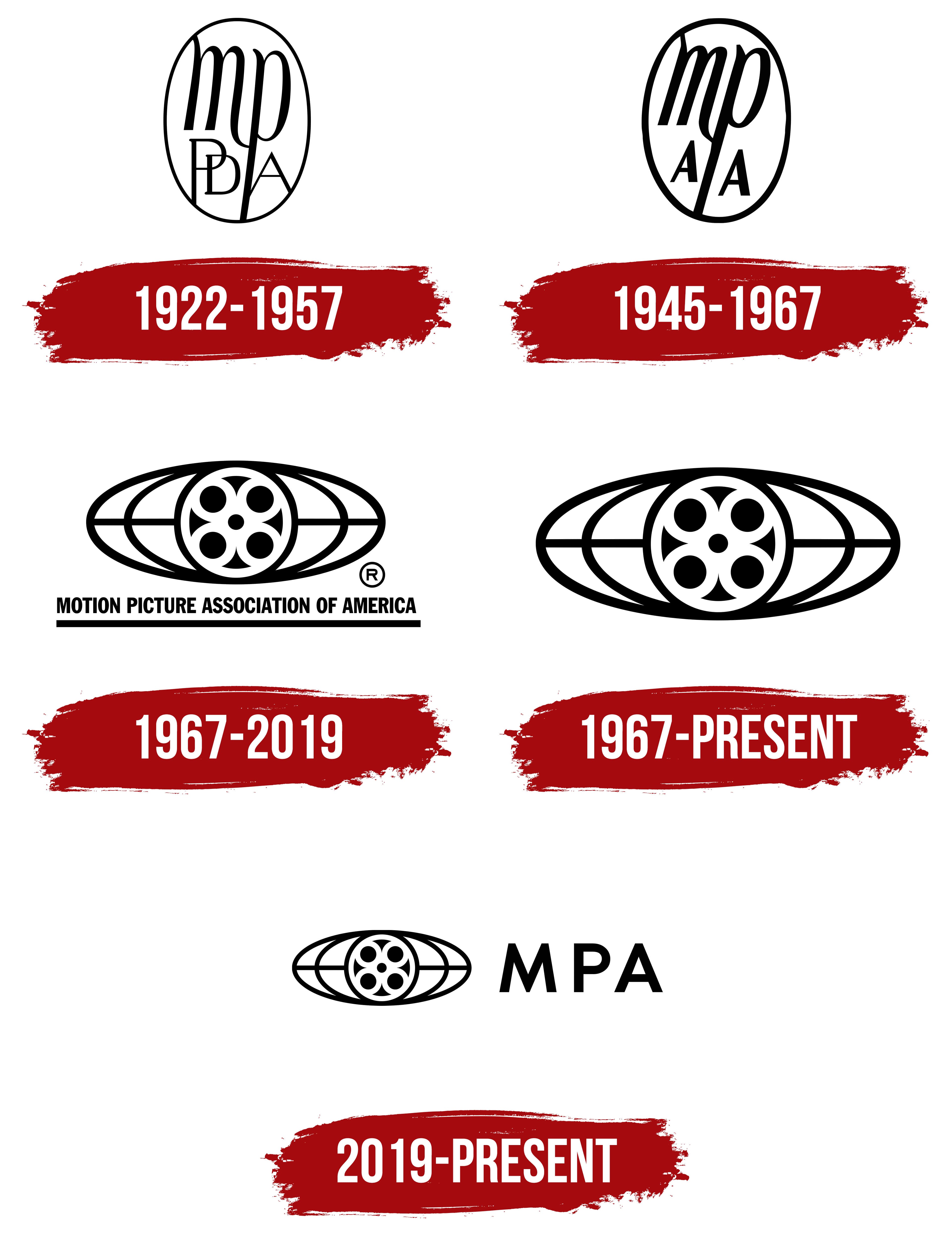
The MPA’s branding can be divided into two distinct periods, each with a distinct logo. Initially, for 45 years, the logo was an oval, reminiscent of a medallion. The second period introduced a reel in the center of the image. This symbol has remained with the company to this day. Both the oval and circular elements emphasized the film production process. The images evoked associations with film and movie cameras. The main reason for rebranding was the organization’s name change, which occurred with each new director.
What is the Motion Picture Association?
It’s an association of major American film studios founded in 1922. Its primary mission is to protect filmmakers’ creative freedom and intellectual property, expand the film market, and introduce shooting innovations. The organization’s headquarters is located in Washington, D.C.
1922 – 1957
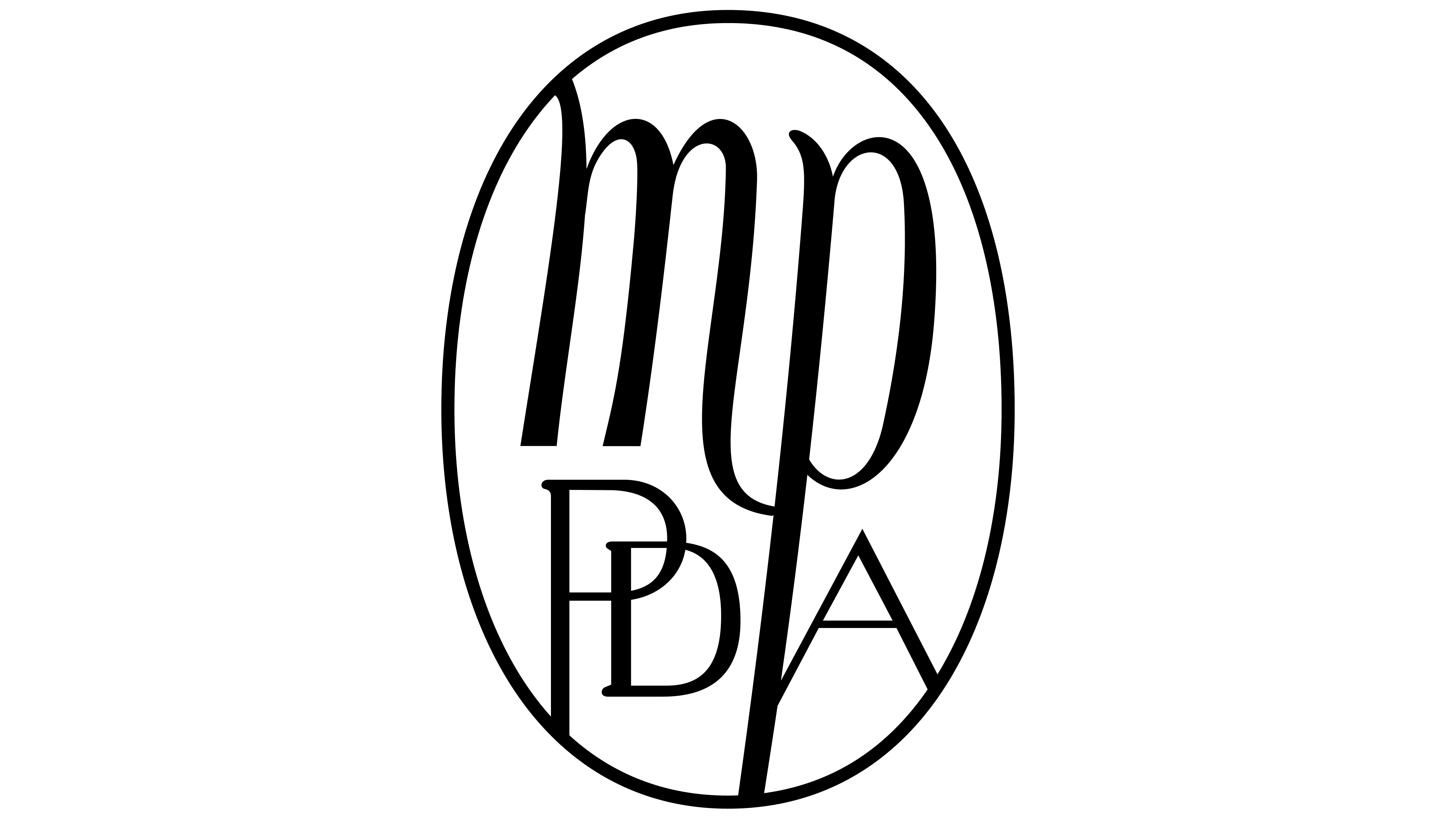
The first logo was a slender, upward-stretched oval, inside which the initials of the name Motion Picture Producers and Distributors of America were arranged in two tiers.
The letters M and P were written in lowercase cursive in the top row. Emphasis was placed on the term “Motion Picture” since the entire organization revolves around cinema. The lowercase and cursive highlighted the dynamic action and the process of producing and selling films, the Association’s main business.
The leg of the “P” extends diagonally across the entire oval. It separates the uppercase letters “PD” on one side and “A” on the other.
Elegant elements hinted at the company’s youth and indicated proper manners and moral purity. During this period, Hollywood had specific behavior requirements for actors and actresses and produced films full of purity and decency.
The closed space of the oval indicated three things:
- The unification of filmmakers for mutual support and the development of common standards.
- The pursuit of monopoly and the marginalization of independent studios.
- The organization of independent film editing, as opposed to censorship committees that often cut out undesirable scenes, disrupts the film’s continuity.
Overall, the emblem appears very cluttered and tight. The letters seem intertwined and illegible. The lack of a tagline makes it challenging to understand the organization’s work direction.
1945 – 1967

In 1945, a new director, Eric Johnston, joined the project. He renamed MPPDA to Motion Picture Association of America, proposing a more compact and elegant name. Consequently, the emblem changed.
The rebranding was just a slight transformation of the already existing logo. The upper M and P remained unchanged. The leg of the P divided the oval diagonally. On one side was the A from Association, and on the other side, the A from America.
The lines of the inscription thickened to demonstrate the Association’s increasing influence and stature.
1967 – today

In 1966, Jack Valenti became the president of the association. Under his leadership in 1967, the renowned film reel symbol was developed, which represented the organization in the years that followed.
At the center of the new logo was a film reel. Such spools stored the filmed materials in studios. From the reel, two ovals of unwound film extended. Horizontal lines and oval shapes created a schematic representation of the globe showing the equator and meridians. This imagery symbolizes the global reach of the film industry’s productions.
The reel in the logo represents movie producers, while the globe signifies distributors. The ovals indicated dual protection: a rating system and laws against piracy. Under Valenti’s presidency, a rating system was implemented in place of censorship to help determine whether a movie was suitable for children. The Association also actively combated piracy and illegal copying.
Below the image, a straight line of film on which the organization’s full name, Motion Picture Association of America, was written in capital letters. This caption significantly facilitated understanding of the company’s essence.
1967 – 2019
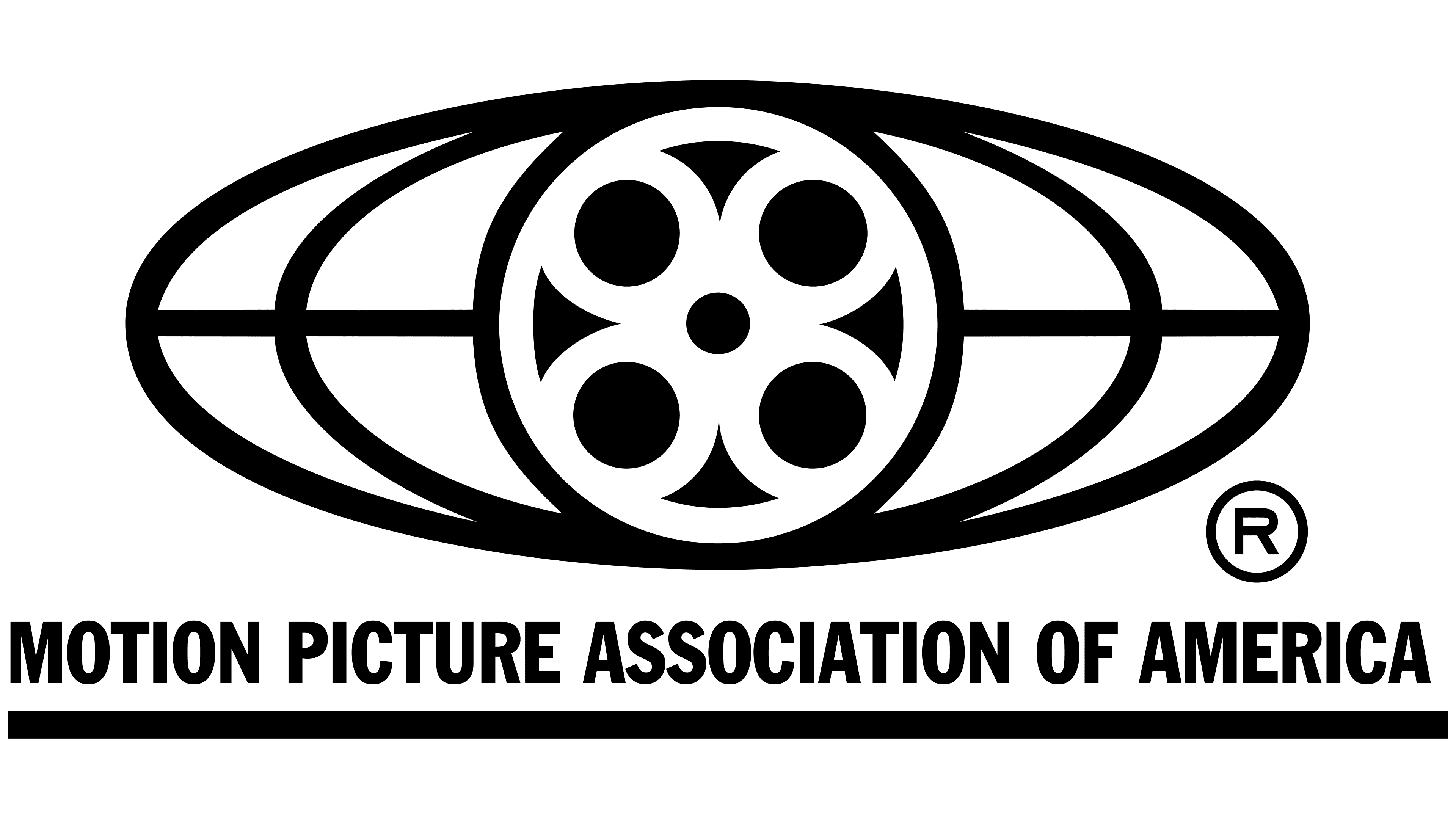
The reel and globe image has been the association’s symbol for almost 50 years. Since 1967, the image has been displayed without a caption.
2019 – today
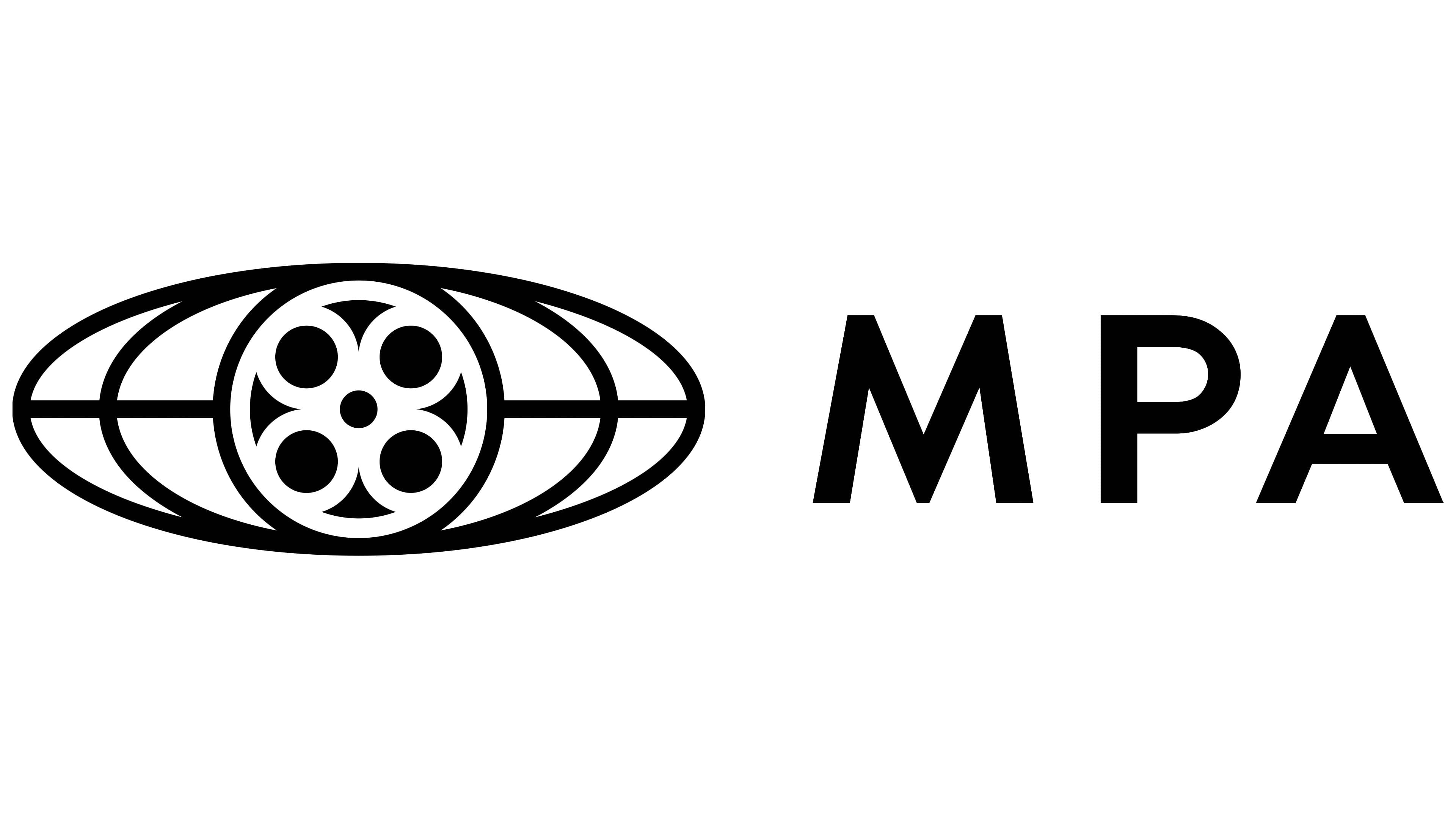
In the contemporary logo, the emblem featuring the reel is complemented by the capital letters MPA, reflecting the organization’s name change to Motion Picture Association in 1919. The reel appears smaller and is positioned to the left, while the abbreviation is on the right, emphasizing the evolution and changes in the Association and the world of cinema. American cinema has gained substantial weight on the international stage. A merger of movies, television, and digital streaming services emerged as a channel for distributing films globally. Hence, film cassettes are becoming a thing of the past.
Font and Colors
Black is the only color in the emblem. It’s associated with film reels, indicating the global reach and power of the organization’s members, active worldwide. Movies from member studios are the most sought-after in cinemas and virtually have no competitors in the US.
The logo’s inscription consists of three capital letters, set in a simple, straight sans-serif font. This choice hints at the Association’s mission to facilitate movie production and sales.