


 Mulberry Logo PNG
The simple, elegant Mulberry logo signifies the company’s impeccable style. Designer things emphasize the owner’s image and make it more sophisticated. The emblem conveys the products’ convenience and functionality and alludes to the artistic elements that adorn them.
Mulberry was founded in 1971 by Roger Saul in Somerset with £500 from his mother. Saul had grown up near leather production, as his father worked at the Clarks Shoes factory in Street, and he later trained in business in London. The brand name and logo came from the mulberry tree he passed on his way to school, with the mark drawn by his sister.
The first products were leather belts with buckles, sold to clients including the London store Biba and department stores in Paris and the United States. In 1973, Mulberry opened its first factory, The Rookery, in Chilcompton, Somerset. The 1975-1976 “Hunting, Shooting, Fishing” collection helped define the brand’s British country image, in a market where Burberry also worked with English heritage from a different position.
By the late 1980s, Mulberry had grown at home and abroad, and in 1996 Saul listed the company on AIM. Expansion into Asian markets and rising operating costs then put financial pressure on the company. In 2000, Singaporean entrepreneur Christina Ong bought a controlling stake. Scott Henshall became creative director, led a rebrand, and put Mulberry on the radar of figures such as Anna Friel, Victoria Beckham, Kate Winslet, Cameron Diaz, and Zara Tindall.
Roger Saul left the company in 2003 after a boardroom coup. In 2007, Emma Hill became creative director and created the Alexa, Del Rey, and Willow Tote bags. From 2008 to 2012, Mulberry’s share price rose fivefold. Hill left in 2013 after a disagreement with CEO Bruno Guillon, and the stock fell 8% in a single day. In 2014, the company opened its second Somerset factory, The Willows, in Bridgwater.
Meaning and History
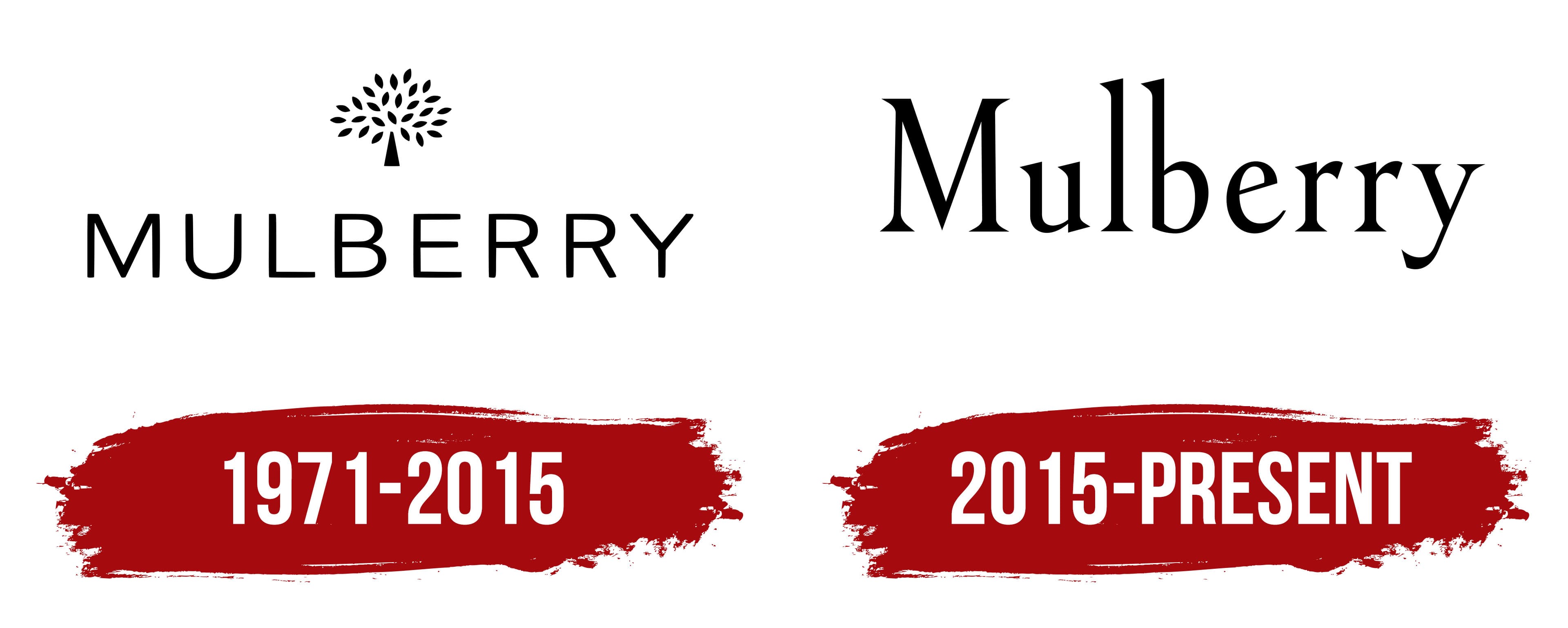
What is Mulberry?
This brand embodies refined English style and the highest quality in leather craftsmanship. Beginning its journey in Somerset, it has become globally renowned for its iconic bags named after famous personalities, such as the elegant Alexa and the classic Bayswater. Each piece is crafted by artisans who combine traditional leatherworking techniques with modern design, transforming materials into true works of art. In addition to bags, the brand offers accessories, belts, wallets, scarves, and other leather goods and clothing collections that reflect British style and sophistication.
1971 – 2015

Heritage is the main word that comes to mind when looking at the Mulberry logo. The brand is trying to create bags you want to wear and then pass on to children. This requires a special quality and design that are popular at all times. That’s what the logo is about.
Family traditions can be traced back to the company’s founding. The name, which translates as “mulberry,” was coined by the creator’s sister, Rogera Saula. As children, he and his brother walked to school daily along an alley lined with mulberries. The image of one of them became part of the visual sign.
The tree demonstrates fidelity, constancy, and reliability, the company’s main values. Shows the growth and development that flows from the past. The sign also hints at naturalness. The company’s main material is leather.
2015 – today
In 2013, the famous designer Emma Hill, who had created Mulberry hits since 2007, left the company in a scandal. This resulted in serious ranking losses. Spaniard Johnny Coca, who took over as creative director in 2015, breathed new life into the brand. It was he who changed the manufacturer’s logo. It was an attempt to revive and update the once-popular house.
The modern emblem consists of the title in a serif typeface. According to experts, removing the tree and reducing the sign to a simple inscription made the visual identity more modern.
“Coca” did not invent anything new. The logo presented to the world was found by the designer in the firm’s archives and used by the manufacturer in the 70s. Therefore, rebranding is a step toward reviving the brand’s roots. A return to the original idea, the company’s vision, by its founders. As the designer himself emphasized, this is an attempt to show and consolidate the British style with its rigor and simplicity, since modernity is rooted in the past.
The company still uses the mulberry tree in product labeling, but it is a secondary sign.
Font and Colors
The logo is black. The color wheel is neutral and achromatic. Shows good compatibility between bags and clothes in different styles and colors. It also conveys a stable market position and buyer recognition.
The font was designed specifically for the company during the 2015 logo change and was named after the Mulberry company. This emphasizes the brand’s uniqueness and exclusivity. Letters with elegant serifs are both simple and distinctive. Like the company’s bags, they are practical, with the addition of a special signature note (in most collections, this is an eye-catching locking element).