


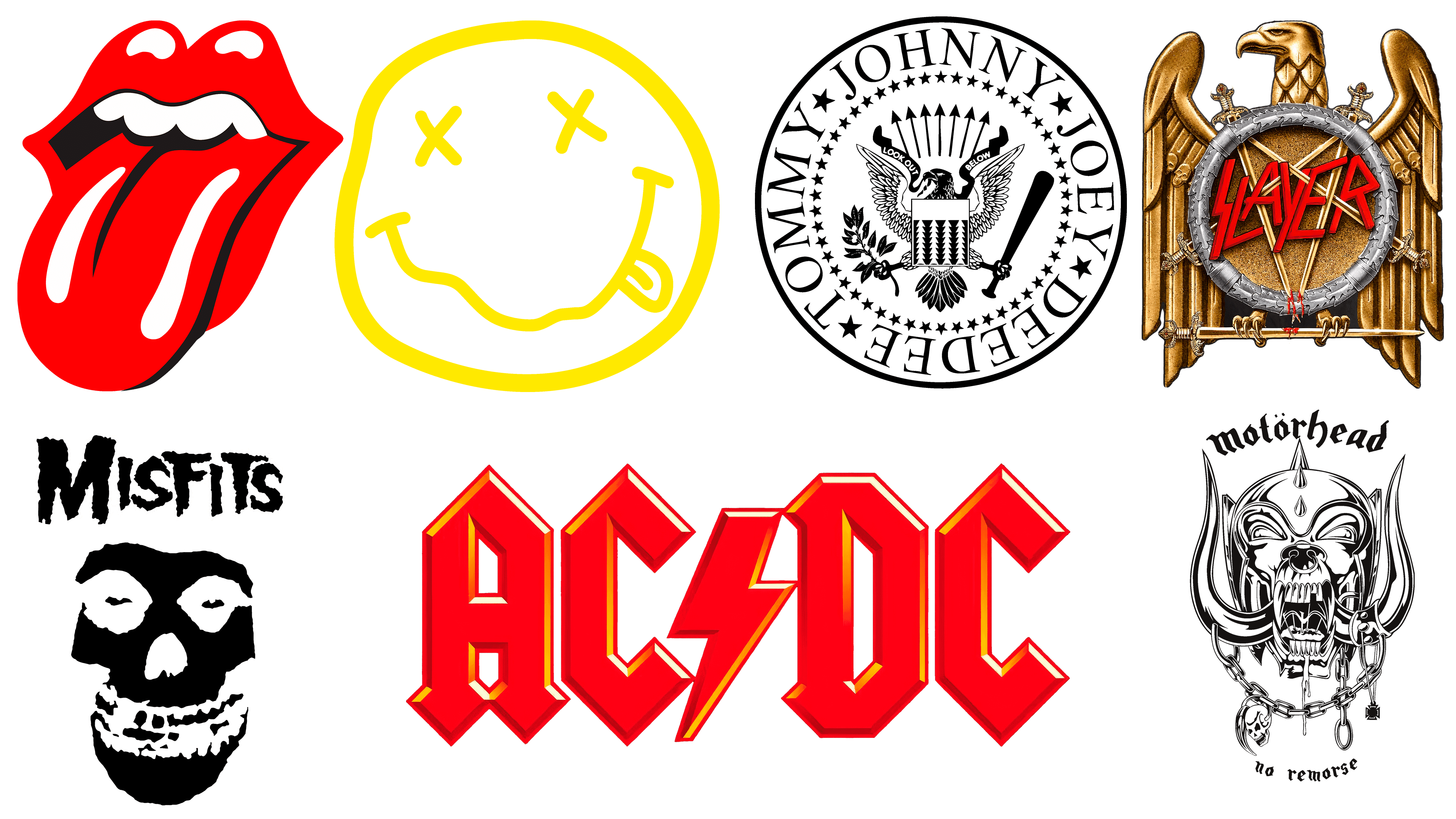
Today, we invite you to remember the most famous logos of bands from all over the world that have long lived beyond music and, it seems, are no longer associated with specific musicians at all.
AC/DC
It’s hard not to notice that the band AC/DC’s name is easy to depict in a graphic style. The sharp, angular letters, which were more rounded in the original version, were created by American designer Gerard Wirth in 1977 and became a component of hard rock. What made the logo particularly recognizable was the lightning bolt sign in the center, one of those logos that even those who have never heard their music will understand.
The Rolling Stones

Surely everyone knows these “mouths” from childhood, and it doesn’t matter whether you heard rock and roll at the time. The drawing’s author, John Pace, was 24 when Mick Jagger asked him to design a logo for the Rolling Stones. Using a prototype of the Hindu goddess Kali and Jagger’s wishes, the designer created an ambiguous image of lips and tongue that looked somewhat provocative and vulgar, especially for the early 70s. However, doesn’t all this best characterize rock ‘n’ roll? Almost 50 years after its appearance, the logo has not lost its popularity and, according to many music magazines, is the most successful and recognizable in the world.
Slayer
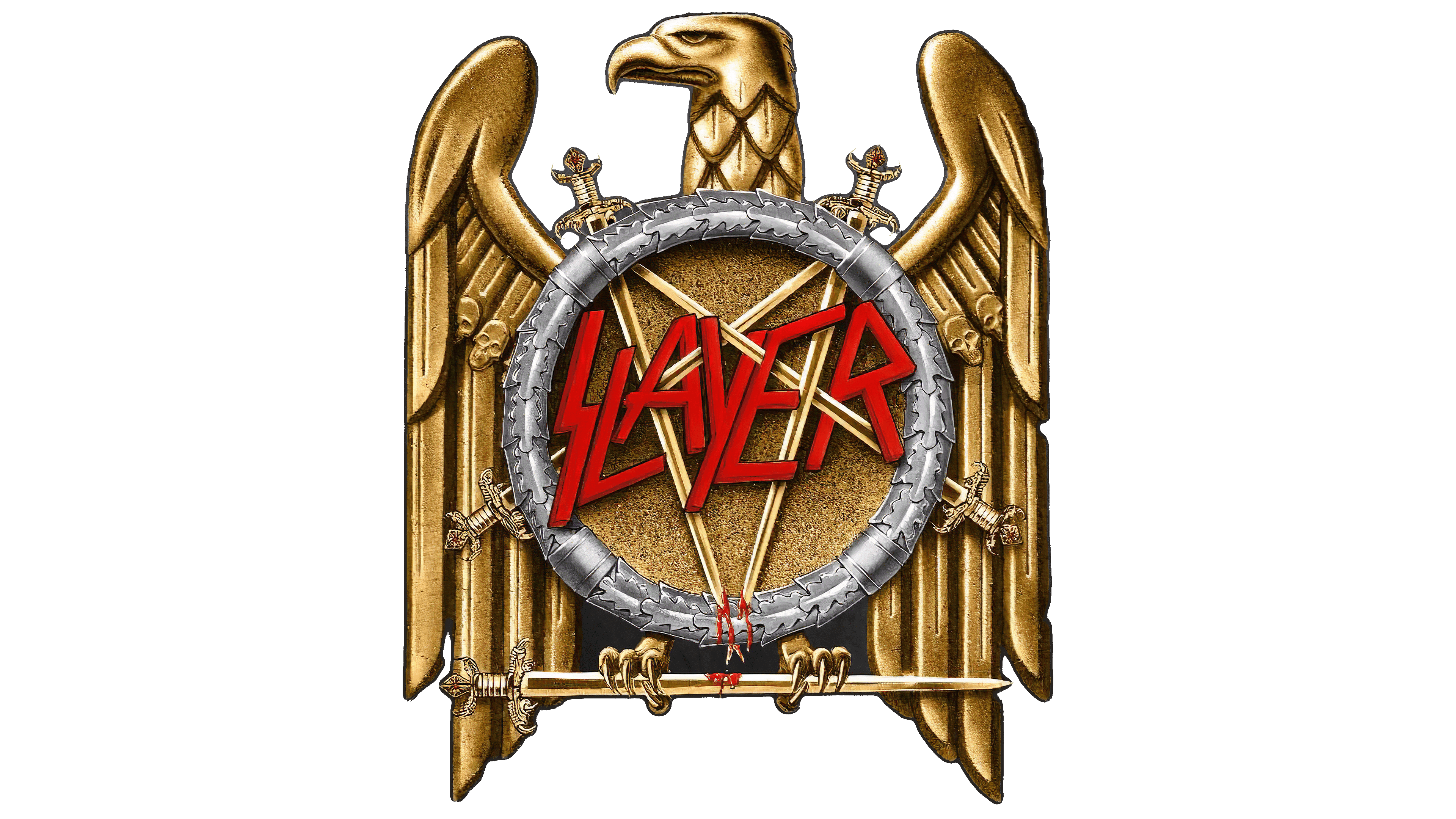
The thrash metal band Slayer, as well as the musicians of Motörhead, were repeatedly accused of sympathizing with Nazism. The main reason for this was their logo, which was very similar to the Third Reich’s emblem. For the first time, the band’s name, Crossed Swords, appeared on the album “Show No Mercy” in 1984. The drawing’s author was the father of one of the members of the “road crew.” At the beginning of their journey, the guys from Slayer used satanic imagery. Various crosses and images of demons were regularly added to the allegory of the pentagram three sixes. Today, the legendary print appears on all sorts of clothes worn by people far from heavy music and from understanding its meaning.
The Ramones

The Ramones logo is a full-fledged seal of the fathers of punk rock, similar in style to the official seal of the President of the United States. The logo’s designer was an old friend of the musician Arturo Vega, who said the band was the best in America and had every right to use the president’s seal. The eagle holds a baseball bat for the band’s opponents and an apple tree branch for its supporters. Biographers note that the musicians earned a tidy sum from selling T-shirts featuring this image, and some punk bands still use variations of the logo.
Misfits

The ghost of the band Misfits first appeared on the cover of their third single, “Horror Business.” Inspired by the mid-40s TV series “Crimson Ghost,” the musicians used the main character’s appearance as a basis. This image appears everywhere and seems to exist independently of its cinematic and musical forebears.
Nirvana

Kurt Cobain himself drew this logo for his main project, the band Nirvana. Despite its apparent simplicity, the image clearly conveys the music’s character and the grunge band’s style. The smiley face with dead eyes, familiar to millions of music lovers, never appeared on any of the band’s studio or live albums. Reflecting ambiguous emotions, the drawing itself became popular and is associated with Kurt Cobain himself, embodying his inner difficulties and contradictions.
Motorhead
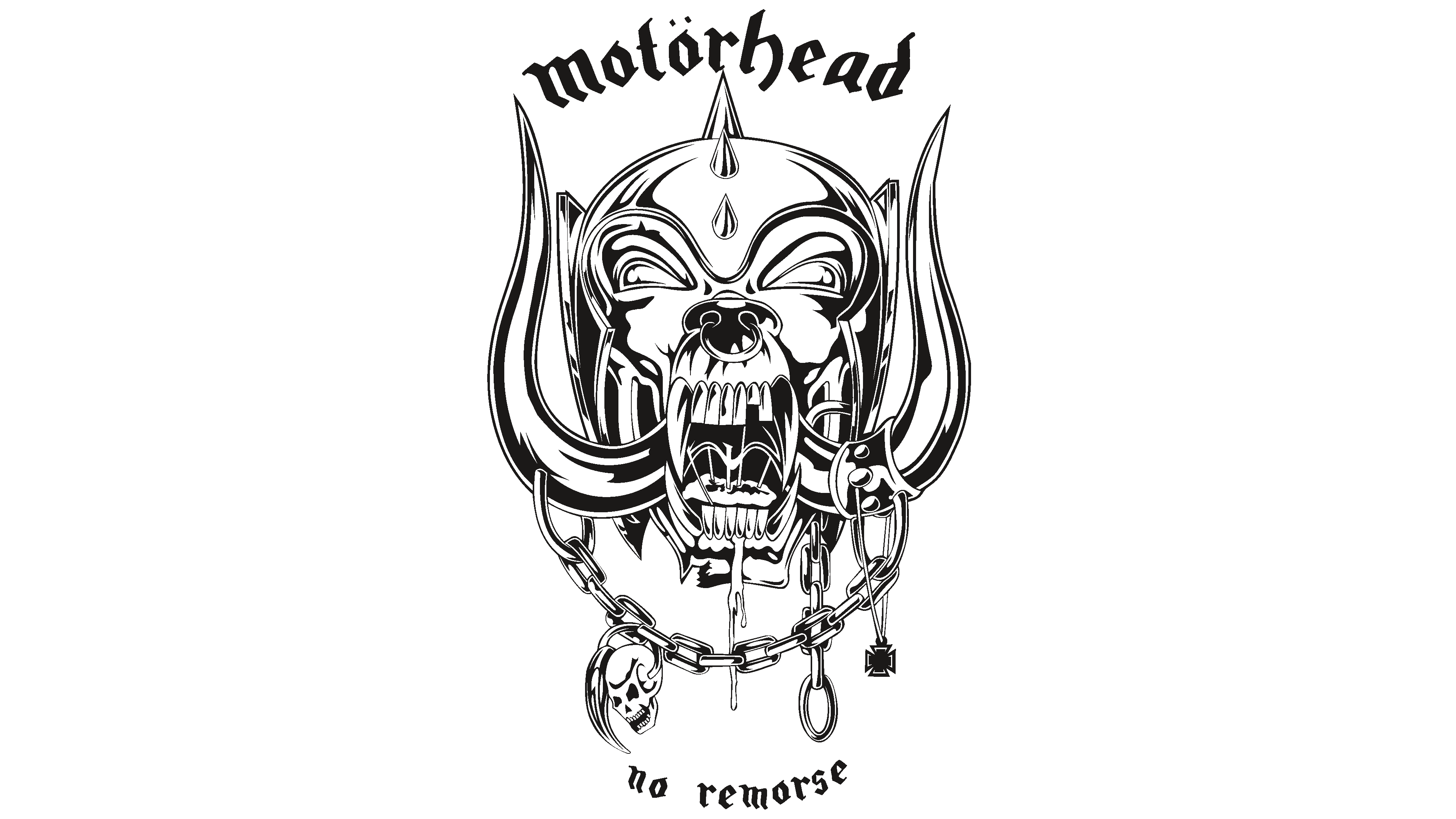
The legendary “Snaggletooth,” aka “War-Pig,” appeared on “Motörhead’s” first studio album in 1975. Joe Petagno drew the primary version, combining the skulls of a gorilla, a dog, and a boar to create the “war-pig.” Lemmy later stylized the character, adding brutality with chains and spikes. “Battle Pig” appeared in various variations on 20 covers of the band’s 22 studio albums. Totorhead merch with the signature logo has remained popular for decades.