


 Olympique de Marseille Logo PNG
Stardom and grandeur are evident in the Olympique de Marseille logo. The emblem reflects the pursuit of dreams and the high bar the players set for themselves. The symbols include gold cups and medals won by club members. The team’s balls always hit right on target.
In 1899, René Dufaure de Montmirail united several Marseille clubs to form Olympique de Marseille. The name referenced Olympic tradition, while rugby shaped the early structure and motto “Droit au But”. Football emerged around 1902, influenced by foreign residents.
In the 1920s, the club gained national status, winning the French Cup in 1924, 1926, and 1927. It became champion in 1929. It became professional in 1932, and the Stade Vélodrome opened in 1937. That same period brought another title and a record 100 goals in 30 matches in 1942–43.
Postwar success in 1948 was followed by decline. The club was relegated in 1959, and by 1965, attendances had collapsed. Recovery began under Marcel Leclerc. In 1971, Josip Skoblar scored 44 league goals, leading to a title, followed by a domestic double in 1972.
A major shift came in 1986 with Bernard Tapie. With players such as Jean-Pierre Papin and Didier Deschamps, Marseille won four titles from 1989 to 1992 and reached European Cup finals. On May 26, 1993, it beat AC Milan to win the Champions League.
The same period also saw a scandal involving Valenciennes FC. The 1992–93 title was stripped, and the club was relegated in 1994, though it kept the European trophy.
After returning in 1996, Marseille reached UEFA Cup finals in 1999 against Parma Calcio and in 2004 against Valencia CF, losing both. In 2009–10, under Deschamps, it won Ligue 1 and later added domestic cups. In 2018, it lost the Europa League final to Atlético Madrid. Rivalry with Paris Saint-Germain became central to French football.
Meaning and History

Olympique de Marseille has strengthened its presence in its hometown by marking the area with the famous OM logo. Because of its impressive fan base, a simple yet memorable monogram adorns homes, shops, public transport, and boats.
The iconic emblem was taken from the personal seal of the club’s founder, René Dufaure de Montmirail. The original contained the initials of a businessman: “D” and “M.” However, the designers replaced the “D” with “O” so that the monogram exactly reflects the name Olympique de Marseille.
What is Olympique de Marseille?
Olympique de Marseille is a professional football team from France. Founded in 1899, it is based in Provence-Alpes-C. The club competes in Ligue 1, where it has won 9 titles. They also have one UEFA Champions League title and numerous other achievements.
1935 – 1972
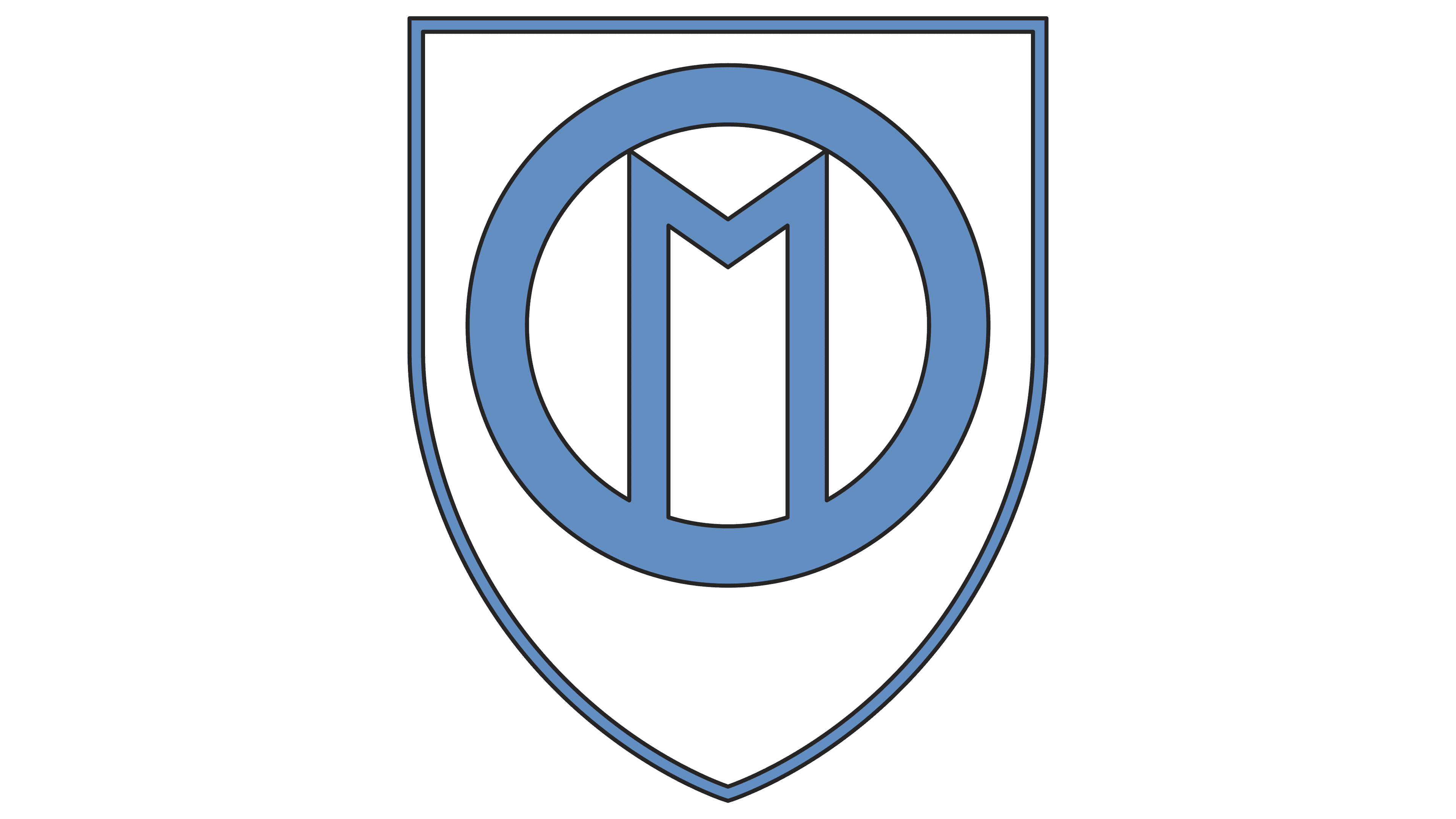
“Olympique de Marseille” changed its emblem several times, and the 1935 version became one of the calmest and most restrained options in the club’s history. It had almost no decoration, yet introduced an “Art Deco” style through its love of order, geometry, and clean form.
The club was founded in 1899 by René Dufaure de Montmirail. He brought together a Marseille soccer team and a fencing society, added Olympic disciplines, and built the club from the start around sport, competition, and results. René’s interest in sports began in Algeria, where he spent his youth alongside his father, an officer. After returning to France, he wanted to create a team capable of winning and leading the city.
The club’s early history is also tied to the motto “Droit au But,” meaning “Straight to the Goal.” Before “Olympique,” Marseille rugby players used it, and according to one version, Marguerite, René’s wife, brought the phrase into the club’s tradition. She was remembered for her strong will, so the motto fit the team’s image well. It contains only direction and a demand for results.
The first emblem was closer to the founder’s personal signature. It intertwined the letters “D” and “M,” designed in the “Art Nouveau” spirit. The lines looked soft, with plant-like motifs, as was common at the turn of the century. Over time, the monogram came to be seen less as René’s personal mark and more as part of the Marseille club’s image.
By the 1930s, that style had begun to look outdated. In 1935, “Olympique” received a new logo. The letter “M” appeared inside a rounded “O,” and the entire form was placed inside a shield. There was less ornamentation, and the form became stricter. The 1935 version captured the change of an era.
1972 – 1986
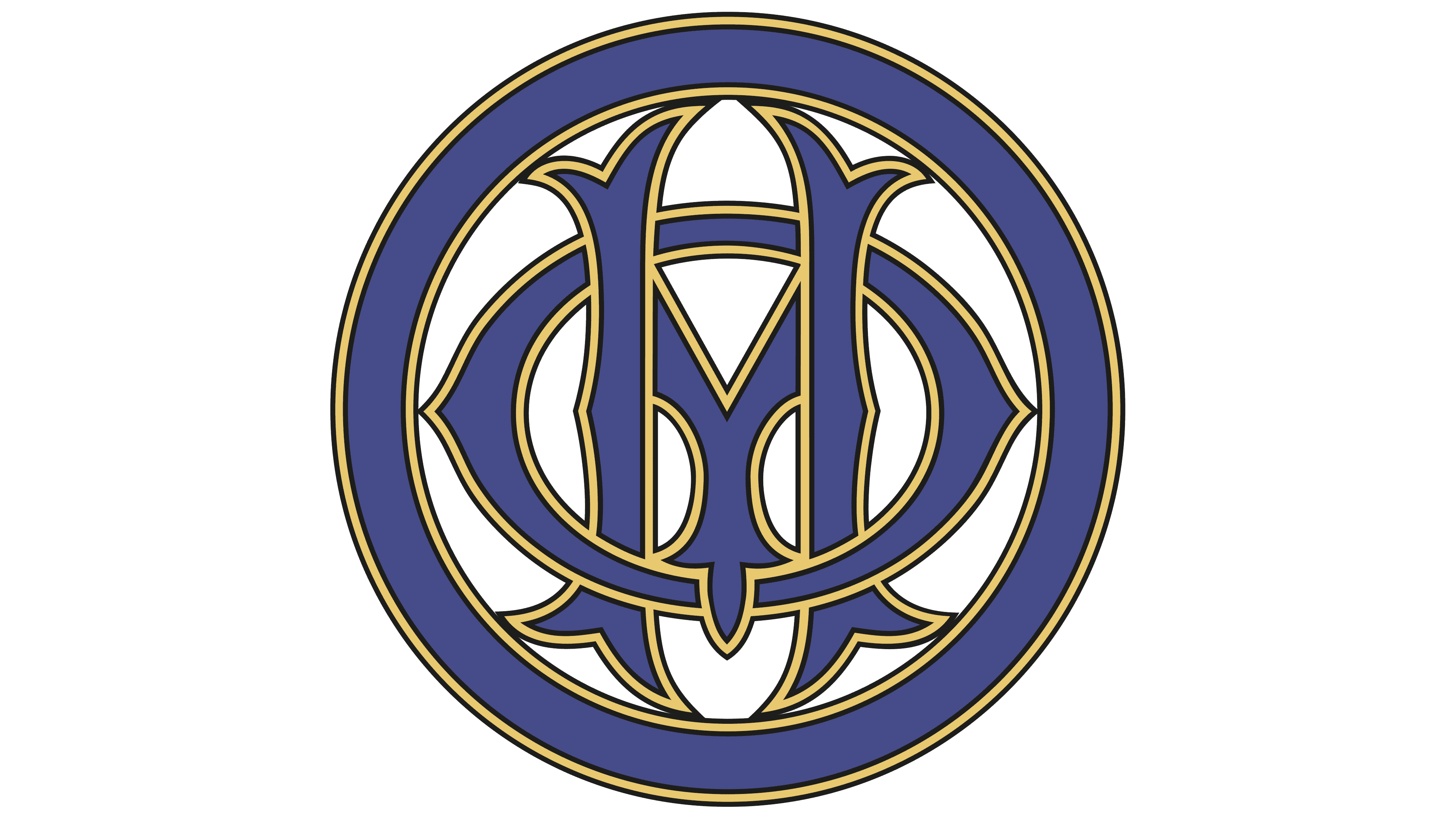
In 1972, “Olympique” went against the prevailing fashion. Sports design then favored futurism, space motifs, and new forms, while the Marseille club returned to the monogram. For a team with a history dating back to 1899, it did not look old-fashioned, but fully deliberate. The logo was meant to recall the club’s roots, its age, and its position in French soccer.
The emblem centered on the letter “M.” It sat inside an oval, where the earlier “O” had already lost its familiar outline. Because of the oval, the logo became closer to a coat of arms than to a sports pictogram. It looked calmer, heavier, and more solid than many emblems of the era.
The letter’s lines were thinned and made decorative. They carry an “Art Nouveau” feel, familiar from the early versions of the club monogram. The endings resemble ancient columns, linking the logo to classicism and old European aesthetics. The blue-and-yellow outline added color, but did not disrupt the overall restrained look.
The oval had another meaningful role. It can be linked to the letter “D” from the surname of René Dufaure de Montmirail, the founder of “Olympique.” The same form also suggests a rugby ball. For the club, that reference was appropriate, since “Olympique’s” early history is closely linked to rugby and other sports.
Through the monogram, the oval, and the classical details, the club recalled its origins, its first teams, and Marseille’s long sporting line.
1986 – 1987
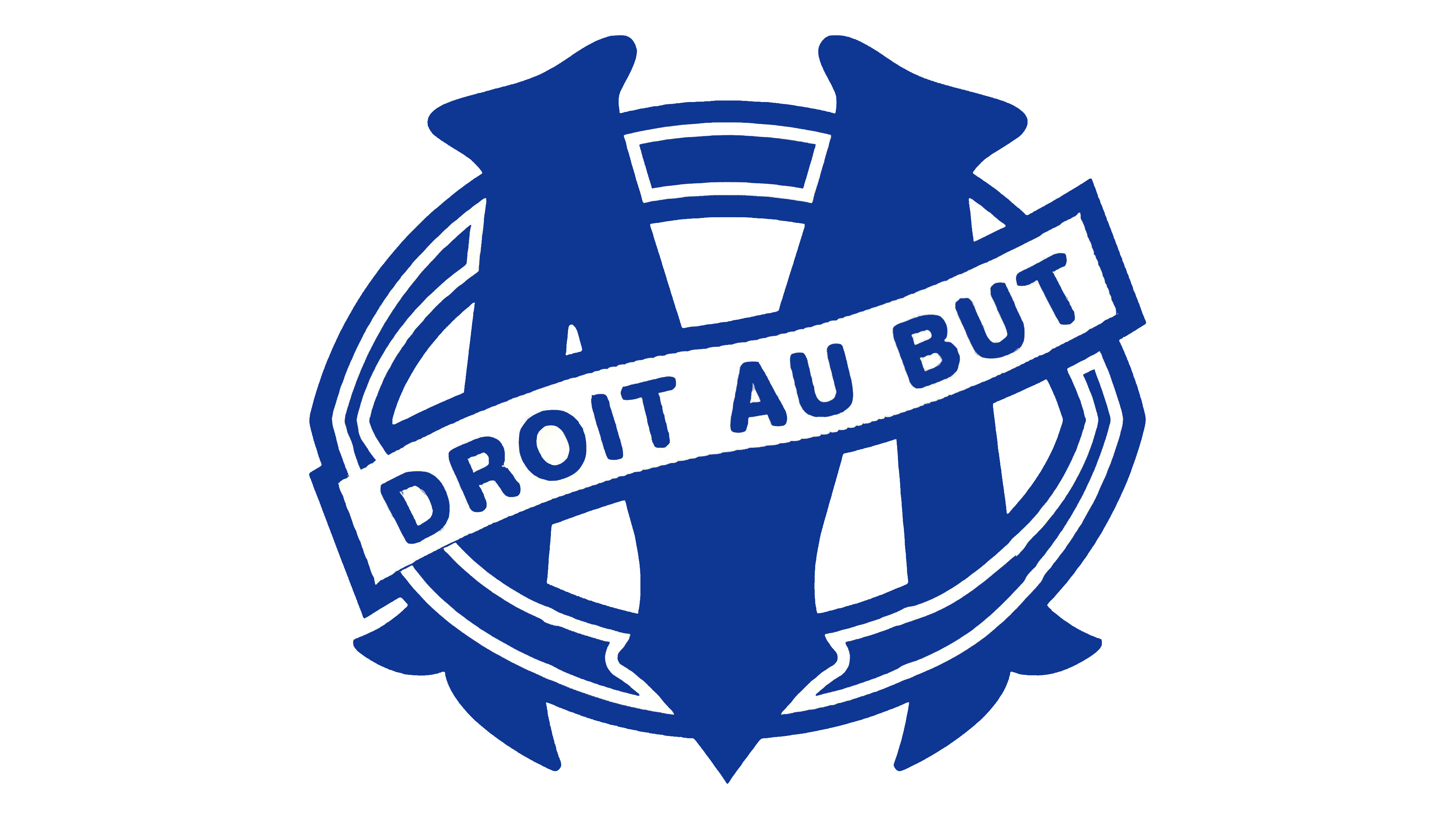
In the mid-1980s, “Olympique de Marseille” brought the motto “Droit au But” back onto the emblem. Before that, the slogan had been absent from the club’s logos for a long time. The return of the motto helped make the emblem closer to sport, supporters, and club memory.
The logo became simpler in concept than previous versions. The monogram with the letter “M” remained at the center, while a white ribbon with the inscription “Droit au But” ran across it. The phrase became part of the overall image. The ribbon recalled a supporter’s scarf, so the motto felt more alive and closer to the stands.
In heraldry, ribbons with text often carry short mottos. In the case of “Olympique,” the device worked naturally. The club did not overload the logo with details, but brought back a phrase long connected with its history.
The monogram remained strict and composed. The white ribbon added an accent, and the motto gave the emblem a new visual style.
1987 – 1988
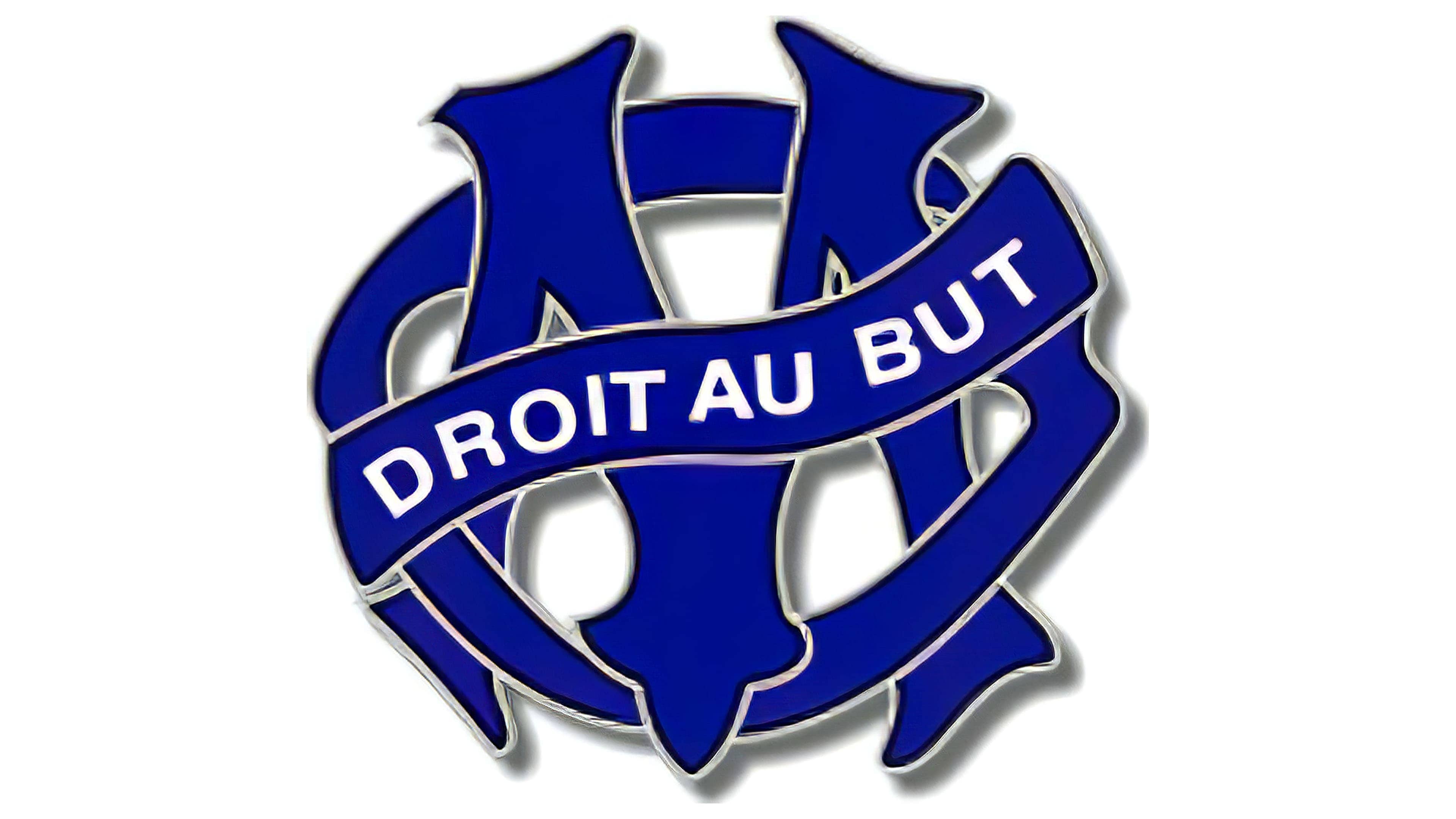
The shapes and proportions did not change; the developers only edited the color scheme. As a result, the monogram is dark blue, and the lettering is white. Light gray outlines resembling shadows appeared around “O” and “M.”
1988 – 1989
Continuing the palette experiment, the designers made the “M” blue. The lettering “DROIT AU BUT” was painted in the same color, as well as the outlines of the white ribbon and “O.”
1989 – 1990
The letters changed: “O” became a perfectly round ring, and “M” became much thinner. A rectangular plaque replaced the curved ribbon, which had straight sides.
1990 – 1993
In the early 1990s, the designers first gave the logo a three-dimensional look using black lines of different widths. The darker lines make the blue monogram look even more distinctive.
1993 – 1999
The team added a yellow five-pointed star to the emblem to celebrate their Champions League title. The shadows around the edges of the letters disappeared, replaced by a white-blue gradient that created a 3D effect.
2000 – 2004
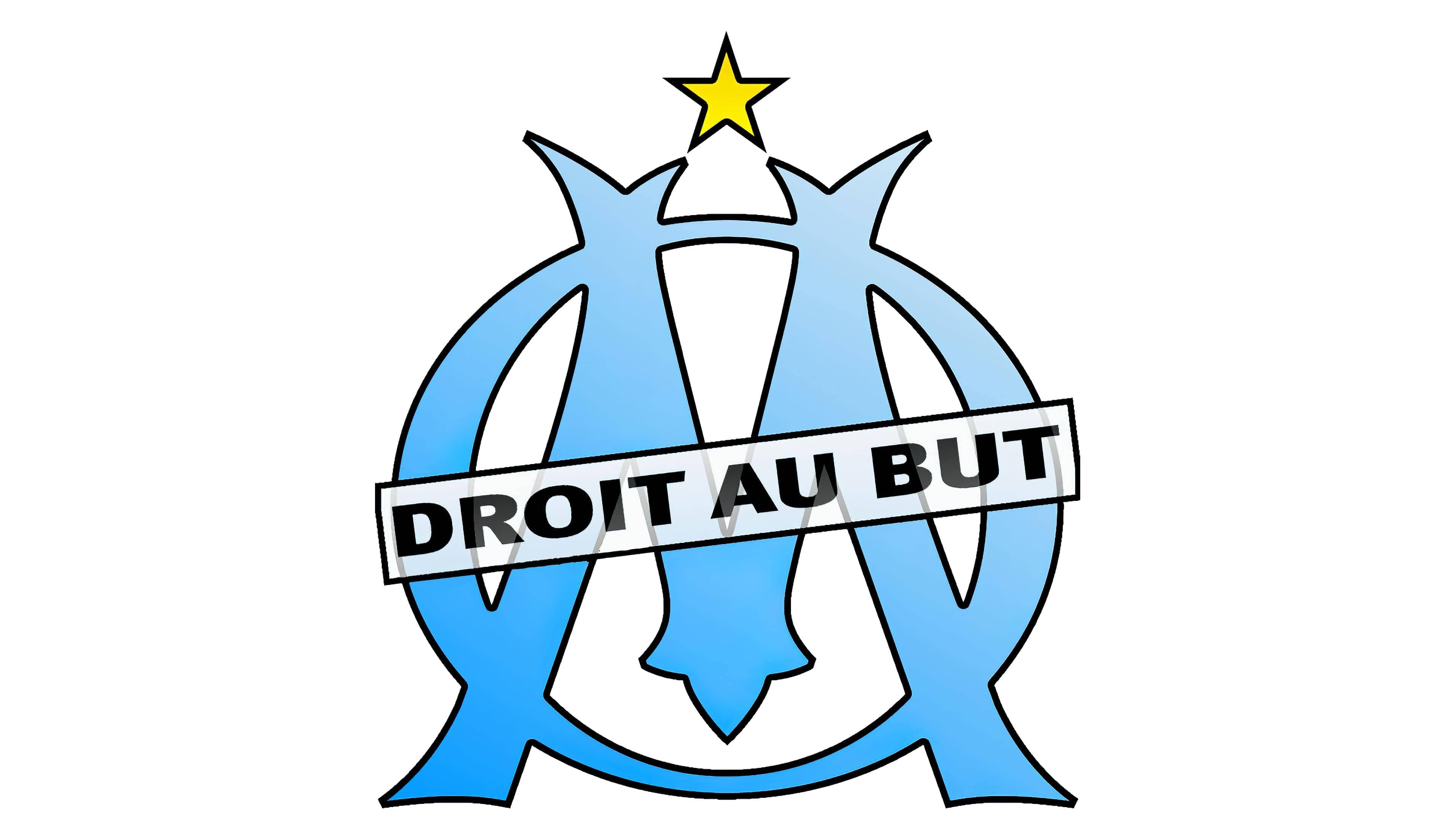
The “O” began to look unusual because the sides were uneven: the top and bottom were noticeably narrower than the sides. The “M” has no branches at the lower ends. Despite many changes, the designers retained the blue-white gradient and kept the club’s old motto.
2004 – 2026

The gradient has disappeared; now the monogram is completely blue. Moreover, the letters do not have contours, so they no longer intertwine. For the first time, the inscription “DROIT AU BUT” is located not across the initials but below. It matches the golden color of the Champions League star.
2026 – today

In 2026, “Olympique de Marseille” changed its familiar image. The new emblem became softer, simpler, and better suited to digital platforms. For a club with Marseille’s heated reputation, the change proved controversial. As a result, supporters reacted strongly.
The club presented the updated logo at a charity event. Fans’ familiar sharp angles gave way to smooth lines. The letters “O” and “M” almost merged into a single form, enclosed within a thin double ring. The emblem became neat and modern.
The main color became the shade “Bleu Marseille.” It was linked to the club’s historic colors, the city’s streets, and the calanques near Marseille. The club removed gold, long associated with victories and status. The new version kept dark blue and white, making the logo calmer and more restrained.
The club wanted to prepare the emblem for the digital era, but some fans reacted sharply to the changes. On social media, the logo was called too corporate and compared to IT companies’ identities. Banners mocking it appeared in the stands because many supporters expected a stronger and more emotional image from “Olympique.”
The club divided the logo into 2 versions. The sports version kept the gold star and the motto “Droit au But,” both associated with the 1993 European victory. The second version is intended for media, the website, documents, and digital platforms. It is simpler, scales more easily, and looks better at small sizes.
The authors explained the update through the club’s history. It includes references to the 1973 frame, the letter “M” from the early 1899 emblem, the smooth lines of the 1986 version, and the double ring from 1993. The idea was to bring together different periods of “Olympique” into a single modern logo.
But that elegant explanation didn’t end the debate. For many fans, the “Olympique” emblem should convey Marseille’s energy, its fighting spirit, and its connection to the stands. The new version looks neater, but colder, so it was far from universally accepted.
Font and Colors
The iconic emblem was based on René Dufaure de Montmirail’s personal seal. But it has evolved significantly, making it a completely new coat of arms unrelated to the original. The designers changed the “D” to “O” and went even further, choosing a different color scheme and transforming the letters. As a result, they preserved the memory of Olympique de Marseille’s founder and created a unique image for the club.
The motto “DROIT AU BUT” reminds us of when OM united rugby, billiards, and fencing teams. The lettering is bold sans serif. The logo palette is simple, featuring only blue (#2faee0) and gold (#bea064), along with the club’s official colors.