


 Pandora Logo PNG
The Danish jewelry brand’s emblem stands out for its elegance and sophistication. The recognizable Pandora logo reflects the brand’s focus and highlights its name, style, refined elegance, and luxurious products.
Pandora began in 1982 when Per and Winnie Enevoldsen opened a small shop in Copenhagen with 80,000 DKK. They sourced jewelry from Thailand and sold it in Denmark. Demand grew fast, pushing the business from retail to wholesale within a few years.
In 1987, the company closed its shop, moved to a larger office, and hired its first designer. In 1989, production shifted to Thailand, where Pandora built its own facilities. This move established control over design, manufacturing, and distribution.
In 2000, Pandora introduced the charm bracelet. The concept allowed customers to add individual pieces over time, each carrying personal meaning. Sales rose quickly as repeat purchases became part of the model.
Expansion followed. In 2003, Pandora entered the US and Canada, then Germany and Australia in 2004. In 2005, a major factory opened in Gemopolis, Thailand, and the company entered the UK and Spain. Revenue grew from 1.8 billion DKK in 2007 to 6.7 billion in 2010, with over 10,000 points of sale.
In 2008, Axcel acquired a 60 percent stake in the business. In October 2010, Pandora went public on NASDAQ OMX Copenhagen, raising 9.08 billion DKK and reaching a valuation of nearly 35 billion. The brand competed with Swarovski in the affordable jewelry segment.
In 2014, Pandora partnered with The Walt Disney Company to add licensed collections. Later agreements included Harry Potter and Marvel. By 2016, the network reached 2,000 branded stores.
In 2019, as part of the “Programme NOW” initiative, the product range was reduced, the brand identity was updated, and digital channels were expanded. In subsequent years, online sales became the key driver of growth.
Meaning and History
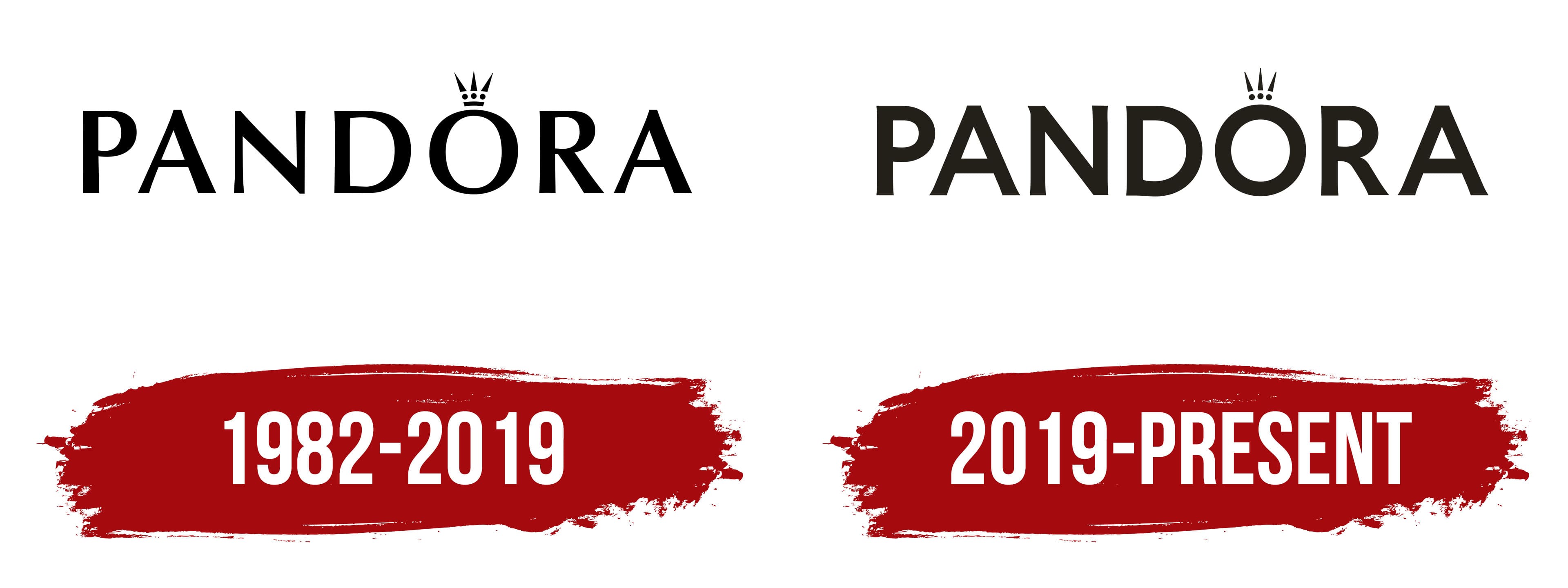
The company’s logo is very recognizable. It combines graphics and text harmoniously. It features the classic word “Pandora” (sans-serif, uppercase, with medium internal spacing) and an image of a ring depicted in the letter “O,” topped with a miniature crown.
The royal power attribute emphasizes that the brand offers valuable jewelry worthy of royalty and effectively distinguishes its owners from others. Over several decades, the company’s legendary logo has undergone only one transformation. Currently, it exists in two forms: original and updated.
What is Pandora?
This brand became famous for its personalized jewelry and charm bracelets. These bracelets allow individuals to tell their own stories, with each charm representing significant life moments, memories, or dreams. The jewelry is crafted from precious metals such as gold and silver, with meticulous attention to detail. In addition to bracelets, the brand offers rings, earrings, necklaces, and other stylish pieces that combine affordability with elegance. The collections cover themes from classic floral designs to collaborations with well-known brands.
1982 – 2019

The debut version appeared almost immediately after the store’s opening and was a sign above the entrance. But as the business expanded, it was incorporated into a single emblem, since the original name had already gained recognition among customers. As a result, an interesting variation emerged: letters + symbol. The original inscription is harmoniously integrated into the word itself, without disrupting its structure or readability.
The symbols are spaced optimally and do not merge. They are black and look unique because of the combination of wide and thin lines. The word is set in an elegant sans-serif font and adorned with a small three-part crown. The base is an arch-shaped line, the middle is round, pea-like dots, and the top is pointed, elongated triangles. The royal power attribute is centrally placed above the letter “O.”
2019 – today
The actual emblem underwent a minor revision: the developers changed the font. Now, it consists of black letters with a slight gray gradient, made with equally wide lines. Designers removed the crown’s base, leaving only three balls and three triangular rays. As a result, this element is now perceived as a crown and a ring with shining precious stones.
Font and Colors
The word “Pandora” comes from ancient Greek mythology and is widely used to refer not only to the Danish jewelry company but also to other well-known services, such as streaming radio. The brand name translates to “all-gifted” and embodies the first woman on earth, created at Zeus’s behest.
She was simple in origin but no less beautiful than the omnipotent goddesses. The brand’s owners have emphasized this by offering products that make any woman feel divine. The logo’s mythological roots support the brand’s high status, granting access to the world of beauty through exquisite jewelry bearing the Pandora label.
The company name is written in even serif letters. Additionally, the updated emblem reflects the modern trend toward strict geometric proportions. The simple black-and-white palette highlights the sophistication and elegance of the brand’s products.
Interestingly, although a Pandora font exists, it was not used for the namesake. In the first version of the logo, the symbols are written in a font reminiscent of Optima Demi Bold, developed by Hermann Zapf. In the second version, the name is set in Cabin Bold.