


 Premier League Logo PNG
The Premier League logo demonstrates the participants’ greatness, nobility, and patriotic spirit. The emblem indicates that the organization is honored to represent the country internationally, and that the teams are ready to do so in the best way possible.
The Premier League grew out of the dispute between England’s strongest clubs and the Football League, founded in 1888. By 1990, TV rights were rising in value, yet revenue was still shared across all four divisions. Manchester United, Everton, Liverpool, Arsenal, and Tottenham Hotspur, known as the “Big Five,” began talks in October 1990 about forming an independent league.
On February 20, 1992, all 22 First Division clubs resigned from the Football League. On May 27, 1992, the Premier League was registered as a public company. Its first TV deal with BSkyB and the BBC was worth £304 million over five years, far above ITV’s earlier contract from 1988 to 1992. The first season began on August 15, 1992, and Brian Deane of Sheffield United scored the league’s first goal. Under Sir Alex Ferguson,
Manchester United won the 1992/93 title, ending a 26-year wait, and retained it the next season. In 1994, the league reduced from 22 to 20 clubs. Under Kenny Dalglish, Blackburn Rovers won in 1994/95, led by Alan Shearer and Chris Sutton. Arsenal became a major rival after Arsène Wenger arrived in September 1996, winning the title in 1997/98 and going unbeaten over 38 matches in 2003/04.
Chelsea’s finances changed after Roman Abramovich bought the club in June 2003. José Mourinho delivered its first league title in 50 years in 2004/05. Later, Leicester City won in 2015/16 at odds of 5000 to 1, while Manchester City dominated under Pep Guardiola from 2017/18 to 2023/24. In 2025, domestic rights for 2025/26 to 2028/29 were sold for £6.7 billion, with total rights reaching about £13.2 billion.
Meaning and History
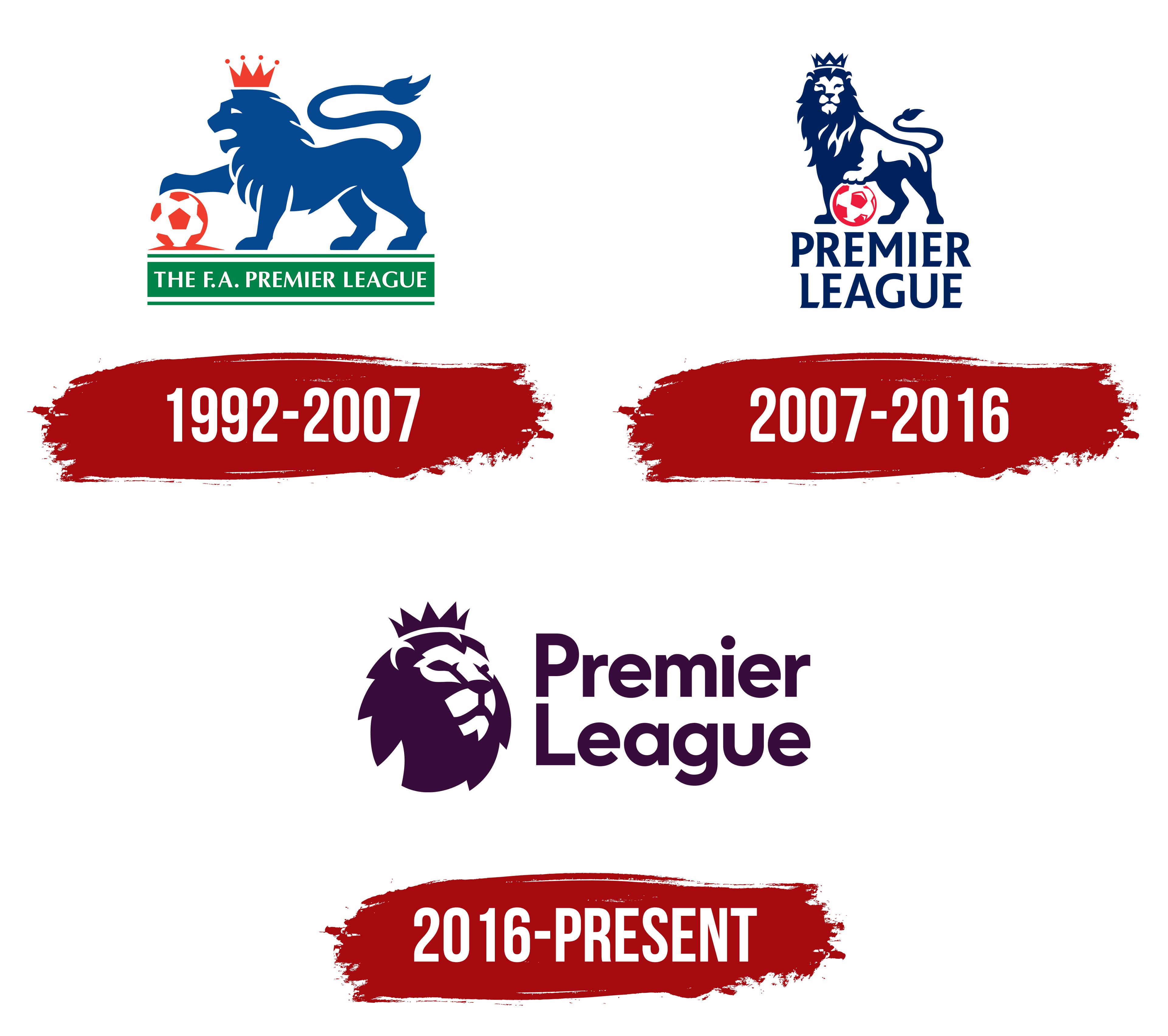
The logo has been changed twice, but the lion has always been integral.
What is the Premier League?
The most famous European association of soccer clubs, including teams from the top English division. Almost 5 billion people watch its television broadcasts. Each club is a shareholder of the organization.
1992 – 2007

The first logo features a majestic, roaring lion in profile, with its paw on the ball. At the bottom, on a green band with a white border, it reads The F.A. Premier League.
The acronym is related to the organization’s legal name, which sounds like the Football Association Premier League. The league formed to increase revenue and amid a confrontation between the Football Association and the Football League. The leading clubs already received the lion’s share of all EFL revenues (more than 75%), but if they were split into a super league, they could earn even more. Therefore, the Football Association supported and led the formation of the Premier League. The rights to broadcast matches were sold for five years for £ 304 million.
The emblem uses the highest symbols of English power: the “Berber” lion and the crown. The lion is considered the national animal and is depicted on the country’s coat of arms, and the crown of St. Edward is used for the coronation of monarchs.
The image shows the league representing the country in the highest-class international competitions. The paw on the ball symbolizes the country’s monarchs’ patronage and blessing for victory. The composition promises that Premier League representatives are the best and will fight like lions.
The green ribbon symbolizes the soccer field, and the white stripes are its markings.
2007 – 2016
The Premier League won the confrontation with FIFA, which demanded reducing the number of teams to 18. The league lost only two teams, entering the 2007 season with 20 members instead of 22. That same year, the league shortened its name by removing the word “England.”
The new visual sign is majestic and realistic. The glorious lion faces the viewer, proudly holding the ball with his paw. His fur ripples in the wind, as if he stands on a pedestal. At the bottom, in large capital letters on two levels, is the Premier League’s name. The whole composition is made in noble navy blue.
The sign suggests the organization is at its peak. It has gained considerable weight in the world of soccer and claims to be not just an English league but a world one, given the Premier League’s about 10 European Cups. The organization’s affiliation with Great Britain is only suggested by the lion.
2016 – today

In 2016, the multi-year contract with the Premier League’s title sponsors ended, and no new ones were contracted. The organization wants to avoid promoting any brand other than its own.
The league’s new image also retains the lion, but now it’s just the beast’s head, looking into the future for viewers. To the right of the King of the Beasts, a two-tiered Premier League inscription appears in capital letters.
The logo no longer evokes superiority and dominance; it reflects confidence, courage, and resilience. The sign foreshadows longevity and symbolizes future victories.
Font and Colors
The logo’s last color is dark purple. It reflects the league’s strength of spirit, venerable age, and creativity. The league is making history and has enough potential to maintain its leadership position.
The font of the Kontora Black inscription is.