


 Princeton University Logo PNG
The Princeton logo represents the unity of science and faith, the spiritual and the material. It reflects ancient heraldry. The emblem conveys nobility, honor, and a serious attitude toward learning.
Princeton University began on October 22, 1746, when acting New Jersey governor John Hamilton signed the first charter of the College of New Jersey in Elizabeth. The charter allowed admission regardless of religious affiliation, a rare clause for a colonial college. In May 1747, the first students met at President Jonathan Dickinson’s home.
After Dickinson’s death, the college moved to Newark under Aaron Burr Sr. In 1756, after Nassau Hall was completed, the institution relocated to Princeton. A major shift came in 1768, when John Witherspoon became the sixth president. He shifted the curriculum from clerical training to political leadership, natural philosophy, and analytical thinking.
Witherspoon signed the Declaration of Independence in 1776. In 1777, George Washington drove British troops from Nassau Hall. In 1783, the Continental Congress met there, making the building a temporary seat of the new nation. In 1896, during the 150th anniversary, the College of New Jersey was renamed Princeton University. In 1900, the graduate school was created.
In 1902, Woodrow Wilson became Princeton’s thirteenth president and its first leader who was not an ordained minister. He doubled the faculty, reorganized the curriculum, and introduced the preceptor system in 1905. In 1906, Andrew Carnegie funded Lake Carnegie, and Princeton became officially nonsectarian. Wilson left in 1910 and later became the US president in 1912. Princeton competed with Harvard and Yale in the Ivy League, admitted women to undergraduate programs in 1969, changed its financial aid in 2001, and renamed the Woodrow Wilson School in 2020.
Meaning and History
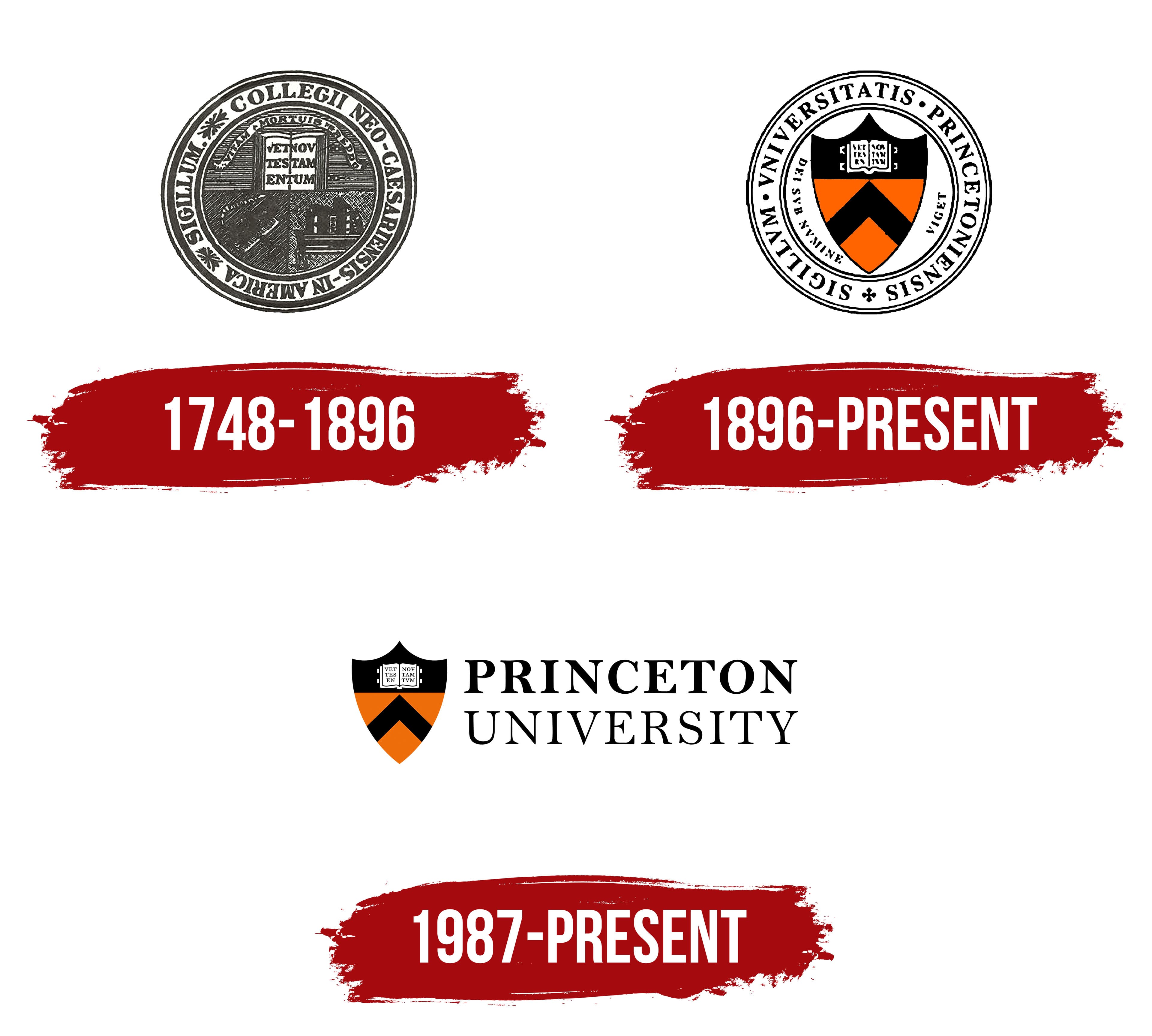
The university received its logo almost 250 years after its foundation and has remained unchanged.
What is Princeton?
The oldest institution of higher education in America offers Bachelor of Arts and Bachelor of Engineering degrees in 34 areas of study. It has the largest endowment, at almost $ 27 billion, and is the ancestor of the Ivy League name because alumni have a tradition of planting ivy.
1987 – today

The emblem consists of a shield, with the university’s name to its right. As usual, the first word is bolder, and “university” is written thinner.
The shield is divided into two parts. At the top, on a black background, an element of the past is an open Bible with the same inscription as on the college’s first seal.
The Code of Honor reflects a distinctive religious orientation within the modern university. Before each exam and piece of written work, students sign a paper stating that they will not violate this Code and that, if they see someone violating it, they will report it. According to the Code, cheating, the use of cheat sheets, and plagiarism are prohibited. The teacher is not present at the written exams, expressing full confidence in the students.
Below the Bible on the shield is a black chevron (rafter) on an orange background. The image symbolizes the federal government, legislative, executive, and judicial branches. The university witnessed the formation of the United States and the signing of the Constitution. Its students took part in it. The image references the university’s rich history. Reinforces the university’s position on the origins of modern America.
Despite its current importance, the shield was said to have been a gift from the British Crown to the university before the Revolution.
The Seal
The institution’s first visual symbol was the seal. Its imprint on documents confirmed their official status and authenticity. The symbol changed once, along with the organization’s status.
1748 – 1896
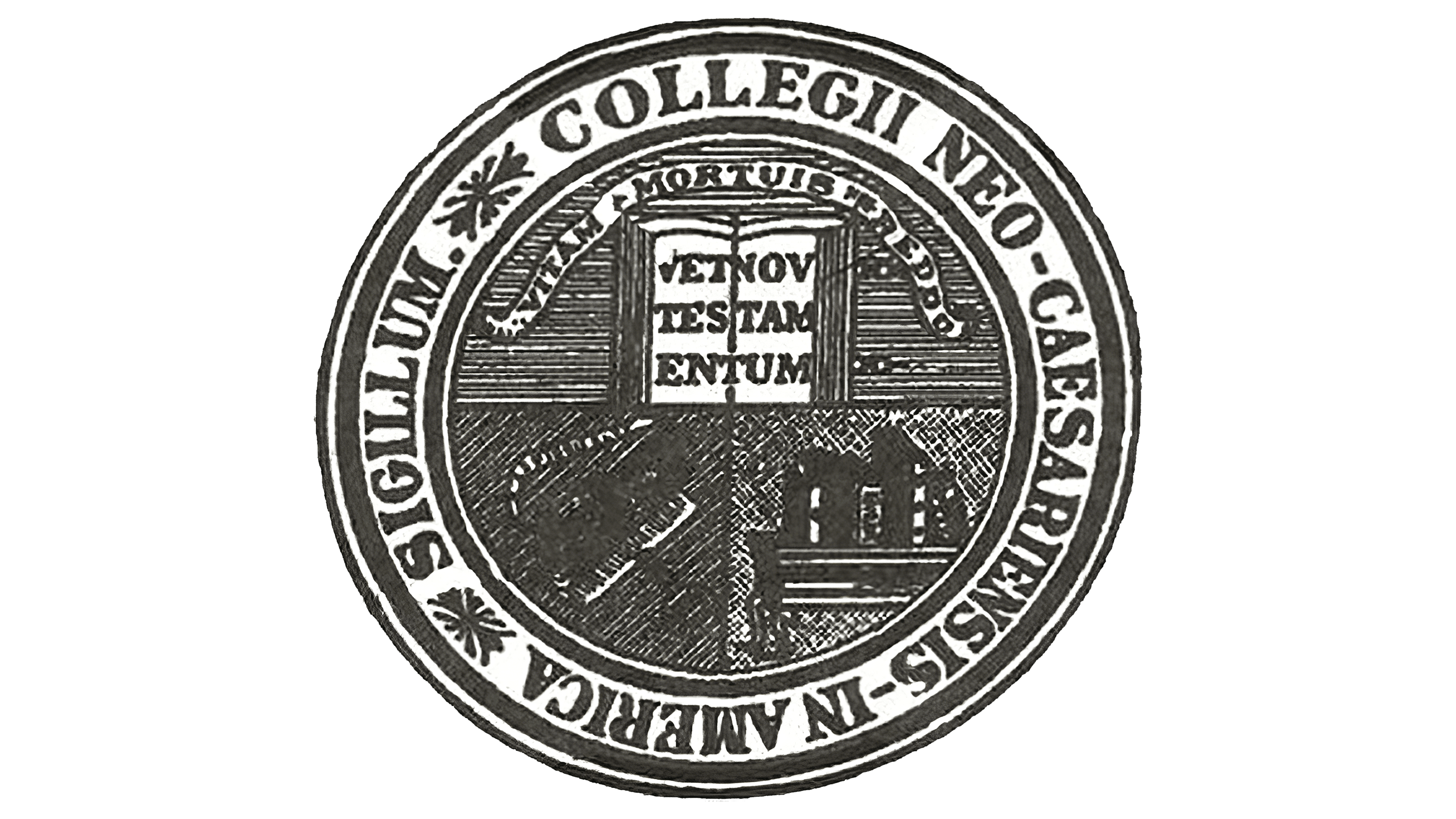
The seal consisted of two concentric circles. The outer ring read: “Seal of the College of New Jersey.”
The inner circle showed an open book, symbolizing the Bible. The institution’s original focus was theology, as was most early educational institutions’.
The Bible is considered the most important book, carrying the light of knowledge. To leave no doubt about what the audience was seeing, it was written on the open pages: “The New and Old Testament.”
Above the Bible, on a heraldic ribbon, was the motto announcing that God gives life to the dead. This alludes to a person’s second spiritual birth at the moment of repentance and to the promised resurrection of the dead at Christ’s second coming.
The emphasis on saving faith aligns with the unprecedented decision to allow anyone to study at the institution, regardless of faith. This gave those who went the wrong way a chance at salvation.
The lower part of the seal’s inner circle is divided in two. In one, a diploma is drawn, and in the other, a table with books. The image shows the need for diligent learning. This is not surprising; the institution has always had high standards. Today, only 9-10% of applicants are admitted.
1896 – today

In 1896, the college was renamed the university. So its seal changed. The outer circle now reads “Seal of Princeton University.”
The inner circle features a shield, now the institution’s logo, and an inscription that again points to matters of faith: “We prosper under the rule of God.”
Font and Colors
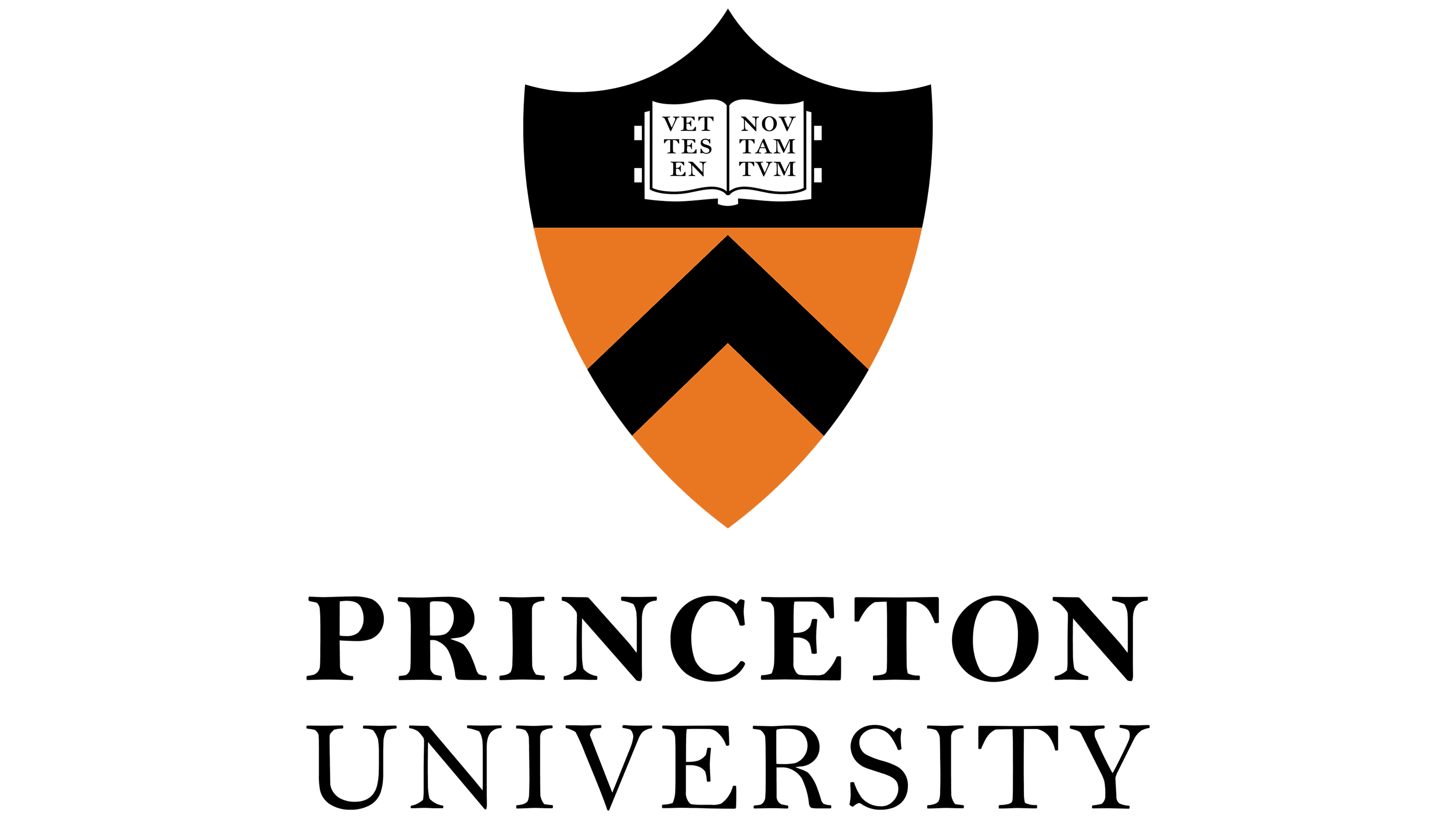
The university’s main colors are black and orange. They echo the color of the establishment’s mascot – the tiger.
- Orange conveys warmth and community.
- Black -isa symbol of knowledge and respectable age. Indicates an establishment located at the base of the US educational system building.
Interestingly, in the original British interpretation, the college colors were orange and a very dark blue. However, when the document bearing the coat of arms was delivered, the blue turned black, as the educational institution’s leadership confirmed.
The Bell MT Bold font is a serif font, which adds elegance to the lettering.