


 Real Betis Logo PNG
The Spanish club’s emblem is purposeful. The Real Betis logo represents teamwork, creativity, and attack. As the sign’s symbols show, the club is under the crown’s auspices and has noble roots.
On September 12, 1907, students in Seville founded Sevilla Balompié, using a Spanish term for football. After a split from Sevilla FC in 1909 and a merger in 1914, the club became Real Betis Balompié following royal approval from Alfonso XIII.
The club adopted green and white in 1910, linked to materials brought from Scotland and associated with Celtic FC. The first derby against Sevilla took place on October 8, 1915, ended 4:3, and was marked by crowd unrest.
In 1932, Betis won Segunda and reached the top division. Under Patrick O’Connell, the club won La Liga in 1934–35, finishing ahead of Real Madrid. It remains the only league title in its history.
The club then declined, leading to relegation to the third tier in 1947. Support remained strong, and by 1954 the club returned to Segunda. On June 25, 1977, Betis won the Copa del Rey after a long penalty shootout against Athletic Bilbao, then eliminated AC Milan in the European Cup before losing to Dynamo Moscow.
In 1994, Lorenzo Serra Ferrer led Betis back to La Liga. The club finished third in 1994–95 and reached the 1997 Copa del Rey final against FC Barcelona. In 2005, it won another cup against CA Osasuna. It entered the Champions League group stage with Liverpool F.C., Chelsea F.C., and R.S.C. Anderlecht.
In 2022, under Manuel Pellegrini, Betis beat Valencia CF on penalties in the Copa del Rey. In 2024, it reached the Conference League final but lost to Chelsea F.C. 1:4.
Meaning and History
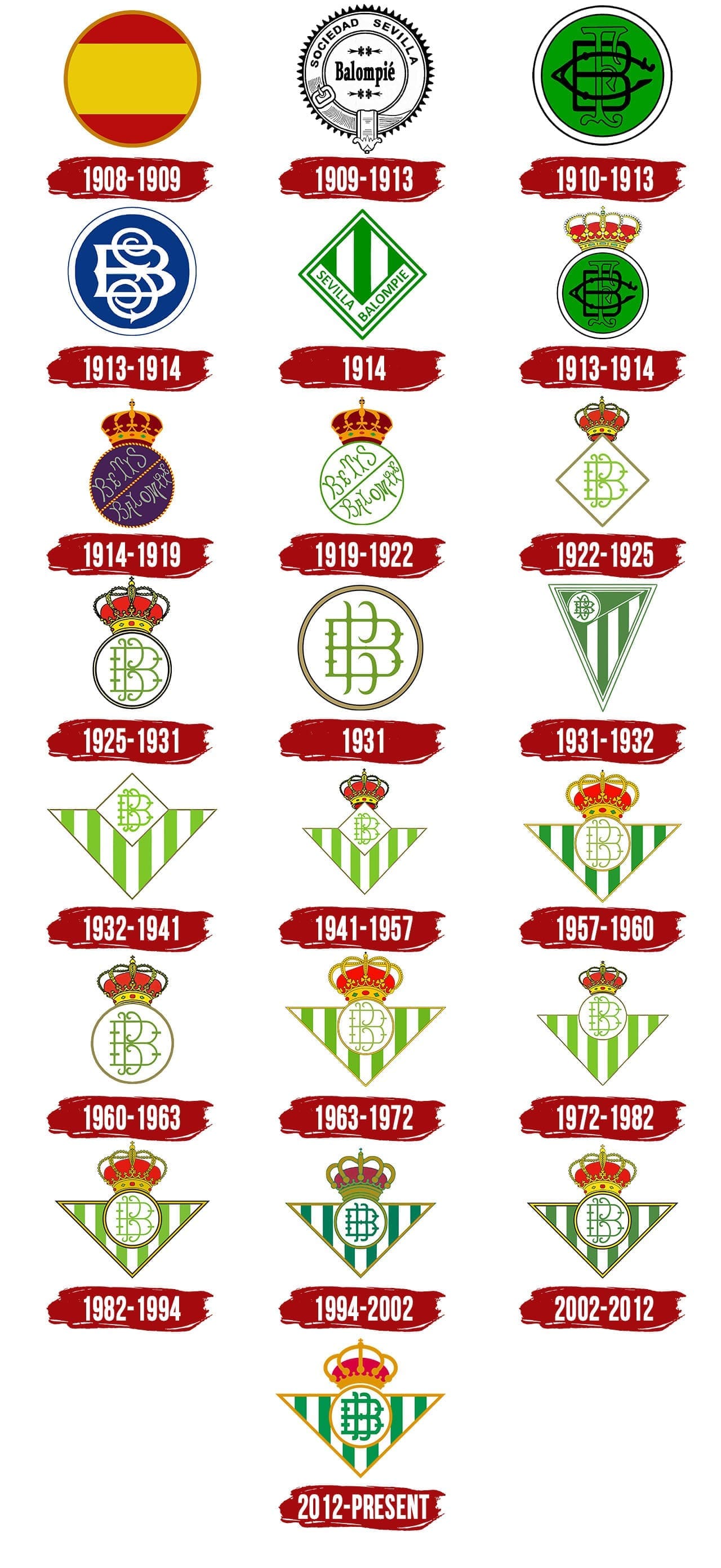
Almost all of the team’s logos, except the first, reflect its name either in full or as the original monogram. The Latin word “Baetis” means the river Guadalquivir, on whose banks Seville is built.
What is Real Betis?
Real Betis is the abbreviated name for the professional football team Real Betis Balompié from Spain. It was established in 1907 and is based in Seville, Andalusia. The club competes in La Liga. They have won the Copa del Rey multiple times and have one championship title.
1908 – 1909
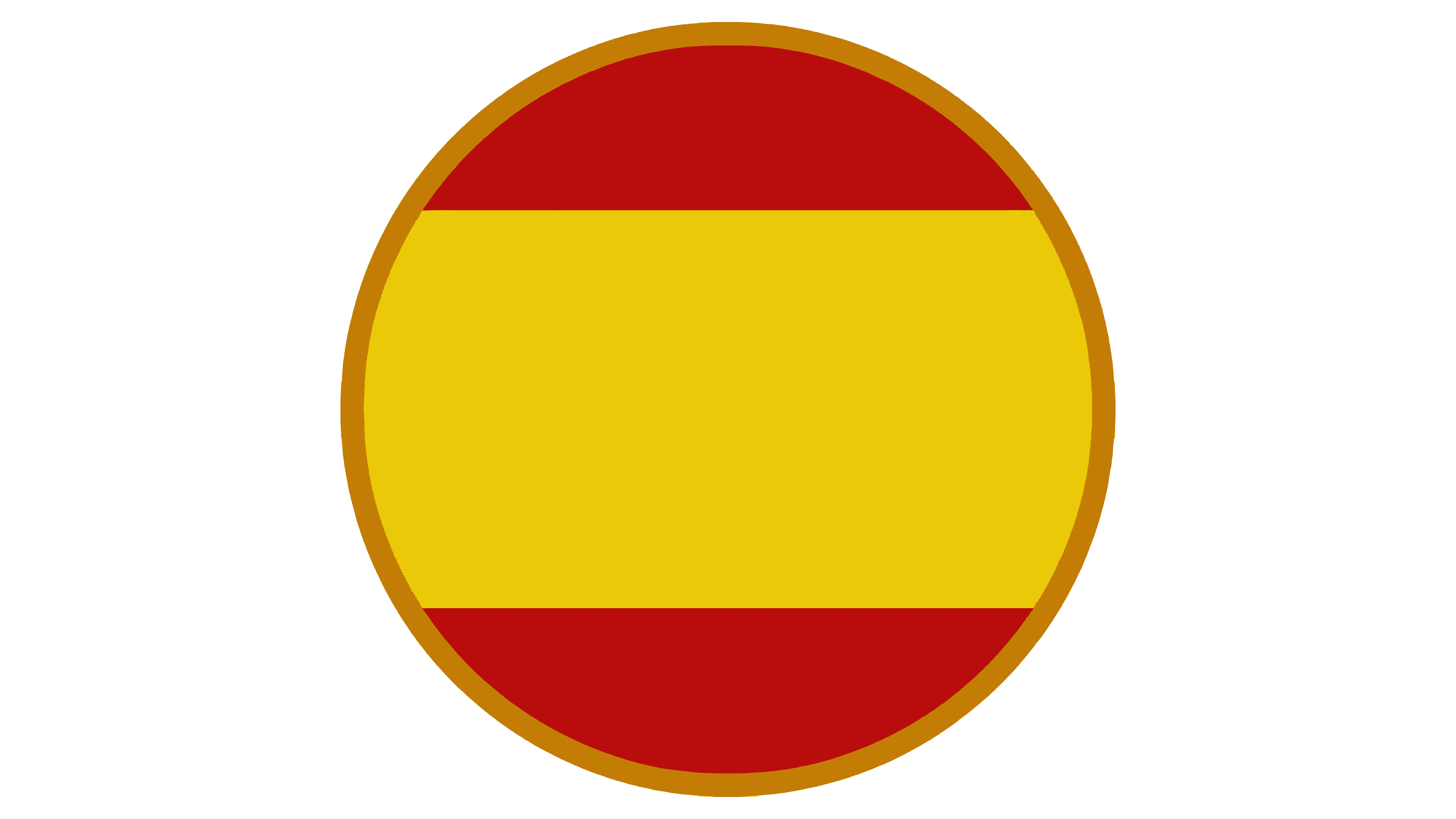
Sevilla Balompié’s debut emblem (the predecessor of Real Betis) features an orange-outlined circle. It is divided into three parts: two red and one yellow. The colors match the Seville graphic.
1909 – 1913
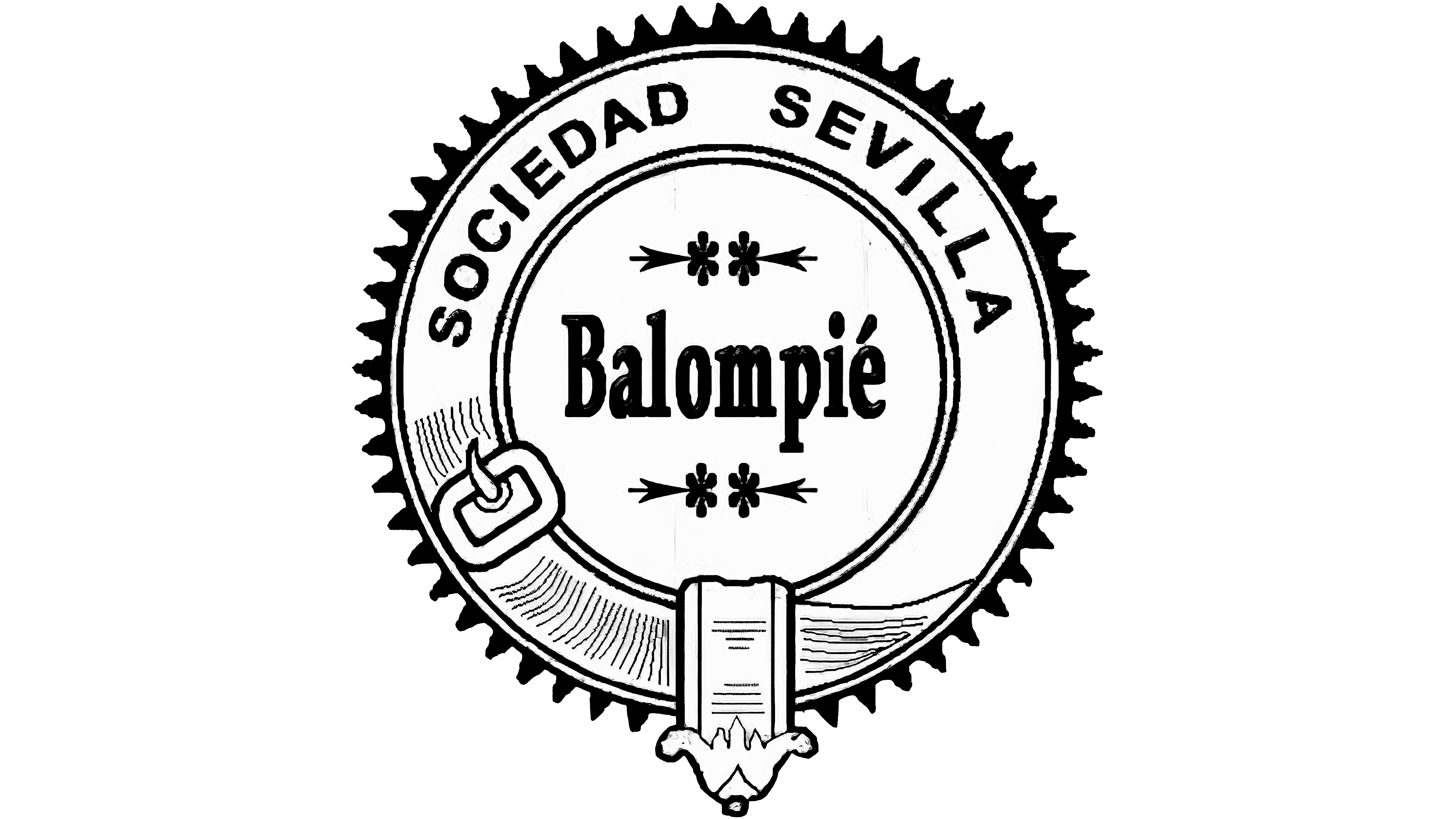
The second logo is also round. In the center is the word “Balompié.” A ring surrounds it, stylized as a knight’s belt with blue teeth. It contains the inscription “SOCIEDAD SEVILLA.”
1910 – 1913
In 1910, the second predecessor of Real Betis, Betis Football Club, debuted. Its logo features a monogram of black “BC” and white “F” superimposed. The background is a green circle with a white ring instead of a frame.
1913 – 1914
The designers played with the name Sevilla Balompié, presenting it as a monogram. The swirling “S” is superimposed on the flattened “B” with triangular serifs. White letters are shown inside a blue circle with a light outline.
1914
Another version of the Sevilla Balompié emblem features a diamond shape. Inside it is a smaller rhombus with five white-green vertical lines. At the bottom, there is an elongated pentagon with the name of the club
1913 – 1914
After the Sevilla Balompié split, the Balompié club was formed and soon merged with Betis Football Club. This is how Betis Balompié was born. Its first emblem was the same as Betis FC: the “BFC” monogram in a green circle. The designers added the crown because the team had received recognition from Alfonso XIII. With the king’s patronage, they added the word “Real” to the name.
During the same period, they used a graphic sign featuring a white circle with a club, racket, and soccer ball at its center. At the bottom was a semicircular inscription, “REAL BETIS BALOMPIE,” and a wreath and crown were at the top.
1914 – 1919

The new logo is a circle divided into two parts by a diagonal line. The word “BETIS” is in the other half, “BALOMPIE.” Above the circle is a red-and-yellow crown. This emblem is available in two versions: one with white lettering on a purple background and one with black lettering on a white background. In the first case, the outlines are red and yellow; in the second, they are black.
1919 – 1922
The outlines turned light green.
1922 – 1925
White rhombus with a khaki outline. Inside, there is a green “BB” monogram. A crown is worn on the rectangular top.
1925 – 1931
The rhombus became a circle, and the crown grew.
1931
After Alfonso XIII’s escape, royal symbols were prohibited, so the club removed the crown from its emblem.
1931 – 1932
The green-and-white inverted triangle contains seven vertical lines and a small circle with the monogram “BB.”
1932 – 1941

The triangle shape changed: it became wider, so 13 stripes fit on it at once. The club’s initials are located in the diamond at the top of the logo.
1941 – 1957
After the Spanish Civil War, the crown was returned to the Real Betis emblem.
1957 – 1960
The crown design changed. The rhombus was replaced with a circle, and the outlines turned yellow. The green shade is darker than in the previous version.
1960 – 1963
The club restored the 1925-1931 logo but narrowed the ring.
1963 – 1972
The 1957-1960 emblem returned. The green became lighter.
1972 – 1982
The crown design has changed again. The circle is slightly shifted up. The outlines are dark gray.
1982 – 1994
The monogrammed circle has moved down. The crown is slightly enlarged.
1994 – 2002
They are used in dark colors. The circle and triangle outlines are now bold. The monogram shape has changed.
2002 – 2012
The usual monogram is returned. The contours are yellow-black. The colors are lighter than before.
2012 – today
A minimalistic crown hangs over the circle. The monogram is bold; the outlines are wide and yellow. The colors are bright, almost neon.
Font and Colors
The Real Betis graphic contains a triangle with 13 stripes. But the club owners don’t see the number as bad luck; they see it as a symbol of change. The initials are placed in a circle, like in the early logos. Above is the crown, a sign that the team has received royal patronage.
The logo contains no inscriptions. The color scheme consists of white, red (#D62550), gold (#E7A614), and green (#0BB363).