


A sports emblem is more than just an attractive picture. A logo, symbol, or any sports mark must create a compelling visual narrative and unique story, contribute meaningfully to the fan community, and effectively fulfill commercial objectives. This applies to the NBA, where the game’s vibrancy and competitive spirit permeate every game, championship, and competition. With colorful emblems of participating teams, each sporting event is forever imprinted in fans’ and spectators’ memories, along with the results of past games. Immersing themselves in the world of basketball team emblems, NBA members realize each emblem serves an important purpose: to represent a team, city, symbol, or character in the best possible way. With the right graphics, players and teams have a real opportunity to stand out from the competition. The most effective and original graphics are remembered at first sight and stay in spectators’ and fans’ memories forever.
Los Angeles Lakers
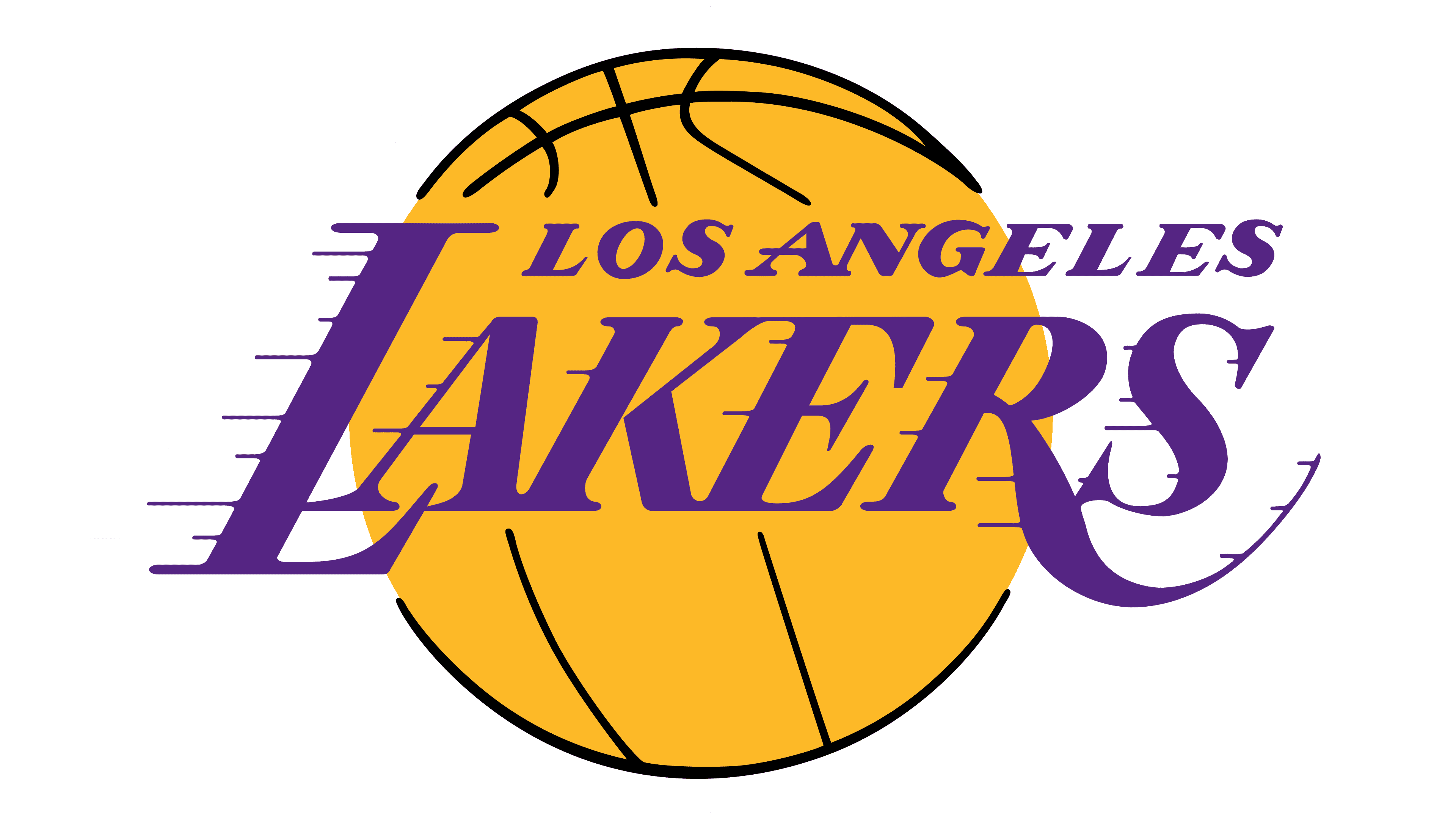
The Los Angeles Lakers began as a basketball team from Minneapolis, Minnesota, with the first emblem featuring the silhouette of their region. After moving to California in the 1960s, the team changed its look and adopted a blue-and-white wordmark as its emblem. The predecessor to the modern emblem was the first Lakers badge, introduced in 1967: a yellow basketball. The modern version differed from the darker, muted corporate colors. The emblem changed in 1976, when the colors were made brighter and more saturated. The modern version was developed in 2001. All shades were redesigned, creating a perfect yellow-purple palette that made the sign highly recognizable. The ball has acquired a rich yellow color; its lines and the word marking on the front side of the image – the full name of the team are made in a deep purple shade. The text is set at a right slant, symbolizing the speed of the game and the dynamics of movement. To enhance this effect, short dashes of different sizes appear to the left of each letter in the word Lakers.
Boston Celtics
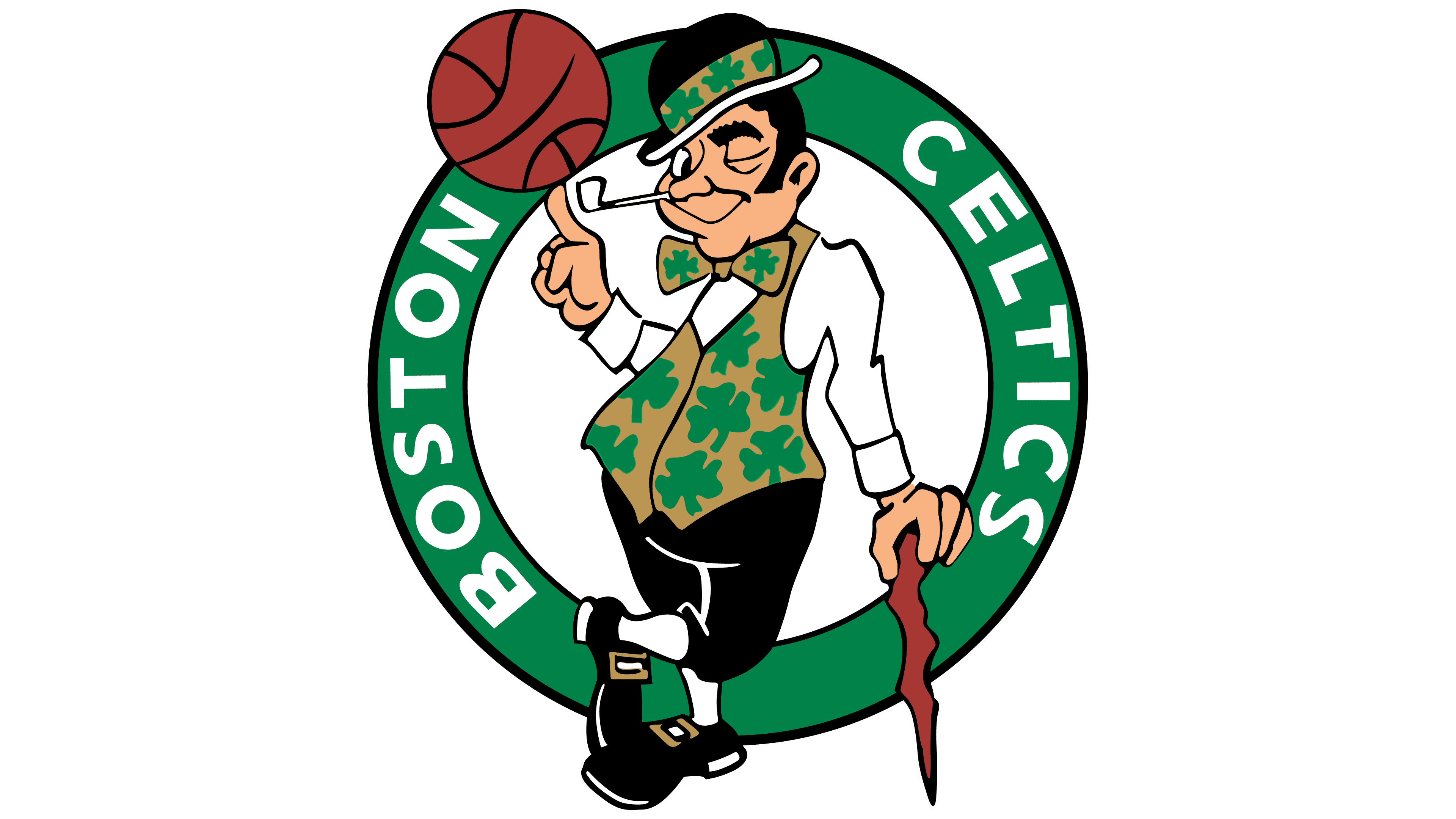
The modern logo of the American basketball team, the Boston Celtics, founded in 1946, is highly attractive, thanks to the personality of its cunning character. The laughing leprechaun first appeared in the early 1950s as a tribute to Boston’s large Irish diaspora. This inspired the team’s name, which translates to “Celts.” The green background filling the circle, in front of which a character with a pipe in his mouth spins a basketball on his index finger, was chosen to commemorate the club’s history, whose first emblem was a green circle with a shamrock. The modern version was installed in 1996 to commemorate the club’s 50th anniversary. It uses gold, black, and brown colors in addition to green and white. To commemorate its successful past, the brand uses the image of a green shamrock on a leprechaun’s hat and clothing. The ball and his walking stick are brown. The club’s full name is written in white paint on a green circle behind the character. All elements are balanced and refined, giving the logo a flawless, professional look and showcasing the club’s core values, traditions, and roots.
Miami Heat
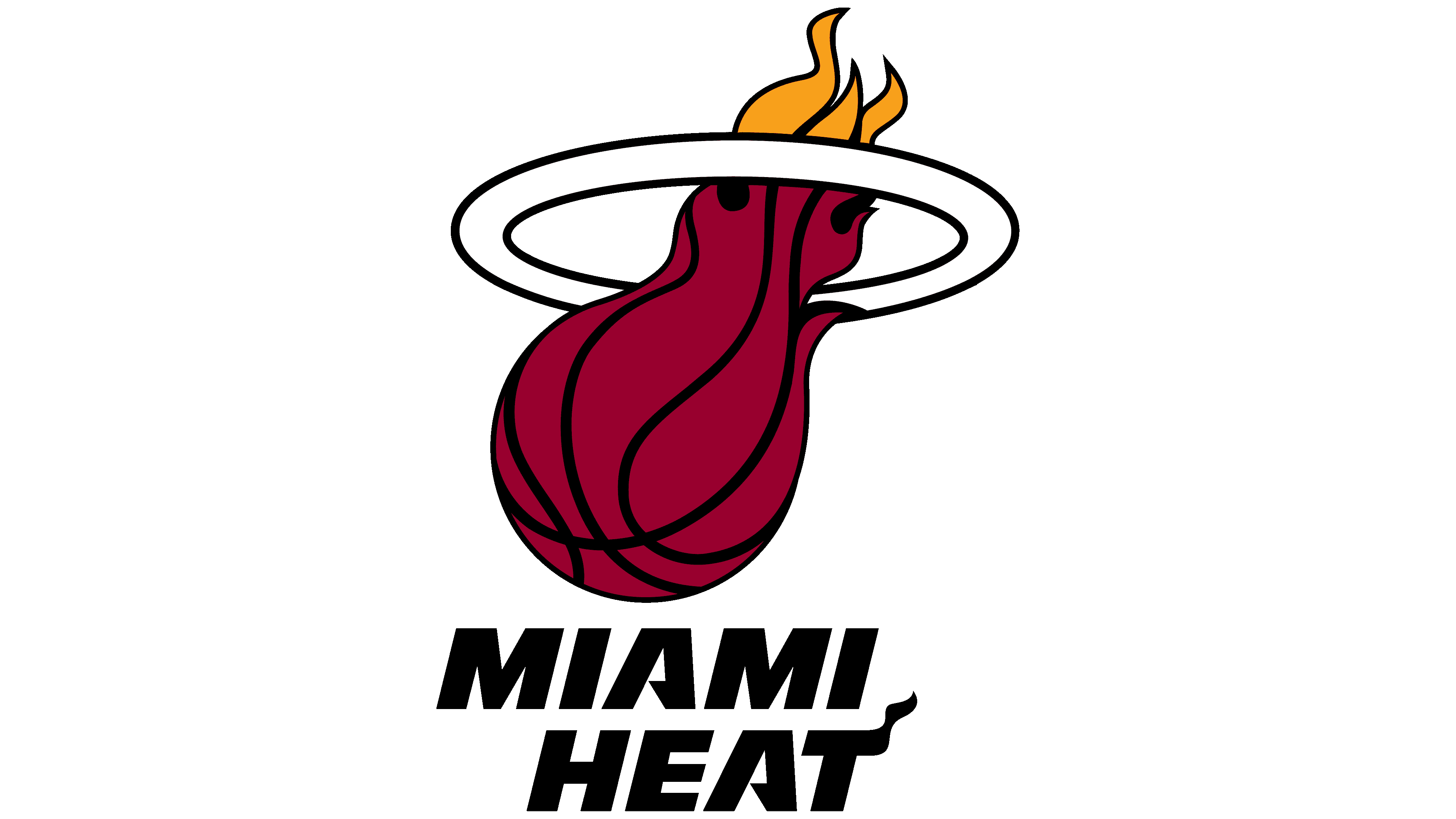
In 1988, the Miami Heat, a professional basketball club based in Miami, Florida, was founded, and today, it uses an updated version of the emblem designed in its early days. The new emblem retains its original concept, style features, and color palette. The Miami Heat wordmark has been rendered in a bold black sans-serif font with a slight rightward slant. The image shows a dark red basketball with orange flames bursting from its base, flying into a stylized basketball hoop. Modern technology gives the image perfect clarity, and the proportions of all elements create a harmonious visual impression. The emblem symbolizes speed, strength, and precision, which characterize the team’s play.
Charlotte Hornets
The NBA basketball team Charlotte Hornets, founded in 1988 in Charlotte, North Carolina, has an interesting history. It bore this name from 1998 to 2004, when it used its first emblem. In the following decades, the team changed its name to the Charlotte Bobcats, necessitating a complete identity change. But in 2014, it returned to the original version, which gained modernity, style, and some sophistication when rendered in dark turquoise and deep blue. The updated brand’s character is a formidable alien hornet with sharp white wings. On his paws, he carries a sign with a two-level inscription, “Charlotte Hornets,” in a specially designed, non-standard font. Its quirkiness makes the brand’s emblem unique and easy to remember.
Phoenix Suns

In 2013, the Phoenix Suns basketball team unveiled a new logo based on the previous one. A radically rethought color palette sets it apart. The emblem uses a strict black-and-white color scheme, with the orange ball as the accent, punching through a black background with a light-orange, star-shaped hole to make it more attractive and memorable. The call and tole form a stylized reflection of the “shining sun,” providing a strong accent that emphasizes what matters most to the brand in sports. The team’s emblem resembles a black-and-white geometric crest, setting the club apart from similar clubs that prefer bright colors and original designs.
Washington Wizards
After years of experimentation, the Washington Wizards basketball club from Washington, D.C., created an original, eye-catching, confident, modern crest. Since its formation in 1961, the team has changed its name six times; it adopted the current name in 1997, and the style has become a worthy successor to the previous rendition. While retaining the iconicity and recognizability of its predecessor, the new logo, with its new name, has acquired a surprisingly attractive graphic character, characterized by simple execution and ease of recall. The perfectly shaped round medallion, rendered in the patriotic blue-red-white colors of the American flag, evokes positive emotions for all American fans. The accent star at the center of the composition is rendered in a gradient gray, and the voluminous inscription adds to the logo’s appeal. The strongest color in the palette, white, was softened by reducing its brightness, allowing the viewer to perceive the composition more fully.
Milwaukee Bucks
The Milwaukee Bucks are an NBA team based in Milwaukee, Wisconsin, and founded in 1968. Its main character is a deer. This image became the team’s emblem when the team was formed. But in 2015, the corporate identity changed, allowing the team’s symbol to showcase its true power and the grace of graphic design. The emblem is elegant thanks to its beige and green hues, radiating calm and confidence. It is perfectly balanced thanks to the clean display of lines and shapes. The modern, crisp design of the deer’s head features a clean sans-serif geometric font across the bottom of the inner circle, making the image easy to read in a variety of sizes, both typographically and digitally. As a result, the symbol effectively conveys the strength and determination that characterize the Milwaukee Bucks.
Toronto Raptors

The Toronto Raptors are the only Canadian team in the NBA today. The team has a strong, memorable logo, with the first version designed in 2015. Today, the team is rethinking the concept, creating a minimalist, strong design built around a basketball whose seams resemble dinosaur claw marks. In the 2020 redesign, the center portion of the badge is highlighted by an accent color combination: a dark red sword at the center and black stitching that joins the claw marks and the rest of the round badge. This combination heightened the mood, making the fighting spirit’s strength both visible and tangible. The club name was printed in pure white to improve color balance and proportions, and to enhance contrast.
Atlanta Hawks
One of the original teams to use bird or animal imagery in their logo is the Atlanta Hawks, a professional basketball team founded in 1946 in Atlanta, Georgia, USA. Over the years, the club changed its identity several times before settling on its perfect logo in 2020. Its original version, created in 2015, had lower color brightness and saturation than the modern version, with less contrast. As a result, it has become one of the Association’s brightest and most stylish logos. The logo’s main element, a round medallion, features a stylized white profile of a hawk’s head on a rich red background. The profile is placed in the central white circle of the image. For clear visibility, a shadow effect is applied along the figure’s contour. Inside the red outer circle, bordered by a white line, the club name is printed in white, set in a thin, light, openwork font with minimal kerning. Enlarged serifs distinguish it and draw attention to the entire composition.
Chicago Bulls
The Chicago Bulls, the most famous American basketball team and the undisputed leader of the NBA, have one of sports’ most popular emblems. Founded in 1966 in Chicago, Illinois, the team has always been represented by its main mascot, Benny the Bull. He first appeared in 1969 in the color red, becoming one of the oldest characters in professional sports. In 1995, the team had another mascot, Benny’s cousin, named Da Bull, who wore the number 95 and had a more brutal facial expression. The current logo was designed in 1996 and has not been changed since. It conveys brightness, strength, and assertiveness, even amid brutality, and provides visual balance. The dark red head and sharp horns, set on a white base, became the team’s main graphic symbol. Above this image is the word “logo” in black, with “Chicago Bulls” below. The text is arranged on two levels, with the base centered. The font features serifs, smooth lines, and slight curves, softening the graphic’s harshness and reducing its aggressiveness.