


 UK Parliament Logo PNG
The UK Parliament’s logo represents the government body of Great Britain, so its structure includes the main state elements, direct evidence of His Imperial Majesty. However, if you look closely, you can see the hidden images associated with parliamentarians.
The history of the British Parliament dates back to 1215, when King John was forced to sign Magna Carta. The charter did not create Parliament, but it limited royal power and introduced the principle that the monarch could not govern without consultation. In 1265, Simon de Montfort called an assembly with nobles, clergy, and representatives of towns and counties. In 1295, Edward I’s “Model Parliament” made representation a regular part of political life.
By the 14th century, Parliament had divided into the House of Lords and the House of Commons. Under the Tudors, it still operated under royal control. Henry VIII used Parliament to legalize the English Reformation and the break with Rome, giving royal policy formal legislative force.
The main conflict came in the 17th century. In 1628, Charles I accepted the Petition of Right, but later ruled without Parliament from 1629 to 1640. The dispute led to the Civil War of 1642-1651, the execution of Charles I in 1649, and the republican period under Oliver Cromwell. After the Restoration in 1660, the monarchy returned, but its power had been reduced.
Parliamentary supremacy was confirmed by the Glorious Revolution of 1688-1689 and the Bill of Rights. The Acts of Union in 1707 and 1800 created a wider state Parliament. Voting rights expanded through reforms in 1832, 1867, 1884, 1918, and 1928. The Parliament Acts of 1911 and 1949 limited the powers of the House of Lords, while devolution in 1998 created elected bodies in Scotland, Wales, and Northern Ireland. The UK entered the European Community in 1973 and left the EU in 2020.
Meaning and History
What is UK Parliament?
The UK government body responsible for the development and adoption of laws has the power of impeachment. It has 659 members in the lower house and more than 600 in the upper house. It sits at the Palace of Westminster.
Until 2018

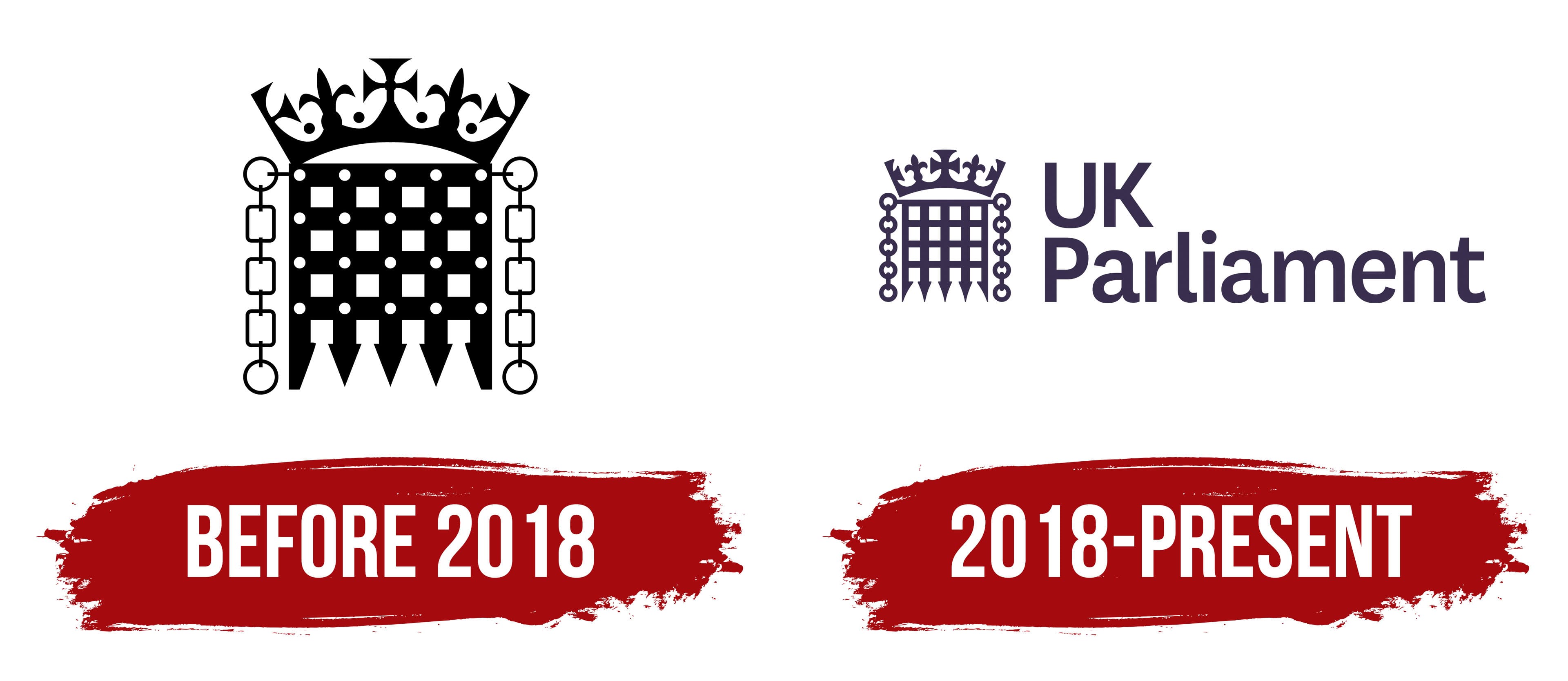
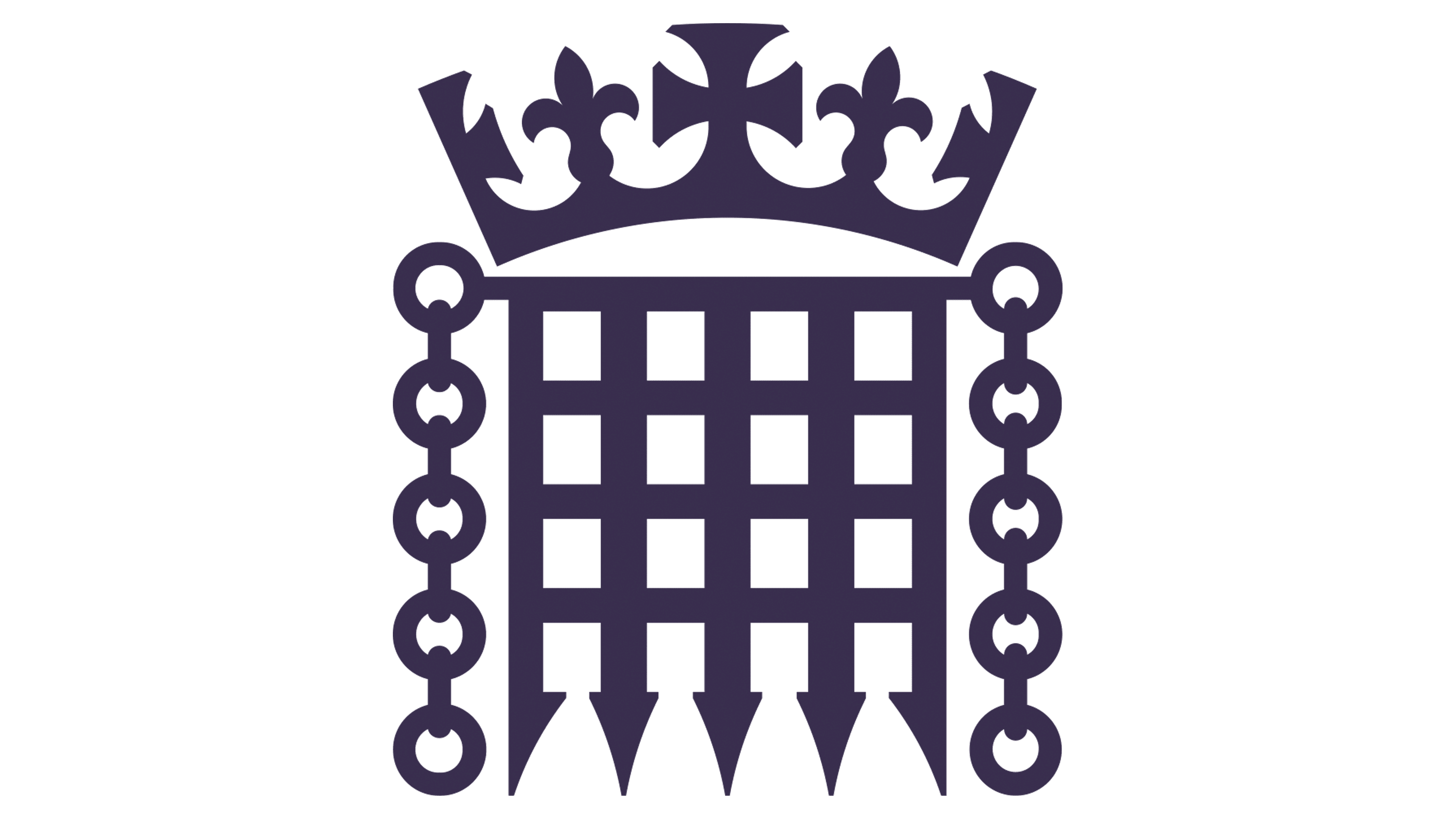
Until 2018, the Parliament’s emblem consisted only of the image of the fortress gate topped with the English crown. The exact date of the visual sign’s appearance is unknown. However, the painted regalia and symbols are quite ancient and demonstrate the deep historical roots of parliamentary government.
For example, the crown pattern in the logo dates back to before the 15th century. Crosses and fleur-de-lis alternated on its battlements. They showed the unity of kings and God: each ruler was appointed by the Higher powers, acted with their approval, and gave an account only to them.
The emblem’s symbol of kings was not chosen by chance. The annual Congress of the Parliament opens with the reigning monarch’s blessing, which requires him to wear a crown. Parliament makes laws on behalf of the ruler, so the crown is at the head.
Lower down, the gate grate. Similar ones were installed at city entrances, fortresses, and castles. The sides of the lattice show a schematic representation of the chains lowering the bridge to pass through the moat.
The image carries a multifaceted semantic load.
- Indicates the high position of members of Parliament. The composition included titled persons and knights. They owned castles and fortresses.
- This confirms the body’s leadership role. After raising the bridge and lowering the grate, laws binding on all are valid within the city, as are the documents adopted by the Parliament within the country.
- This alludes to the Palace of Westminster. Since its foundation, legislators have gathered in the Palace, which they originally shared with the king and was under his “wing.”
The logo’s silhouette resembles a crowned person’s face in a wig and symbolizes a member of Parliament, since dukes and earls could also wear a crown. And they wore wigs to meetings.
2018 – today
English conservatism hampered logo changes for a long time. The decision to rebrand was made only after the image had lost relevance and doubts had arisen about the emblem’s meaning and its belonging. However, even during the renovation, they tried to preserve the original appearance as much as possible.
The image remained practically unchanged. However, we rounded the chain links and sharpened the lower lattice spears. These changes reflected the reforms and renewals that had taken place in the House of Lords in previous years, allowing Parliament to work more quickly.
A signature indicating logo ownership was added to the right of the emblem. The UK Parliament’s name was arranged into two levels, reducing the composition’s length and making it more harmonious.
The abbreviation “UK” (United Kingdom) is on the first line. The word Parliament is below, smaller in size and with soft, rounded letters. This demonstrates the importance of England’s interests, and Parliament serves and obeys them.
The placement of the primary image on the left indicates that history is in the past and that a renewed Parliament is moving forward.
Font and Colors
The logo’s main colors are black and lilac-violet (a shade of Martinique).
- The first emblem was black. When Parliament was formed, color printing did not yet exist, and the first legislative acts were adopted. Therefore, using black for the image is quite natural. Black personifies power, dominance, strictness, and adherence to the rules.
- The updated version uses a friendlier color scheme and conveys a sense of calm, confidence, and wisdom.
The lettering font is similar to Gardenia Bold.