


 Vineyard Vines Logo PNG
The Vineyard Vines logo is a pink whale, symbolizing the brand’s core idea: creating comfortable, stylish clothing for outdoor recreation and entertainment. The logo includes the brand name “Vineyard Vines” in fine print below the whale image. The Schaeffer brothers created the Vineyard Vines brand, which emphasized the nautical theme and brought a coastal feel to their clothing. The emblem has become an important part of the company’s branding. It is often used on products, in stores, and on promotional materials, attracting consumers’ attention and emphasizing the brand’s uniqueness and style.
Vineyard Vines was founded on July 3, 1998, by brothers Shep and Ian Murray, who left office jobs in New York to start their own company. Shep, 27, worked in advertising, while Ian, four years younger, worked in public relations. Both grew up in Greenwich, Connecticut, and spent summers on Martha’s Vineyard, a place tied to sailing, fishing, and coastal American leisure.
The brothers started with about $7,000 to $8,000 from credit cards. They photographed island street signs, scanned the images, and used the scans to make silk ties. With no fashion or textile background, they produced 800 ties in four colors, priced at $65 each. Sales began without a store, from a backpack, a Jeep, and even a boat near the pier.
Local retailers were skeptical, saying tie sales were falling, yet the first batch sold out over one weekend in July 1998. The credit card debt was paid off, and the company moved from the family home into an office. The slogan “Every day should feel this good” became part of the brand’s early identity. In contrast, the smiling pink whale later became its main logo.
Vineyard Vines grew without outside equity investors and remained owned by the Murray brothers. Its assortment expanded from ties to shirts, shorts, swimwear, bags, and hats. The brand competed in the American preppy market with Polo Ralph Lauren and Tommy Hilfiger. Its first store opened in Edgartown on July 4, 2005, followed by Greenwich and other East Coast locations. By 2016, sales reached $476 million. In 2019, Vineyard Vines partnered with Target on more than 300 products. The company later built licensing programs with the NFL and MLB, entered Nordstrom and Bloomingdale’s, and, by 2024, was named Connecticut’s top retailer by the Connecticut Retail Network.
Meaning and History
After swapping business suits for bathing suits and moving from the big city to Martha’s Vineyard, the brothers Ian and Shep Murray decided never to return to the office again. And to have money for vacations and fishing, they went into debt and started sewing funny ties. The entrepreneurs named their companies after the place they loved most. They added the word “Vines” because of the uncomfortable associations: in their mind, a tie is as tight around the neck as a vine.
What is Vineyard Vines?
Vineyard Vines is a clothing manufacturer known for its whimsical, colorful ties. Their story began in 1998 when siblings Ian and Shep Murray quit their day jobs to become entrepreneurs. They began sewing ties, even though they hated them while in the office. They added polo shirts, shorts, hats, bags, and more to the range a little later.
1998 – 2005
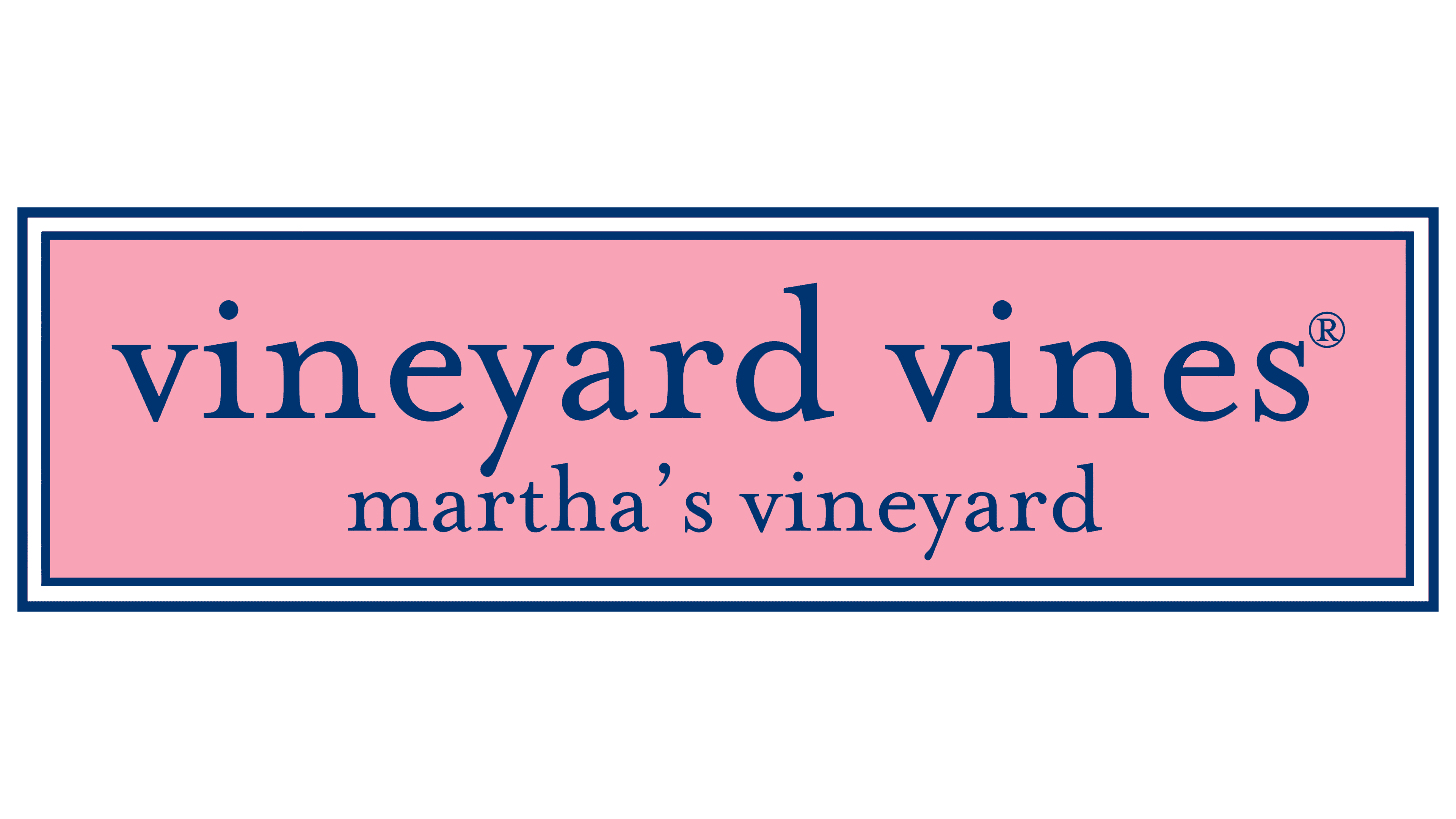
Vineyard Vines products were once available only on the small island of Martha’s Vineyard in southeastern Massachusetts. Both the brand name and the island were featured in the logo used in the promotional materials. The designers divided the lettering into two lines and placed it inside a pink rectangle with a border of white and blue stripes of varying thicknesses. All of the letters were lowercase and dark blue. The font was identical to Mrs. Eaves Lining by Emigre.
2005 – today
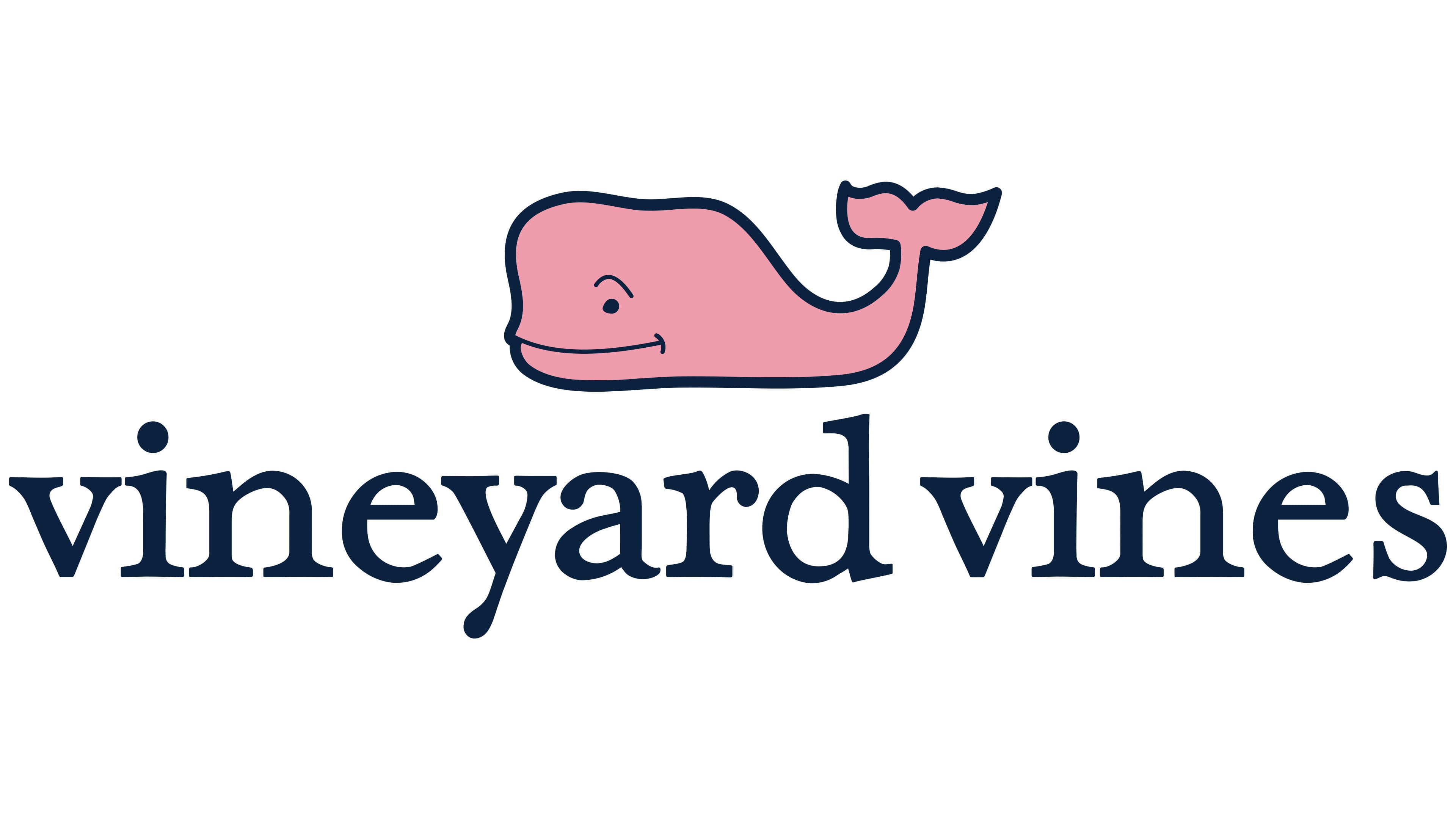
Not many people know, but the Murrays chose the Vineyard Vines logo not in 1998 but in 2005. It was needed to decorate polo shirts because they usually have a brand name on them. The funny pink whale became the brand’s symbol and was supposed to inspire the customers to have a carefree time. After all, the aspiring entrepreneurs promoted the concept of the so-called good life – without offices and utilitarian style, with relaxation, outdoor recreation, and fishing.
And the whale was also a tribute to Martha’s Vineyard, long famous for whaling. Also, one of Ian and Shep Murray’s ancestors was known for masterfully carving whales from wood. One such figure still hangs above the entrance to the brothers’ ancestral home.
The whimsical logo is reminiscent of the patterns that adorn the iconic Vineyard Vines ties. First, the whale is not a regular whale but a pink one with a dark blue outline. Second, it smiles affably, raising an eyebrow. The drawing looks childish, and the minimal detail reinforces this impression. There are no side fins, but there is a tail bent upwards and bifurcated at the end in the form of a heart or two tassels.
The brand name is written at the bottom in lowercase, navy blue. The elegant font with serifs and drop-shaped thickenings adds dynamics, contrasting with the rounded silhouette of a whale. The text is intentionally oversized and spans one line, so the icon appears small against its background.
As Ian and Shep Murray admitted, they didn’t put anything specific into the whale’s image and didn’t try to create a recognizable character from it. According to them, the whale has neither gender nor a name. It is simply a traveler who is cheerfully sailing the ocean and meets someone along the way. It often appears on Vineyard Vines merchandise in different roles: as a teacher, lifeguard, doctor, soccer player, and even a pet. The main emblem, with the pink whale symbolizing the island’s way of life, is full of carefree relaxation.
Font and Colors

The company, which produces clothing for outdoor activities, wants to convey to its customers a sense of freedom and comfort. Therefore, the Vineyard Vines logo symbolizes relaxation, cheerfulness, and strength. It reflects the brand’s philosophy, stressing its connection with adventure and the seashore.
The American men’s and women’s clothing retailer has long used the logo with “vineyard vines” in lowercase. The geometric serif typeface, chosen as the main font, is called Mrs. Eaves Roman, after the wife of the English typographer and wordsmith John Baskerville. It was created by Zuzana Licko in 1998 and published by Emigre Fonts.
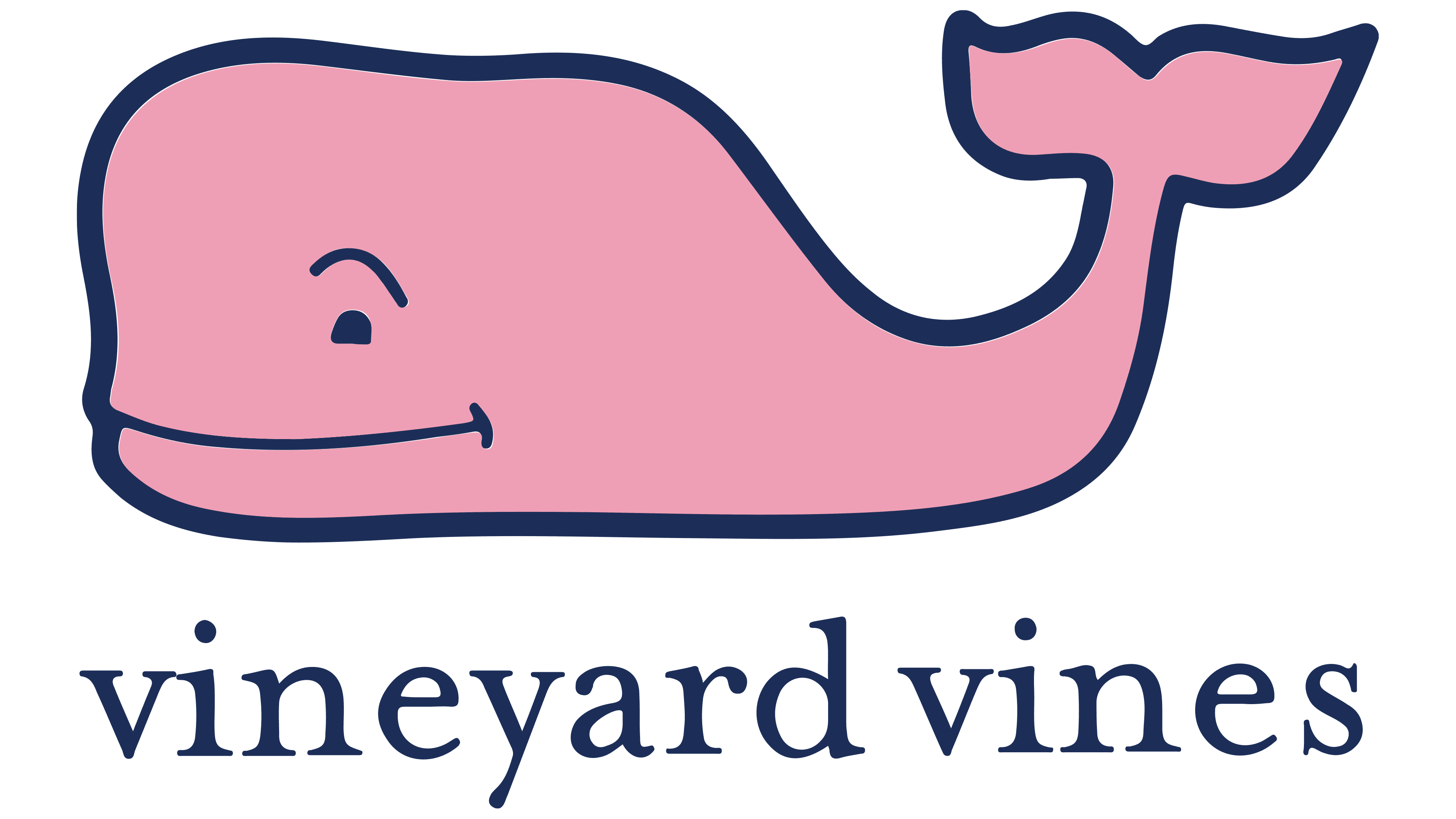
The smiling whale looks as bright as the first Vineyard Vines ties because it’s blue and pink. The Murrays’ brothers made it that way on the advice of someone outside the family business. Shep Murray didn’t know what color to use for the brand identity, so he asked a friend for his opinion. He replied that he should choose a palette associated with Vineyard Vines. Many Islanders wore blue polo shirts or blazers and faded Nantucket Red-style pants or shorts at the time. That’s why the whale is painted in Pantone #197 pink and complemented by navy blue elements.