 Atletico Madrid Logo PNG
The Atletico Madrid logo is patriotic, reflecting the club’s pride in its origins. The city’s heraldic elements and official symbols demonstrate how athletes are pleased to represent Madrid in the Champions League. Their emblem conveys confidence and endurance.
Atlético Madrid was founded in April 1903 by Basque students in Madrid as a branch of Athletic Bilbao. The club adopted blue and white as its colors and operated under Bilbao’s influence until it gained independence in 1911.
In 1939, after the Civil War, Atlético merged with a military team to become Atlético Aviación, which won La Liga in 1939–40 and 1940–41. In 1946, the club adopted its current name.
During the 1950s and 1960s, Atlético built a rivalry with Real Madrid, defeating them in the Copa del Rey finals in 1960 and 1961. In 1962, the club won the Cup Winners’ Cup against Fiorentina.
The 1970s brought three league titles and a 1974 European Cup final against Bayern Munich, lost in a replay. The same year, Atlético won the Intercontinental Cup against Independiente.
Instability followed under President Jesús Gil from 1987 onward, culminating in relegation in 1995. In 1995–96, under Radomir Antić with Diego Simeone in the squad, the team won a domestic double.
In 2011, Simeone returned as coach. Atlético won the Europa League in 2012 and defeated Chelsea in the Super Cup. In 2013, it beat Real Madrid in the Copa final.
In 2014, Atlético won La Liga ahead of FC Barcelona and reached the Champions League final, losing in the final minutes to Real Madrid. A similar defeat followed in 2016.
In 2018, the club won the Europa League again, and in 2021 secured La Liga again, with Luis Suárez leading the attack.
Meaning and History
In 1917, the Madrid club finally got its logo. The Madrid city coat of arms, with a bear reaching for a strawberry tree, became the basis for Atlético’s new emblem. It has not changed since 1939.
Besides the bear, the club’s emblem featured seven stars, symbolizing Madrid’s seven border provinces. The red-and-white stripes symbolize the club’s uniform. As is known, the Madrid club’s owners decided to save on shirts and bought the cheapest red-and-white striped material used to make mattresses. Hence, the team got the nickname “The Mattress Makers.”
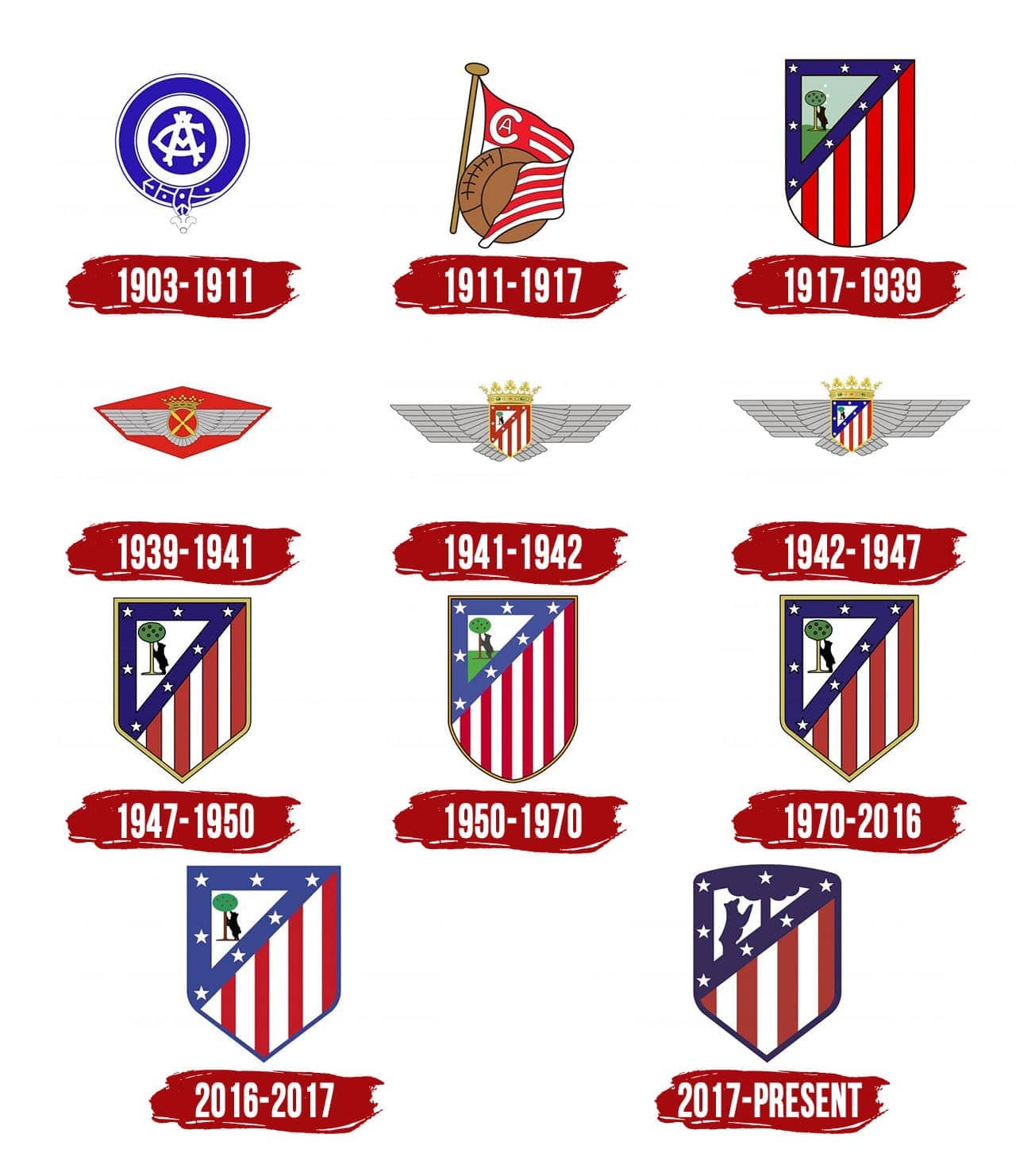
The Atletico logo has changed many times. Its composition remained the same; only its shape was redesigned.
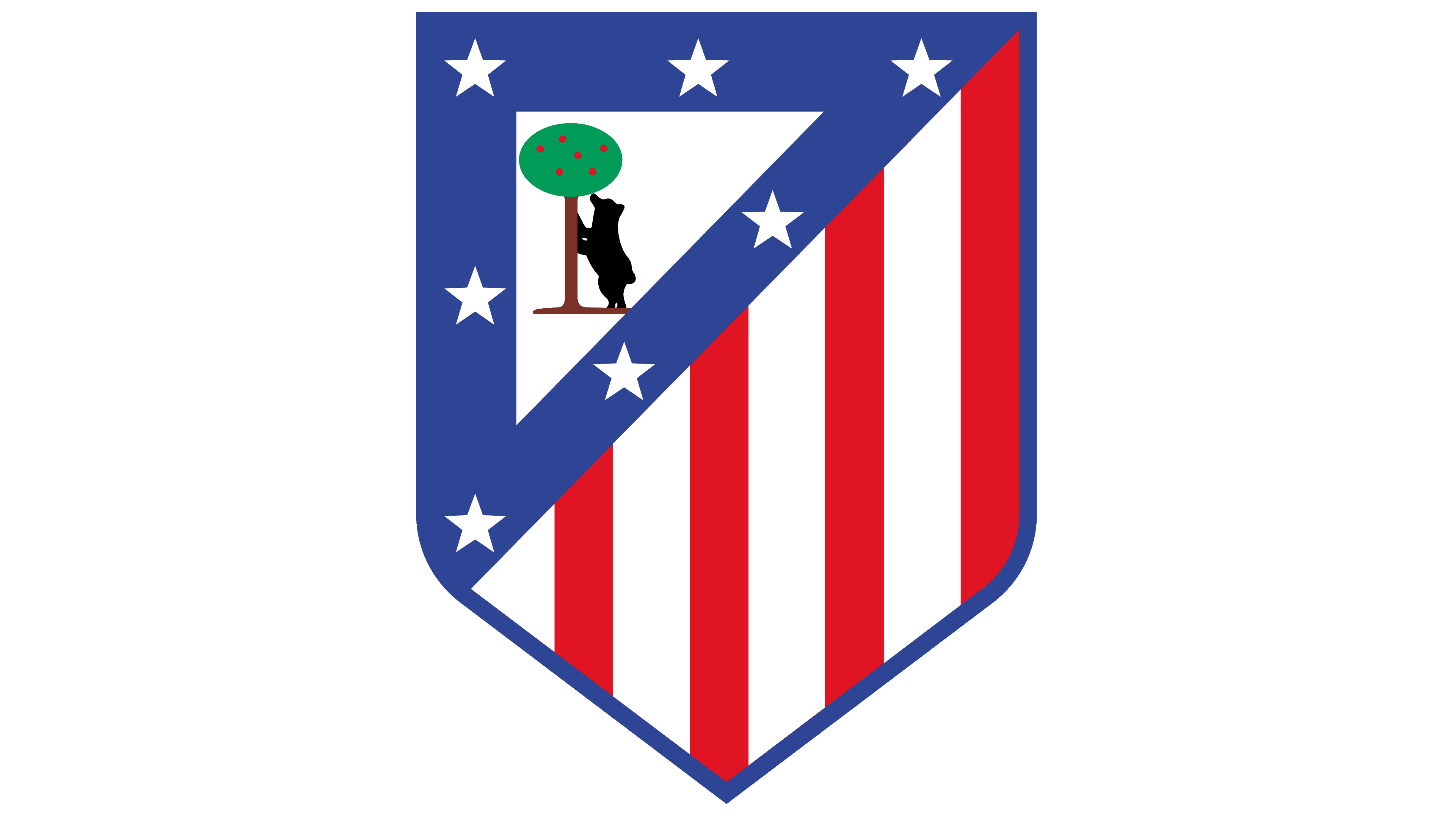
The modern “Atletico” emblem looks as follows: the strawberry tree the bear reaches for has lost its green color, and its crown extends beyond the upper contour. The emblem now has no sharp corners, so it is round. Also, designers eliminated all colors except red, white, and blue. The red stripes were made bolder, and the four white stripes were reduced to three. The most important change in the Atletico logo is that the bear used to face left, but now it faces the opposite way. Will it look towards Atletico’s future Champions League victories?
What is Atletico Madrid?
Atletico Madrid is a Spanish sports club with a professional football team. Founded in 1903 and located in the country’s capital, the club is part of La Liga. It is also among Spain’s top three football teams by number of championship titles. Their home stadium is the “Metropolitano.”
1903 – 1911
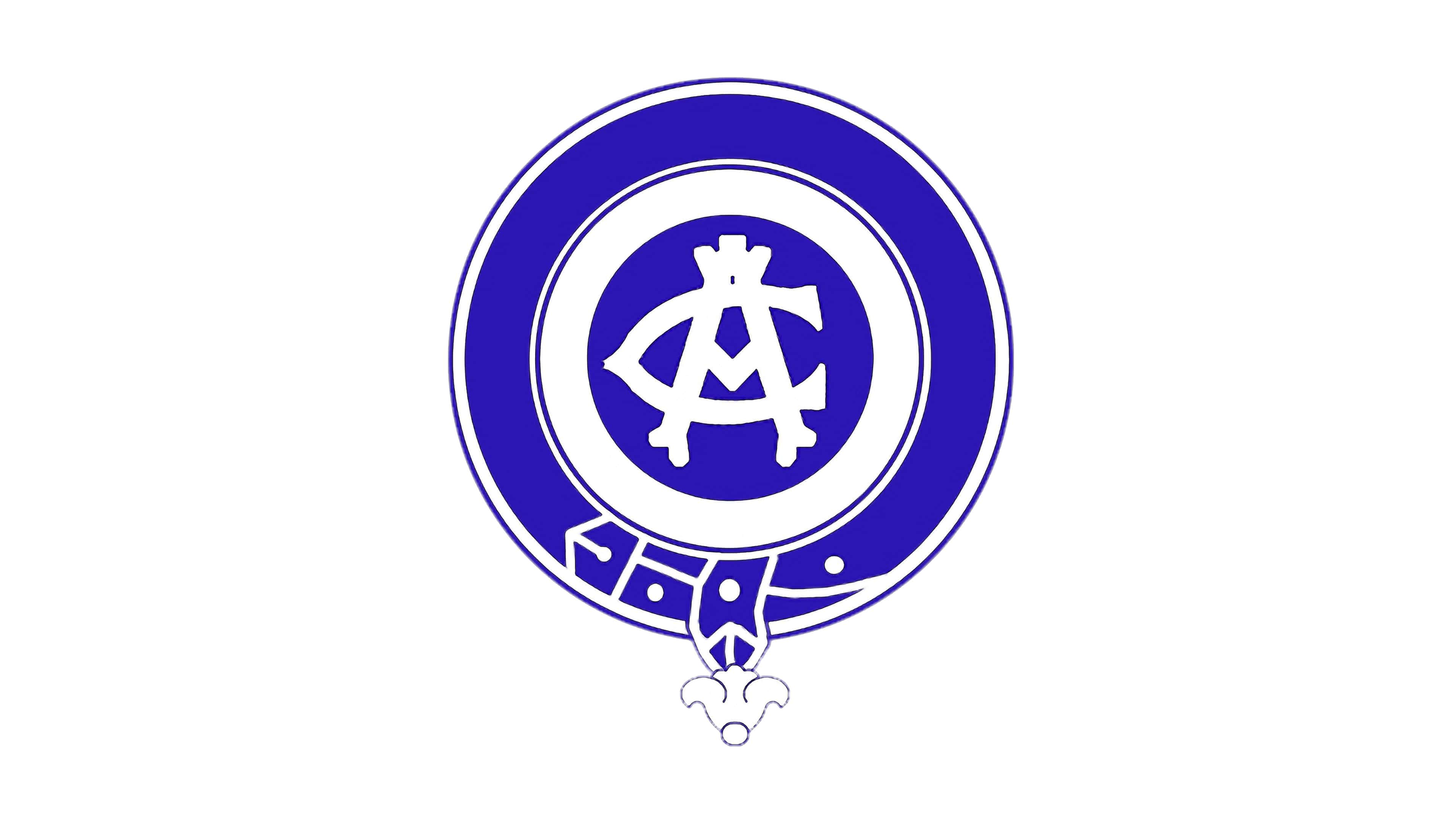
In its early years, Atlético Madrid used the emblem of the Spanish football club “Athletic Bilbao,” which it later adopted. The graphic sign looked like a blue-and-white rondel of concentric circles. In the center were intertwined letters “A” and “C,” an abbreviation for “Athletic Club.”
1911 – 1917
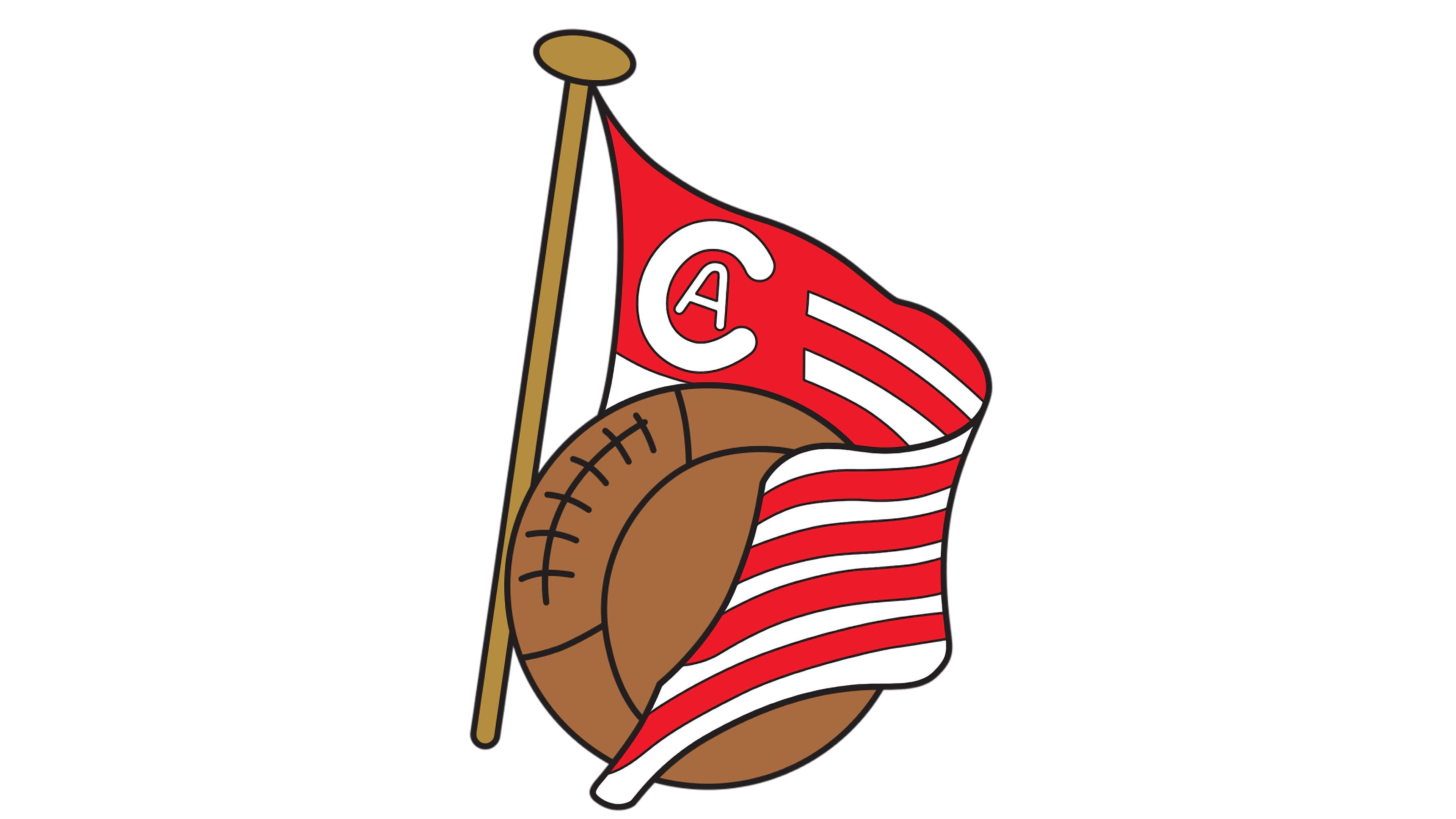
In 1911, “Athletic Bilbao” changed its logo and the color of its equipment. Madrid’s Atletico followed this example. Thus, the Madrid team adopted an emblem featuring a red-and-white striped flag, a brown ball, and a monogram of a large “C” and a small “A.” At the same time, players remained in the old uniform with blue shorts.
1917 – 1939
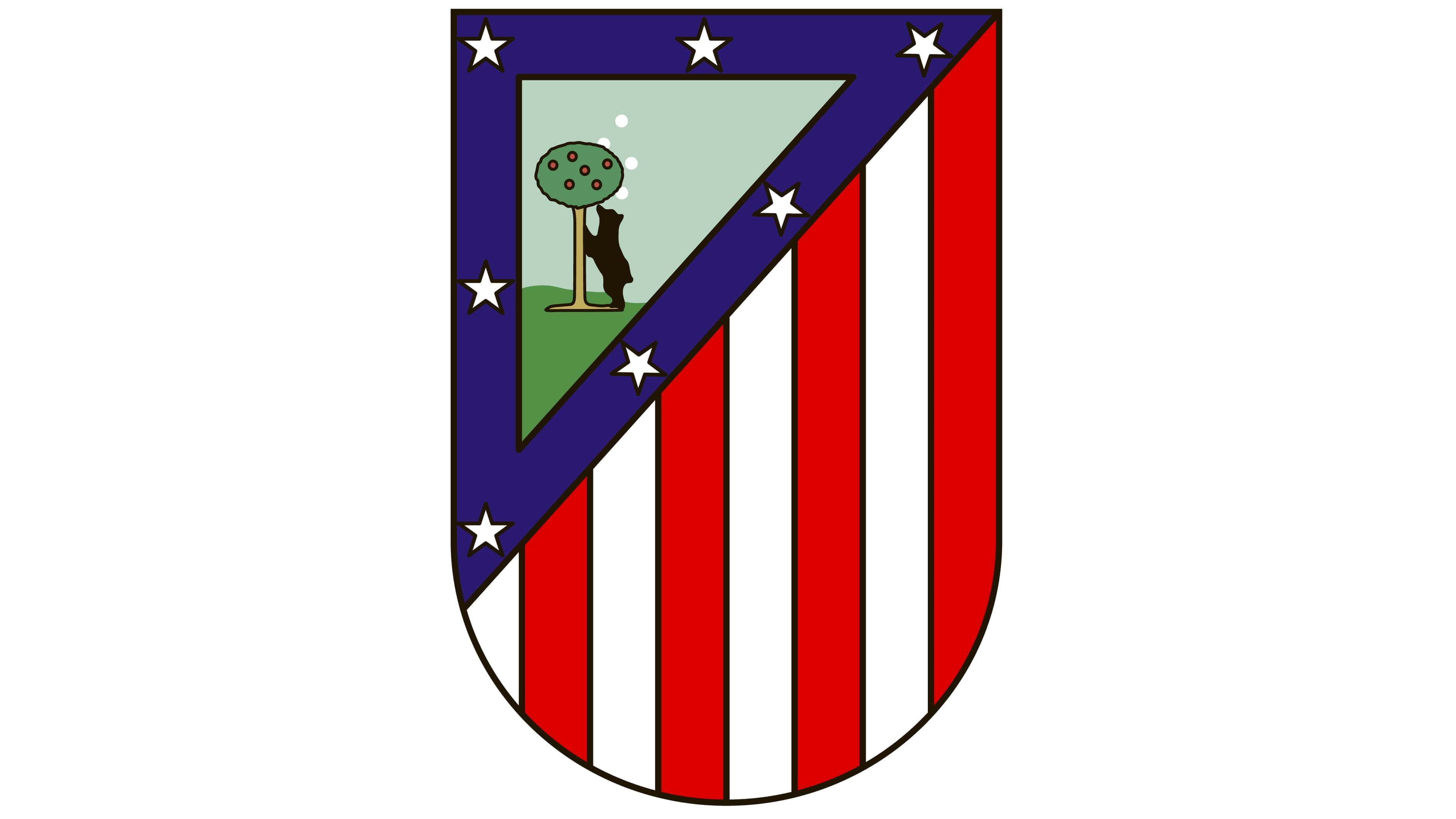
In 1917, “Atletico Madrid” stopped imitating “Athletic Bilbao” in everything and got its emblem, which first appeared in Madrid’s symbolism: Arbutus, the strawberry tree, and a bear standing on its hind legs. They have symbolized the city since the 13th century and adorn its official coat of arms. On the team’s emblem, these elements were depicted at the top as a dark blue triangle with seven white stars. Below were alternating red and white stripes. Together, they formed a quadrangular shield with a rounded base.
1939 – 1941
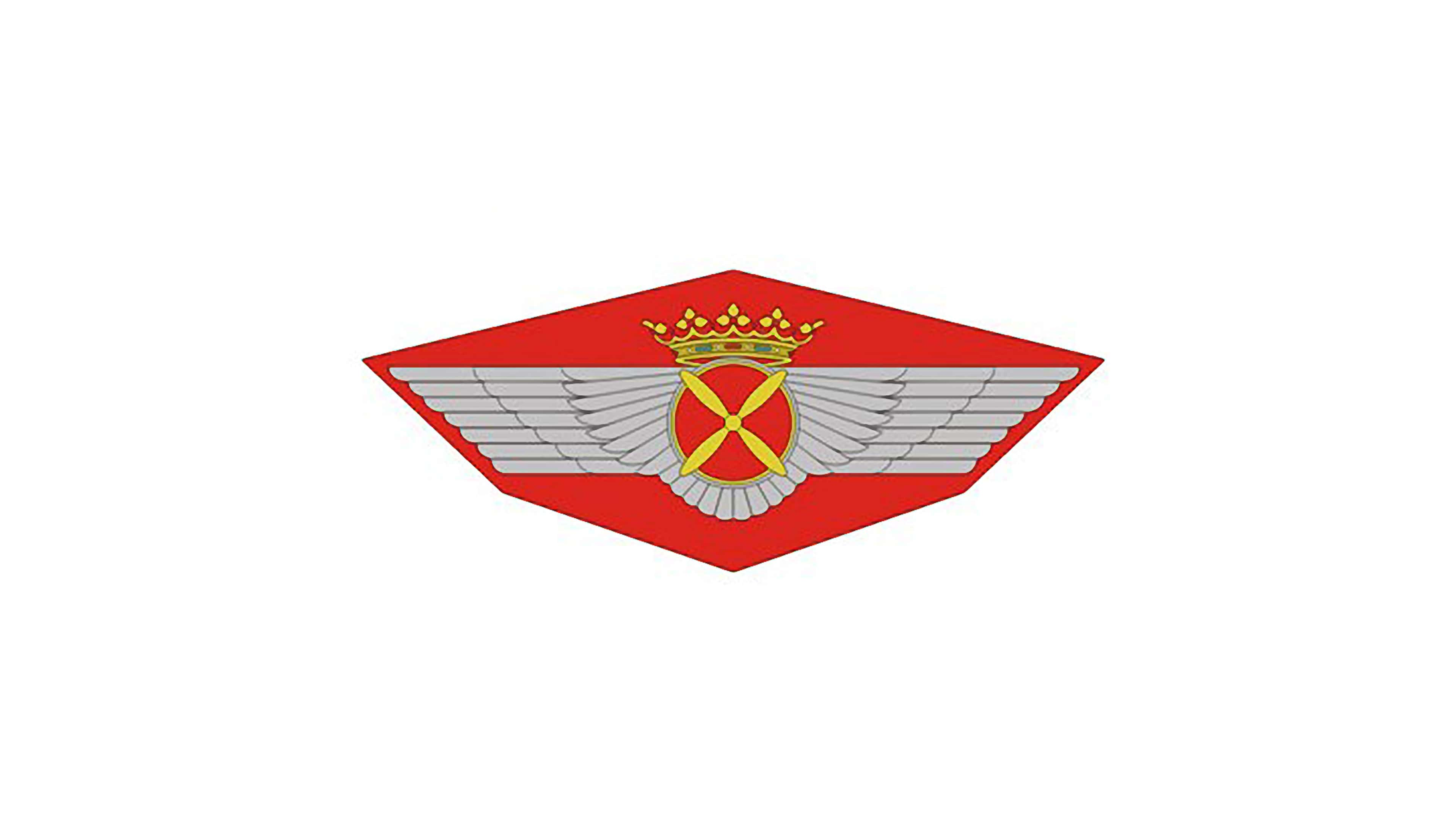
When the Civil War in Spain ended, Madrid’s Atletico merged with the newly formed Spanish Air Force football club. Thus was born “Atletico Aviacion de Madrid.” The new sports organization’s logo resembled the original Air Force symbol. Wings and propellers symbolized an airplane, and a crown represented royal power. The predominant colors became red, gray, and gold.
1941 – 1942
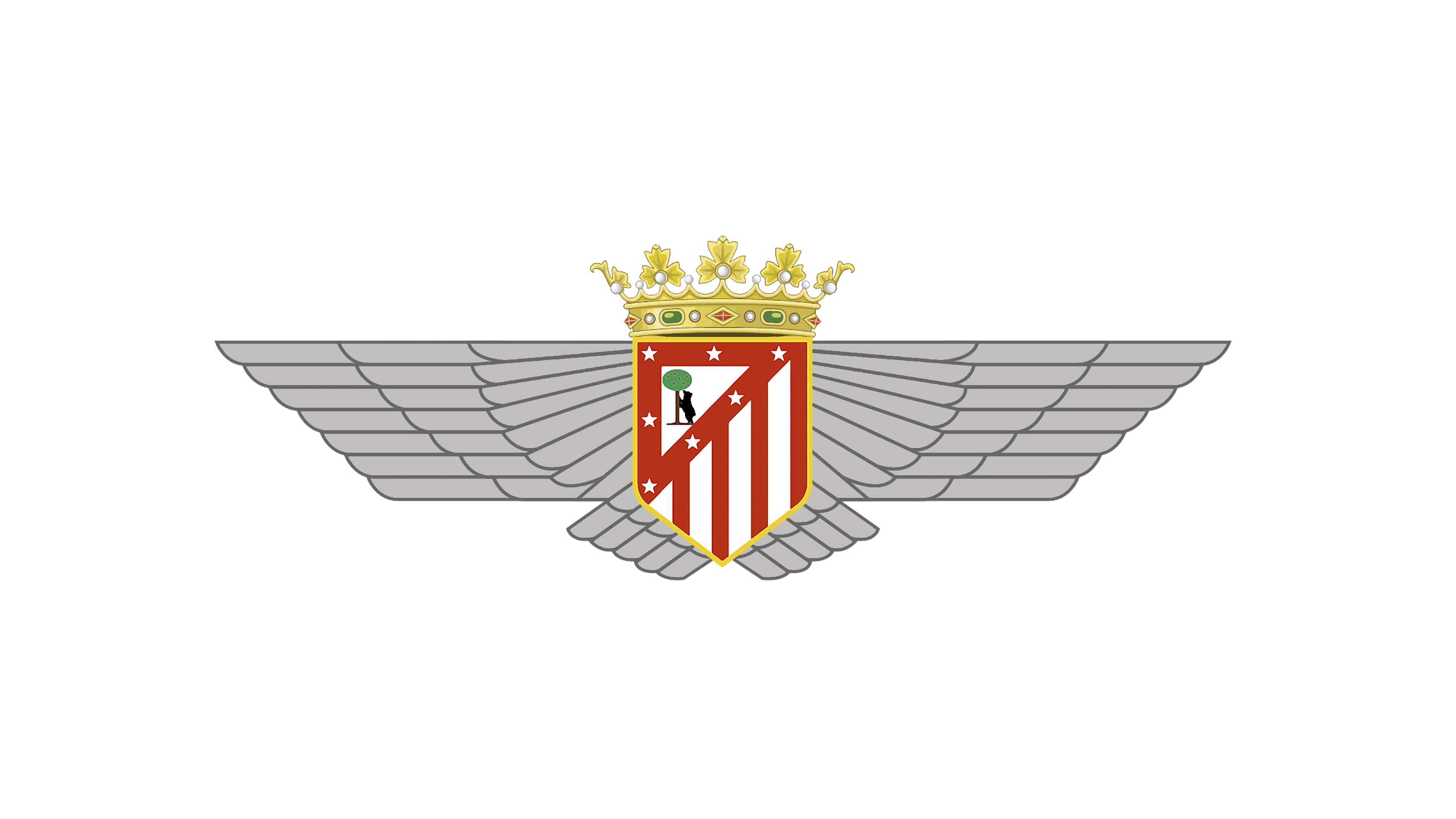
In 1941, the team made the first changes to the original Air Force graphic sign. Designers placed an element similar to the old “Atletico Madrid” emblem, featuring a bear and a strawberry tree, centered between the wings. Only the lower part of the heraldic shield became pointed, and the blue triangle turned red. The crown took on a new, more elegant form than in the previous emblem. The red hexagon, against which the “airplane” was previously depicted, disappeared.
1942 – 1947

In 1942, artists redeveloped the multi-component emblem. This time, they made the triangular frame at the top of the shield blue, as in the original.
1947 – 1950
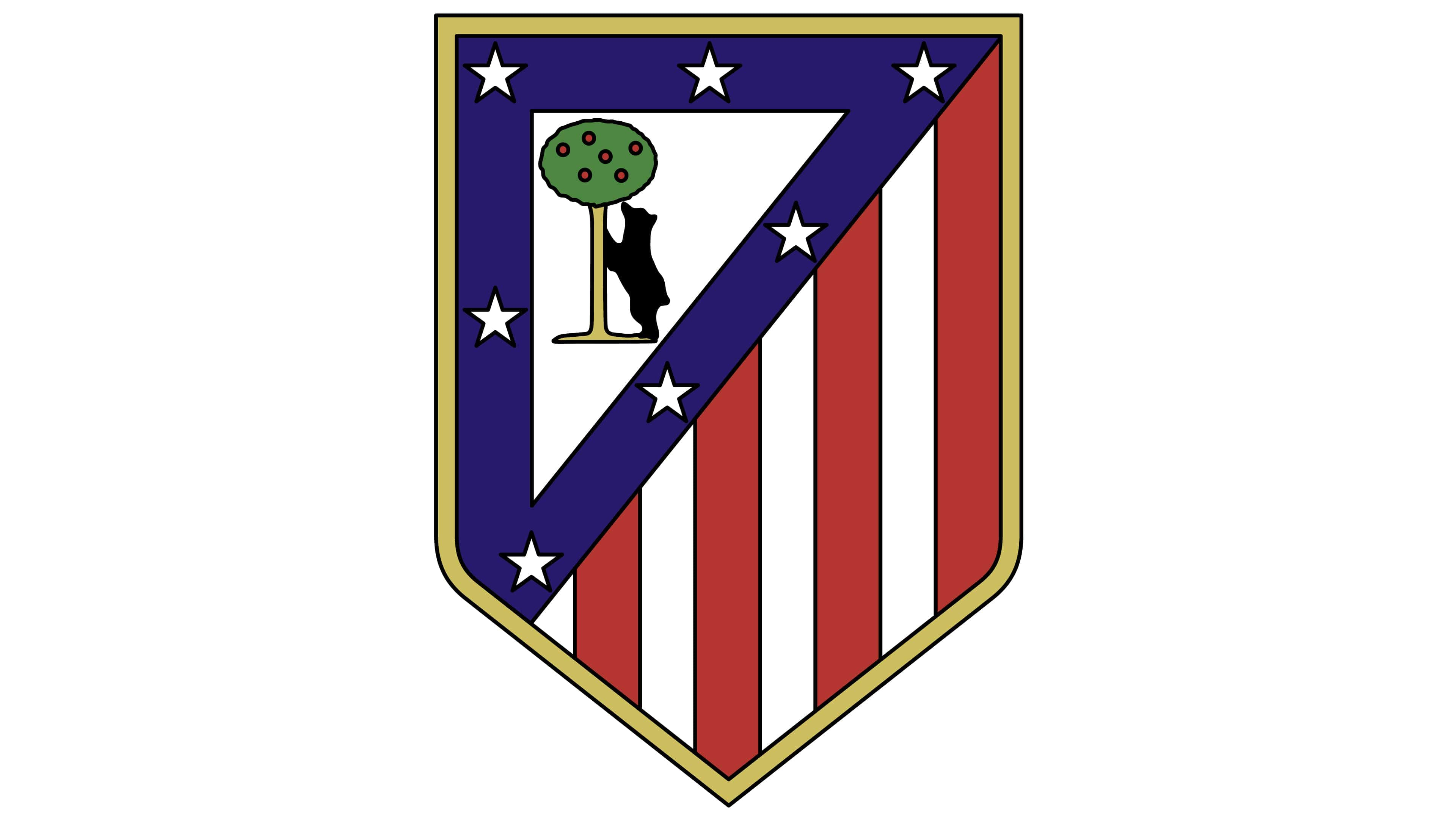
Separating from the Spanish Air Force club, the football team removed all Air Force-related symbols from the emblem. Only the modified “Atletico Madrid” graphic remained as a rectangular shield with a pointed base. Significant differences from the 1917-1939 version included an empty white background behind the bear and a wide golden border around the outer contour. The colors also became slightly darker.
1950 – 1970
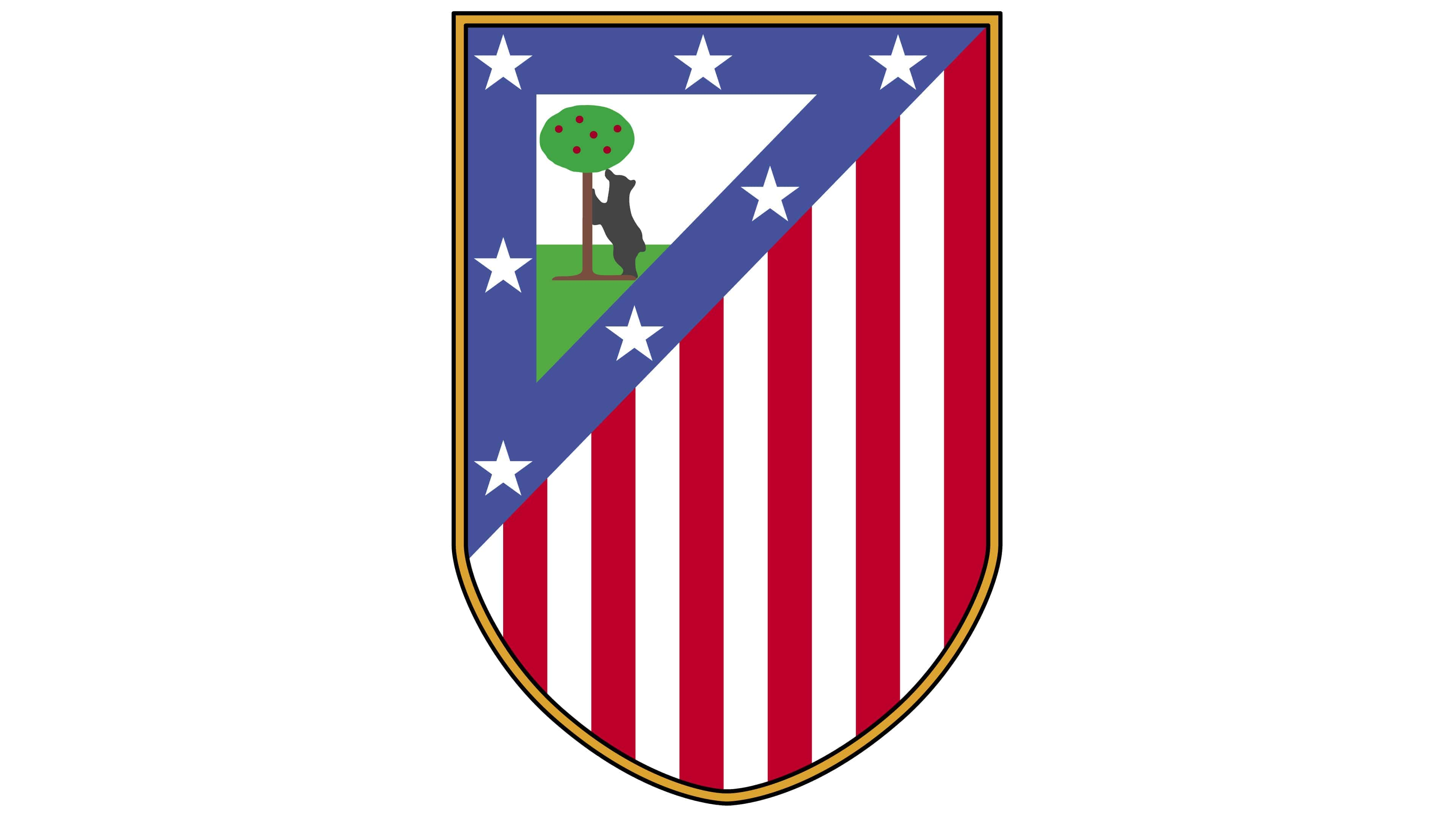
In the mid-20th century, the club revisited the emblem and brought it closer to the original created in 1917. Designers increased the vertical stripes and rounded the bottom of the shield, but kept the golden frame. Meanwhile, they changed the classic palette, opting for paler shades of red and blue.
1970 – 2016
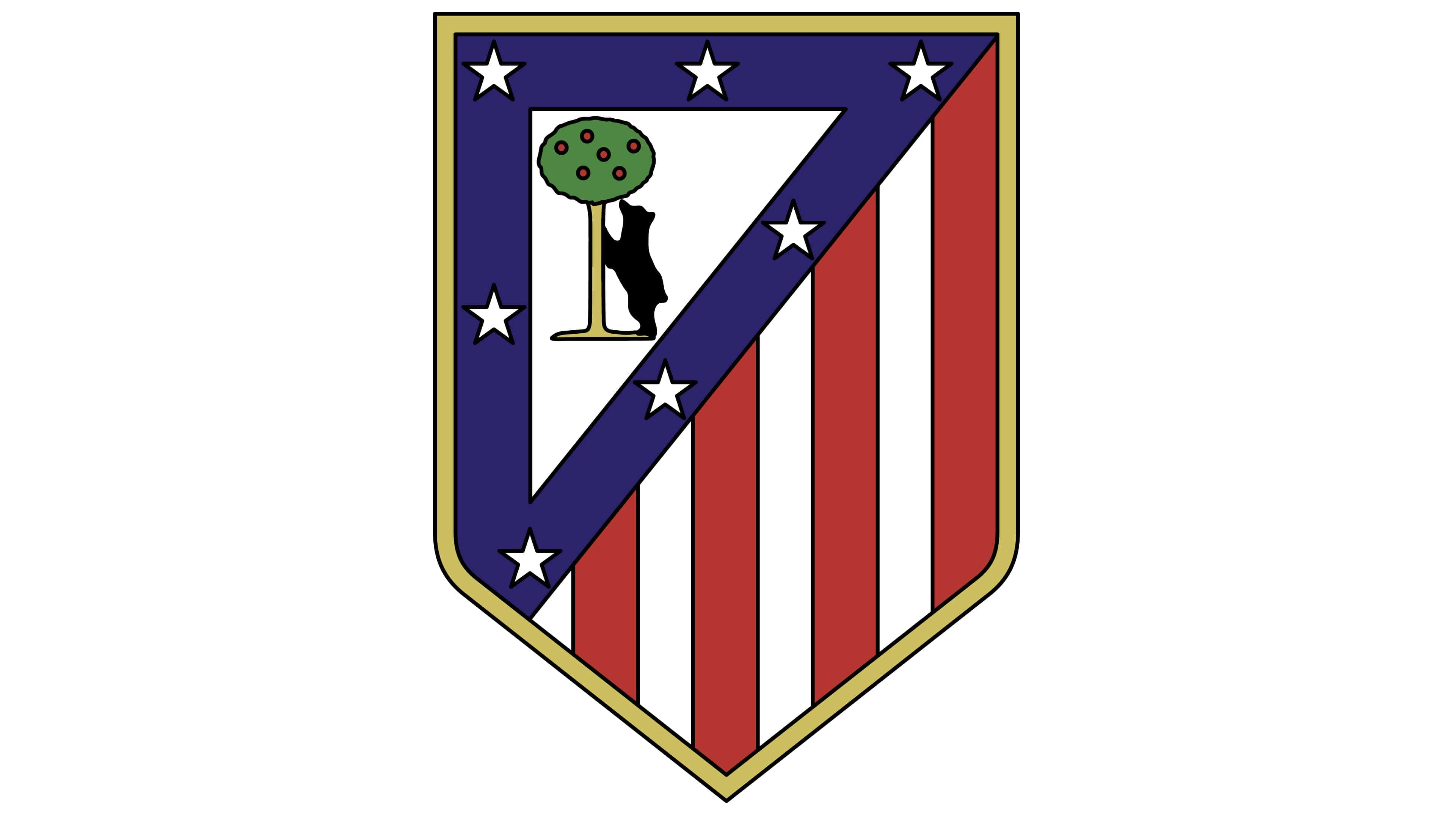
In 1970, the old Atletico Madrid logo, adopted in 1947 and used until 1950, returned.
2016 – 2017
The penultimate team emblem resembles the one before. Artists made minor color changes, turning the golden border blue and removing black outlines around the elements. The red vertical lines became slightly thinner, and the white ones, correspondingly, wider.
2017 – today
Designers developed a new logo to mark a new era in the club’s history, tied to its move to the “Wanda Metropolitano” stadium. The previous graphic signs served as the basis, so the design changed slightly. The lower part of the shield remains pointed, but the upper part is now rounded rather than rectangular. The bear and the tree have been enlarged and inverted.
Font and Colors
The design group Vasava developed the current crest. It preserved Atlético Madrid’s traditional symbols and presented them in a modern interpretation. These symbols include seven white stars taken from the constellation Ursa Major. Five of them represent provinces located near Madrid: Toledo, Cuenca, Guadalajara, Ávila, and Segovia. That’s why artists placed the stars around the bear and the strawberry tree.
There have never been any inscriptions on the logo, and the colors have remained unchanged – only the main shades have changed. These include red (#CB3524), blue (#272E61), and white. Other colors include gold, brown, and green. The original white-and-blue combination was inspired by the English professional football club Blackburn Rovers.