


 Bank of America Logo PNG
Bank of America’s logo is rife with patriotic motifs. The organization is proud of its country and does everything it can to promote its prosperity and glory. The emblem’s symbols convey reliability and confidence in the future, which the sign conveys to customers.
On October 17, 1904, Amadeo Pietro Giannini opened the Bank of Italy in San Francisco. Born in 1870 to Italian immigrants, he focused on clients that established banks ignored. Capital was raised through 3,000 low-priced shares, with limits on the number per investor. On April 18, 1906, after the San Francisco earthquake, Giannini moved assets out of the city and resumed lending within days while competitors remained closed. The episode shaped the bank’s early reputation.
In 1918, he created Bancitaly Corporation to expand through acquisitions. In 1922, he bought Banca d’America e d’Italia. By 1927, several entities were consolidated into the Bank of America of California. On November 1, 1930, it changed its name to Bank of America National Trust and Savings Association. By the mid-1940s, it had become the largest commercial bank by assets. At the time of Giannini’s death in 1949, it operated over 500 branches with more than $ 6 billion in assets.
In 1958, the bank introduced BankAmericard, a revolving credit card. Unlike Diners Club and American Express, it allowed balances to carry over. In 1976, its network became Visa. In 1998, NationsBank acquired BankAmerica for 62 billion dollars and adopted the Bank of America name. Later deals included FleetBoston in 2004 and MBNA in 2006. During the 2008 crisis, the bank acquired Countrywide Financial and Merrill Lynch. It received 45 billion dollars in TARP support and repaid it by 2009. In 2014, it settled mortgage-related claims for $ 16.65 billion.
Meaning and History
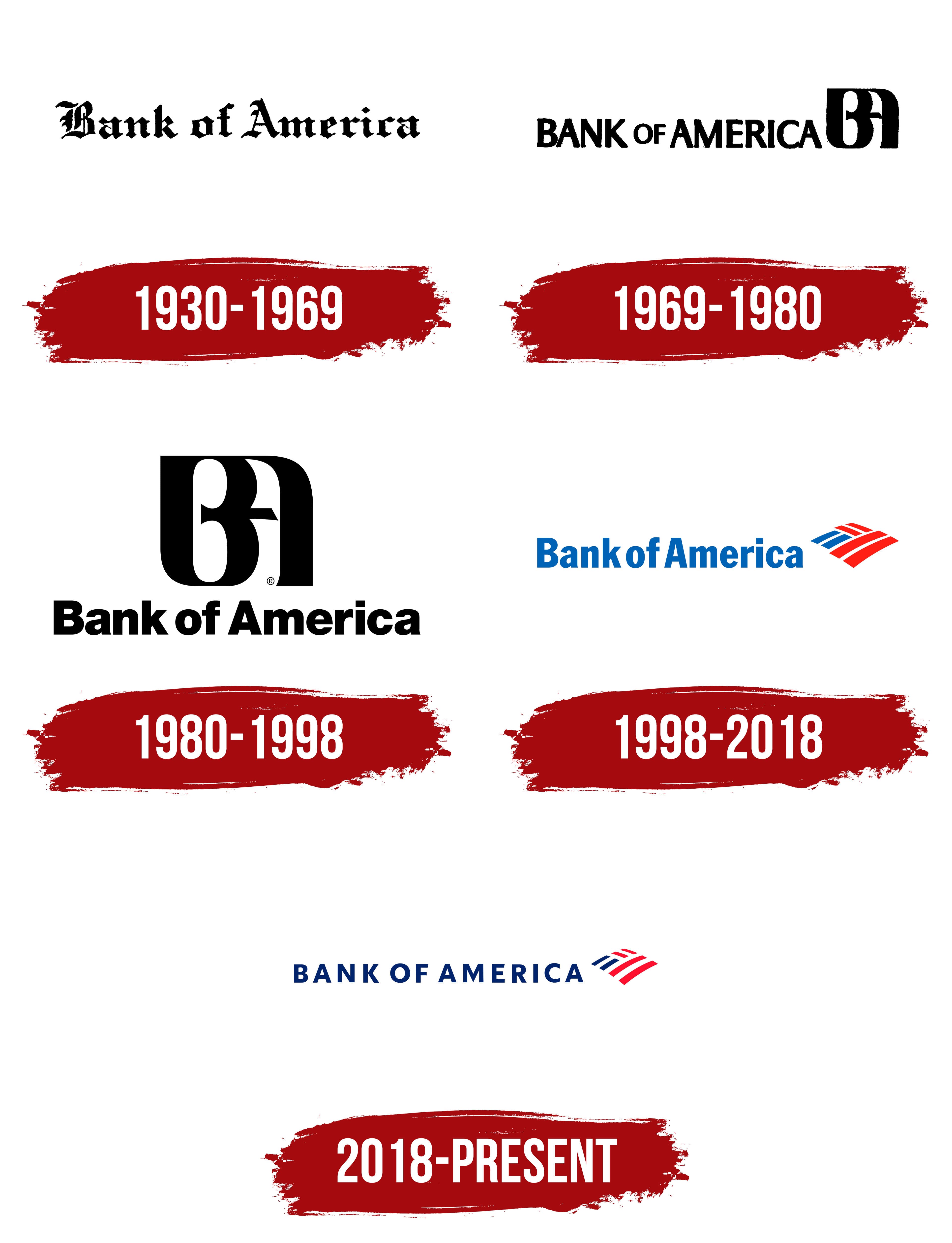
The bank’s early logos featured its corporate symbol, a monogram of the letters “B” and “A.” But we are not talking about Bank of America itself, but about its eponymous predecessor. The operating company has a different graphic sign: a stylized US flag of six stripes of different lengths.
What is Bank of America?
This is one of the largest representatives of the US banking industry. It is a holding company headquartered in Charlotte, North Carolina, and is the second-largest Big Four bank in the country. BofA originated in 1998 in San Francisco and became what it is today after acquiring NationsBank of Charlotte. The bank offers commercial banking, investment banking, and wealth management.
1930 – 1969

From 1930 to 1969, one of the largest banks in the United States used an emblem with black lettering in Gothic script. It featured the name “Bank of America,” which looked presentable thanks to medieval-Latin letters. After all, it was believed that the fraction, as opposed to Antiqua, embodies depth, seriousness, and solidity. Ancient scribes created it by tearing the pen off the paper, so the words in the handwritten text became discontinuous. To reproduce the logo, you can use a close modern analog: the Archive Black Title font family from Archive Type.
1969 – 1980

In 1969, Walter Landor designed the logo. The graphic designer insisted and convinced the board of directors. He proposed many variations until the General Counsel said it did not matter what the logo looked like as long as it had the letters “B” and “A.” Thus came the monogram, which was intended to mimic a name stamp. On the left was the inscription “BANK of AMERICA.”
1980 – 1998
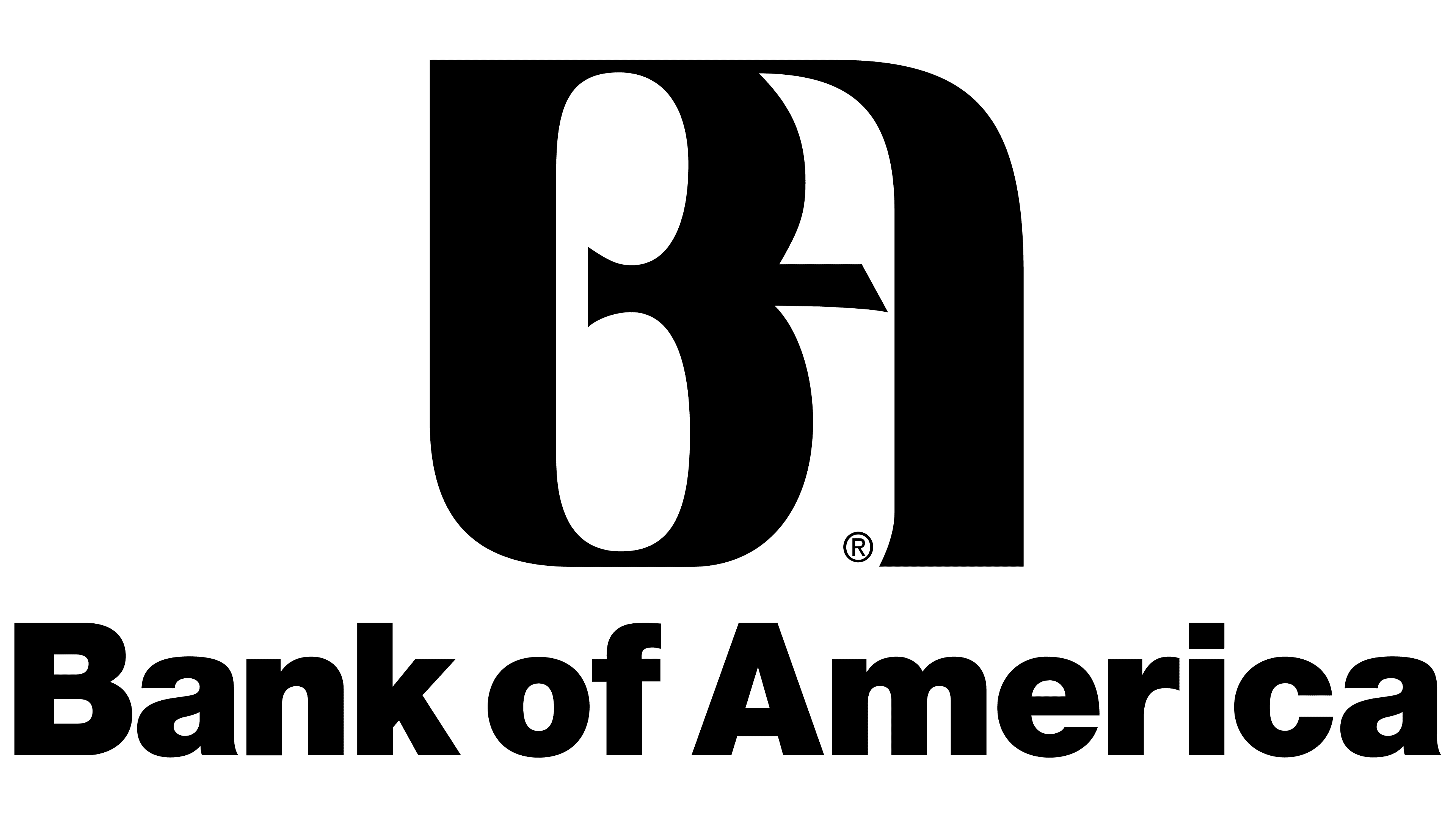
Over time, the name began appearing at the bottom of the monogram. The letters “B” and “A” were capitalized, and the rest were lowercase. The Helvetica Black font gave them a modern look.
1998 – 2018

After the merger of NationsBank and BankAmerica, the current Bank of America emerged with $525 billion in assets. Some of these funds went toward developing a new logo: a red-and-blue abstract figure reminiscent of the US flag. An attentive observer will notice the letters “B” and “A” in the six colored stripes. The financial institution’s name has been moved to the left and painted blue.
2018 – today
In 2018, Lippincott thinned the lines, changed the colors and letter case, and increased the letter spacing.
Font and Colors
Designers turned Bank of America’s sense of self into a graphic sign on every credit card and branch. The stylized flag codes “B” as two blue stripes and “A” as four red stripes.
The newest logo uses a new sans-serif font: the name is now displayed in capital letters. The colors are darker than before 2018, although the palette remains the same: blue and red elements on a white background.
FAQ
What does the Bank of America logo represent?
The modern Bank of America logo demonstrates the simplicity, ease, and accessibility of the financial institution it represents. The emblem depicts a flag in the same colors as the US national flag. It is placed sideways and shaped like a regular rhombus. In front of it is the bank’s name, typed in uppercase in a chipped font.
Why did Bank of America change its logo?
Bank of America changed its logo for three reasons:
- It wanted to stay on trend and align with current corporate identity design.
- The bank aimed to obtain a logo that reflects its status as a confident representative within the international ranking system.
- BofA wanted to emphasize patriotism and evoke emotional attachment from customers.
Does Bank of America have a new logo?
Yes, Bank of America has a new logo. It was adopted in 2018 and is an improved version of the previous logo. The three blocks of stripes on the makeshift flag are spaced slightly wider than before. The red and blue colors match the American flag palette as closely as possible. The lettering is simple, with generous spacing to convey the bank’s modernity and accessibility.