


 Mastercard Logo PNG
The emblem immediately makes it clear that the system’s main task is to facilitate the unification of parties. The MasterCard logo illustrates the merger of two financial structures for sending and receiving payments. The sign demonstrates globalization and comprehensive process coverage.
Mastercard grew out of competition with Bank of America’s BankAmericard. By 1961, after the 1958 Fresno experiment reached profitability, rival banks moved to create their own system. In 1966, Karl Hinke of Marine Midland brought regional banks in Buffalo together to form the Interbank Card Association, with about 150 members.
Early cards had no unified design, marked only by a small “i” symbol. In 1969, ICA introduced Master Charge, which added the overlapping-circles logo. First National City Bank, later Citibank, joined the network with its Everything Card, expanding it.
During this period, customers authorized transactions by phone. Through the 1970s, the system expanded internationally. In 1979, the name changed to MasterCard, and from 1980, cards used the red-and-orange circles.
In 1983, MasterCard introduced holographic security. In 1985, it acquired the Cirrus ATM network, enabling global cash access. In 1992, Maestro launched as a debit system linked directly to bank accounts.
Visa, formed from BankAmericard in 1976, became the main competitor. In 1996, merchants filed an antitrust case against both networks, which culminated in a $5.6 billion settlement in 2024.
In 2002, MasterCard shifted from a bank-owned association to a private company. In May 2006, it went public and raised $2.4 billion. In 2013, the brand adopted the Mastercard spelling, and in 2016, it removed the wordmark, leaving the circles as the main identifier.
Meaning and History
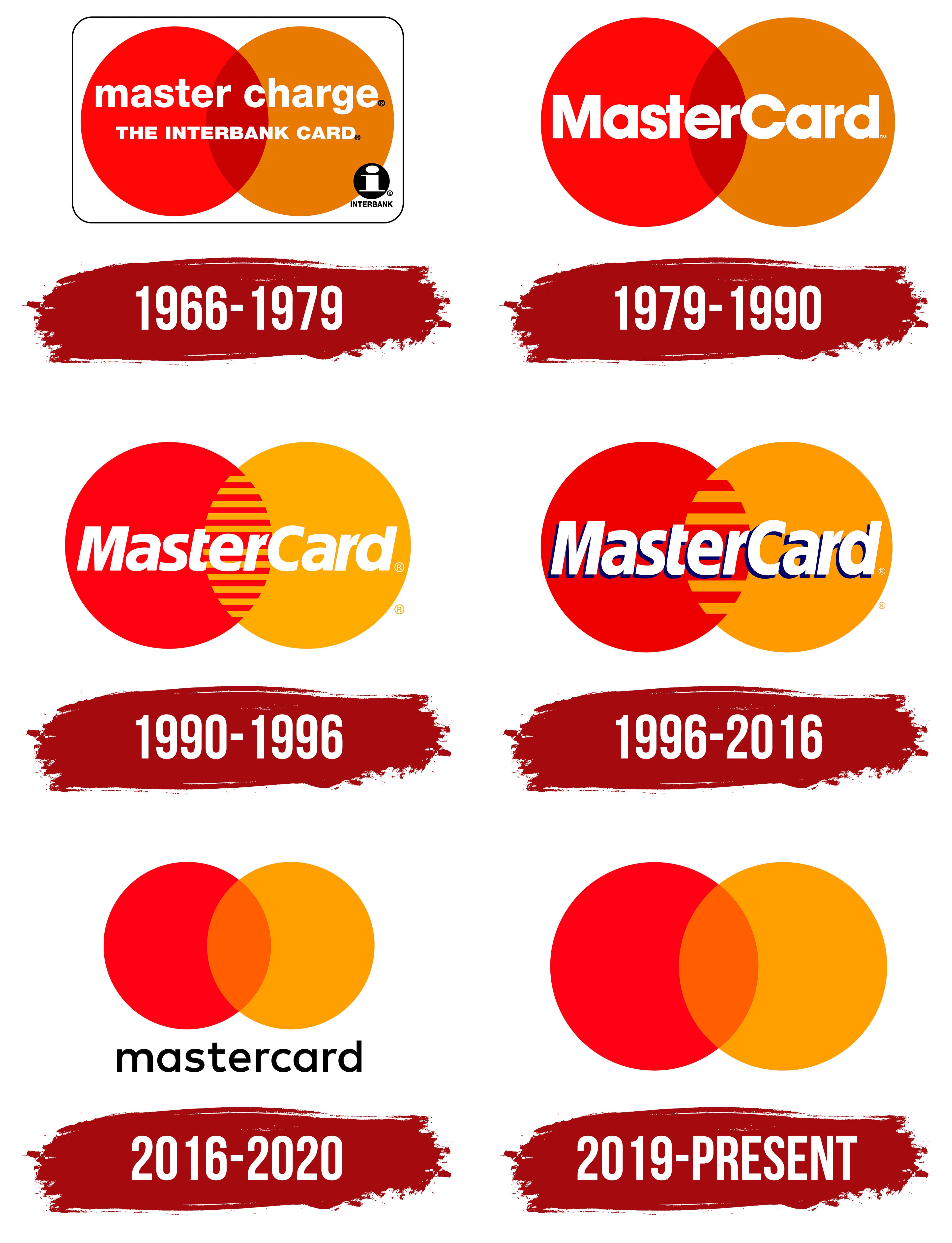
The corporation’s original logo appeared at the start of its career and has never changed radically, and it still looks the same today. Changes were limited to minor adjustments as needed over time, such as for adaptive visualization on electronic media or when updating a bank card design.
What is Mastercard?
This is the name of the company, formerly known as Master Charge: The Interbank Card. It provides payment processing services and recently supported cryptocurrency transactions. The financial corporation’s office is located in Harrison Township, New York. It was founded in 1966, when a group of California banks formed an association to offer an alternative to BankAmericard.
1966 – 1979
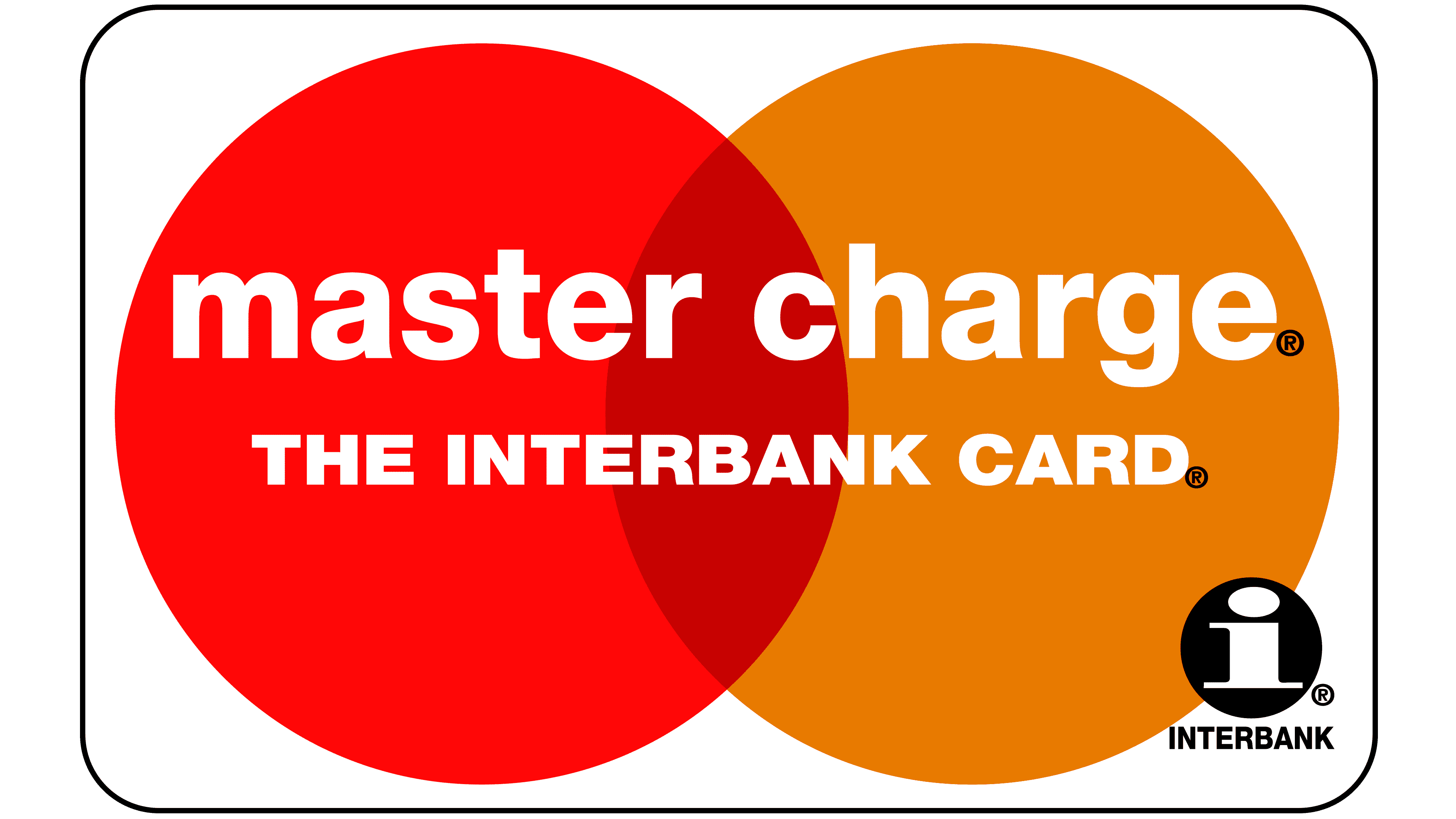
The emblem’s history is closely linked to the bank’s evolution. It reflects the signature concepts it embodies. To show the areas of intersection of two sides of the same process, the administration used a Venn diagram.
Thus, the first sign appeared, stylized to visually confirm the idea that cooperation is necessary because it is mutually beneficial. Two identical circles, one red and one orange, formed the basis. They overlap by one quarter, showing the possibility of intersecting interests.
Above the intersecting circles, the corporation’s name was written in lowercase letters. Below, in capital letters, was written “Interbank Card.” In the lower right corner was a lowercase letter “i” – the symbol of Interbank in a black circle.
1979 – 1990
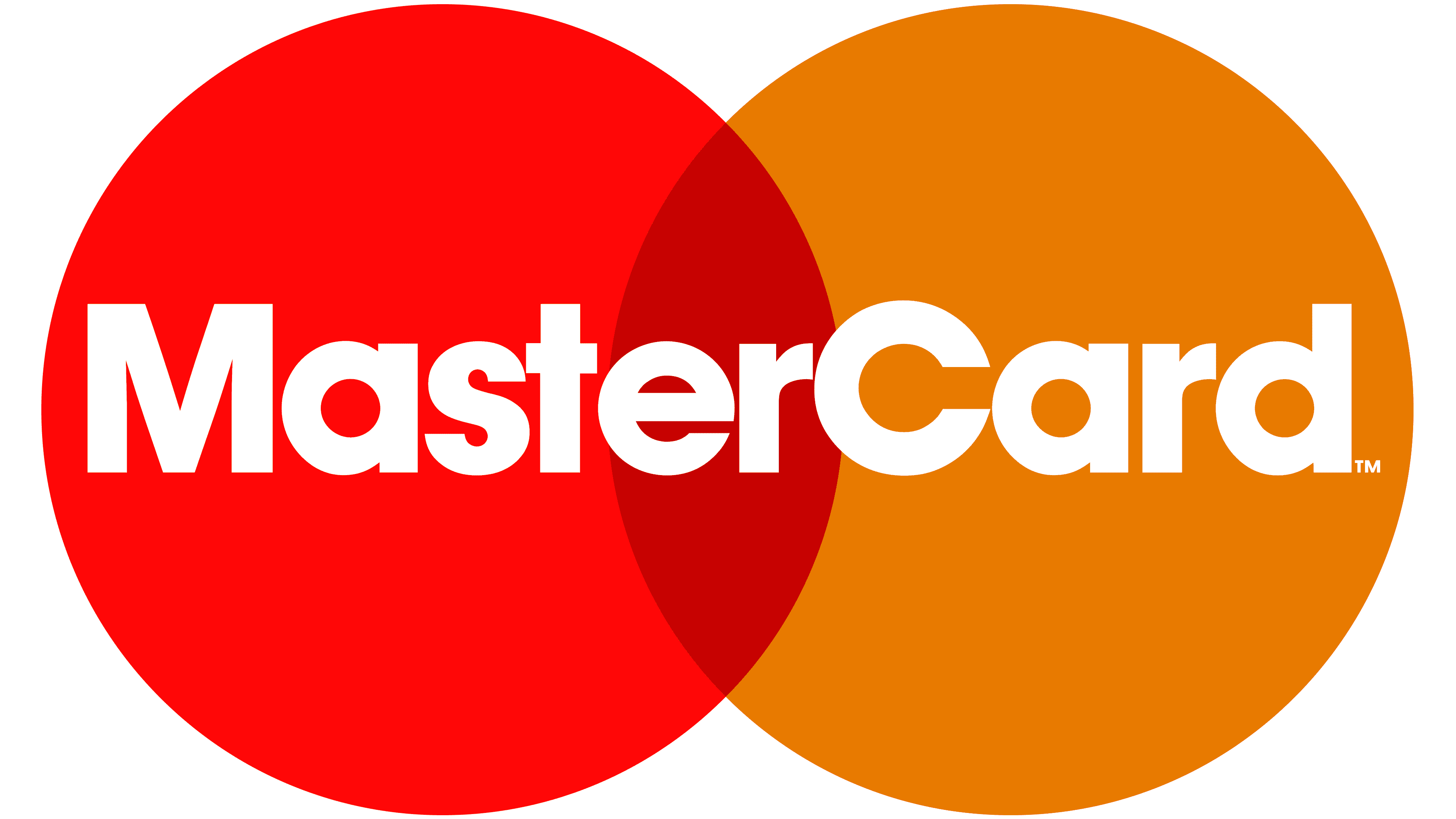
In December 1979, the company was renamed MasterCard. As a result, the financial institution’s new name appeared on the logo. They did not abandon the previous image, as it perfectly reflected the progressiveness, energy, and dynamism of banking operations.
1990 – 1996
In April 1990, the emblem was slightly modified. Yellow replaced orange, and the border of the intersecting circles was hatched with horizontal stripes. This design moved away from the Venn diagram and further emphasized the close relationships between the parties. The name in the center was written in italics, slightly tilted.
1996 – 2016
The designers emphasized the yellow circle, enhancing its color. They also reduced the number of intersecting stripes in the center. As a result, the logo became more minimalist and stricter. Another revision concerned the word “MasterCard”: it gained thin black shadows on the right side and became more voluminous.
In the middle of the previous period, a corporate version of the emblem also appeared, which was used in parallel for ten years. It had the same logo and a third circle, slightly larger than the first two. Thanks to its transparency, it did not cover what was under it, creating a 3D effect. Below the graphic sign was the phrase “MasterCard Worldwide,” set at two levels: in the upper row, in bold black font, and in the lower row, in thin font.
2016 – 2020
In July 2016, the financial corporation changed the spelling of its name: now, instead of a capital “C”, a lowercase “c” is used; “Mastercard” is considered the current spelling. Cardinal also changed the logo for the first time in 20 years. The text in the circles disappeared, and the logo returned to its original Venn-diagram appearance from before 1990.
The company name is positioned outside the graphic symbol at the bottom. It is written in lowercase letters. The yellow color was intensified, approaching orange. It is at the intersection of the two elements. This version is relevant for all sub-brands of the corporation. Only the inscription “Mastercard” will disappear from the logo in July 2020.
2019 – today
At the beginning of 2019, the logo of physical cards, electronic wallets, labels, stickers, and marketing materials also changed. On January 7, they removed the word “Mastercard” from it. In all other respects, it matches the 2016 version.
Font and Colors
The current version has existed since 1966, when the financial association was formed, and has never changed. Changes have been minor, so throughout this time, the emblem has featured two partially overlapping colored circles.
The emblem uses the FF Mark font family. These are minimalist, clean sans-serif fonts: Std Premium and Helios Antique Semi Bold. The emblem’s color, like its shape, is also standard: a combination of red and yellow (formerly orange). The letters have always been white.
FAQ
What does the Mastercard logo represent?
According to one version, the two circles in the Mastercard logo symbolize the interconnection of trade interests of Eastern and Western countries. In this context, the golden element symbolizes the rising sun of the West, opening wide opportunities, and the red circle symbolizes the Japanese flag. The emblem shows how the payment system connects the two parts of the world. The emblem’s shape resembles a Venn diagram.
What font is used in the Mastercard logo?
Since 1979, the Mastercard logo has used the ITC Avant Garde Gothic font. In 1990, it was replaced with an italic font with modified glyphs. In 2016, a new wordmark appeared, set in the geometric sans-serif FF Mark font. The letters repeated the shape of the two circles of the graphic symbol. Finally, in 2019, the brand name was removed.
What does the Mastercard logo mean?
The Mastercard logo signifies a duality that finds common ground. The two circles can represent the East and West, the client and the credit card, and the common area between them symbolizes interaction. The image is based on the Venn diagram.