


 Black Lives Matter Logo PNG
Exercising constitutional rights and complying with the law require using the Black Lives Matter logo. Governments must protect blacks without prejudice. The emblem’s main message is the struggle for truth. The government must listen to the protesters.
Black Lives Matter began on July 13, 2013, after George Zimmerman was acquitted in the shooting of Trayvon Martin. Alicia Garza wrote a Facebook post, and Patrisse Cullors turned its core phrase into the hashtag #BlackLivesMatter. The next day, they contacted Opal Tometi, who helped move the hashtag to Twitter and Tumblr and created the movement’s first accounts.
At first, the phrase had little reach. In the second half of 2013, it appeared on Twitter about 5,100 times. In August 2014, the killing of Michael Brown by police in Ferguson changed the scale. Cullors and Darnell Moore organized the Black Lives Matter Ride, bringing more than 600 people to support protests in Ferguson and St. Louis. The death of Eric Garner in New York that same year gave the movement wider national visibility.
In 2015, BLM activists interrupted Martin O’Malley and Bernie Sanders at Netroots Nation, pushing police reform into the presidential campaign. Unlike the NAACP or the Urban League, Black Lives Matter developed as a decentralized network with local chapters keeping autonomy. After Derek Chauvin killed George Floyd on May 25, 2020, BLM protests drew an estimated 15 to 26 million people across the United States.
Black Lives Matter Global Network Foundation reported $90 million in donations for 2020, with $60 million left at year-end. In November 2020, several BLM-linked groups demanded financial transparency from the foundation. In 2021, reports about a $6 million Southern California property intensified criticism, prompting Patrisse Cullors to step down. From July 2021 to June 2022, the foundation raised just over $9 million, far below the previous year’s surge.
Meaning and History
Expressions of dissatisfaction with police action and impunity initially spilled over into local protests. But with each new case of violent deaths of representatives of the dark-skinned race, it acquired an increasingly large-scale character and went beyond one street, spreading across cities. For example, another portion of the protest reasons was added after the deaths of Michael Brown in Ferguson, Missouri, and Eric Garner in New York, who also died tragically as a result of police misconduct.
Then the movement became widespread and became a protest against all deaths of African Americans who lost their lives at the hands of the police, regardless of where and when they happened. The action became so influential and relevant that in 2015, activists of the protest movement took part in the 2016 presidential elections.
What is Black Lives Matter?
Black Lives Matter is a slogan used by activists fighting against racial injustice. It is not a registered trademark but serves as a name for a decentralized movement advocating for the rights of Black people. Its goal is to eradicate violence and discrimination against African Americans living in the United States and abroad. The history of BLM began in 2013 after a court acquitted the murderer of a Black teenager on all charges.
Several representatives (Opal Tometi, Patrisse Cullors, Alicia Garza) developed a hashtag that became a global emblem and shared it with the public. They expanded the local project nationally, creating more than 30 local chapters between 2014 and 2016. These people made Black Lives Matter a decentralized protest, a network of activists who have no formal hierarchy.
A new wave of outrage and widespread recognition of the logo came in 2020 when another case of violence was recorded: the murder of George Floyd by police officer Derek Chauvin in Minneapolis. Then, according to various estimates, from 15 million to 26 million people took part in protests against the bullying of blacks. The movement now has many demands and views, but they mainly concern criminal law reform and racial justice. And what unites them is a striking protest logo derived from a hashtag. It currently exists in several versions.
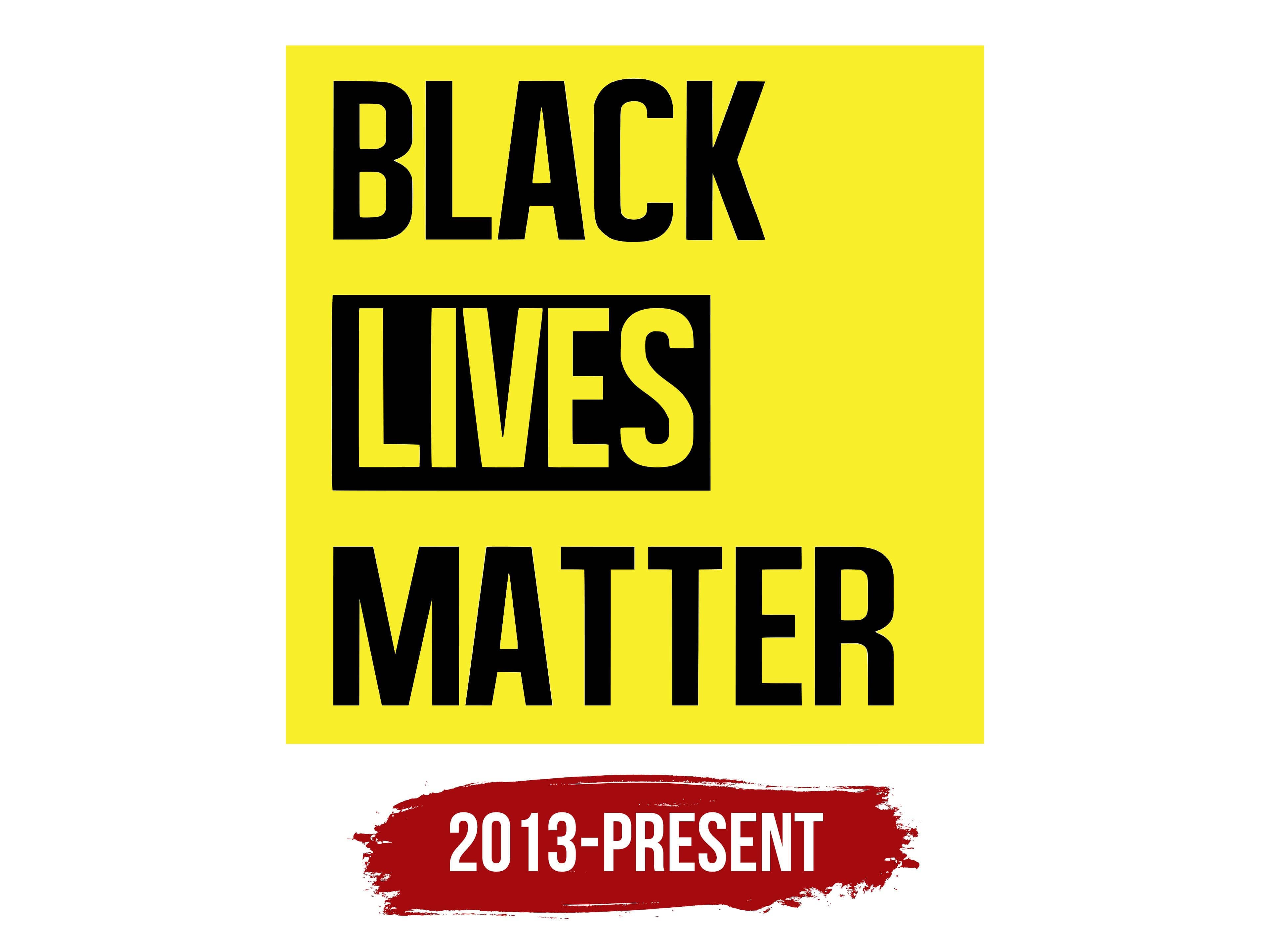
The original logo features a bright yellow square with the proclamation “Black Lives Matter” written in three lines. The rows are left-aligned to make the words easier to read, since English is read from left to right. The top inscription is in black letters, and the middle one is in white on a black rectangle (to enhance contrast). The font is even, chopped, strict, with symbols extended high. At the same time, the inter-letter spacing is minimal, which does not affect the call’s readability. However, the neon yellow color immediately catches the eye.
Another version of the text logo exists. It is made in black and white to emphasize the unity of black and white people. It is based on a rectangle with smooth edges and clear corners. In the center (no left alignment is used here) is the well-known demand motto created and circulated by Opal Tometi, Patrisse Cullors, and Alicia Garza. It also occupies three lines: at the top, the white word “Black”; in the middle, “Black Lives” on a light, narrow rectangle; and at the bottom, the white word “Matter.” The font, in this case, is taken differently: squat, wide, sans serif. But the letters are also close together, demonstrating the protesters’ solidarity.
The third version of the logo mirrors the text from the first logo. The word “Black” is painted white and placed on a black background, as is the bottom inscription “Matter.” The central place is occupied by the word “Lives.” It is completely black and is on a white stripe. The text is in a thin white frame.
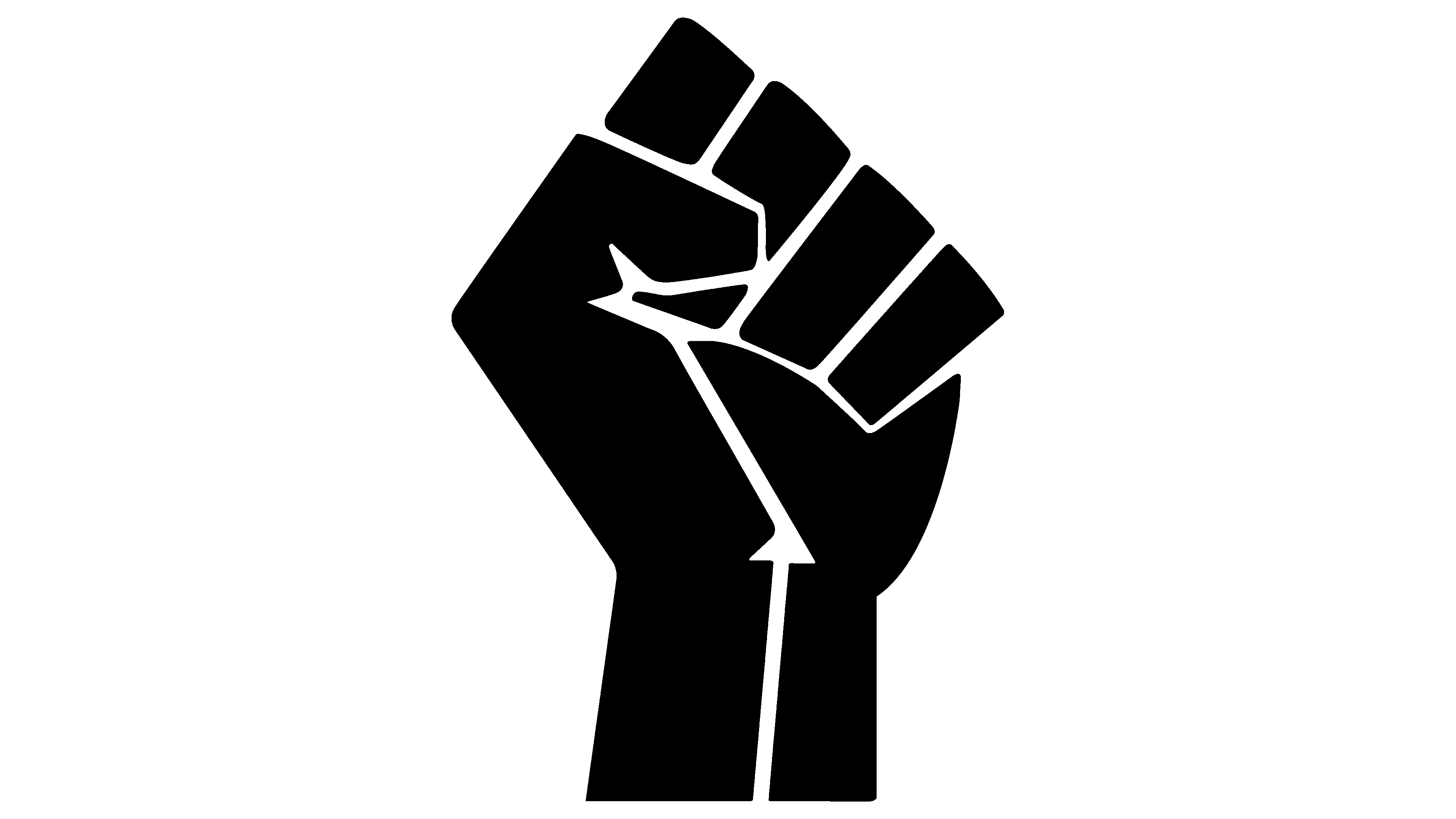
In addition to verbal protest, the movement uses a drawn sign. This is a raised left hand clenched into a tight fist. It symbolizes unity, threat, warning, and a call to action. The image is black with a white background. Below, the slogan “Black Lives Matter” is written in small letters. It takes one line. The fist is drawn in a geometric style, with straight lines, clear corners, rectangles, and trapezoids.
Font and Colors
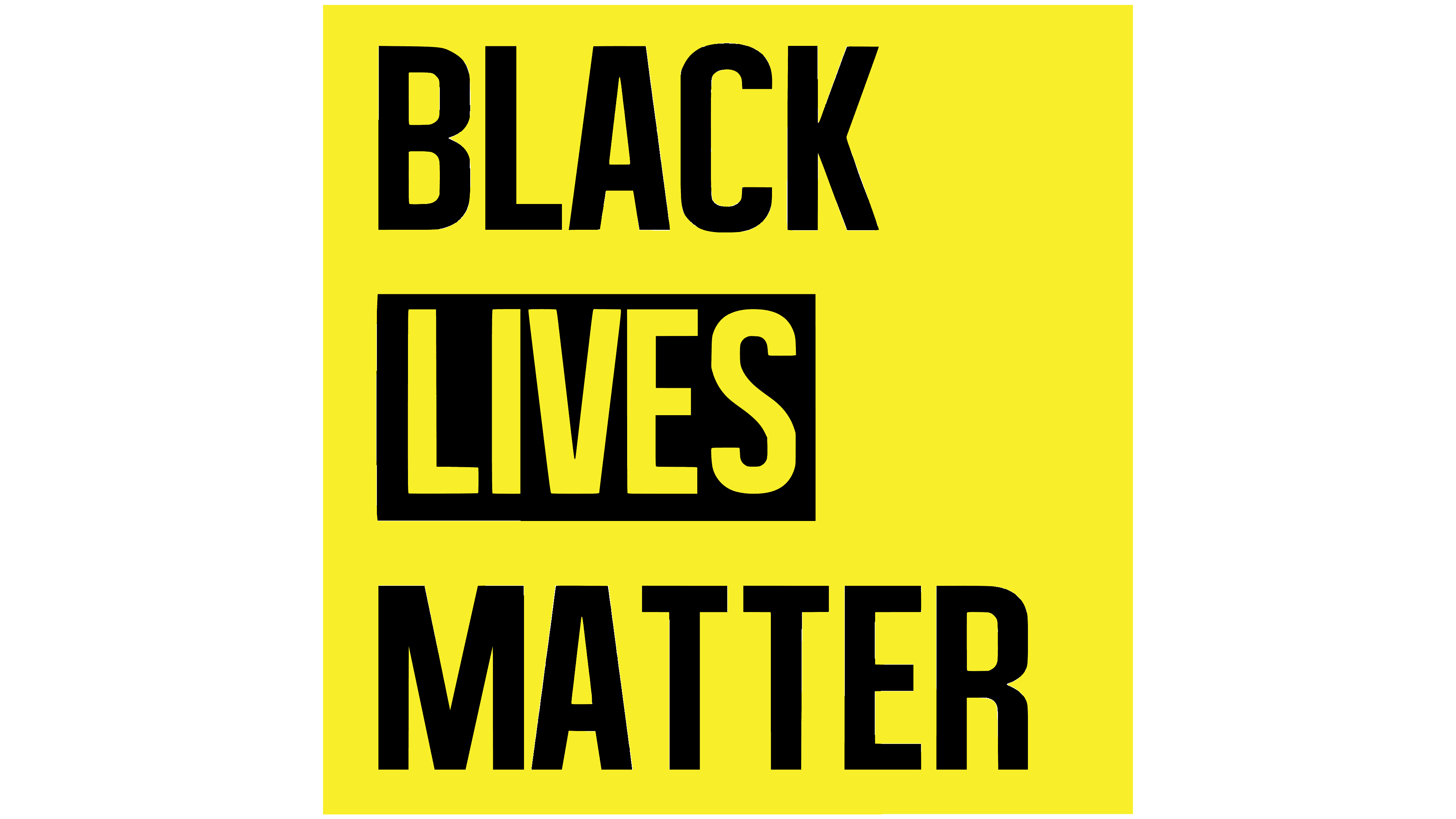
The creative team at advertising studio DDB San Francisco has turned “Black Lives Matter” into the official font. It was based on a grotesque typeface called Anton Bold, even with right angles. They chose it because it resembles Impact and is free.
The movement’s color palette is monochrome. In the first case, it uses yellow and black; in all others, it uses white and black, reflecting unity among representatives of different races.