


 Coinbase Logo PNG
The Coinbase logo stands out for its simplicity and expressiveness, creating the impression of a modern, innovative company. Its minimalist design emphasizes precision and reliability, reflecting the brand’s core values. Straight lines and a balanced text block give the emblem a sense of rigor and confidence, while the overall style makes it memorable.
Coinbase began with Brian Armstrong, an Airbnb engineer who discovered Bitcoin in 2010. He saw that buying it was still tied to opaque exchanges such as Mt. Gox, often exposed to hacks. Armstrong concluded that crypto needed a regulated platform with a simpler buying process.
In early 2012, Armstrong applied to Y Combinator and had three days to find a co-founder. He posted on Reddit and met Fred Ehrsam, a Goldman Sachs trader interested in crypto. They joined Y Combinator that summer, received $150,000 in funding, and officially launched Coinbase in October 2012 as a service for buying and selling Bitcoin via bank transfers.
In December 2012, Coinbase introduced merchant tools, allowing sellers to accept Bitcoin online. In May 2013, it raised $5 million in Series A funding led by Union Square Ventures. In December 2013, Andreessen Horowitz led a $25 million Series B. In January 2015, Coinbase launched a professional exchange and raised $75 million from investors, including the New York Stock Exchange and several banks. In January 2017, it received a New York BitLicense, and that year, its app became one of the most downloaded apps on the US App Store.
On April 14, 2021, Coinbase listed on NASDAQ through a direct listing, opening at $381 per share and reaching a valuation of about $100 billion. In 2020, it reported $322 million in net profit on revenue above $1 billion. In January 2023, it paid a $50 million fine to New York regulators and committed another $50 million to compliance. In June 2023, the SEC sued Coinbase, while Binance faced stronger action from the US Department of Justice. In February 2025, the SEC withdrew its case.
Meaning and History
What is Coinbase?
This is a leading Bitcoin exchange offering an easy-to-use interface for managing, buying, and selling various digital currencies, and is a popular option for both new and experienced traders. Reliable security protocols, regulatory compliance, and insurance for user funds set the exchange apart. Services include an offline digital wallet, Coinbase Pro for advanced trading, and a commercial solution for companies accepting cryptocurrency payments.
2012 – 2013

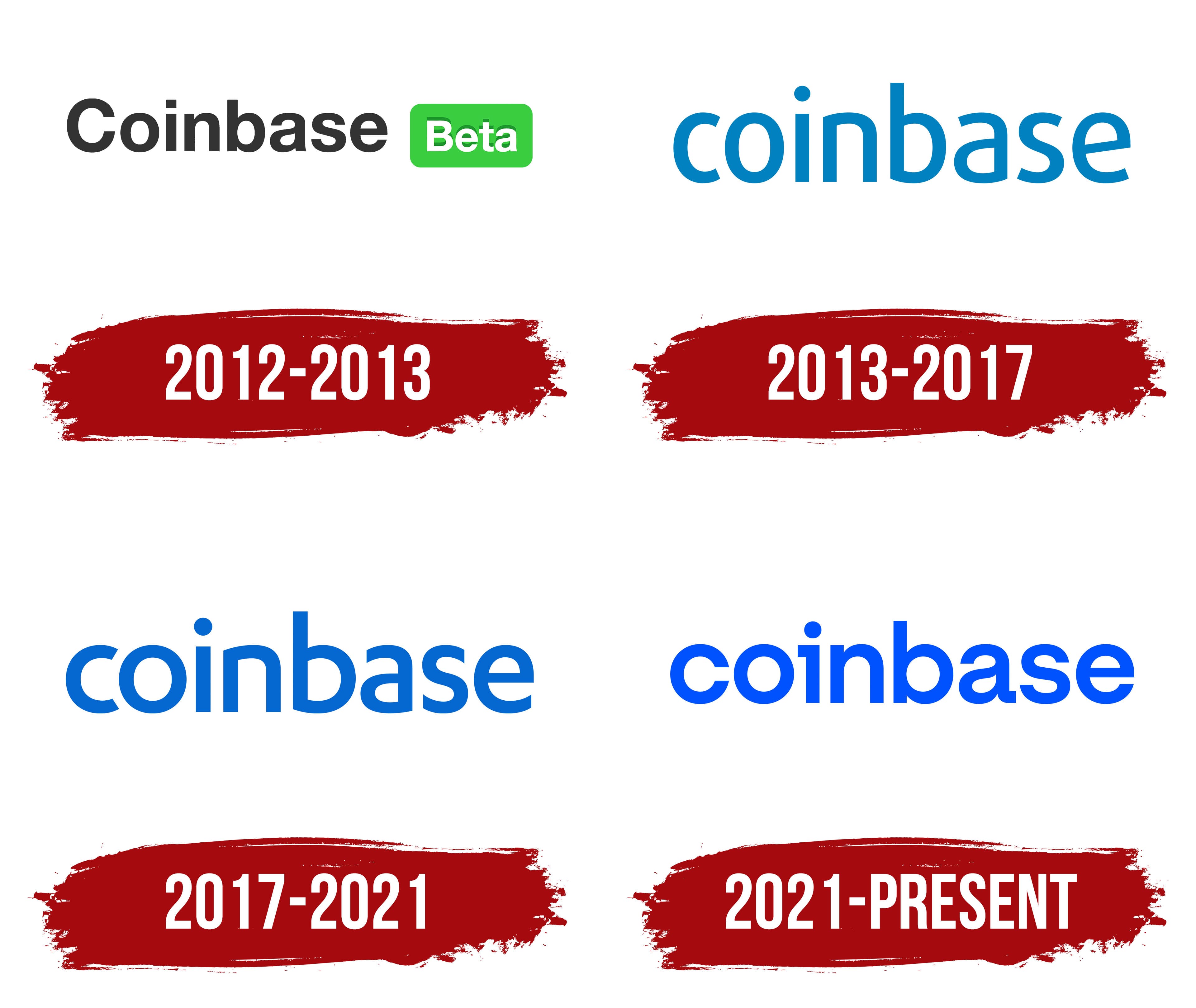
In 2012, the company introduced its first logo, with its key element being the name rendered in an elegant font. The word “beta” held an important place in the design, signifying the initial stage of development for the new exchange. Its inclusion emphasized the platform’s formation and active growth.
The designers’ primary task was to create a striking text block representing the service. The service name, in black, was read excellently due to its contrast with the white background. The thoughtful spacing between letters, the height, and the strict geometry lent the logo an elegant and professional appearance.
The designers highlighted “beta ” on the right side to draw attention. The light green of the rectangle containing the word added a fresh, dynamic accent. The white text within the rectangle blended with the background, enhancing contrast and harmony. The bold, large letters of “beta” ensured high readability and completed the emblem’s overall look, adding modernity and expressiveness.
2013 – 2017

In 2013, the service attracted many users and achieved operational stability. This prompted an update to the logo, removing the word “beta.” The exchange name now stood out, rendered in light blue. The shade was chosen for its associations with modern technologies and developments, reflecting the company’s advanced nature.
The company name, presented in lowercase, appeared dimensional thanks to the large letters slightly elevated above the text’s baseline. The increased spacing between letters enhanced readability, making the text visually lighter and easier to understand. The design added structure and elegance. The smooth lines of the text created a glowing effect, reinforcing the impression of modernity and harmony.
2017 – 2021

As one of the largest exchanges, it developed and expanded, and its branding evolved to reflect the platform’s growth and achievements. By 2017, the platform’s success was evident, as evidenced by a refreshed identity with new color solutions.
The light blue color was replaced with a rich blue, emphasizing Coinbase’s market leadership. The deep shade added a sense of permanence, highlighting the company’s stability and strength. Every detail was carefully considered: the letters became larger but retained a low-profile shape, making them visually solid and trustworthy.
The company name, centered within the design, was the composition’s focal point. This placement reinforced the perception of the emblem as a symbol of a thriving, dynamically evolving company, instilling confidence in clients in the quality of its services.
2021 – today

The modern Coinbase logo stands out for its simplicity, harmony, and balance. Every design element is precise and aligned. The letters’ color complements the background, enhancing the text block’s expressiveness. The company name in the branding serves as an independent, significant element, giving the design a sense of completeness.
Large letters arranged in clear sequence with equal spacing create a visually appealing image. The rich blue shade adds elegance to the text, highlighting the name and emphasizing its importance. The uniform character size underscores unity, tradition, and stability, which are central to the company’s identity.
The emblem of the new generation exhibits maximum steadiness. The stable, motionless shapes of the letters evoke reliability and solidity, reflecting the strength and confidence that define the company’s operations.