


 Deutsche Bank Logo PNG
The Deutsche Bank logo embodies a securely sealed safe and an ATM. The emblem evokes security and stability for customers. The symbols are like powerful pillars that cannot be broken or hacked. Only the person with the access code can open the door.
Deutsche Bank’s history began on January 22, 1870, when its charter was approved. A license was granted on March 10, and the bank opened in Berlin on April 9 with a capital of 5 million thalers from 76 shareholders. Adelbert Delbrück initiated the project, while Ludwig Bamberger shaped its focus on foreign trade, aiming to reduce reliance on British and French banks.
Expansion followed quickly. Branches opened in Bremen in 1871, Hamburg, Shanghai, and Yokohama in 1872, and London in 1873. Under Georg von Siemens, capital grew tenfold within three decades. The bank financed US railroads and established Deutsche Überseeische Bank to finance trade with Latin America.
In October 1929, Deutsche Bank merged with Disconto-Gesellschaft to form DeDi-Bank. The name reverted in 1937. During the Nazi period, the bank financed rearmament and participated in forced asset transfers. After World War II, Allied authorities split the bank into regional units in 1947–1948. The bank reunified in 1957, with Deutsche Bank AG headquartered in Frankfurt. In the 1960s and 1970s, it held major stakes in German industry, including Daimler-Benz.
The bank shifted toward investment banking in 1989 by acquiring Morgan Grenfell. In 1999, Deutsche Bank bought Bankers Trust for $10.1 billion, expanding in the US alongside rivals like JPMorgan Chase. The 2008 crisis led to losses, fines, and LIBOR-related compliance issues. In 2010, the bank acquired Deutsche Postbank. In 2018, Christian Sewing became CEO and launched restructuring. By 2024, Deutsche Bank reported its fifth consecutive year of revenue growth, with net profit of €5.7 billion.
Meaning and History
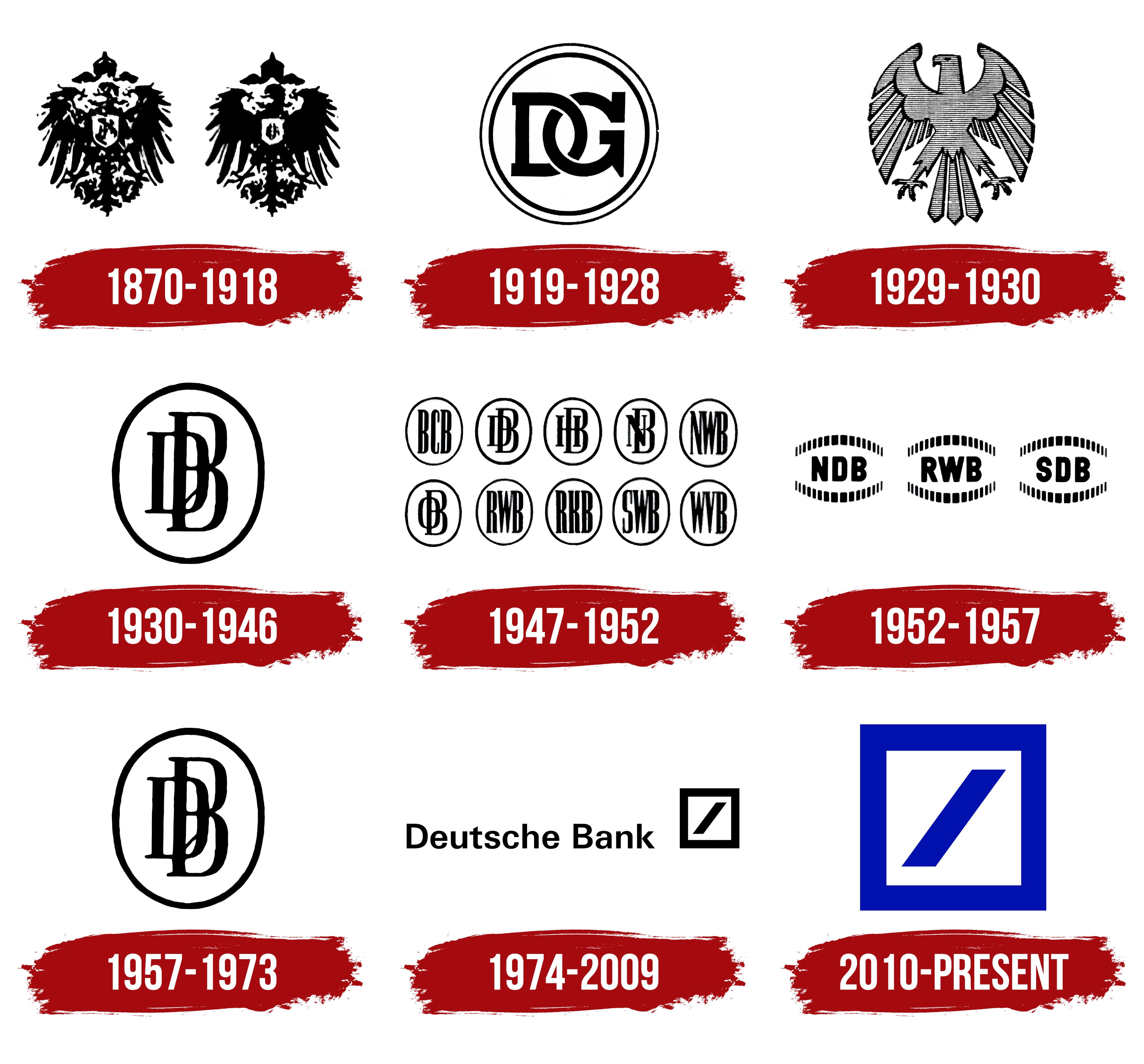
Deutsche Bank’s logos indirectly reflect Germany’s history because global events influenced their formation. The modern symbol, the “Slash in a Square,” is considered one of the most famous in the financial industry. It followed earlier signs, mainly eagles or monograms.
What is Deutsche Bank?
Deutsche Bank is a German investment bank and financial company headquartered in Frankfurt. Founded in 1869, it has since become an international organization with a permanent presence in 58 countries, including Asia, the Americas, and Europe. It consists of four basic departments that oversee the bank’s core activities.
1870 – 1918
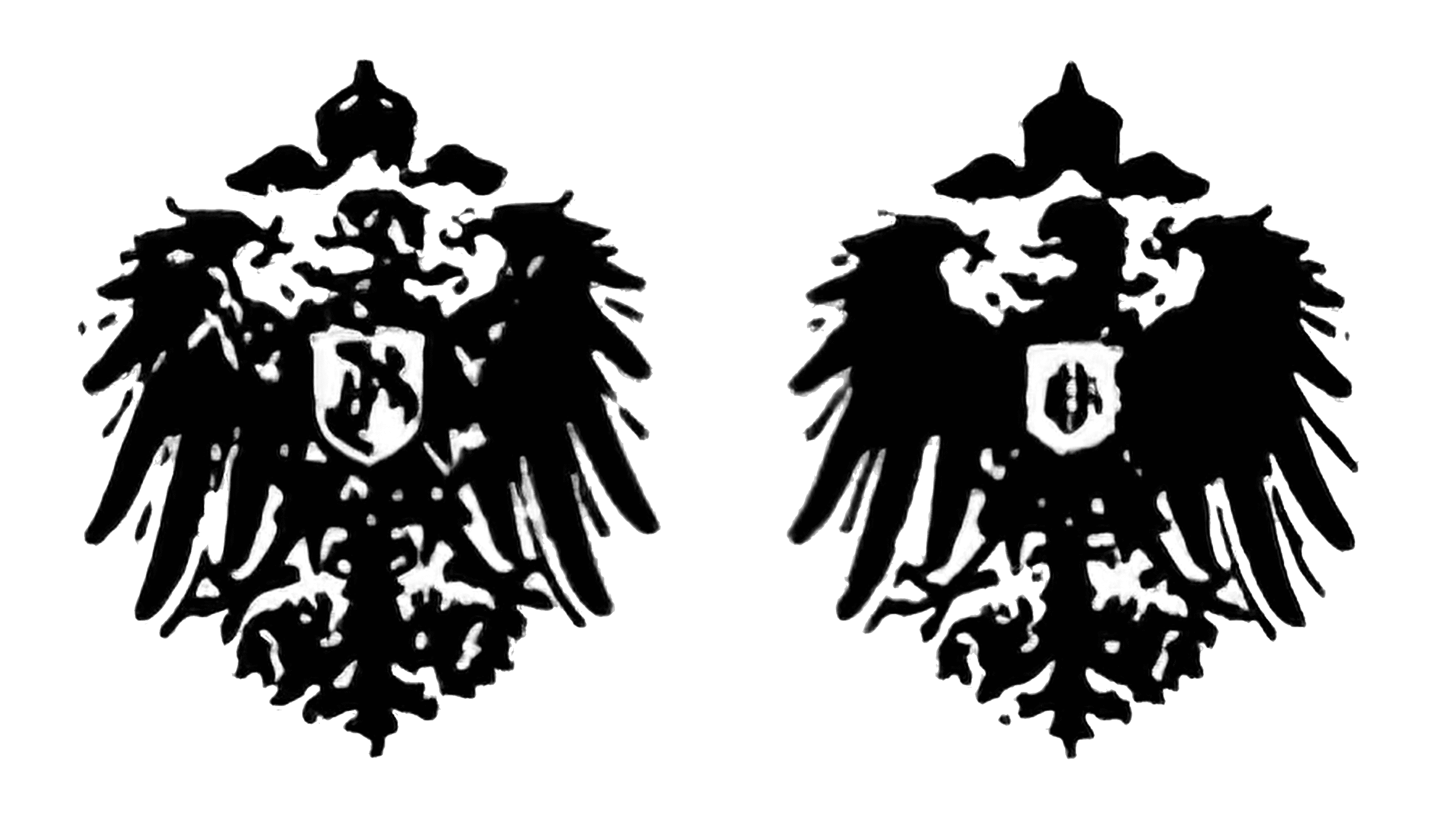
Deutsche Bank was founded in 1870 by several bankers and politicians. Its emblem resembled the coat of arms of the Deutsches Reich, the German state that existed from 1871 to 1918. It showed an imperial eagle with its wings spread, and its head turned to the left. One version contained white details, and the second was completely black, except for the light coat of arms on the bird’s chest.
1919 – 1928
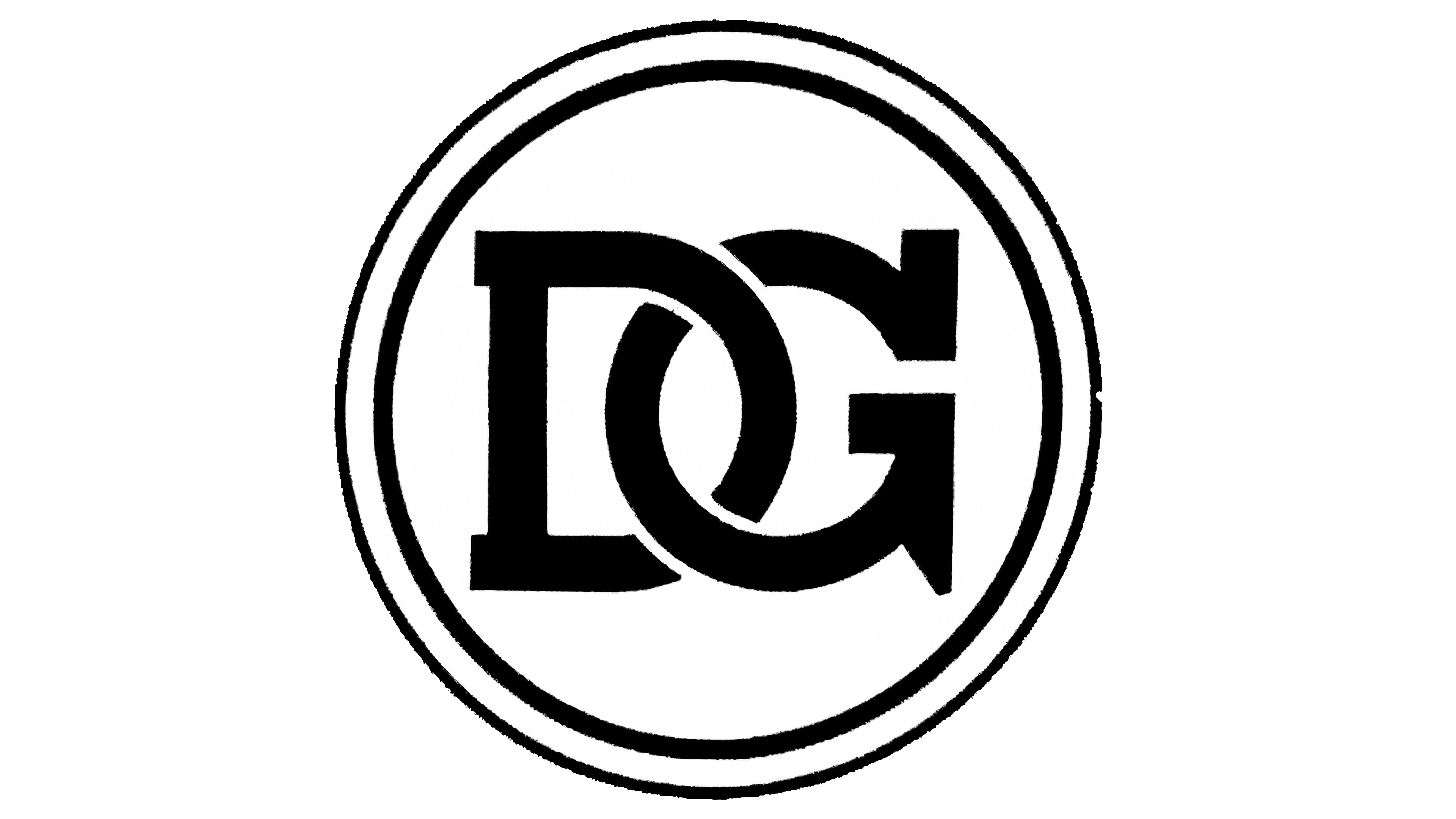
Disconto-Gesellschaft, part of the modern Deutsche Bank, was founded in 1851. They merged in 1929, and until then, one of Germany’s largest financial institutions used the logo featuring the monogram “DG” inside the ring.
1929 – 1930
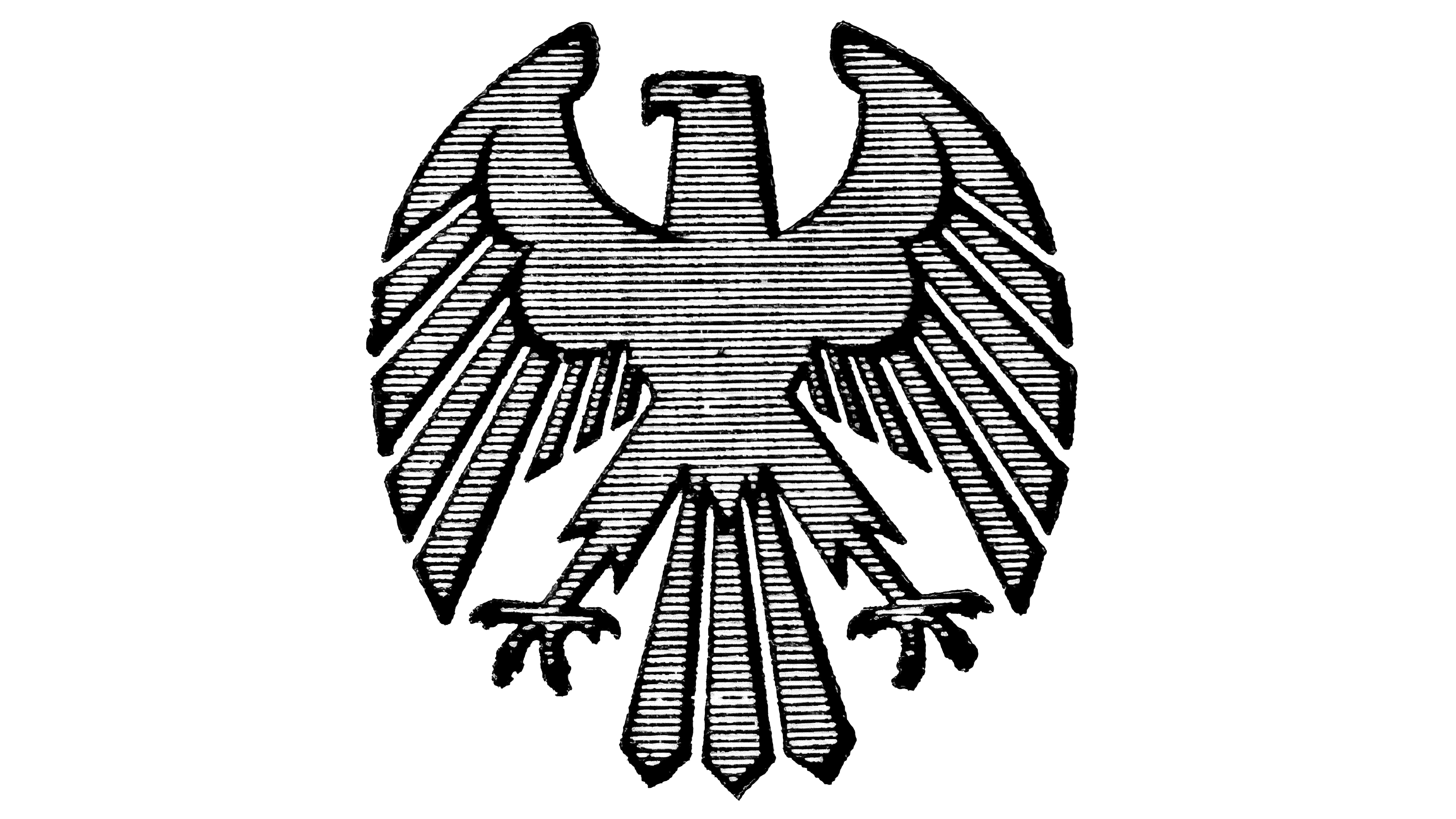
When Deutsche Bank and Disconto-Gesellschaft became one, the eagle’s design changed. The artists made the bird white, changed its shape, and removed the coat of arms. The company then received the double name Deutsche Bank and Disconto-Gesellschaft.
1930 – 1946

In the mid-1930s, the bank updated the logo again. The eagle was replaced by the monogram “DB” in an oval. This variation resembled the old Disconto-Gesellschaft brand name.
1947 – 1952
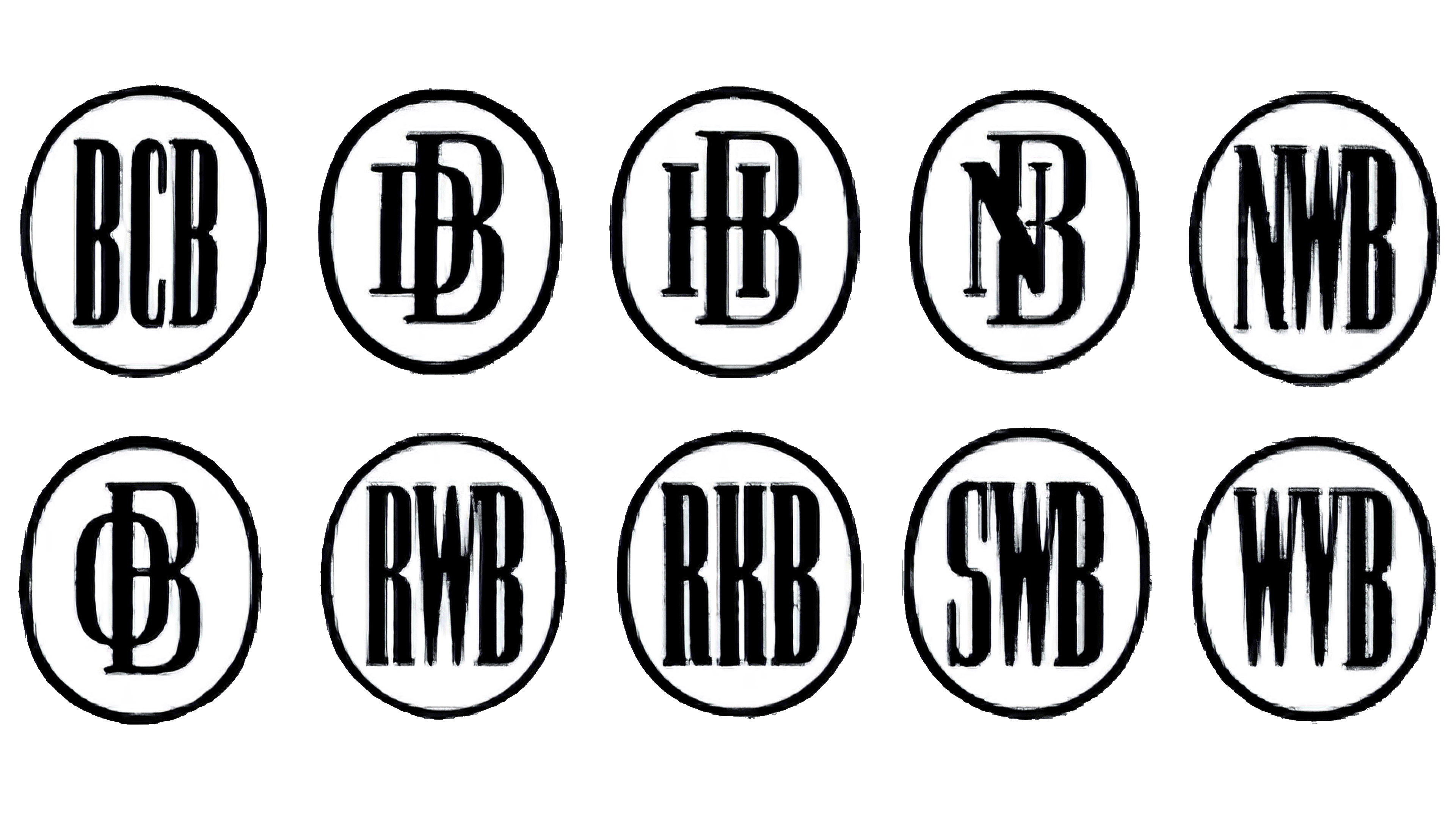
After the Second World War, the financial institution was on the verge of ruin. Because of this, and for political reasons, it was divided into ten parts. Each autonomous structure received its symbol, created in the style of the Deutsche Bank logo. This created a series of similar monograms in ovals. The letters came from regional organizations’ names, for example, BCB, NWB, NB, HB, or DB.
1952 – 1957

In 1952, 10 small banks merged into three large banks: Rheinisch-Westfälische Bank AG, Süddeutsche Bank AG, and Norddeutsche Bank AG. They continued to use the same logos, but the design changed:
- The ovals are gone.
- Abbreviations were written in a line, without interlacing letters.
- A semicircular ornament appeared on the top and bottom of the ribbed coin rims.
1957 – 1973
In 1957, the three successor institutions merged to revive the classic Deutsche Bank. Together, they returned to its old 1930 symbol: the monogram “DB” in a white oval outlined in black.
1974 – 2009
The executives revamped the bank’s visual identity to highlight its international presence. To this end, they organized a competition for the best logo in 1972, promising all the contestants 3,000 German marks. Eight graphic artists, including Coordt von Mannstein, Armin Hofmann, and Anton Stankowski, participated in the competition. On February 6, 1973, an expert jury headed by designer Jupp Ernst announced the winner. Anton Stankowski won with his square diagonal line. The winner received 100 thousand marks for his work.
First, the brand name appeared in the company magazine Deutsche Bank, and only then was it publicly advertised at the annual press conference. So, in April 1974, the world first saw the iconic symbol now associated with the German financial sector.
But not everyone liked the simple design. The media wrote that Stankowski was “an artist who earned 100,000 marks with five strokes.” However, that wasn’t the case, as his studio submitted nine projects to the competition at the same time. Among them were different variants with the letters “DB.”
2010 – today
After a minor redesign, the “DEUTSCHE BANK” label disappeared, and the square and forward slash turned blue. The new logo conceptually continues the old one, as it is one of the most famous financial trademarks.
Font and Colors
Stankowski painted pictures and often experimented with oblique lines. It was his favorite motif and eventually became the basis of the current Deutsche Bank logo. The designer admitted that he did not put a specific meaning into geometric abstraction; everyone can interpret it differently. At the same time, he compared the diagonal stripe with growth dynamics and called the square a symbol of security. Development and stability are exactly what customers expect from a bank.
In 2010, the company decided to focus on an icon that could be used in any context without being tied to language. A little earlier, against Anton Stankowski’s wishes, a wordmark appeared next to the geometric figures. It was “DEUTSCHE BANK” in the Univers font, which became famous after the Munich Olympics. Today, the logo has only a diagonal line and a square border. It is colored blue (shade #0018A8).
FAQ
What does the Deutsche Bank symbol mean?
The symbol has a square frame with a diagonal slash inside it. This design supports the brand’s uniqueness by providing a consistent reference point. The slash represents the brand’s commitment to growth and dynamic development, showing progress and forward movement.
The square frame around the slash signifies security and a controlled environment. It shows the brand operates within a stable, secure framework, ensuring reliability and trust for its clients.
Is Deutsche Bank a German bank?
Yes, it is a German bank. It was founded in 1870 to help German businesses expand internationally. From the start, the brand has operated across borders, supporting German enterprises in their global ventures.
The bank’s headquarters are in Frankfurt, Germany. Over the years, the brand has become one of the world’s leading financial institutions, offering a wide range of banking and financial services.
German roots are clear in its support for the country’s economic interests and strong international presence. The brand plays a significant role in domestic and global financial markets, showcasing its expertise and reliability.
Did Deutsche Bank change its logo?
Yes, the brand introduced its current logo in 1974 and has kept it unchanged. The logo turned 50 this month and remains attractive with its clean, minimalist design. It was a big change from the previous logo when it first appeared.
Its simplicity and modern look made it stand out and become easily recognizable. Over the years, this design has represented the brand’s identity, so there has been no need to change it. The logo’s lasting nature reflects the brand’s stability and consistent presence in the financial world.
What does the Deutsche Bank logo mean?
Created by graphic artist Anton Stankowski, the logo is minimalist and meaningful. It features a slanting line inside a square. The line slopes to the right, symbolizing financial growth and progress. The square stands for stability, protection, and security.
Stankowski selected the design from seven competitors’ submissions. The logo’s simple and clear design has remained relevant, reflecting the brand’s commitment to steady growth and reliable service. This emblem communicates the brand’s core values, making it recognizable and enduring.
What was Deutsche Bank’s first-ever logo?
The first logo featured the German coat of arms from the Deutsches Reich, the state from 1871 to 1918. It came in two versions: black-and-white and solid black.
The logo features an imperial eagle with spread wings and a head turned left. Each eagle had a small shield with symbolic signs on its chest. This design highlighted the bank’s connection to the German state and its heritage at that time. It strongly symbolized the brand’s early uniqueness and role in the German financial system.