 Eurobank Logo PNG
Eurobank was registered in Athens in March 1990 as Euromerchant Bank S.A., an investment and private bank backed by Greek and international capital, primarily from the Latsis family, behind EFG Group. Its creation followed Greece’s 1981 entry into the EEC and the gradual liberalization of the national financial sector, where state banks still dominated.
In 1994, Euromerchant Bank acquired 75% of Luxembourg’s Banque de Dépôts, which was later renamed EFG Private Bank (Luxembourg) S.A. In 1997, the bank changed its name to EFG Eurobank S.A. and absorbed Interbank Greece. It acquired Crédit Lyonnais Grèce’s branch network. In 1998, Deutsche Bank AG took a 10% stake, while EFG Eurobank and Consolidated Eurofinance Holdings invested in Ergasias Bank.
In 1998-1999, the group acquired Bank of Athens and Cretabank, expanding its regional base. In September 2000, it merged with Ergasias Bank. It became EFG Eurobank Ergasias S.A., one of Greece’s largest private banks by assets, competing with Alpha Bank and the National Bank of Greece. In the early 2000s, Eurobank developed modern mortgages and mass-market credit cards in Greece, then expanded across Bulgaria, Serbia, Poland, Romania, Turkey, Ukraine, and Cyprus, including Polbank EFG and Eurobank Tekfen.
The Greek debt crisis of 2010-2015 weakened Eurobank after the 2012 PSI bond write-down. In 2013, the HFSF injected about €5.8 billion and received nearly 95% of the bank after a blocked merger with the National Bank of Greece. In May 2014, Fairfax Financial Holdings, Capital Group, and WL Ross & Co. invested about €2.9 billion, reducing the state stake to about 35%. In 2020, Eurobank reorganized, separating the holding company from the licensed bank, Eurobank S.A.
Meaning and History
What is Eurobank?
This is a well-known Greek banking organization actively operating in Southeastern Europe. It provides access to asset management, insurance, retail, corporate, and investment banking. The bank serves millions of clients in Greece, Bulgaria, Serbia, and Cyprus through its extensive network of branches and online platforms. The bank played a crucial role throughout Greece’s financial crisis, enduring difficult times and securing its position among the country’s systemic banks. The bank promotes innovation and entrepreneurship through various projects and programs, helping stimulate the local economy in its operating regions.
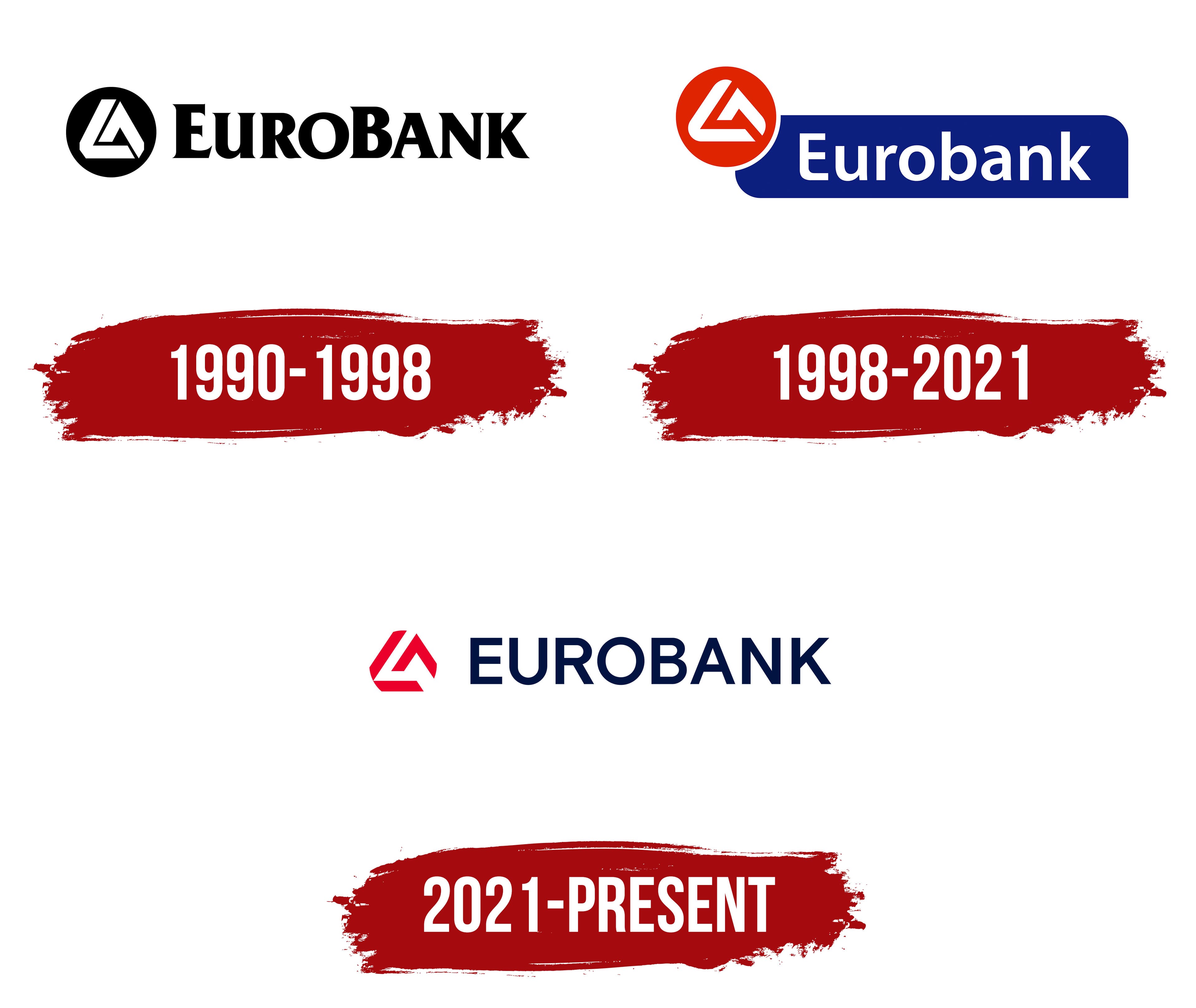
1990 – 1998
1998 – 2021
2021 – today