


 Georgia Tech Yellow Jackets Logo PNG
The Georgia Tech Yellow Jackets logo showcases the strength of college sports, emphasizing that it nurtures real talent, which eventually moves on to professional teams. The emblem emphasizes the athletes’ excellence, highlighting their essential qualities: the ability to deliver a decisive strike in any situation, even the most unexpected ones.
The Georgia Institute of Technology was founded in Atlanta in 1885, and its athletic identity developed soon afterward. Football began in 1892 with a 0-28 loss to the University of Georgia, marking the start of one of college football’s major rivalries. The Yellow Jackets name appeared in the early 1900s, linked to students wearing black pants and yellow jackets at games.
John Heisman led the team to national attention in 1917, when Georgia Tech went unbeaten and defeated Cumberland 222-0, still the highest score by one team in an official American football game. Under William Alexander, the program won the 1928 national championship and became a force in the Southern Conference. In 1934, the school became a founding member of the SEC.
Bobby Dodd coached from 1945 to 1966 and led the 1952 national championship team. After leaving the SEC in 1964, Georgia Tech later joined the Atlantic Coast Conference (ACC), first for basketball in 1979 and then for other sports in 1983. Basketball rose under Bobby Cremins, reaching the NCAA Final Four in 1990, while football shared the 1990 national title under Bobby Ross.
In 2009, Paul Johnson’s team beat Clemson for the conference title and reached the Orange Bowl. In 2014, Georgia Tech defeated Mississippi State for its first major bowl win since 1955. Later years brought football rebuilding after Johnson’s 2018 retirement, an ACC basketball tournament title in 2021, and continued results in baseball, golf, and tennis. Facility upgrades included a football training center in 2011 and the renovated McCamish Pavilion in 2013.
Meaning and History
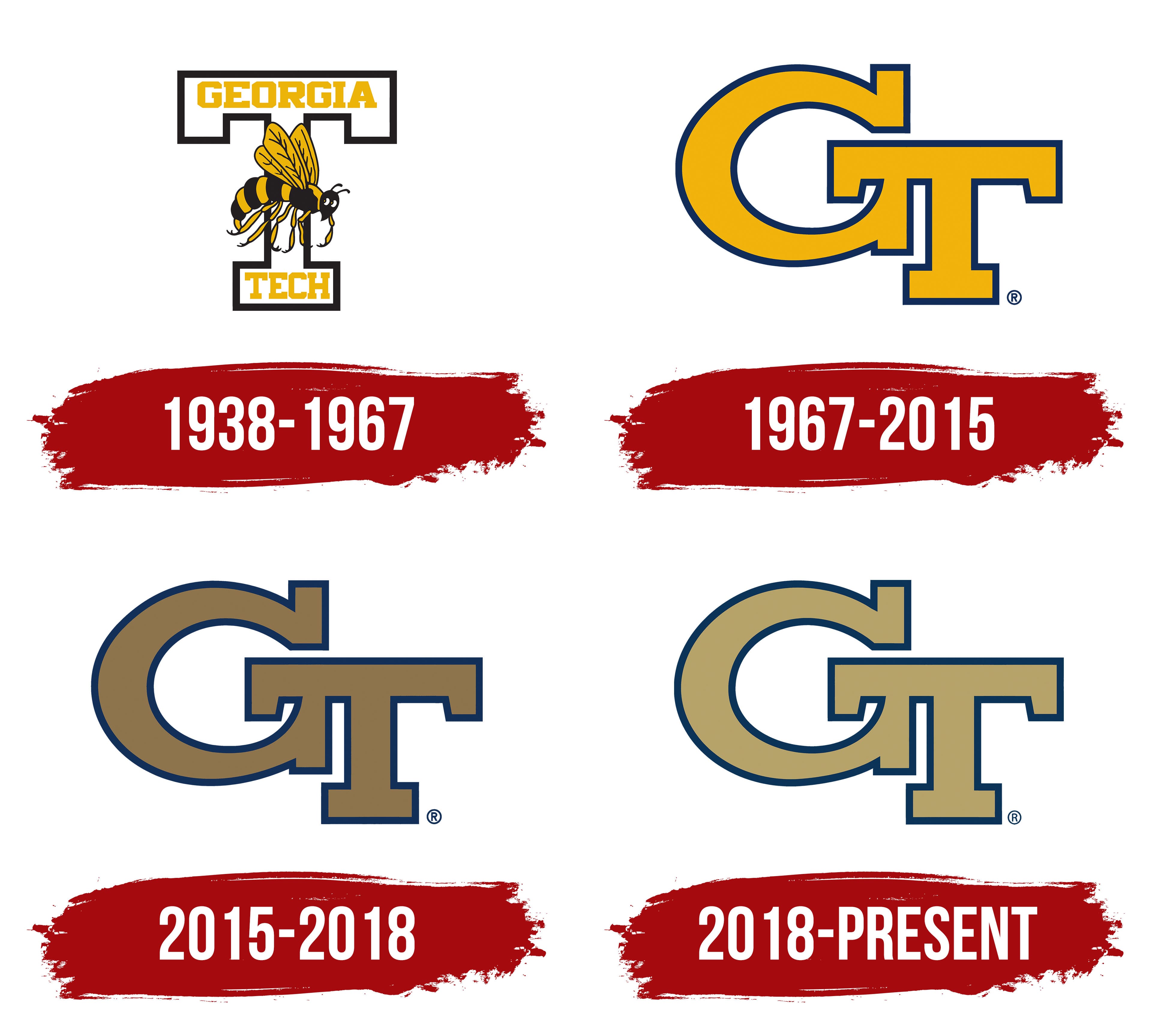
Georgia Tech’s sports arm comprises eight men’s and seven women’s teams competing in 17 sports. They are members of the Atlantic Coast Conference, a Division I conference within the NCAA, and the Football Bowl Subdivision. According to the survey, four varsity teams were named national champions in the last century: 17th, 28th, 52nd, and 90th. In 2007, the tennis players won a resounding victory over UCLA.
What is Georgia Tech Yellow Jackets?
These are the Georgia Institute of Technology sports teams competing in the Atlantic Coast Conference. Distinguished by their bright gold-and-white uniforms, they represent the ingenuity and perseverance of their engineering-focused university. The team’s mascot, a stylized yellow jacket named Buzz, entertains spectators with its memorable antics at sporting events. The institute’s athletic department is renowned for its achievements in baseball, basketball, and football, while also maintaining high academic standards. Bobby Dodd Stadium at Grant Field, one of the oldest college football stadiums, hosts thrilling games.
1938 – 1967
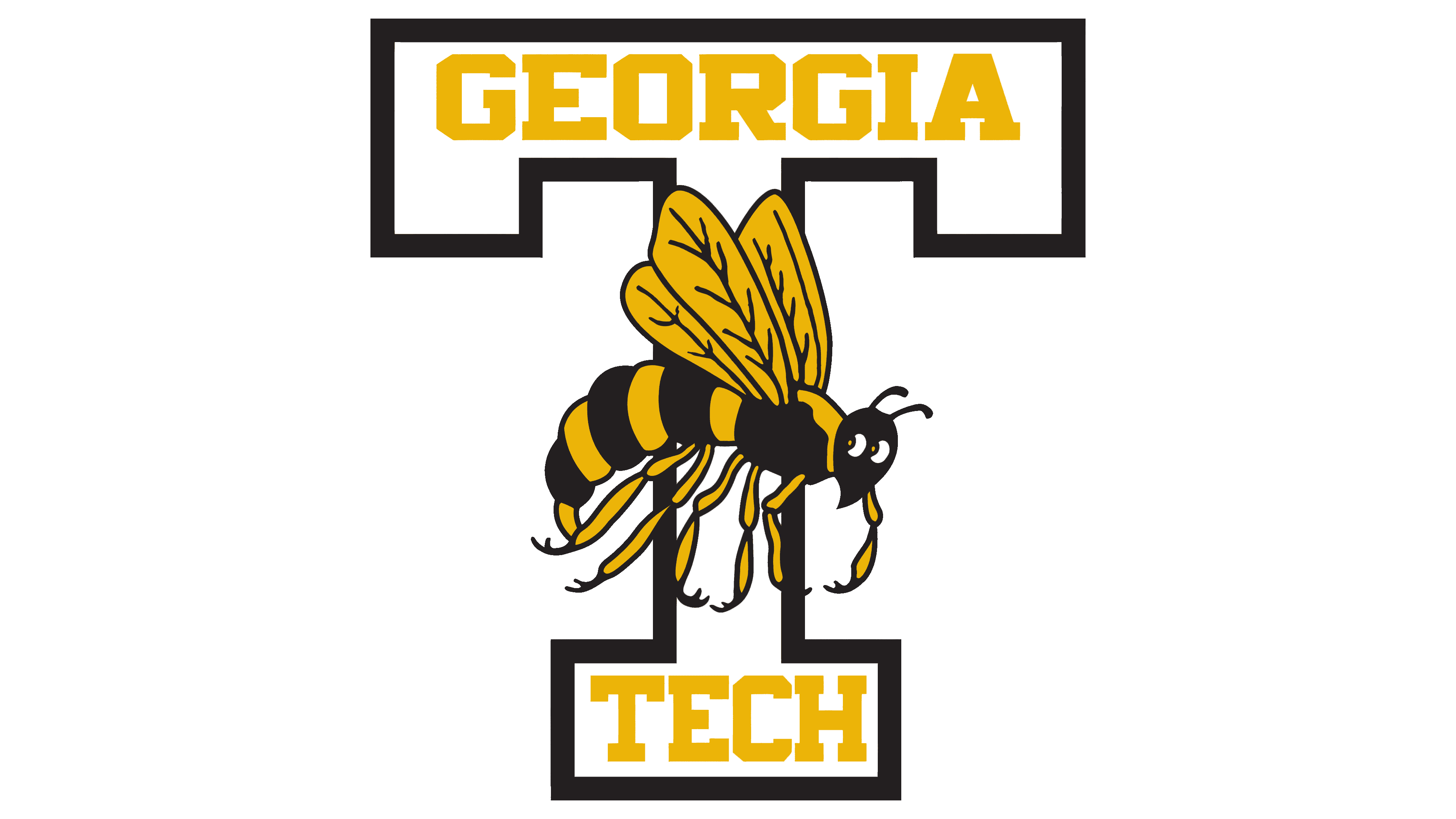
The Georgia Tech Yellow Jackets logo stands out for its dynamic, memorable design. At the center is a wasp or hornet, symbolizing strength, energy, and persistence qualities essential to the university’s team. This insect embodies relentless determination and readiness to strike at any moment, perfectly capturing the fighting spirit of a sports team.
The hornet is depicted in a lively pose: its wings are raised and spread as though poised to spring into action. The black and yellow stripes on its body add vibrancy and mirror the natural coloring of a real hornet, while these colors together symbolize loyalty and courage. The hornet’s white eyes stand out against its black body, adding a playful yet slightly aggressive expression. This hornet is both a mascot and a powerful team symbol, instilling unease in opponents.
In the background is a large letter, “T,” representing the Georgia Institute of Technology. This bold element is cleanly outlined, emphasizing clarity and structure. The words “GEORGIA” and “TECH” are positioned at the top and bottom of the “T” in large, bold font. The bright yellow text contrasts with the black outline, adding intensity and visibility. The font, with its sharp angles, conveys energy and strength.
The color scheme, consisting of black, yellow, and white, carries meaning. Yellow represents life energy, movement, and optimism, reflecting the team’s spirit. Black adds a sense of seriousness and determination, while white highlights clarity and openness. Together, these colors create an image of a team that never backs down, always pushes forward, and is ready to fight.
The logo embodies the university’s determination and fighting spirit. Every element tells a story of readiness for battle and resilience in the face of challenges.
1967 – 2015

The new Georgia Tech logo features the bold letters “GT,” an abbreviation for the Georgia Institute of Technology, which has become a symbol of the university’s academic and athletic culture. This emblem, rendered in the university’s traditional yellow, highlights the institution’s energy and vibrancy. The yellow color conveys dynamism and positivity, reflecting the university’s progressive and innovative spirit.
Outlined with a thick, dark blue border, the letters gain definition and strength. This blue shade represents reliability, stability, and intellectual depth, qualities consistently associated with the team. Additionally, the blue color provides contrast, allowing the emblem to be clearly distinguished against any background.
The letter shapes are slightly angular and structured, giving the logo a confident and monumental appearance. The curve in the “G” seamlessly flows into the “T,” creating a connected effect that symbolizes unity and cohesion among students, alumni, and everyone tied to the university.
Despite their simplicity, these letters convey a sense of teamwork and respect for tradition. The Georgia Tech emblem symbolizes community, pride, and the pursuit of new achievements in science and sports.
2015 – 2018

The logo, featuring the “GT” abbreviation, retains its traditional shapes and styling but now incorporates a revised color palette. This time, the interior of the “G” and “T” letters is bronze. This new color adds richness and prestige, underscoring the university’s status and historical significance. Bronze is associated with tradition, continuity, and strength, highlighting the institution’s deep roots and legacy.
The dark blue outline around the letters remains unchanged, adding depth and creating a three-dimensional effect. This blue shade represents stability and intellectual depth, reflecting the university’s academic achievements and reliability. The contrast between bronze and blue adds balance to the logo, giving it a dignified, stylish look.
The shape of the letters remains bold and confident. The large, straightforward “GT” letters appear solid and dependable, embodying the team spirit and determination of Georgia Tech’s students and faculty.
2018 – today

In the new version of the Georgia Tech logo, the color inside the letters has been changed again, while the overall structure remains the same. Now, the “G” and “T” interiors are filled with a soft yet rich golden hue. This color symbolizes the university’s proud heritage and commitment to excellence across all fields. Gold is traditionally associated with success, leadership, and achievement, highlighting the team’s high standing among leading educational institutions.
The dark blue outline still frames each letter, defining the edges and adding confidence to the emblem. The combination of blue and gold creates a harmonious and elegant contrast, drawing attention to its understated luxury.
This logo reflects the spirit of Georgia Tech, where tradition is honored as it moves forward into new horizons.
Georgia Tech Yellow Jackets Alternate Logos History
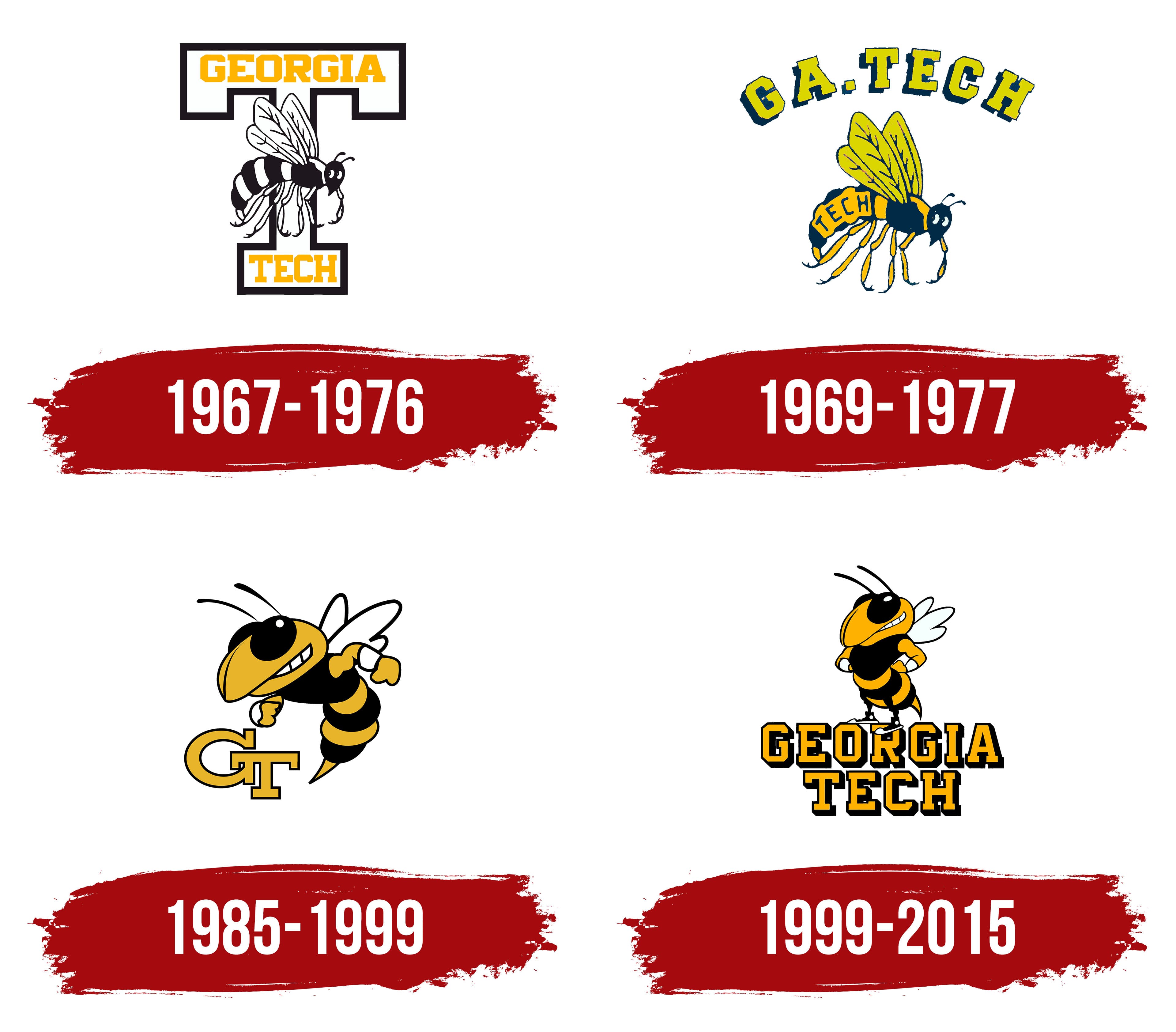
1967 – 1976

The Georgia Tech Yellow Jackets’ emblem initially featured a successful and memorable image of the Yellowjacket wasp. This analogy arose from the similarity between student-athletes and one of the world’s most formidable insect predators, the Yellow Jacket.
As a result, a striped wasp circles around a block-style “T” in the background. It flies clumsily, with three pairs of legs hanging down and cautiously glancing back. There’s a certain hesitation in its posture, ready to turn into a decisive strike against an opponent at any moment. The insect has transparent wings with thin veins and a powerful stinger at the end of its tail, resembling a needle used to inject venom when threatened.
The wasp and the massive letter are monochromatic, but each has its own style of color combination. The insect has alternating black and white stripes, while the glyph features a black outline that forms a continuous border. The palette’s plainness is brightened by a vivid yellow inscription that reads the name of the university to which the athletic division belongs.
The top part of the letter “T” (the crossbar) displays the word “Georgia,” while the lower part (the stem) shows “Tech.” The text uses two fonts: the first line consists of short, extra-bold letters with cropped corners, and the second features tall, semi-bold glyphs with sharp edges. All characters are uppercase and in a serif style.
1969 – 1977
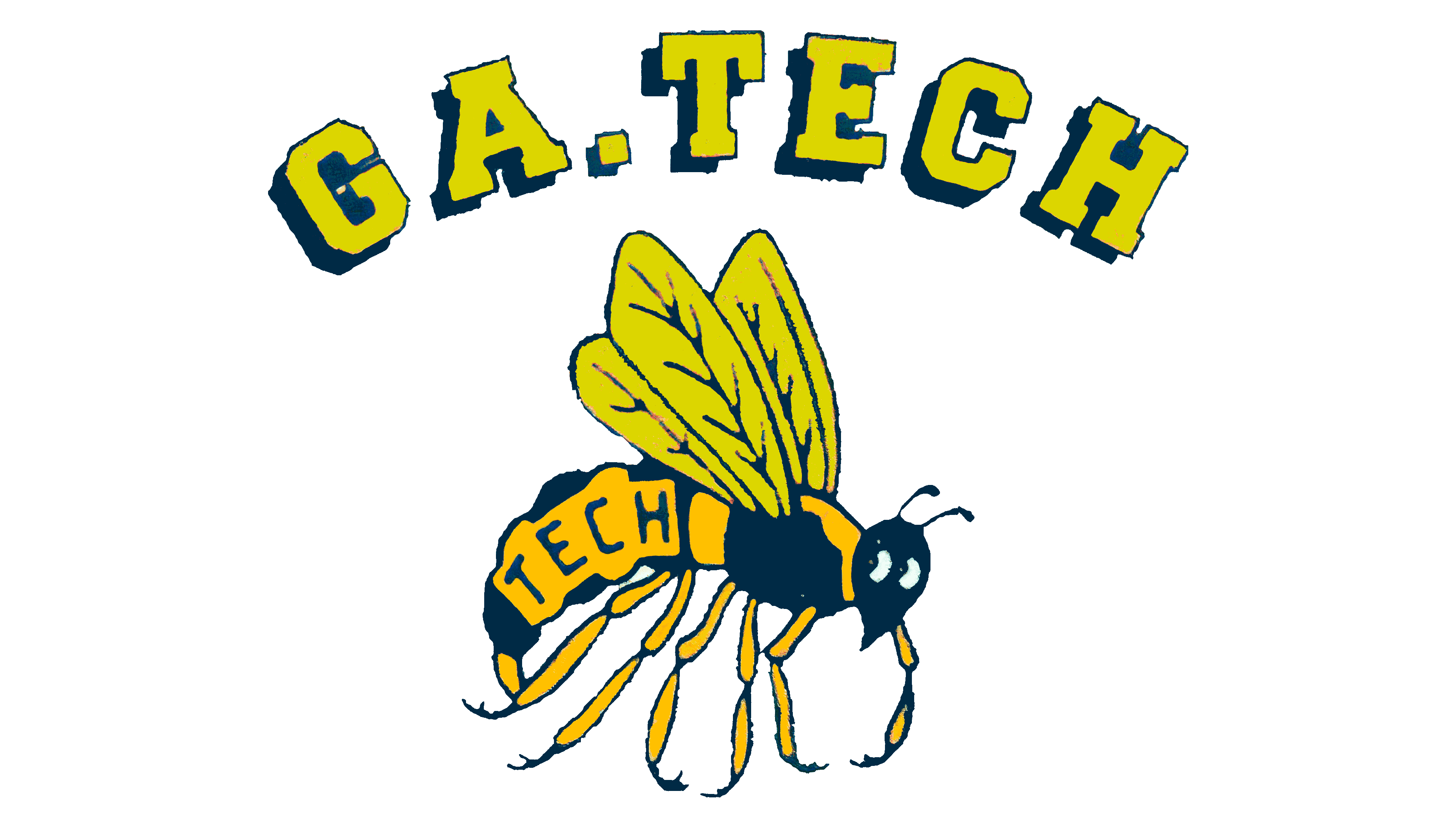
After the monochrome period, a time of colorfulness arrived. However, it was also limited to two colors, as a wasp is typically yellow and black. The designers used these as the base colors, painting both the insect and the text.
The artists took the Yellowjacket wasp from an old logo, so its pose and expression exactly match the depiction on the 1964 emblem. The wings have thin membranes, the legs hang downward, the antennae stick up, and the head is turned to the left, all depicted as previously described. The only new addition is a plate with the word “Tech” positioned on the black and yellow stripes of the abdomen.
The upper inscription is arched. The letters are widely spaced, creating a stretched line that seems to hang above the wasp, forming a broad, distinctive dome. It displays the name of the sports division, “GA.TECH,” where “GA” stands for “Georgia.” The font is capitalized, with large rectangular serifs. All glyphs are designed in a block style.
A standalone “T” is absent, so the background is neutrally white, allowing the image and text to stand out equally well. Some letters have their corners trimmed at right angles, an alternative to rounding that maintains a consistent geometric design across all symbols.
Another advantageous feature of the Georgia Tech Yellow Jackets logo is the addition of shadows, which gives it a three-dimensional effect. These shadows appear on the upper inscription, distinctly duplicating the glyphs, making them seem raised above the surface.
1985 – 1999
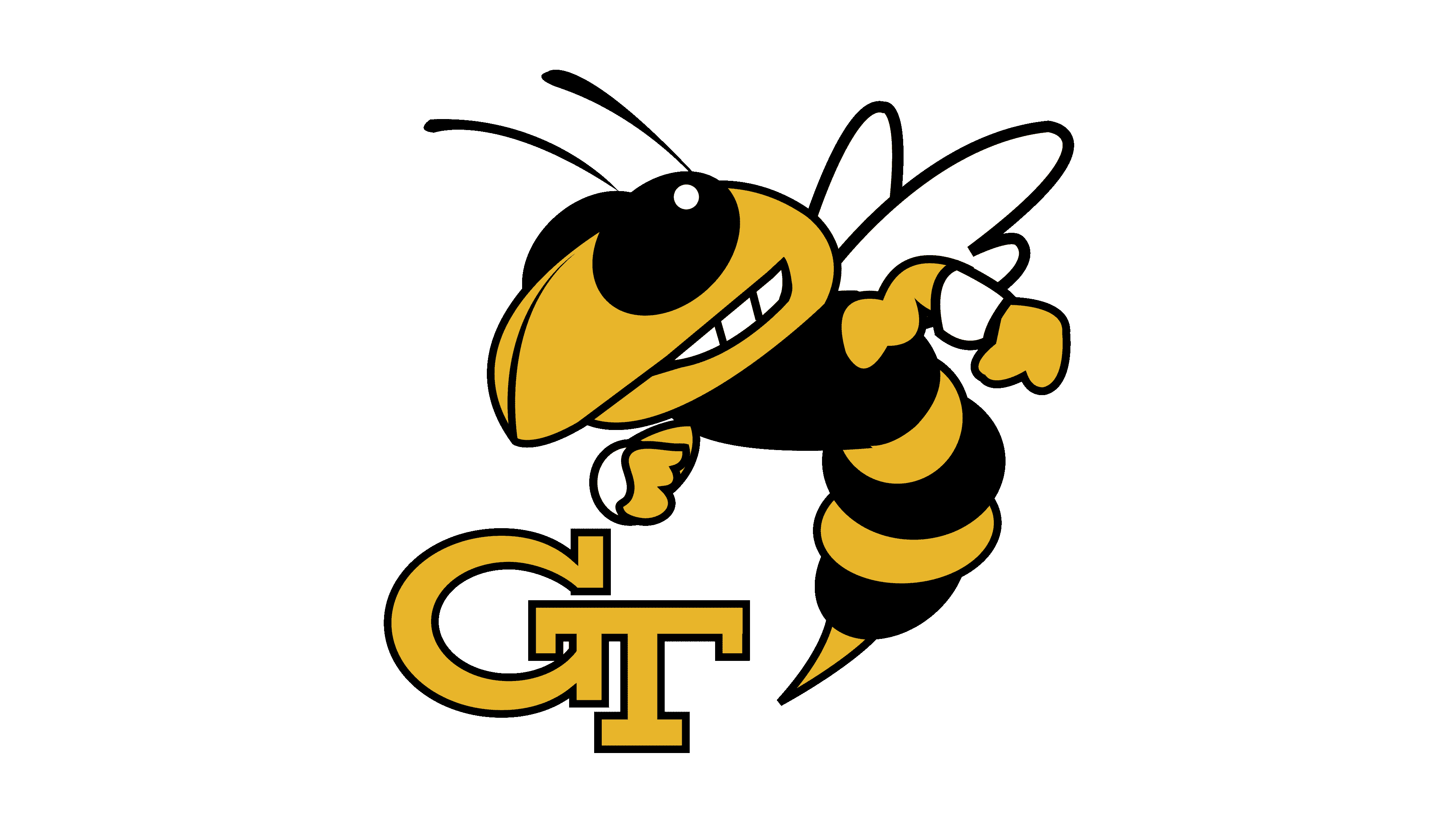
This version of the Georgia Tech Yellow Jackets emblem appears modern and concise. It is highly adapted to current visual identity requirements because it is:
- compact;
- informative;
- authentic;
- unique.
It reflects everything the athletes want to convey to their rivals; for instance, the character displays confidence, fierceness, a fighting spirit, and readiness to step onto the playing field at any moment. Moreover, this version effectively captures a sense of dynamism not present in any previous emblems. Movement is conveyed through the wasp’s gestures, particularly in the active waving of its arms, calling for action.
This design makes the insect less anthropomorphic since it lacks legs in sneakers. The designers retained only the muscles, wristband-clad arms, and a smirk that reveals tightly clenched teeth. The stinger is elongated to emphasize the threat to competitors. The wasp, as before, looks to the left.
The minimalism of the Georgia Tech Yellow Jackets emblem is also evident in the absence of long inscriptions. The abbreviation “GT” is modestly positioned in the lower left. It is designed as a monogram, with the letters connected and placed at varying heights. Rectangular serifs are retained, but the trimmed corners are gone and replaced by regular rounding.
1999 – 2015

The indecisive wasp is a thing of the past: it has been replaced by a confident character who confirms its status as one of the most dangerous predators among insects. The image’s style has also changed, becoming simple, cartoon-like, and slightly anthropomorphic, with the wasp now having improvised arms and clenched fists resting on its sides. This stance demonstrates the wasp’s superiority over its rivals, seemingly challenging them.
The insect features a sharp stinger and defined muscles to showcase strength, courage, and fearlessness. Classic sneakers are worn on its feet, while sports wristbands adorn its wrists. Light reflections in its large, round eyes highlight the yellowjacket wasp’s restless nature. Its antennae stick forward, and its mouth twists into a mysterious smile.
The angelic image has turned rebellious: the insect no longer hovers in the air with its legs hanging down; it now confidently stands on a two-level inscription, as if on a pedestal. Below is the name of the student teams: Georgia Tech. The name is set in a geometric, bold, uppercase, serifed typeface with rectangular-shaped letters. Some corners of the letters have small cuts instead of smooth rounding, found, for example, on the “G,” “O,” “R,” and “C.”
Additionally, the shadows on the glyphs remain but have shifted from left to right, visually organizing the logo and making it neat. The color palette traditionally combines black and yellow, which stand out effectively on a white background.