


 Java Logo PNG
The brand representing the programming language features an emblem that reflects the name’s connection to the Indonesian island where large Arabica plantations are found. That’s why the Java logo contains unexpected elements, but this structure makes it unique and recognizable.
Java began in June 1991 inside Sun Microsystems, where James Gosling, Mike Sheridan, and Patrick Naughton formed the Green Team. Their task was to explore the future of connected TVs, computers, and home devices. Gosling wanted a programming language with familiar C-style syntax, but without C and C++’s main weaknesses.
The language was first called Oak, after the tree outside Gosling’s Menlo Park office. In September 1992, the team showed Star Seven, a handheld media controller with a touchscreen, the animated assistant Duke, and a graphical interface for home devices. Sun cofounders Scott McNealy and Bill Joy liked the prototype, but cable companies were not ready for it.
In 1994, the project found its real direction when Patrick Naughton and Jonathan Payne created the HotJava browser. It could run interactive Java applets inside web pages, turning a static web of text and images into a platform for live programs. Oak was renamed Java after a trademark search found the old name unavailable. Sun also discussed other names, including Silk, Lyric, and DNA.
Sun announced Java on May 23, 1995, at SunWorld, with Netscape Navigator set to support it. The JDK 1.0 followed in January 1996 under the promise “Write Once, Run Anywhere.” Microsoft later released Visual J++, which led to a lawsuit by Sun, settled in 2001. In 1998, Java 2 split the platform into J2SE, J2EE, and J2ME. Sun opened the core through OpenJDK in 2007. Oracle bought Sun in 2010, inherited Java, and fought Google over Android APIs until the U.S. Supreme Court ruled in Google’s favor in 2021.
Meaning and History
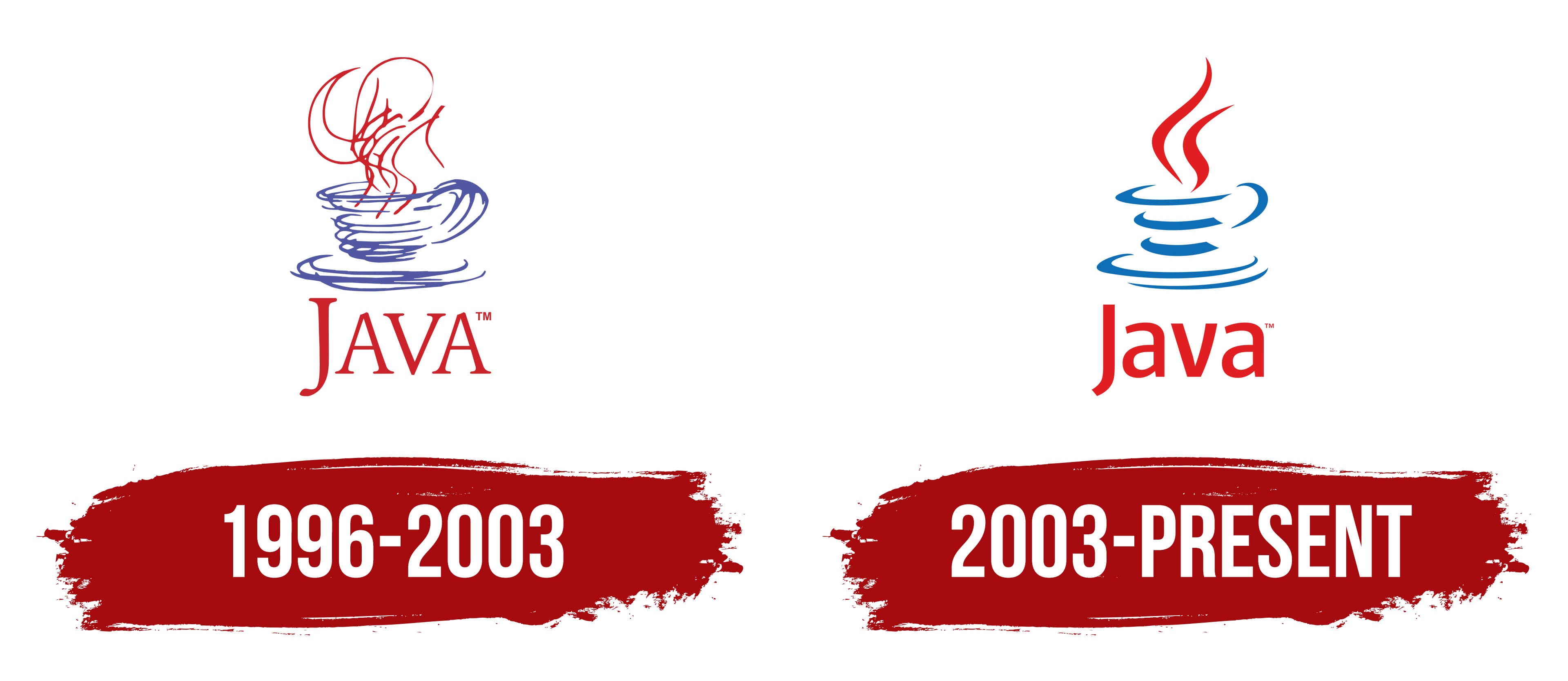
The Java project was initiated in 1991, well before 1996. Three programmers supervised it, including James Gosling, Patrick Naughton, and Mike Sheridan. At first, it was intended for interactive TV, but cable TV was not very advanced at the time, so this option was ruled out.
Then, practical experiments began within Sun Microsystems, and in 1996, the first public version was presented. It was assumed that the key condition for its functioning would be the principle of “write once and use anywhere.” And so it happened: the language worked on most popular platforms. It proved quite safe and secure, limiting access to files and the network. As a result, major browsers soon implemented the plugin. This software is compatible with everything from game consoles to data centers, laptops, and supercomputers. Gradually, it became popular.
The new software product was first called Oak. It got this name in honor of a real oak that grew near James Gosling’s office. The utility was later renamed Green, then Java. Yes, the similarity in the coffee’s name is no accident: the creators named it after an Arabica variety that grows on Java Island in Indonesia. This connection also shows up in the visual identity, where the logo’s only element is a coffee cup holding a hot drink. The emblem has two variants.
What is Java?
Java is a high-level programming language officially launched in 1996. Development began in 1991 and initially focused on household appliance functionality, but later shifted to computer technology. James Gosling created this software. Version 18 was recently released (in 2022).
1996 – 2003

The debut logo directly reflects the software’s name. Even though the sphere associated with it concerns virtual machines, an elegant blue cup is featured on the emblem. It consists of chaotic semicircular strokes that form one side of a miniature dish, a handle, and a saucer. A cloud of “steam” hovers above its surface, created by many small red lines. This palette suggests the drink is hot and must be drunk before it cools. Below is the software name, set in a thin antiqua.
2003 – today
The blue coffee cup with red steam has been preserved but has changed in style. Designers have made it more recognizable and realistic. To do this, they reduced the number of strokes, using only three semicircular lines for the cup, two for the saucer it stands on, and one for the handle. The rising steam is shown as two winding bands. The text at the bottom of the picture has also changed: it is a little lighter and set in grotesque instead of antiqua.
Font and Colors
The updated name of the Java programming language and the coffee cup are tributes to its creators, who drank a lot of coffee while working intensively to achieve their goals. And since the drink was made from coffee beans of this particular variety, the project finally received this name, replacing the temporary names “Oak” and “Green”. After the redesign, the authors kept the previous logo but bolded the thin outlines.
For the inscription in the original Java logo, a typeface was first chosen that was close to Junicode Regular but with a more elongated “J” stem. In the second logo, preference is given to a bold grotesque with a slightly twisted “v.” It resembles Sorkin Type Co.’s Merriweather Sans Regular. The corporate palette is more stable. It contains two colors: red (steam, name) and blue (cup, saucer). In some cases, a blue-yellow design option is used.