


 Chrome Logo PNG
The Chrome logo has been a registered trademark of Google Inc. since 2008 and represents Chrome, today’s most popular web browser. The Chrome logo’s graphic concept remains unchanged; it nods to Google’s writing style, showcasing technical innovation and recognizable simplicity.
By the mid-2000s, Google depended on browser speed but couldn’t control it. CEO Eric Schmidt opposed building one until Larry Page and Sergey Brin pushed a secret project in 2005, hiring developers from the Mozilla Firefox team, including Ben Goodger.
On September 2, 2008, Google released a Chrome beta for Windows after a leak by Philipp Lenssen. The browser entered a market dominated by Internet Explorer and Firefox. Chrome used a multi-process architecture where each tab ran separately, reducing crashes. It introduced the V8 engine, which compiled JavaScript into machine code and outperformed Internet Explorer, Firefox, and Safari in tests.
In December 2008, Chrome 1.0 launched and reached over 30 million users within 9 months. Its open-source base, Chromium, enabled other browsers to build on the same code. In May 2010, Chrome 5.0 added support for Windows, macOS, and Linux.
In 2012, Chrome expanded to Android and iOS, becoming the default browser on many Android devices. That year, it surpassed Internet Explorer in global market share, and by 2013, it led Firefox. Google also introduced the Blink engine in 2013, replacing WebKit and gaining full control over rendering.
Growth raised concerns about market concentration. In 2024, US regulators considered forcing Google to separate Chrome. By early 2026, Chrome held around 75% of the global desktop browser market, reshaping how web standards evolve.
Meaning and History
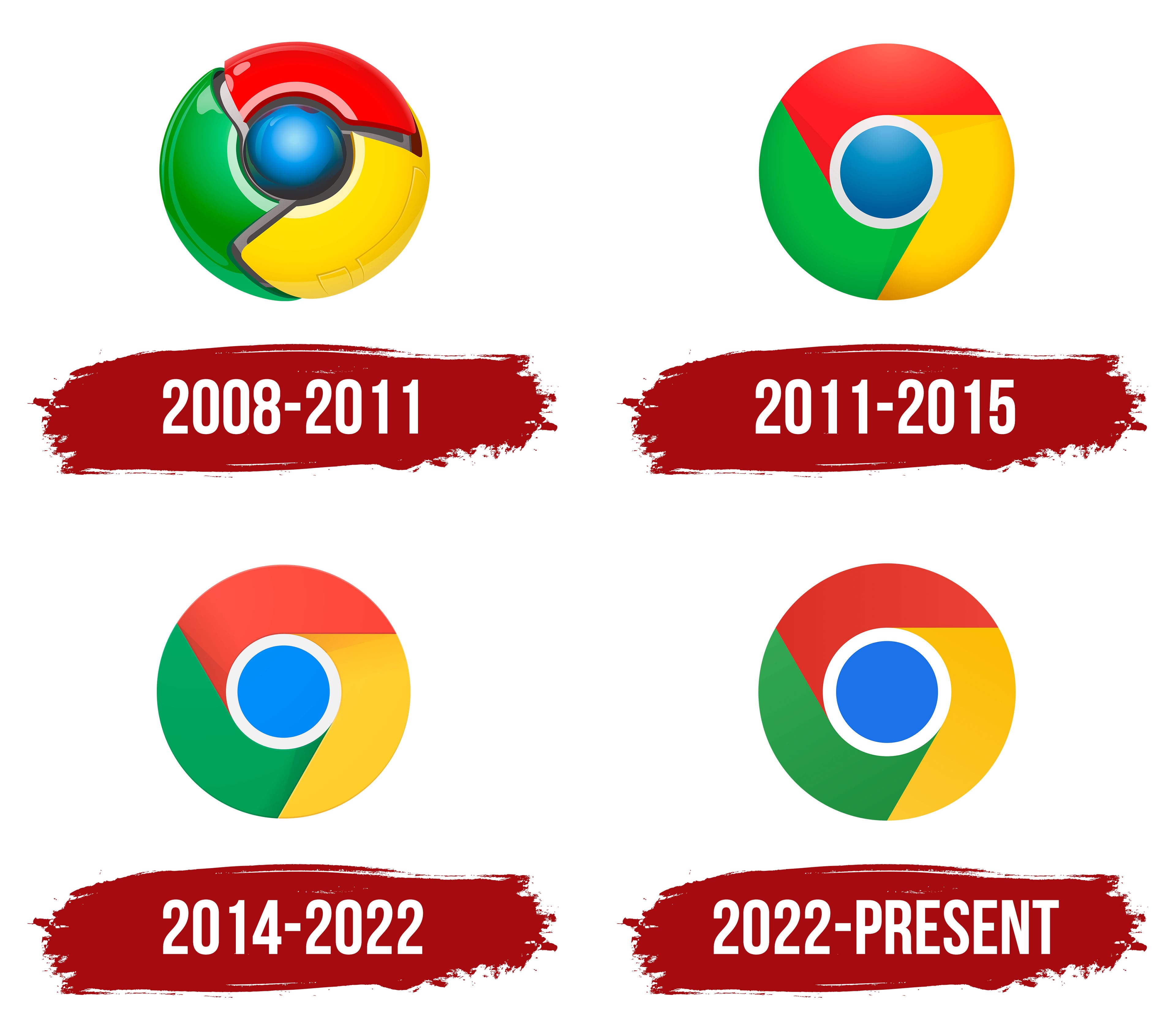
The Chrome logo is a registered trademark of Google Inc. It has changed several times, but the overall concept has remained the same: a multicolored circle divided into four color segments.
What is Chrome?
Chrome is a web browser developed by Google, available on multiple platforms. It is based on free tools from Mozilla Firefox and Apple WebKit. The browser is based on the open-source project Chromium, which gives it its name. Initially, developers created it for Microsoft Windows and later adapted it to other popular operating systems. The browser was released in 2008.
2008 – 2011
The palette and design of the browser’s logo are a nod to the famous “Google” inscription, which combines blue, red, yellow, and green letters in a circular form. The parent company’s original logo was conceived by American entrepreneur and scientist Sergey Mikhailovich Brin, who used GIMP to implement it. The multicolored text sign, which became the basis for the Chrome symbol, was introduced in the late 1990s.
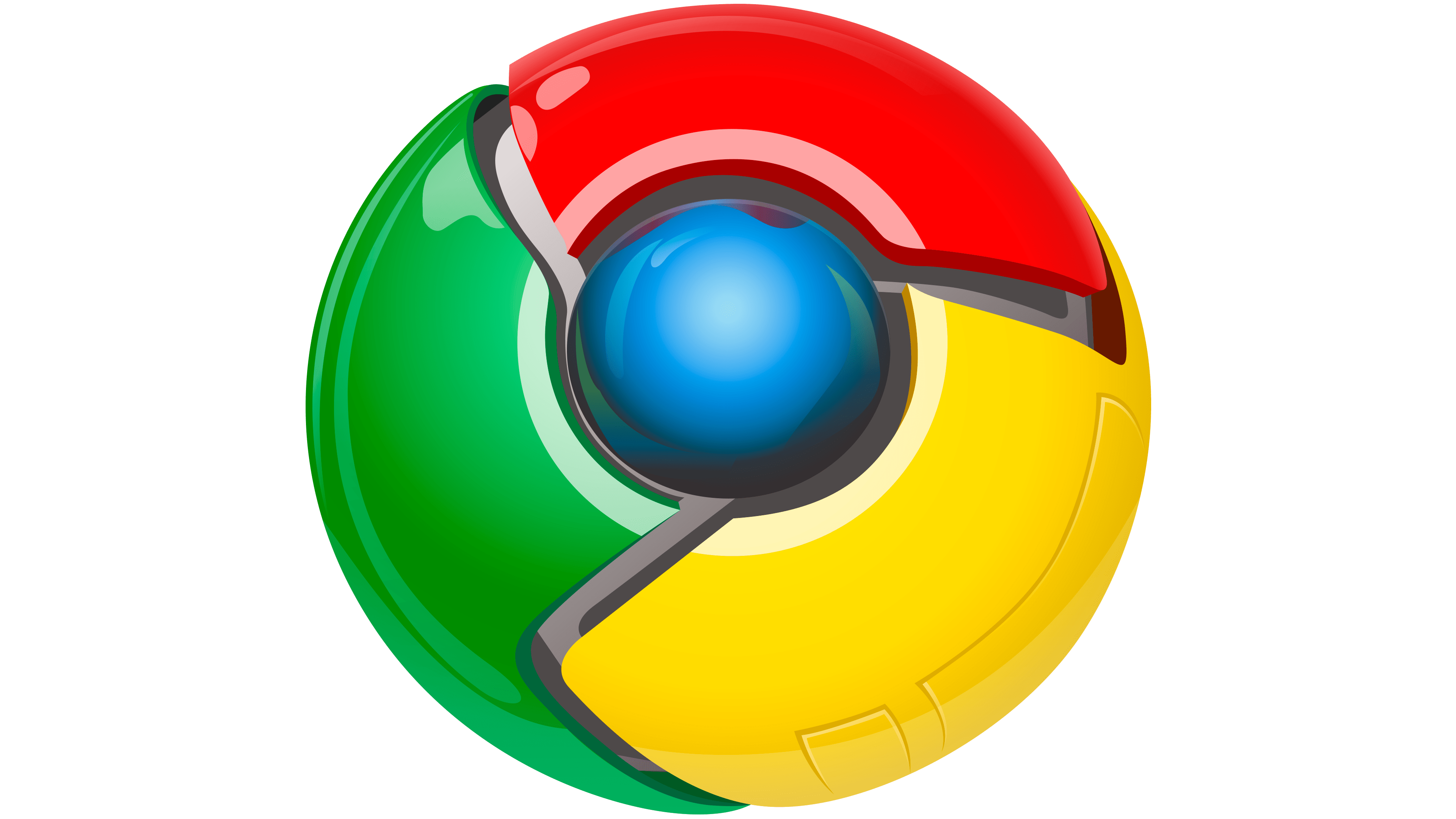
Almost twenty years later, the corporation acquired its own browser. It appeared in 2008, along with a circular 3D emblem. Developers achieved a three-dimensional effect through smooth gradient transitions, dark, near-black shadows, and white highlights. This makes the surface appear smooth and shiny.
The Chrome logo depicts a certain technological innovation. Inside, there is a large blue sphere at the center. Around the edges are three embossed curved panels: yellow, green, and red. The yellow segment has shallow, light-gray grooves.
2011 – 2014
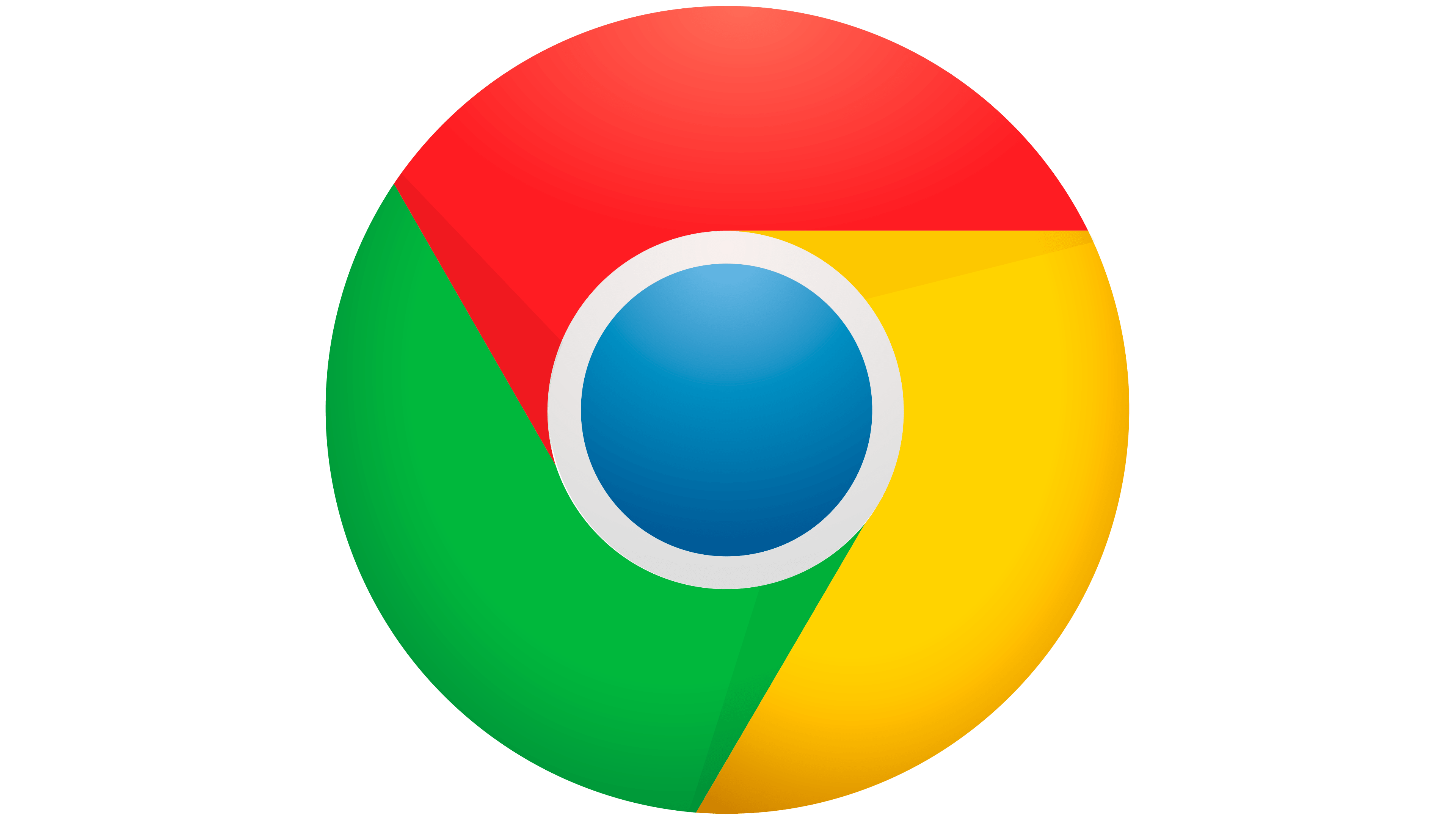
In 2011, the 3D emblem was replaced with a flat 2D image that resembled the new Chromium icon. According to designer Steve Rura, this was done to show Chrome’s simplicity, accessibility, and speed. Despite the significant simplification, the gradient did not disappear. Artists left the shade shift from darker (at the edges) to lighter (closer to the center). They placed the blue circle in a wide white ring, separating it from the multicolored fragments.
This logo appeared in Google Chrome 11. However, Android 3.0-3.2 used a slightly different icon. It differed from the main version in its distinct texture: developers adjusted shadow placement and smoothed the gradient, resulting in a more realistic 3D effect.
2014 – 2022
Google last changed the logo in 2014. The redesign aimed to update Google’s product design while maintaining the existing style. The new Chrome icon first appeared in Android 5.0 Lollipop (2014) and later in iOS (2015). In 2017, Chrome introduced an animated logo. It appears when launching Chrome OS 57 or a later version on devices such as Chromebooks.
This logo is very similar to the previous one. Designers slightly adjusted the color palette, blurred the shadow borders, and removed the pronounced gradient. The image is now 100% 2D and follows a simple concept. It only vaguely resembles the original 2008 graphics, mainly because of its round shape and color scheme.
2022 – today
The modern Chrome logo differs in more saturated colors. The colors are more vivid and bright. In addition, the central circle is slightly enlarged. The other elements remain the same.
Font and Colors
The Chrome trademark is an abstract, multi-part, disc-shaped figure consisting of a small blue circle and a wide multicolored ring. The latter consists of three segments, each bounded and with its own color.
The unique icon makes the browser recognizable and emphasizes its visual identity. From a marketing perspective, this successful design has become an immutable attribute of the brand. Perhaps that’s why developers have never changed the overall concept; instead, they have limited themselves to minor palette adjustments and experimented with graphic techniques.
The Chrome logo often features inscriptions that complement the original trademark. The key feature is a simple sans-serif font, such as Myriad Pro or Verdana. Google’s already-known concept explains the standard font choice: the simpler, the better. Developers chose not to focus on the product name, limiting it to a formal mention next to the circular emblem.
In most cases, the inscription is light gray, unlike the main Chrome symbol. It is bright and colorful because it combines all four colors of the Google logo: blue, red, yellow, and green. And perhaps all five, if you consider the white ring in the middle. Meanwhile, designers initially experimented with the palette, presenting a range of shades in halftones and gradients.