


 Kentico Logo PNG
“Using individual elements of the system, the service allows you to create websites,” explains the Kentico logo. The emblem conveys a user-friendly visual display of content in a finished prototype, along with various design variations.
Kentico was founded in Brno, Czech Republic, in 2004 by Petr Palas, an IT student at Masaryk University who was working at Moravia IT. After the company showed no interest in his CMS idea, he registered Kentico Software on June 4, 2004, without outside funding.
In August 2004, Kentico CMS 1.0 for ASP.NET was released. The first paying customer arrived in 2005, when Gibson Musical Instruments chose the product. Palas, an American client, confirmed early on that Kentico had to sell internationally from the start.
By 2006, Kentico had its first employees, became a certified Microsoft partner, and released Kentico CMS 2.0. In 2008, it reached Microsoft Gold Certified Partner status and opened its first foreign office in New Hampshire. In 2009 and 2010, Deloitte Technology Fast 50 ranked Kentico among Central Europe’s fastest-growing tech companies.
The company later opened offices in the UK and Australia while competing with Sitecore and WordPress in the CMS market. In 2016, it launched Kentico Cloud, a headless CMS, followed by Kentico Xperience 11 with Ucommerce in 2017. By 2018, Kentico had over 200 employees, 421 million Czech crowns in revenue, and more than 90,000 websites using its products. In 2022, Expedition Growth Capital invested $40 million in Kontent, which became Kontent.ai, while Kentico renamed its main product Xperience.
Meaning and History
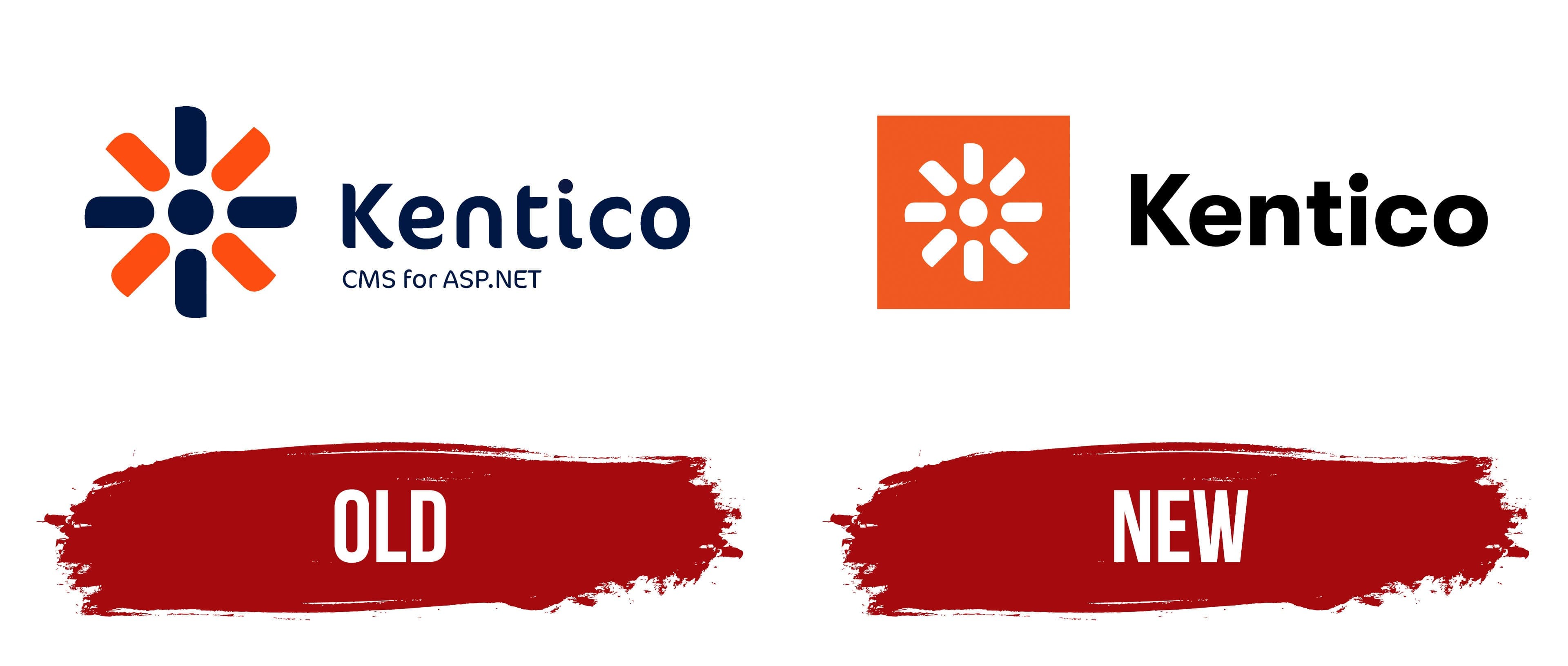
After launching the first version of Kentico, the team focused on building a positive image with the target audience and strong visual brand recognition. Naturally, the logo was an important component of this process. It was updated only once, but the main details have remained unchanged to this day.
What is Kentico?
First of all, it lets any webmaster create a website without special programming skills or knowledge of programming languages. Built-in CMS tools let you develop at any level of complexity.
Old
The first version of the logo appeared immediately after the CMS release. In addition to the brand name, it also features the Kentico logo. For the verbal inscription, the author used the author’s font. Except for the “K” character, all letters in the name are lowercase. The letters are bold, with minimal rounding at the edges. The dark blue color brightly highlights the inscription against the emblem’s background. At the same time, it evokes warm, positive emotions in a potential CMS client, fostering a positive work environment for creating a site.
The emblem visually resembles a flower; at its center, a circle with eight petals radiates outward. Each petal is visually similar to a rectangle, orange or dark blue, identical to the verbal inscription. Each rectangle has pointed corners. As a result, users may associate the flower with the sun or a windmill in motion.
New

This logo variation looks more formal than the previous version. The main color has changed from dark blue to black for the wordmark. It also uses a classic sans-serif font. As a result, the brand name contrasts with the emblem, which has also changed.
Now all elements are white on an orange background. The emblem also includes a circle and eight rectangles. At the same time, the dot above the “i” in the name is the same size as this circle, creating the impression that it is the same element. The distance between the logo and the Kentico name has been increased, making each element independent even though they belong to the same brand.
Font and Colors

The first version uses the author’s font, while the new variation uses a classic font similar to Times New Roman. The name uses bold, lowercase sans-serif letters, except for the capital “K.”
In the original logo, the color palette consists of navy blue and orange. At the same time, the main name is completely in blue. The brand is displayed in black, and the updated version uses orange and white for the emblem. These minimal changes have little impact on the visual recognition of the Kentico logo and brand overall.