


 Lacoste Logo PNG
The Lacoste logo symbolizes the luxury, elitism, and exclusivity of the company’s products. Brand customers will always stand out from the crowd.
Lacoste traces back to René Lacoste, born July 2, 1904, in Paris. He entered tennis relatively late and relied on analysis, earning the nickname “crocodile” in 1926. With the French team, he won the Davis Cup in 1927 and 1928 and secured seven Grand Slam titles.
In 1929, illness ended his career. During matches, he wore a redesigned shirt with short sleeves, a soft collar, and cotton piqué fabric, replacing heavy traditional garments and improving movement.
In 1933, Lacoste and André Gillier founded La Société Chemise Lacoste. The L.12.12 model defined production standards, and the crocodile logo appeared on the chest, becoming one of the first visible brand marks in apparel.
Until 1950, shirts were produced only in white. After that, color variations expanded, and in 1952, Lacoste entered the US market, gaining traction among postwar consumers.
In 1958, the company introduced tennis footwear. In 1963, Bernard Lacoste took over and broadened the range beyond sportswear. In 1968, the company added fragrances to its portfolio.
Throughout this period, Lacoste competed with Fred Perry, another brand rooted in tennis culture, and both focused on polo shirts as core products.
In 1981, Maus Frères acquired control, supporting international expansion. By 2012, Lacoste operated in around 110 countries. René Lacoste died on October 12, 1996, having seen the brand reach global scale.
Meaning and History
The brand is directly linked to a dispute between tennis star René Lacoste and the captain of the French Davis Cup team. They bet on a crocodile-leather suitcase the tennis player saw in one of Boston’s showcases. He couldn’t afford it, so he made a bet: if Lacoste won, the other side would buy him the suitcase. However, luck did not smile on the athlete, and the crocodile suitcase remained out of reach.
Therefore, when the company was launched, a crocodile appeared on the brand’s logo, based on René Lacoste’s nickname. His friends called him “crocodile” for his aggressive style and persistence in “crushing” opponents on the tennis court until a crushing score. However, later, because of this symbolism, the company became involved in a legal scandal that ended with the parties reconciling and agreeing to change their brand names.
The Hong Kong company Crocodile Garments, a sports clothing manufacturer, also claimed the disputed emblem. This misunderstanding began in the 1990s when the company tried to enter the Chinese market. But on the Lacoste logo, registered in France in 1933, the crocodile faces right, while on the Garments logo, registered in Asia in the 1940s-1950s, it faces left.
What is Lacoste?
The famous tennis player René Lacoste founded the company and was nicknamed “The Crocodile” for his persistence on the court. It began its history by releasing the first polo shirt adorned with an embroidered crocodile. Today, the brand is known for its clothing, footwear, accessories, and fragrances that combine comfort and style. The company has maintained its connection to its sporting roots, becoming a symbol of French elegance in everyday fashion and gaining popularity among athletes and fans of comfortable clothing worldwide.
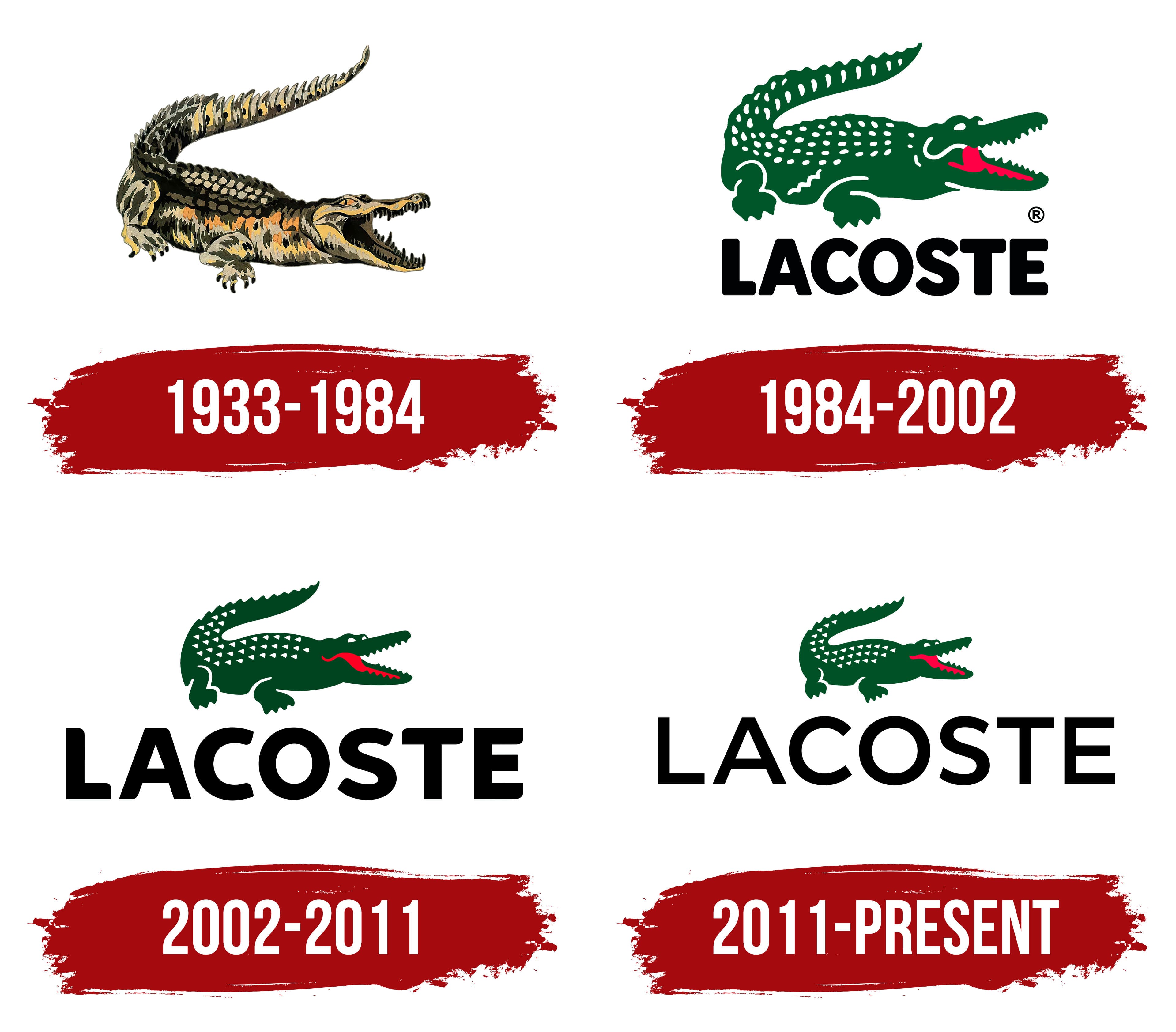
1933 – 1984
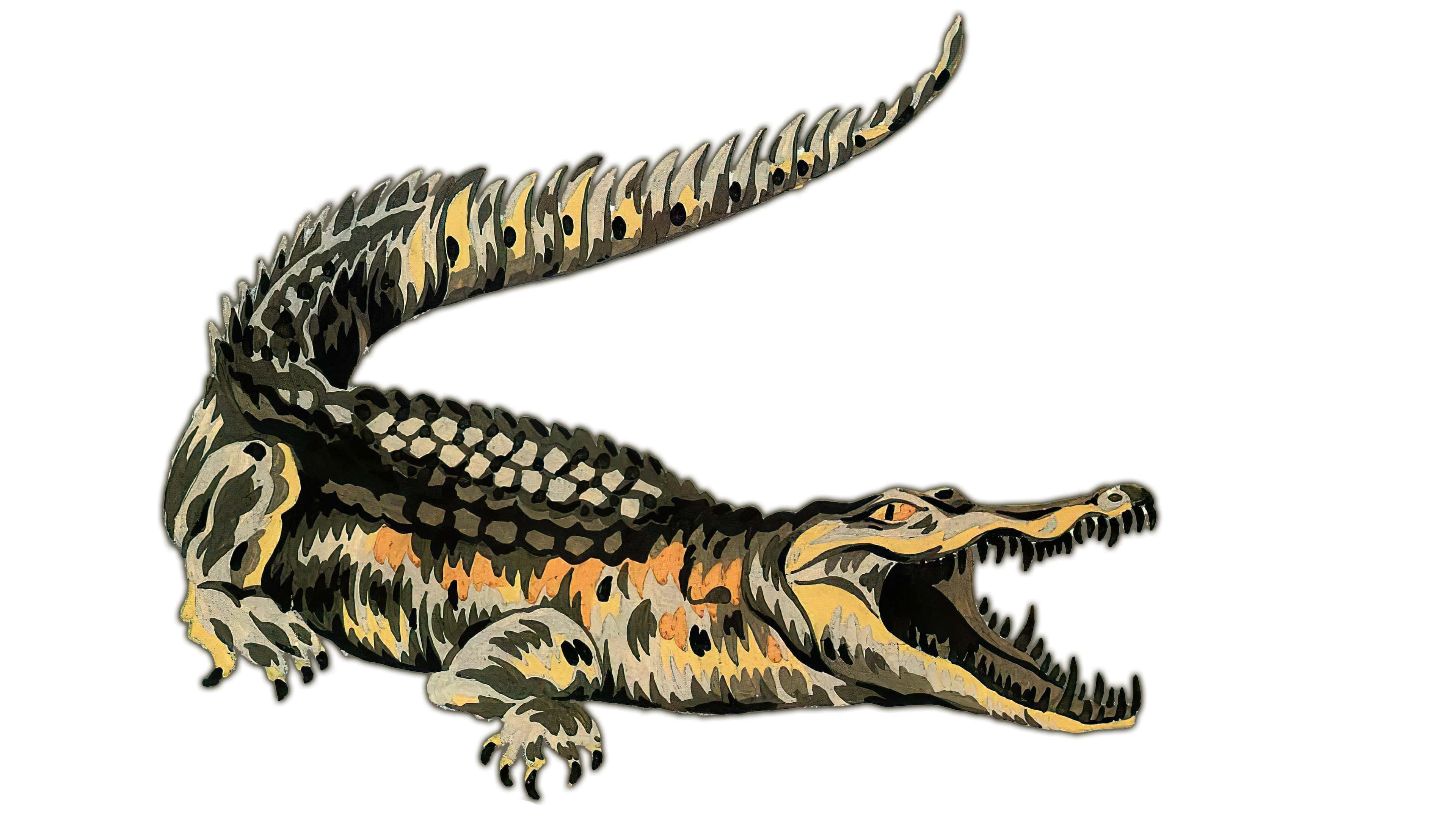
The original version featured a crocodile identical to a real one. It has brown skin with gray-orange spots and black shadows. The tail has sharp spikes, and the mouth is wide open.
1984 – 2002
In 1984, the French company created a logo with a green crocodile and a red mouth. Under the animal, the inscription “Lacoste” appears in bold capital letters.
2002 – 2011
After the turn of the millennium, designers changed the ratio of the graphic and text, making the crocodile smaller.
2011 – today
In the current logo, the brand name is written in a thin sans-serif font.
Font and Colors

The brand name originated from René Lacoste’s nickname and was initially used only on tennis shirts worn by athletes. Robert George developed it in 1926. The athlete wore a personal logo on his blazer. But after creating La Chemise Lacoste with André Gillier, the head of the knitwear business, they began using the crocodile image across the entire clothing line. For ten years, the crocodile symbol belonged to the company Izod, but later Lacoste regained its reputation and restored the brand.
After a legal dispute between Lacoste and the sewing and textile factory Crocodile Garments, the crocodile’s appearance changed slightly because of the shared emblem. As a result of the legal proceedings, the crocodile’s image was adjusted: it now has an almost parallel tail, large spots on its skin, and small eyes. The opponent also corrected the trademark: the reptile’s tail is raised vertically, the skin is smooth, and the eyes are large.
The Lacoste logo uses a proprietary font with slightly rounded capital letters. The color palette consists of green (crocodile), white (spots, eyes), and red (mouth). Usually, the animal appears on a light background, but there are also reverse versions: a white crocodile on a green rectangle.
FAQ
What Does the Lacoste Logo Mean?
The crocodile in the Lacoste logo personifies René Lacoste, after whom the brand is named. The tennis player was nicknamed “Crocodile.”
How to Identify a Fake Lacoste Logo?
The quality of the embroidery can determine the authenticity of the Lacoste logo. A fake lacks finely drawn claws and teeth; the tail is pointed in the wrong direction, and the eye is round. Besides, the crocodile should be on a white background only.
Why is the Lacoste Logo a Crocodile?
The Lacoste logo is associated with the nickname of its founder, tennis player René Lacoste. In one match, he bet on a luxurious crocodile-leather suitcase. As a result, the press dubbed him “Alligator,” and then “Crocodile.”
Which Brand is Represented by an Alligator Logo?
One might say that the Lacoste logo features an alligator, but this is not the case – the main symbol is a crocodile. These reptiles belong to different species.