


 Phat Farm Logo PNG
The Phat Farm logo, in all its variations, was created with a focus on elements of prestigious school crests. This decision was intended to highlight the origin and inspiration behind the brand’s clothing style. Each line and symbol reflects pride in the opportunities that a stylish appearance can bring. The emblem’s visual aesthetic suggests that the brand is designed for those who aspire to success, possess inner strength, and maintain a youthful spirit. Thanks to classic crest elements, the visual mark gains depth and sophistication, supporting the brand’s concept, which is aimed at those who view fashion as more than just a functional necessity.
Hip-hop producer and Def Jam Recordings co-founder Russell Simmons founded Phat Farm in 1992. The label began with men’s urban clothing shaped by rap culture, including T-shirts, trousers, jackets, and accessories. Its name used the period’s slang term “phat,” meaning stylish. In 1994, a flagship store opened on Prince Street in SoHo, New York, serving as a retail and cultural space for street-fashion fans.
During the 1990s, the range expanded into boots and sneakers worn as streetwear and on basketball courts. In 1999, Kimora Lee Simmons launched Baby Phat as a women’s line with a more glamorous interpretation of urban fashion. Retail partnerships and refined clothing collections supported further growth during the early 2000s.
In 2004, Russell Simmons sold Phat Farm to Kellwood for $140 million. Under corporate ownership, the catalog grew to include watches, fragrances, and accessories. Kellwood acquired the women’s label in 2007, bringing both lines under one company. However, critics argued that the business had lost part of its connection to hip-hop culture.
Competition increased in the late 2000s as consumer tastes changed. Sichuan Lesaunda Industrial Group bought Phat Farm from Kellwood in 2010 and shifted attention toward Asia. By 2015, the label had largely disappeared from major US and European retailers. From 2016 to 2020, it operated mainly through regional licensing, and by 2023 its market presence was far smaller than during its 1990s peak.
Meaning and History
What is Phat Farm?
This well-known American clothing company played a key role in shaping hip-hop culture and urban fashion. The brand combined prep elements with streetwear, creating a unique “urban prep” style. The collections included suits, accessories, T-shirts, and pants, targeting a young audience passionate about hip-hop and fashion. The brand’s success lies in bridging the gap between high fashion and street style, making luxury accessible to a broader audience. In urban areas, the brand’s recognizable logo and bold designs became symbols of status and style.
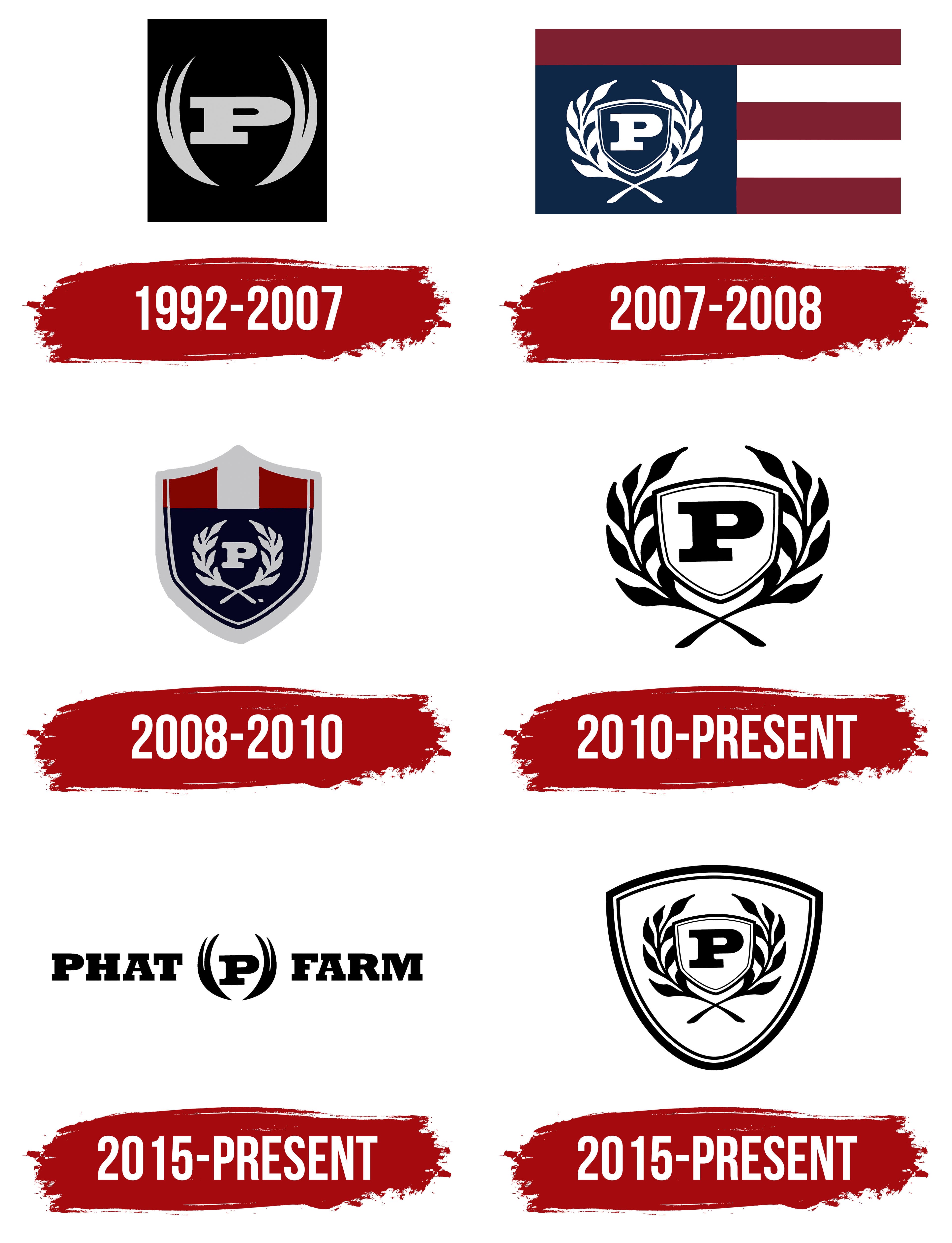
1992 – 2007

The brand is one of the few that hardly uses its full name in its emblem. This choice can be justified, as people unfamiliar with hip-hop culture or elite youth might misinterpret the name. In this context, the slang word “Phat” means something excellent, “the coolest,” and the best. Taken together with “Farm,” the brand’s name suggests a place where something truly valuable is created and cultivated. This expression has its roots in 90s hip-hop culture.
The Phat Farm logo is a black square with the first letter of the name, “P,” in the center. The bold font is intentionally stretched to visually highlight the brand’s style and identity. Surrounding the letter are two curved lines resembling a laurel wreath, symbolizing achievement and success.
The emblem’s design references the crests of prestigious American schools, emphasizing the brand’s connection to traditions. This reflects a unique blend of hip-hop-style clothing and preppy elements, making the brand appealing to those who value style and are ready to express their individuality through fashion.
2007 – 2008
The emblem was modified with American traditions in mind. The composition, consisting of the letter “P” and a wreath, is now placed on a blue rectangle, an element of the current U.S. flag reserved for stars. Although fewer red and white stripes exist, the overall composition remains similar to the national symbol. The visual mark emphasizes patriotic values, evident in everything from education to daily life and clothing.
This transformation is directly related to the company’s new owner, Kellwood Company. After the founder stepped down as director, the new team sought to give the brand a new meaning and strengthen its connection to American culture and spirit. The logo reflected these changes, symbolizing a commitment to tradition and a desire for renewal while maintaining the brand’s unique style.
2008 – 2010

The logo was transformed into a crest to emphasize the nobility and style of clothing designed for respectable and affluent individuals. At the top of the symbol are three stripes, referencing elements of the flag, while the recognizable letter “P” remains in the lower part, framed by two branches or stalks. The symbolism expresses not an appearance but a specific set of values shared by the wearers of Phat Farm clothing.
This emblem highlights that the brand’s wearers belong to a distinct youth subculture with a unique spirit and worldview. The emblem symbolizes membership in a specific group with shared beliefs and lifestyles.
2010 – today

The logo returned to the 2007 version, but with the difference that it went beyond the traditional flag design. The abandonment of the color palette in favor of a black-and-white scheme added a vintage touch to the image. During this period, the hip-hop style, which had previously been very popular, began to lose its relevance, and the brand’s clothing increasingly adopted vintage characteristics. The emblem became a symbol of this transition, connecting to the past and reflecting changes in the brand’s perception.
This updated visual mark appeared after the departure of Kimora Lee Simmons, the founder’s wife, who played a key role in managing the brand’s fashion direction. The black-and-white palette symbolized a change in style and a sense of loss, as if the brand had been left without its “parents,” deprived of the leadership and support that had helped it develop and grow.
2015 – today

This logo became the first and only one to use the brand’s full name. The massive letters with large serifs emphasize the brand’s significance and influence at the time, highlighting its substantial mark on fashion history. The visual mark symbolizes recognition of Phat Farm’s contribution to the industry and its integral role in the era.
The original company logo is placed between the words, an attempt to return to the roots, emphasizing the brand’s original essence and positioning. The emblem represents a step toward rethinking, searching for a new foundation for the brand’s relaunch and renewal. It is also an effort to immortalize Phat Farm’s status as a pioneer that combined elements of hip-hop culture and preppy style in the fashion world.
2015 – today

The emblem, designed as a “shield within a shield,” symbolizes a campaign to protect the brand’s legacy. The familiar shield encloses two branches in the design, framing a second shield with the letter “P” in the center. This transformation aimed to refresh the image and reconnect with the core audience amid growing competition among streetwear brands.
The logo’s design reflects a desire to emphasize uniqueness and preserve the brand’s original style despite changes and challenges. It is a visual element that profoundly symbolizes the efforts to maintain a position and strengthen the brand’s identity in the rapidly evolving fashion world.