The Royal Albert Hall has unveiled an updated visual style designed to convey the venue’s legacy and enduring cultural significance. The new system is built around the interaction among audiences, performers, and the hall’s team, who together create the atmosphere that draws people back time and again.
The update combines the building’s architectural heritage with a contemporary brand expression. A new headline typeface became the key element. Its form echoes the dome’s curve and the building’s outline, linking the visual identity to the hall’s architecture. The typography references the Victorian era and the bold poster styles of the 1960s and 1970s.
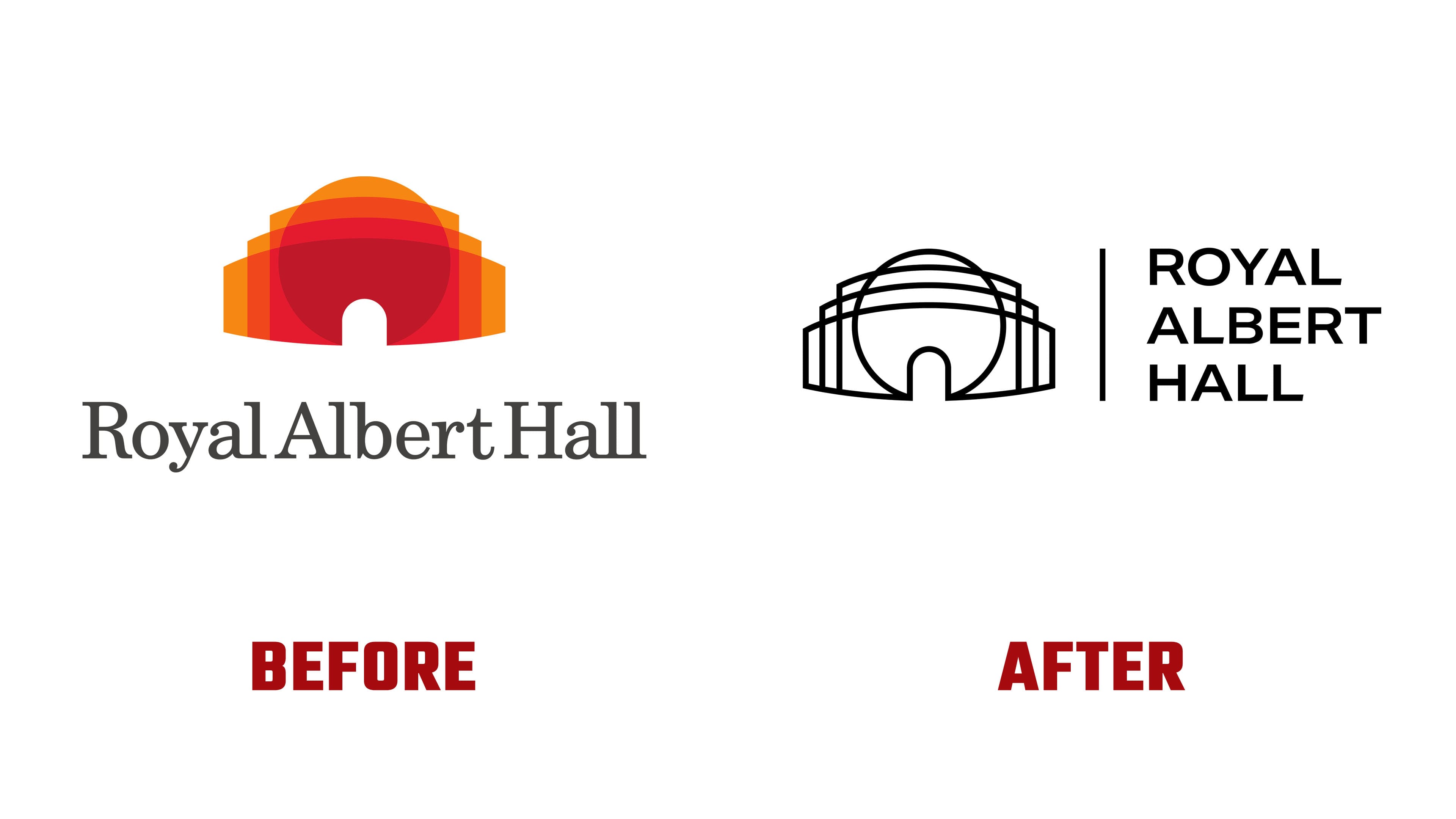
The previous logo was layered and abstract. Colored planes created a sense of depth but made application across formats more difficult. The designers of that version anticipated a move to a single-color option, and that moment has now arrived. The new emblem is monochrome and features clearer outlines. An important change was the shift away from a classic serif toward a sans serif. At the same time, the letterforms acquired subtle angles that can evoke associations with industrial aesthetics, leaning more toward technology than art.
Special attention was given to the secondary typeface used for the name. It is constructed with slight expansion and a smooth curve that follows the facade’s lines. The main challenge was aligning letters of different sizes so they read as a unified whole. Letter spacing was calibrated with high precision despite the complex shapes.

With the introduction of the new headline type, the system became more flexible. Content of any genre, from classical music to film screenings and unconventional events, fits easily into outdoor advertising and other formats. Aktiv Grotesk was selected as the supporting typeface. It is simple and functional, though at times it feels overly neutral next to the headline.
Overall, the refreshed identity of the Royal Albert Hall engages with the venue’s traditions through architectural references and contemporary typography. The image of the hall retains its cultural weight while becoming more approachable for a new audience, bringing the past and the present together.