


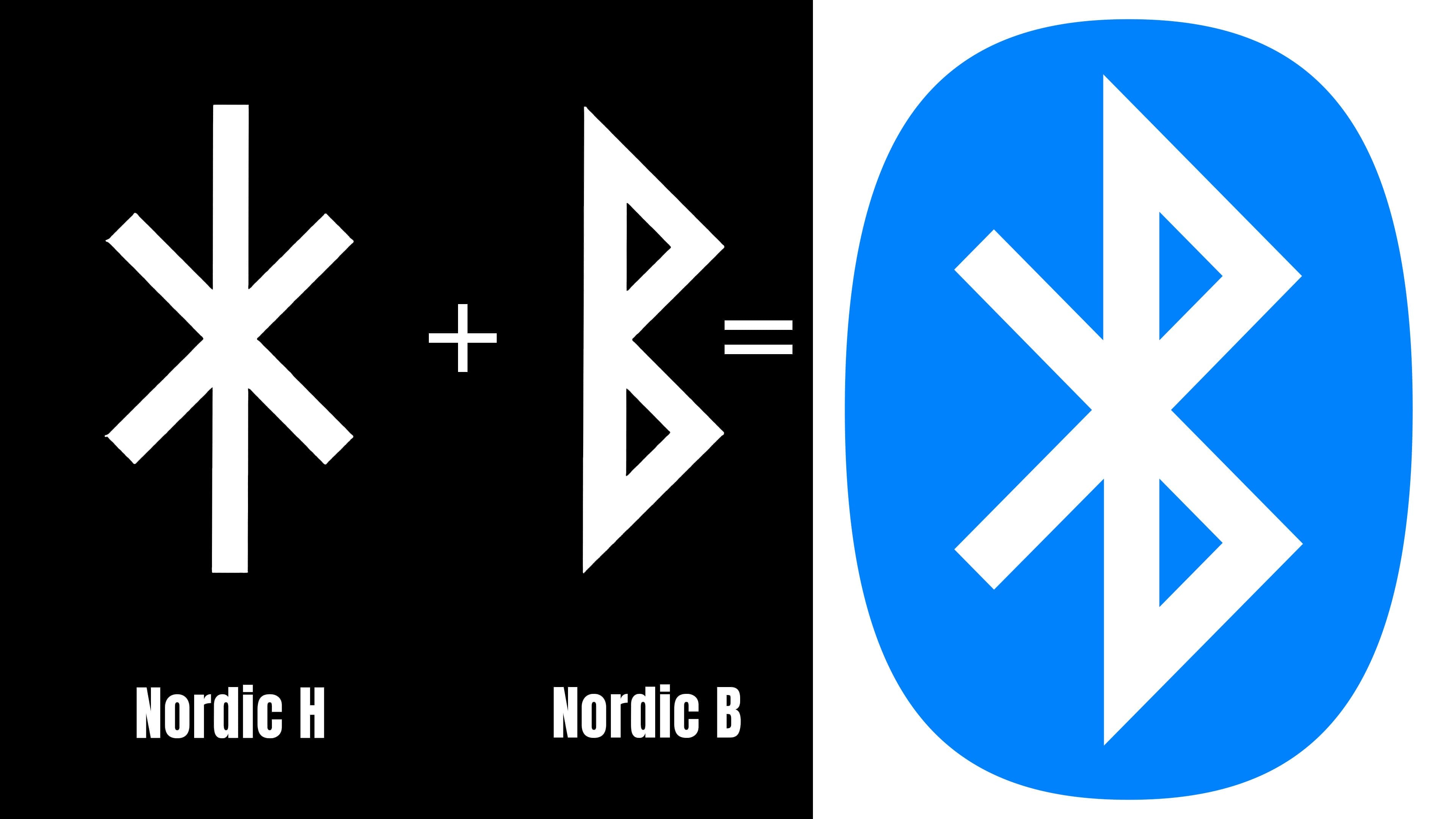
As it turned out, Bluetooth is directly related to the Vikings and the 10th century.
When you see a famous logo, how often do you think about its meaning and additional information hidden behind the image? Bluetooth is part of our daily lives, especially with the rise of wireless devices. But the name and logo of the wireless data transmission standard carry historical implications.
The name of the standard is nothing more than the name of the Viking king Harald Bluetooth. Historians distinguish three versions of an interesting nickname. The first says that the king loved blueberries, and for this reason, his teeth became pathological blue. Other sources say Harald had a dark front tooth, and during Viking times, the word “blå” referred to black. The third version says that the king was dark-haired and dark-skinned from birth, which was not typical among the Vikings. He received the nickname “Chernyavenky,” and English chroniclers chose not to break the language with Scandinavian names, so they used a consonant name.
Developers Sven Mattisson and Jim Kardach spent a long time considering a suitable name for the project. The late 1990s were a period of rapid startup emergence, especially in technology. They wanted to stand out and grab users’ and investors’ attention.

The men talked “over a beer” and discussed possible options. At the time, Jim Kardach was reading The Long Ships, a historical Viking novel by Frans G. Bengtsson. King Harald Bluetooth is best known for unifying Norway and Denmark. Since Bluetooth transfers data between devices, the developers drew a parallel and kept the symbolic name.
Not only the name but also the device’s logo hides a little secret. You might think the image represents an insect, a butterfly, or a graphic symbol. These are the Viking king’s combined initials: ᚼ (H) and ᛒ (B).
Recently, the logo and name’s history has been spreading widely among users on social networks. No one had even suspected this additional context, and people were pleasantly surprised by these details from the standard wireless history.